
Chibune Ya gives Itami’s udon culture a focused, small-room expression: wheat noodles, deep-fried sides, and curry udon in a format that sits closer to everyday Kansai lunch than destination tasting-menu dining. Its 2024 Tabelog 100 Udon WEST selection gives the address a credential beyond local convenience, while the appeal remains grounded in accessible Japanese noodle craft.
Pearl is the En Primeur Club membership app — saves, bookings, and concierge access live there. Same editors, same standards.
- Address
- 5 Chome-2-18 Central, Itami, Hyogo 664-0851, Japan
- Phone
- +81 72-779-1062
- Website
- instagram.com
 Saves & bookings on Pearl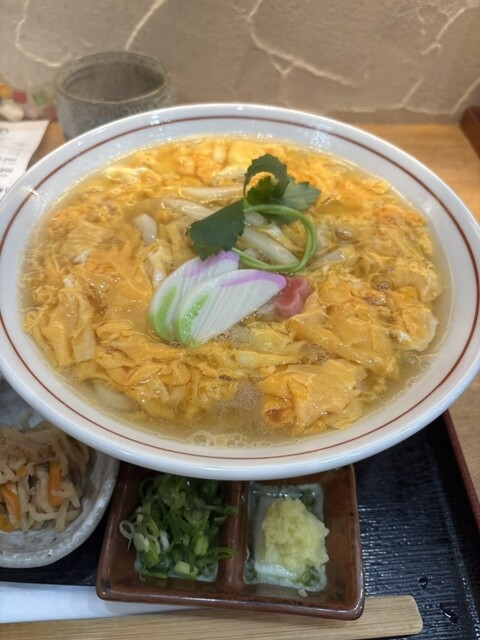
A serious Kansai udon shop is rarely theatrical. The signal is scale: a compact room, counter seats facing the kitchen, tables that may be shared at lunch, and a menu built around wheat rather than ceremony. In Itami, close enough to Osaka and Kobe to absorb their appetite for quick, precise noodle cooking yet quieter than either, a focused udon counter feels less like a trend than civic infrastructure.
Chibune Ya belongs to that practical Kansai tradition: udon as texture, broth, heat, and timing, not a vehicle for luxury ingredients. Its categories, udon, deep-fried foods, and curry udon, put it in a familiar but demanding lane. Wheat noodles expose technique fast: too soft and the bowl loses structure; too rigid and it becomes an exercise. Fried accompaniments add another clock, since tempura-style cooking and noodle service move differently. Curry udon adds a third logic, balancing spice, viscosity, and noodle resilience without making the bowl heavy.
Itami's udon lane, seen through wheat, broth, and frying
Kansai udon is often contrasted with Tokyo’s darker, sharper broths, but the deeper point is Western Japan’s restraint in the liquid and confidence in the noodle. A bowl can look plain, yet its structure depends on wheat, water, salt, stock, and heat. That is why a modestly priced udon shop can draw serious attention: the technical margin is narrow, and customers read it immediately.
The 2024 Tabelog 100 Udon WEST selection is the key external signal. Tabelog’s Hyakumeiten lists are not Michelin-style fine-dining awards; they identify category specialists across everyday Japanese food culture. For udon, that matters. The field is crowded with neighbourhood shops, station-adjacent counters, and family-run rooms where good and forgettable are separated by texture, stock clarity, and frying consistency rather than spectacle.
Within Itami, the competitive set is democratic. Gafuu An and Clutch Hitter sit in a similar approachable spending band, while Gyoza Senmonten Osaka Ou Itami ten, Grimm, and PATISSERIE LACROIX show how much of the city’s eating life happens in compact, specialized formats. Chibune Ya’s distinction is not formality, but category credibility in a city where casual food carries much of the daily dining load.
Ingredient sourcing is quiet here, but the category tells the story
Not every Japanese noodle shop narrates provenance; udon culture often communicates sourcing through restraint. The central ingredient is wheat, worked into a noodle that must carry the meal. Around it, the categories point to Kansai grammar: broth-driven bowls, fried items alongside noodles, and curry udon for warmth and weight. The sourcing question is less about named farms than how simple inputs perform.
That is where udon differs from higher-priced Japanese dining. Sushi counters may foreground fish origin, aging, and supplier relationships; kaiseki may map a season through named produce and tableware. Udon is more direct. Flour, stock, oil, and heat are judged in the bowl, as attention moves from aroma to chew to finish. A Tabelog Udon WEST listing suggests recognition within that ingredient-led discipline, not because the meal becomes luxury performance, but because the shop works inside a narrow craft tradition with consistency beyond the neighbourhood.
Curry udon also describes the audience. In Japan, it is not a compromise dish for cautious eaters; it is its own comfort category, built for appetite and speed. Deep-fried foods do similar work, making the meal more generous without turning it into restaurant theatre. For visitors used to premium dining as explanation, this is a useful recalibration: Itami’s noodle culture rewards attention without asking diners to treat lunch as an event.
How to read the room before ordering
The room’s scale shapes the experience. Eighteen seats, split between counter and tables, means turnover and timing matter more than lingering. Counter seating suits solo diners; tables make room for families and friends, including children. The format is casual by design. Reservations are unavailable, placing the meal in the Japanese queue-and-eat tradition rather than the reservation economy of sushi counters and tasting-menu restaurants.
Payment signals the same informality: credit cards and electronic money are not accepted, while PayPay is accepted. That matters for travellers moving through Hyogo without much cash. The shop is non-smoking, private rooms are unavailable, and paid parking nearby replaces on-site parking. None is a drawback if the meal is read correctly. This is a small udon specialist, not a room for long business meals or ceremonial dining.
For an Itami food day, the better comparison is not fine dining in Osaka but specialist local formats across the city. Use our full Itami restaurants guide to map those choices, then widen the trip with our full Itami hotels guide, our full Itami bars guide, our full Itami wineries guide, and our full Itami experiences guide. The broader lesson is simple: a city’s food intelligence often appears first in places that serve lunch well.
Travellers comparing Japanese casual dining across regions can also look sideways: -Grilled beef Sukiyaki- KAMAKURA TANUKIAN 鎌倉 たぬき庵 in Kamakura for beef-focused cooking. 鮪と炭火焼き うお炭 秋葉原店 in Tokyo for tuna and charcoal.cafe in Osaka for café culture.know in Kumamoto, (Shoku) Vietnam in Kawasaki, [Curry Senmon Ten] Maruyama Kyoju. in Sapporo, Jōdo Saké Bar in Los Angeles, and Onigiri Time in Pasadena. Seen that way, Chibune Ya fits a larger Japanese pattern: narrow specialization, accessible pricing, and seriousness carried by repetition rather than display.
Fast Comparison
Comparable venues by cuisine and price in the same metro.
| Venue | Cuisine | Price | Notes |
|---|---|---|---|
| Chibune YaThis venue — the venue you are viewing | Japanese Udon & Teishoku | $ | Not listed |
| がふうあん | Japanese Ramen | $$ | 西台 |
| Clutch Hitter | Ramen and Tsukemen Shop | $$ | Mizugaoka |
| Gyoza Senmonten Osaka Ou Itami ten | Osaka-style Gyoza Specialty Shop | $ | Itami |
| Gafuu An | Traditional Japanese Ramen Shop | $$ | Itami |
| Grimm | Neighborhood bakery & cake shop | $ | / 西台 |
Recognition history
Dated appearances from independent guides and award organizations, with the underlying list record or original source where available.
Tabelog 100 #3 · No. 3
Tabelog · Tabelog 100 - Udon - WEST - 2024
Continue exploring
More in Itami
Restaurants in Itami
Browse all →




Bars in Itami
Browse all →




Hotels in Itami
Browse all →


Wineries in Itami
Browse all →
At a Glance
- Solo
- Casual Hangout
- Standalone
Current opening hours
- Monday
- 11 AM–3 PM
- Tuesday
- Closed
- Wednesday
- Closed
- Thursday
- 11 AM–3 PM
- Friday
- 11 AM–3 PM
- Saturday
- 11 AM–3 PM
- Sunday
- 11 AM–3 PM
Hours can change for holidays and private events. Last verified .