Cleo's
Located at 117 Decatur St in the French Quarter, Cleo's sits in one of New Orleans' most contested dining corridors, where Creole tradition and contemporary ambition compete for the same tables. The address places it within walking distance of the city's most scrutinized kitchens, making it a natural point of comparison for visitors building a serious dining itinerary through the Quarter.
Pearl is the En Primeur Club membership app — saves, bookings, and concierge access live there. Same editors, same standards.
- Address
- 117 Decatur St, New Orleans, LA 70130
- Phone
- +1 504 766 1853
- Directions
- Get directions
 Saves & bookings on Pearl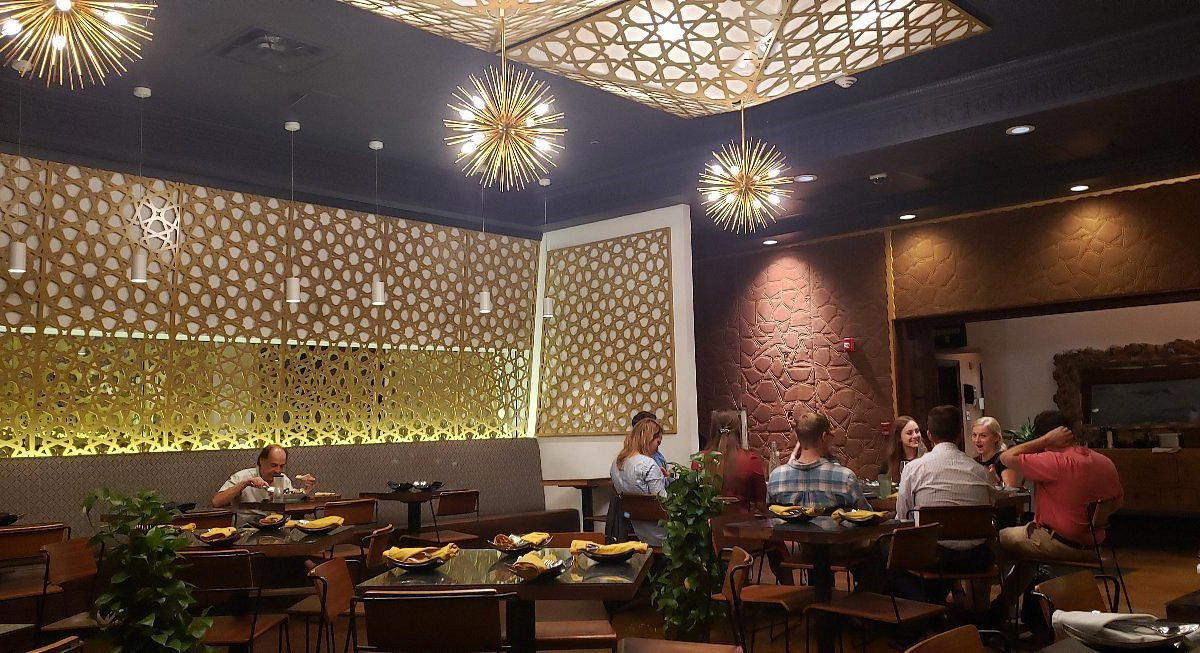
Decatur Street and the French Quarter Dining Corridor
Few blocks in American dining carry as much accumulated expectation as Decatur Street in the French Quarter. The stretch running through the 100s puts any restaurant in immediate conversation with New Orleans' longest-running culinary traditions: Creole technique, Cajun seasonings adapted for the table-cloth set, and the French foundations that gave both cuisines their grammar. It sits inside a corridor where diners arrive with comparisons already formed, where the neighbourhood itself acts as a credential, or a pressure, before the first course lands. It sits inside a corridor where diners arrive with comparisons already formed, where the neighbourhood itself acts as a credential, or a pressure, before the first course lands.
New Orleans' French Quarter has developed a split character over the past decade. On one side, institutions with decades of reputation, like Bayona in the New American register, hold ground through consistency and longevity. On the other, a newer cohort of contemporary kitchens, represented by places like Re Santi e Leoni and Saint-Germain, is reframing what a serious New Orleans dinner looks like in formal terms. Cleo's at 117 Decatur enters that conversation by geography alone.
What the Address Says About the Room
The physical character of French Quarter dining spaces tends toward the layered: exposed brick, low ceilings, rooms that have been partitioned and reopened over successive decades of use. Buildings on Decatur carry that history in their bones. Approaching from the river side, the street carries ambient noise from the waterfront, foot traffic from the Market, and the particular energy of a block that functions around the clock. Inside, that exterior pressure typically resolves into something more contained, a quieter register that the building itself enforces. That transition, from the charged exterior to whatever a restaurant makes of its interior, is where a kitchen's intentions first become legible to a guest.
The team dynamic at any serious French Quarter restaurant reflects the particular demands of the city's hospitality culture. New Orleans front-of-house expectations run high. Guests arriving in the Quarter often carry opinions about service cadence formed at Commander's Palace or shaped by the Creole formalism that has defined the city's white-tablecloth rooms for generations. In that context, the coordination between kitchen, floor, and the wine or beverage program becomes a visible editorial statement. Venues that align those three functions coherently tend to hold ground; those that treat any one of them as secondary show the gap quickly.
How Cleo's Sits in the New Orleans Competitive Set
New Orleans now operates at multiple price and ambition tiers simultaneously. Zasu in the American Contemporary bracket offers one model of the mid-to-upper register. Emeril's anchors the Cajun-rooted end of the serious dining spectrum with decades of documented presence. The French Quarter's restaurant density means that differentiation within the neighbourhood depends less on geography and more on format clarity: what a kitchen is specifically trying to do, and whether the floor and beverage teams are executing against the same brief.
Nationally, the restaurants that have sustained the clearest reputations in competitive urban markets tend to be those where kitchen-floor-sommelier collaboration is treated as a structural priority rather than an afterthought. Frasca Food and Wine in Boulder built its identity explicitly around that tripartite alignment. Smyth in Chicago and Atomix in New York City operate with the same premise: that the quality of the dining experience is a product of coordinated intention across all three functions, not just the plate. In New Orleans, where hospitality tradition runs deep, a kitchen that can match that coordination against the city's specific service culture has a clear competitive advantage.
Placing Cleo's in the Broader Fine Dining Map
For visitors building a multi-city dining itinerary, New Orleans functions as a distinct node on the American fine dining circuit. The city's culinary identity is specific enough that comparisons to Le Bernardin in New York City or The French Laundry in Napa are less instructive than comparisons within the Southern regional tradition. That said, the structural ambitions of a restaurant, the degree to which kitchen, floor, and beverage operate as a unified program, translate across geographies. Providence in Los Angeles, Blue Hill at Stone Barns in Tarrytown, and Single Thread Farm in Healdsburg all demonstrate what happens when those three functions are treated as inseparable. Addison in San Diego, The Inn at Little Washington, and Lazy Bear in San Francisco extend that pattern across different regional contexts. The standard, in other words, is well-established nationally. What varies is how individual kitchens adapt it to their city's specific character.
New Orleans asks something particular of that adaptation. The city's dining culture prizes warmth alongside technical execution, and guests who arrive from markets shaped by the cooler formalism of some high-end tasting menus often find the Southern hospitality register disorienting in a useful way. A room that can hold both registers simultaneously, technical precision in the kitchen and genuine warmth on the floor, occupies a position that the city's leading tables have historically owned. See our full New Orleans restaurants guide for broader context on how those rooms distribute across the city's neighbourhoods. International comparisons, such as Atelier Moessmer Norbert Niederkofler in Brunico, reinforce the point that the discipline of team alignment is a global marker of serious dining ambition.
Planning Your Visit
Cleo's address at 117 Decatur St places it in the heart of the French Quarter, walkable from the major Quarter hotels and accessible from the CBD by a short cab or rideshare. Decatur Street's foot traffic peaks on weekends and during festival periods, when the corridor between Jackson Square and the French Market fills quickly. Visitors planning a dinner at Cleo's should factor the neighbourhood's ambient energy into their timing: the block is active well into the evening, which affects the approach if not the room itself. Cleo's is walk-in friendly, and the neighbourhood's overall demand can make Friday and Saturday evenings busy.
Cost and Credentials
Comparable venues nearby, for context on price, style, and recognition.
| Venue | Cuisine | Price | Notes |
|---|---|---|---|
| Cleo'sThis venue — the venue you are viewing | Not listed | $$$ | Not listed |
| Marigny Brasserie | Marigny, Cajun & Creole Brasserie | $$$ | Not listed |
| Jamila's Cafe | Not listed | $$ | East Carrollton, Authentic Tunisian & Mediterranean |
| Evviva | Bywater, Modern Mediterranean Bistro | $$$ | Not listed |
| Gabrielle | Not listed | $$$ | Esplanade Ridge, Modern New Orleans Creole-Cajun |
| Sun Chong | French Quarter, Creole-Korean Fusion | $$$ | Not listed |
Continue exploring
More in New Orleans
Restaurants in New Orleans
Browse all →
Bars in New Orleans
Browse all →
At a Glance
- Lively
- Trendy
- Casual Hangout
- Late Night
- Standalone
- Street Scene
Current opening hours
- Monday
- Closed
- Tuesday
- 11 AM–10 PM
- Wednesday
- 11 AM–10 PM
- Thursday
- 11 AM–10 PM
- Friday
- 11 AM–10 PM
- Saturday
- 11 AM–10 PM
- Sunday
- 11 AM–10 PM
Hours can change for holidays and private events. Last verified .
Welcoming and lively atmosphere with fresh, bold flavors in a convenient location.