Citrus & Salt
Located at 319 A St in Boston's Seaport District, Citrus & Salt sits in a neighborhood that has become one of the city's most closely watched dining corridors. The restaurant's name signals a kitchen preoccupied with balance and restraint, citrus acidity, salt as a foundation, two of the more honest building blocks in contemporary American cooking. For the Seaport's growing roster of independently minded restaurants, it represents a distinct point of view.
Pearl is the En Primeur Club membership app — saves, bookings, and concierge access live there. Same editors, same standards.
- Address
- 319 A St, Boston, MA 02210
- Phone
- +16174246711
- Website
- citrusandsaltboston.com
- Directions
- Get directions
 Saves & bookings on Pearl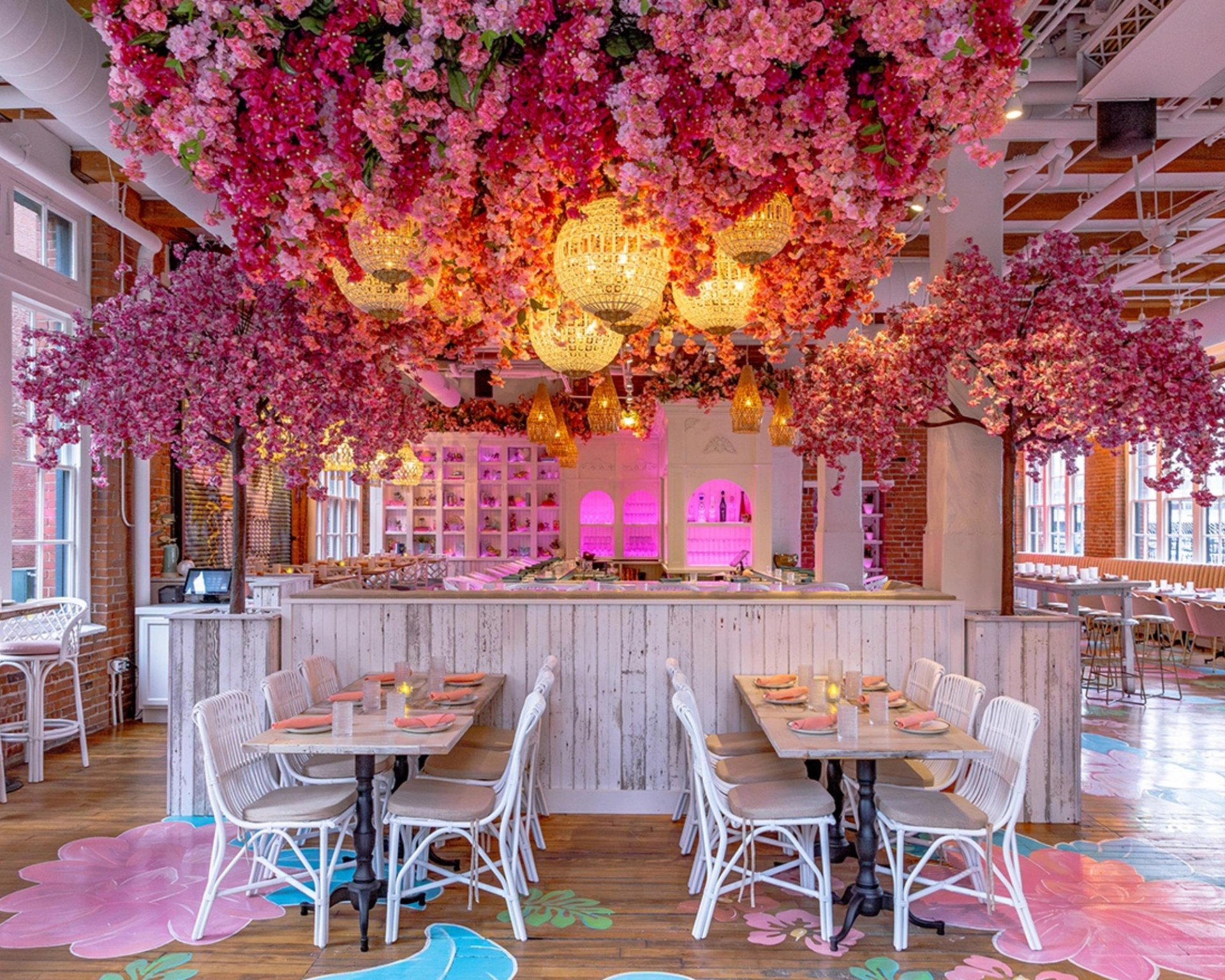
The Seaport's Shift Toward Considered Cooking
Boston's Seaport District has spent the better part of a decade sorting itself out. Early on, the neighborhood read as a real-estate project with restaurants attached, corporate formats, predictable menus, little that required a second visit. That has changed. The corridor along A Street and its immediate surroundings now houses a more varied set of operators, including a growing cohort of kitchens that treat sourcing and waste reduction as structural concerns rather than marketing language. Citrus & Salt, at 319 A St, sits inside that shift. Its name alone signals a kitchen interested in fundamentals: the bright cut of citrus acids, the mineral bedrock of salt, not flourishes, but the invisible architecture of cooking that actually tastes like something.
The wider American dining scene has spent several years working through what sustainability means in practice. At the more credible end of that conversation, the answer involves decisions made before service begins: which farms supply the kitchen, how trim and byproduct are used, whether the menu is built around what's available rather than forcing what's fashionable. Restaurants in comparable cities have staked out positions on this spectrum with some specificity. Blue Hill at Stone Barns in Tarrytown made the farm-to-pass-through model the entirety of its identity. Single Thread Farm in Healdsburg built supply chain infrastructure alongside its dining room. Smyth in Chicago uses a rooftop farm as both sourcing tool and editorial statement. These are not comparable in scale to what most neighborhood restaurants attempt, but they set the reference point against which any kitchen making environmentally conscious claims is now, fairly or not, measured.
What the Name Tells You About the Kitchen's Priorities
A restaurant named for two of cooking's most elemental tools is making a quiet declaration. Citrus and salt are not luxury ingredients; they are correction, contrast, and structure. Kitchens that think in those terms tend to privilege technique over spectacle, and they tend to be more comfortable with seasonal constraint, using what has acidity and brightness when it's available, salting and curing to extend what would otherwise be wasted. That sensibility maps naturally onto the kind of sourcing discipline that defines the more credible sustainability-oriented kitchens in cities like Boston, where the growing season is compressed and the gap between what local farms produce and what diners expect is wider than in California or the mid-Atlantic.
Boston's seafood access is a structural advantage that few of the city's restaurants fully exploit from a zero-waste perspective. The docks are close. The supply chain for local fish and shellfish is shorter here than almost anywhere else in urban America. Neptune Oyster, a North End fixture, has long demonstrated that disciplined sourcing within a narrow product range builds more loyalty than a broad menu that relies on commodity supply. O Ya's decade-plus run showed that Boston diners will accept austere, high-integrity formats when the product justifies it. The question for a newer address in the Seaport is how to build that kind of credibility from scratch, in a neighborhood still defining its dining character.
The Seaport Context and Its Competitive Set
The Seaport is not the South End, and it's not the North End. It lacks the generational density of either. What it has is foot traffic from a growing residential and office population that, more than the tourist-heavy Faneuil Hall corridor, actually returns to restaurants it trusts. That creates an opening for a kitchen with a clear point of view. 75 on Liberty Wharf showed the neighborhood could support a seafood-forward address with a view premium built in. 1928 Rowes Wharf occupies the more formal end of the waterfront dining register. Citrus & Salt, based on its name and address, reads as something positioned between the casual and the composed, a register that, done well, tends to be especially durable in a neighborhood that needs restaurants local diners can use on a Tuesday as readily as a Friday.
For the Seaport's sustainability narrative to develop further, it needs kitchens that make environmental decisions visible through the food itself rather than through signage. The strongest examples nationally, Providence in Los Angeles with its sustainable seafood sourcing, Lazy Bear in San Francisco with its fermentation and preservation program, Addison in San Diego with its local agricultural relationships, demonstrate that the practice earns more trust than the claim. In Europe, Atelier Moessmer Norbert Niederkofler in Brunico has taken that logic further than most, building an entire tasting format around Alpine regional product exclusivity. These comparisons are not meant to suggest equivalence in category or scale, but to map the territory Citrus & Salt operates within when its name and positioning are taken at face value.
Planning a Visit
Citrus & Salt is at 319 A St, Boston, MA 02210, in the Seaport District. The address puts it within walking distance of South Station and the Silver Line, making it reachable from Logan Airport without a car, a practical consideration in a neighborhood where parking adds friction to the evening. For the Seaport's dining corridor more broadly, weekday evenings tend to be more relaxed than weekend nights, when the area's hotel density drives covers at nearly every address.
Those building a longer dining itinerary in Boston might use Citrus & Salt alongside a steak-focused evening at Abe & Louie's or a more formal tasting experience elsewhere in the city. For national context on what careful sourcing and restraint-led cooking can look like at a higher level of formalization, Le Bernardin in New York City and The French Laundry in Napa represent the ceiling of the format, while Emeril's in New Orleans and Atomix in New York City offer distinct regional perspectives on what considered cooking can look like at different price registers.
Booking and Cost Snapshot
Comparable venues nearby, for context on price, style, and recognition.
| Venue | Cuisine | Price | Notes |
|---|---|---|---|
| Citrus & SaltThis venue — the venue you are viewing | Fort Point, Coastal Mexican Tapas | $$$ | Not listed |
| Borrachito | Not listed | $$ | South Boston Waterfront, Modern Mexico City-Style Taqueria |
| Moxies - Boston Seaport | Inner Harbor, Modern American | $$$ | Not listed |
| Chickadee | Not listed | $$$ | South Boston Waterfront, Modern Mediterranean |
| Bey | South End, Modern Lebanese | $$$ | Not listed |
| Scampo | West End, Italian-Mediterranean | $$$ | Not listed |
Continue exploring
More in Boston
Restaurants in Boston
Browse all →
Bars in Boston
Browse all →

Hotels in Boston
Browse all →



Wineries in Boston
Browse all →
At a Glance
- Trendy
- Lively
- Modern
- Group Dining
- Brunch
- Casual Hangout
- Open Kitchen
- Craft Cocktails
Current opening hours
- Monday
- 4–10 PM
- Tuesday
- 11 AM–10 PM
- Wednesday
- 11 AM–10 PM
- Thursday
- 11 AM–11 PM
- Friday
- 11 AM–12 AM
- Saturday
- 10:30 AM–12 AM
- Sunday
- 10:30 AM–10 PM
Hours can change for holidays and private events. Last verified .
Fun and bright coastal-inspired décor with high-energy, lively atmosphere.