
Tabelog 100 #25
Our verdict
A compact Kikusui ramen counter with Tabelog Ramen HOKKAIDO 100 recognition in 2024 and 2025, Chuka Soba California belongs to Sapporo’s quieter ramen conversation: smaller rooms, leaner budgets, and serious local repeat traffic outside the Susukino circuit. The format suits solo diners, families, and visitors who want Sapporo ramen culture beyond the butter-corn shorthand.

Pearl is the En Primeur Club membership app, where members save venues, book tables and use the concierge.
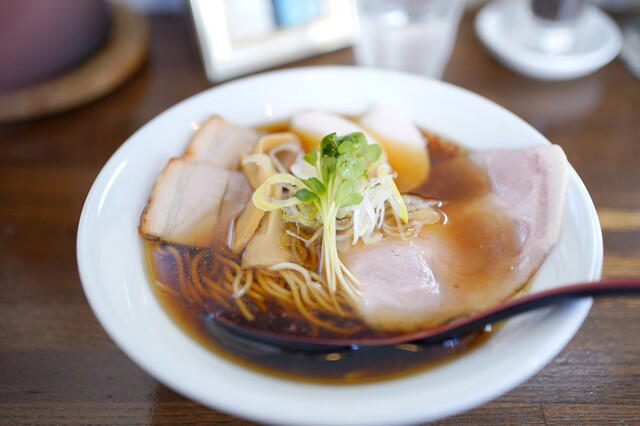
The menu
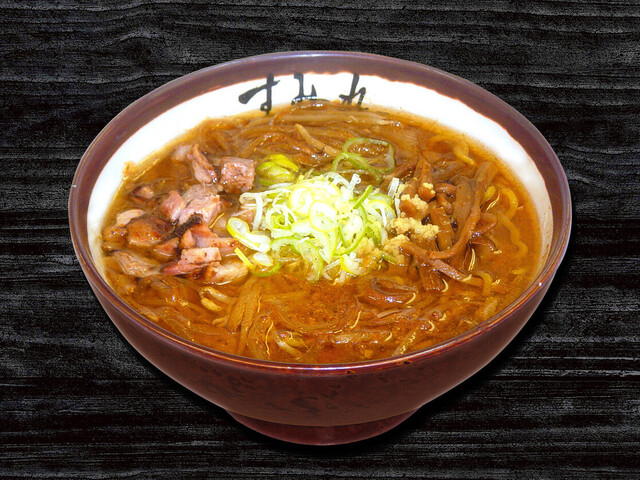
What to order
- Chashu meat wonton soba (black shoyu)
- Chashu meat wonton soba (white shio)
- Chuka soba (classic ramen)
- Shio niboshi chashu-men
Approaching the Kikusui side of Sapporo’s ramen map changes the tempo. The city’s familiar ramen image is often loud, central, and winter-coded, but the eastern wards tell a more local story: short waits, compact rooms, counter seats, and bowls treated as everyday craft rather than travel spectacle. Chuka Soba California fits that register. Its recognition in Tabelog Ramen HOKKAIDO 100 for both 2024 and 2025 places it inside a serious regional selection, but the appeal is better understood through Sapporo’s neighbourhood ramen culture than through trophy language.
Sapporo’s ramen identity is usually reduced to miso, butter, corn, and snow. That version is not wrong, but it is incomplete. The city also has a deep appetite for shoyu-led chuka soba, lighter broths, and small operators whose distinction comes from calibration rather than excess. In that context, this Kikusui address reads as a useful counterweight to the tourist shorthand: a modest ramen room with 15 seats, counter seating at the centre of the experience, and the kind of scale that keeps service close to the bowl rather than the brand.
Kikusui's ramen culture rewards precision over spectacle
Ramen in Sapporo is not a single style; it is a set of neighbourhood habits. Susukino pulls late-night energy and visitors looking for the classic Hokkaido bowl. Areas such as Kikusui operate differently, with smaller restaurants serving office workers, residents, solo diners, and families moving through ordinary routines. That matters because ramen changes when it is not performing for a postcard. The room size, the no-reservations format, and the counter-led setup all push attention back to pacing, broth, noodle texture, and turnover.
Within the nearby comparison set, the price tier also says something about the local market. Menya Ozawa and Ise no Jo Kikusui honten sit in the same low-cost ramen bracket, while Toripaitan Soba Yuu, Spice Pot Kikusui honten, and CAN CUN occupy a slightly higher band. Chuka Soba California’s place in the lower ramen tier is part of its significance: regional recognition has not moved the format into destination-menu pricing. For diners mapping Sapporo by category rather than by neighbourhood alone, that makes the restaurant a useful reference point for how much serious ramen can remain tied to daily eating.
The 2024 and 2025 Tabelog Ramen HOKKAIDO 100 selections are the main trust signal here. Hyakumeiten recognition is not the same as a Michelin star, and it should not be read that way. Its value is different: it identifies venues that matter within a specific Japanese dining category and region. For ramen, where local loyalty and repeat visits often carry more weight than formal ceremony, that kind of category-specific recognition is especially relevant.
A small-room format for solo bowls, family tables, and fast decisions
The physical format explains the experience more clearly than a long chef narrative would. Fifteen seats, including seven at the counter and two four-seat tables, place the restaurant in the compact ramen-shop tradition rather than the expansive casual-dining model. Counter seating suits solo diners, which is one reason ramen remains such a flexible meal in Japanese cities. The table seats matter too: this is not a rarefied counter where children are an intrusion. The listed family-friendly status, including preschool and school-age children, points to a room built for regular life as well as ramen-focused visitors.
That combination is worth noting in Sapporo, where visitors often separate “serious” eating from family logistics. Ramen collapses that divide better than almost any category in Japan. A high-recognition shop can be inexpensive, quick, and accessible to children, while still drawing committed noodle hunters. The constraint is not ceremony; it is timing and patience. With reservations unavailable, the decision is less about securing a table weeks ahead and more about choosing a moment when a small room can absorb the party.
Payment and access details reinforce the old-school ramen-shop rhythm. This is a cash-only operation, with credit cards, electronic money, and QR code payments not accepted. There is also a single parking space, which is useful for local drivers but too limited to anchor a plan around. For visitors, the stronger move is to fold the meal into a Kikusui itinerary rather than treat the restaurant as a stand-alone transfer from central Sapporo.
How to place it within a Sapporo food day
Chuka Soba California works better as part of a broader Sapporo eating map than as a lone pilgrimage. Ramen can carry lunch or an early dinner without consuming the day, leaving room for the city’s other obsessions: soup curry, spice-driven casual counters, bakeries, and izakaya-style drinking later on. For a ramen-heavy comparison, 175°DENO Tantanmen Sapporo kitaguchi ten shows another side of the city’s noodle appetite. For curry, [Curry Senmon Ten] Maruyama Kyoju., Ajanta Indo Curry Ten, and Ajanta Sohonke point to a parallel comfort-food tradition that is just as central to Sapporo’s modern palate.
Visitors building a full itinerary should treat ramen as one chapter, not the whole book. Aigues Vives adds another kind of craft-driven stop, while Our full Sapporo restaurants guide gives the broader dining frame. For the rest of the trip, use Our full Sapporo hotels guide, Our full Sapporo bars guide, Our full Sapporo wineries guide, and Our full Sapporo experiences guide to connect the meal with sleep, drinking, and daytime planning.
The wider Japan file is useful for calibration too. The country’s casual dining excellence appears in many shapes, from -Grilled beef Sukiyaki- KAMAKURA TANUKIAN 鎌倉 たぬき庵 in Kamakura and. 鮪と炭火焼き うお炭 秋葉原店 in Tokyo to.cafe in Osaka.know in Kumamoto, (Shoku) Vietnam in Kawasaki, and [ki:] in Kyoto. Outside Japan, Jōdo Saké Bar in Los Angeles and Onigiri Time in Pasadena show how Japanese formats travel, but Sapporo’s ramen culture remains rooted in price discipline, small rooms, and repeatable pleasure.
Frequently asked questions
Can I bring kids to Chuka Soba California?
Yes. The restaurant lists children welcome, including preschoolers and school-age children, and it has 15 seats with two tables for four in Sapporo’s Kikusui area.
Is Chuka Soba California better for a quiet night or a lively one?
It reads more like a calm ramen stop than a late-night room. With 15 seats, counter seating, and hours that run to 8 PM on weekdays, it suits a low-key meal in Sapporo rather than a lively evening.
Is Chuka Soba California expensive?
Pricing at Chuka Soba California is listed as - JPY 999 - JPY 999.
When can I go to Chuka Soba California?
Hours at Chuka Soba California: Mon: 11:15 AM–2:30 PM, 6–8 PM; Tue: 11:15 AM–2:30 PM, 6–8 PM; Wed: 11:15 AM–2:30 PM, 6–8 PM; Thu: 11:15 AM–2:30 PM, 6–8 PM; Fri: Closed; Sat: 11:15 AM–2:50 PM; Sun: 11:15 AM–4 PM.
Price and Positioning
Comparable venues for orientation by cuisine and category.
| Venue | Cuisine | Price | Awards | Notes |
|---|---|---|---|---|
| Chuka Soba CaliforniaThis venue (the venue you are viewing) | Tokyo/Hachioji-style ramen | $1–10 | Tabelog 100 #25 | Not listed |
| Gyoza Suguruya | Gyoza-focused Japanese dumpling bar | $20–30 | Tabelog 100 #64 | Chūō, Gyoza-focused Japanese dumpling bar |
| Yamaarashi Honten | Japanese Ramen | $1–10 | Tabelog 100 #50 | Toyohira, Japanese Ramen |
| Mendokoro Maruha BEYOND | Japanese Ramen | $10–20 | Tabelog 100 #20 | Toyohira, Japanese Ramen |
| MEN SHOUKI | Modern Japanese Ramen & Tsukemen | $10–20 | Tabelog 100 #73 | Higashi, Modern Japanese Ramen & Tsukemen |
| Wadashi Ramen Umekichi | Japanese dashi-based ramen | $10–20 | Tabelog 100 #70 | Chūō, Japanese dashi-based ramen |
Recognition history
Dated appearances from independent guides and award organizations, with the underlying list record or original source where available.
Tabelog 100 #25 · No. 25
Tabelog · Tabelog 100 - Ramen - HOKKAIDO - 2025
Continue exploring
More in Sapporo
Restaurants in Sapporo
All restaurants in Sapporo →
Bars in Sapporo
All bars in Sapporo →
Details
- Cozy
- Classic
- Solo
- Casual Hangout
- After Work
- Standalone
- A La Carte
- Counter Dining
Current opening hours
- Monday
- 11:15 AM–2:30 PM, 6–8 PM
- Tuesday
- 11:15 AM–2:30 PM, 6–8 PM
- Wednesday
- 11:15 AM–2:30 PM, 6–8 PM
- Thursday
- 11:15 AM–2:30 PM, 6–8 PM
- Friday
- Closed
- Saturday
- 11:15 AM–2:50 PM
- Sunday
- 11:15 AM–4 PM
Hours can change for holidays and private events. Hours as of .
Small, clean and somewhat café-like ramen shop with a simple, stylish interior; counter-focused seating creates an intimate, lively atmosphere typical of popular local ramen spots.