Cha-Ya
Our verdict
On Shattuck Avenue in Berkeley's Gourmet Ghetto, Cha-Ya has maintained a plant-based Japanese menu for years, occupying a niche that few Bay Area restaurants address: traditional Japanese formats executed without any animal products. The kitchen draws from tofu, seasonal vegetables, and house-made preparations rather than substitutes, making it a reference point for how Japanese cuisine functions when stripped of fish and meat.

Pearl is the En Primeur Club membership app — saves, bookings, and concierge access live there. Same editors, same standards.
- Address
- 1686 Shattuck Ave., Berkeley, CA 94709
- Phone
- (510) 981-1213
- Hours
- Daily 12–3 PM, 5–8 PM
- Website
- chaya-berkeley.com
- Directions
- Get directions
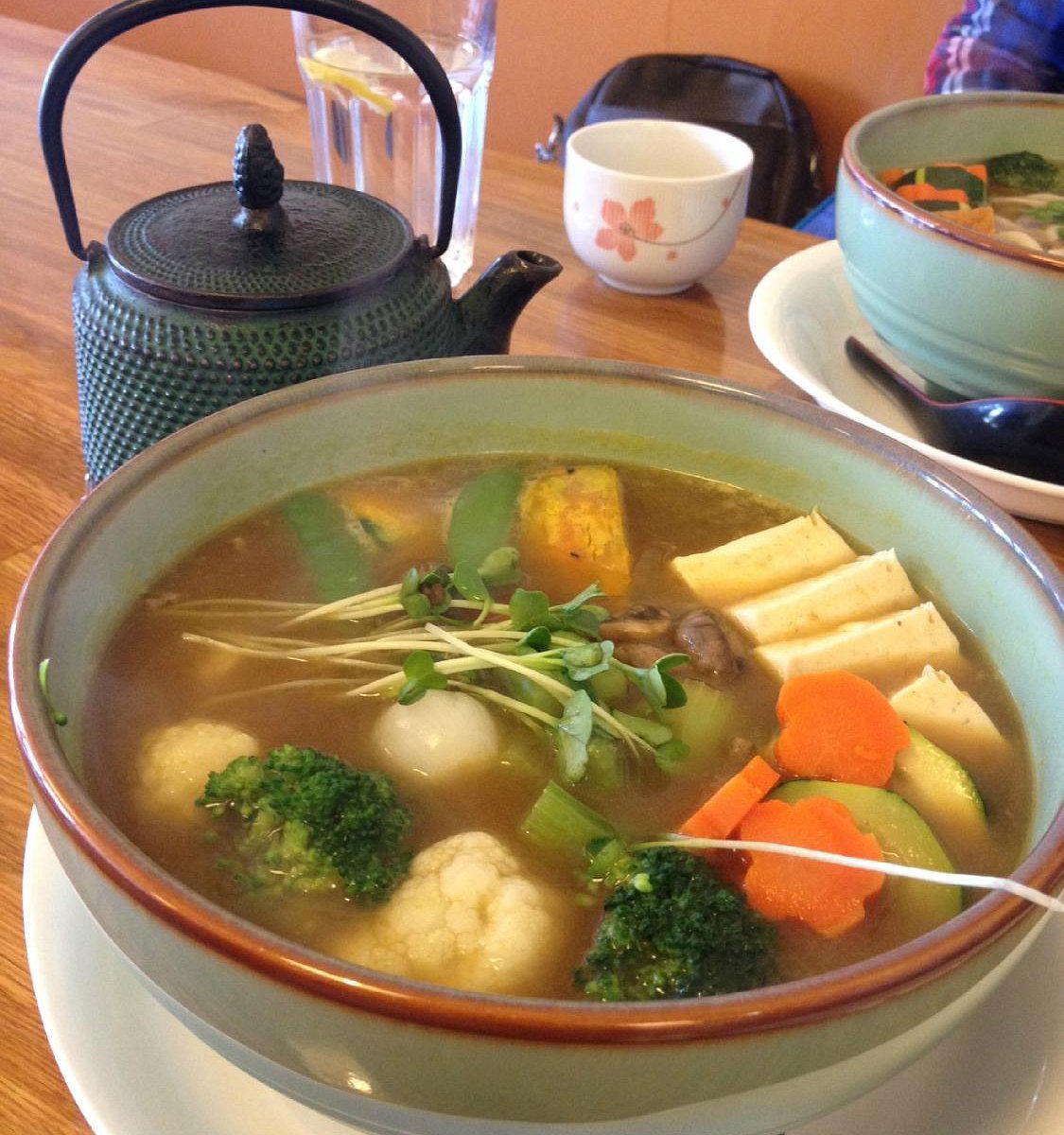
The menu
What to order
- Gyoza
- Vegetable Tempura
- House Miso Soup
- Dobin Mushi
- Cha Ya Roll
Shattuck Avenue and the Plant-Based Japanese Question
Berkeley's Shattuck Avenue corridor has long functioned as a testing ground for food ideas that arrive years before the mainstream catches up. The stretch between Cedar and Rose streets, often called the Gourmet Ghetto, produced Alice Waters and the farm-to-table argument before that phrase existed as a marketing category. Against that backdrop, Cha-Ya at 1686 Shattuck Ave. represents a specific and less-discussed version of the same argument: that Japanese cuisine, one of the most fish-dependent culinary traditions on earth, can be executed coherently and with integrity without a single animal product on the menu.
This is not a common proposition. Across the Bay Area's broader Japanese restaurant scene, even the most vegetable-forward kaiseki-influenced menus treat dashi made from kombu and bonito as foundational. Cha-Ya removes the bonito entirely, building its broths from kombu and shiitake, a subtraction that changes the flavor architecture of every bowl and broth-based dish on the table. The result reads as Japanese but occupies a quieter, more mineral register. Whether that registers as loss or clarity depends on what you're looking for.
The Environmental Case for Animal-Free Japanese Cooking
The sustainability argument for plant-based dining is now standard rhetoric in food media, but it lands differently when the cuisine in question is Japanese. Japanese fishing culture and its supply chains carry real environmental weight: bluefin tuna populations remain under pressure, eel is critically endangered in several regions, and the global appetite for high-grade seafood has pushed sourcing ethics into increasingly difficult territory. Restaurants that deal with those pressures honestly tend to either invest heavily in traceability programs, as operations like Providence in Los Angeles and Le Bernardin in New York City have done, or they exit the seafood equation entirely.
Cha-Ya takes the second path. By committing to a fully vegan format, the kitchen sidesteps the sourcing ethics of seafood supply chains altogether. That is not a trivial decision in a city where Japanese restaurants still compete heavily on the quality of their fish.
In broader terms, animal agriculture and commercial fishing together account for a disproportionate share of the restaurant industry's environmental footprint. Restaurants oriented around grain, legume, and vegetable inputs operate with a structurally lower impact regardless of how sophisticated the menu becomes. Cha-Ya's menu, rooted in tofu, seasonal produce, and seaweed-based preparations, sits well within that lower-impact tier, which is a more substantive claim than any restaurant's sustainability marketing copy.
Berkeley as Context
It helps to understand that Berkeley tolerates and often rewards restaurants that occupy narrow, principled niches. The city's dining scene has never been purely about luxury capture or Michelin validation. It runs on a mix of institutional loyalties, ideological consistency, and a genuine appetite for restaurants that have a point of view. Cha-Ya fits that profile. It is not competing with the high-tasting-menu operations that define premium American dining at venues like The French Laundry in Napa, Smyth in Chicago, or Blue Hill at Stone Barns in Tarrytown, where the farm-to-table and sustainability arguments are framed within a luxury context and priced accordingly.
Cha-Ya operates closer to the neighborhood-restaurant end of the spectrum, making the plant-based Japanese proposition accessible rather than rarefied. That is its own editorial position. In a category where sustainability credentials often correlate with high price points, as at Single Thread Farm in Healdsburg or Atelier Moessmer Norbert Niederkofler in Brunico, a restaurant that keeps the format approachable represents a different kind of argument about who sustainable dining is actually for.
Elsewhere on Shattuck and in the surrounding blocks, Berkeley's restaurant community covers a wide range: Ajanta works through regional Indian traditions, Angeline's Louisiana Kitchen holds down Southern cooking, and 900 Grayson has long operated as a brunch institution with a local sourcing focus. Cha-Ya's specific niche, vegan Japanese, has few direct competitors in the immediate area, which accounts for much of its durability. See our full Berkeley restaurants guide for broader context on how the city's dining scene is organized.
How the Menu Works Without Animal Products
Japanese cuisine has a longer tradition of plant-based cooking than is commonly recognized in the West. Shojin ryori, the Buddhist temple cuisine that shaped Japanese food culture over centuries, is entirely vegan and predates any contemporary plant-based movement by hundreds of years. Cha-Ya draws from that tradition rather than from the modern substitute-protein playbook. The emphasis falls on tofu preparations, pickled and simmered vegetables, seaweed applications, and rice and noodle formats that have their own culinary logic rather than existing as replacements for something absent.
This distinction matters in practice. A menu built around shojin ryori principles reads coherently in its own terms. A menu built around vegan substitutes reads as a translation of something else, and the gap between original and translation is usually legible on the plate. Restaurants like AKEMI and Agrodolce in Berkeley approach their respective traditions with similar fidelity to source material. Cha-Ya's version of that fidelity is rooted in Japanese monastic cooking rather than modern innovation, which gives it a different character than a restaurant that arrived at plant-based cooking from a contemporary sustainability angle.
Planning Your Visit
Cha-Ya is located at 1686 Shattuck Ave. Berkeley, in the Gourmet Ghetto, walkable from the North Berkeley BART station and accessible by several AC Transit lines along Shattuck. Given the restaurant's neighborhood positioning and the absence of a reservations infrastructure typical of higher-volume Berkeley dining rooms, walk-in traffic is generally feasible, though weekend evenings and peak dinner hours on the Shattuck corridor tend to generate waits at most mid-tier restaurants in the area. Arriving before the dinner rush or during early lunch service tends to reduce that friction. For dietary accommodations, the fully vegan format of the menu means the baseline is already plant-based; specific allergy inquiries are worth raising directly with the restaurant given the absence of confirmed contact details in current public records.
Frequently asked questions
What part of town is Cha-Ya in?
Cha-Ya is located at 1686 Shattuck Ave. Berkeley, CA 94709, Berkeley.
Is Cha-Ya a good option for people who don't usually eat vegan food?
Cha-Ya's menu is grounded in shojin ryori, a Japanese Buddhist cooking tradition with centuries of practice behind it, rather than in vegan substitution logic. The result is Japanese food that happens to contain no animal products, not vegan food approximating Japanese cuisine. Berkeley's Gourmet Ghetto location at 1686 Shattuck Ave places it alongside restaurants that draw broad audiences, and the format tends to work for diners who are skeptical of plant-based cooking but comfortable with traditional Japanese flavors.
What's the signature dish at Cha-Ya?
The kitchen's consistent focus is Japanese tofu and vegetable preparation executed without animal products, which reflects the shojin ryori framework the menu is built around. That orientation, rather than any one plate, defines what the restaurant does.
Can I walk in to Cha-Ya?
Walk-ins are standard practice for neighborhood-format restaurants along the Shattuck Avenue corridor, and Cha-Ya fits that pattern. The Gourmet Ghetto stretch of Berkeley rewards showing up, though demand on weekend evenings can mean a wait. Arriving early or mid-week improves your odds of a seat without planning ahead.
What's Cha-Ya best at?
Cha-Ya's clearest strength is executing recognizable Japanese formats within a fully vegan framework without defaulting to substitute proteins or novelty ingredients. That is a narrower and more disciplined position than most plant-based restaurants on the Shattuck corridor take. The approach draws directly from centuries of Japanese temple cooking tradition rather than contemporary vegan trend cycles.
Can Cha-Ya adjust for dietary needs?
The baseline menu is already fully vegan, which removes the most common accommodation request from the equation. For allergy-specific needs beyond the vegan format, including gluten or soy concerns, it is worth contacting the restaurant directly before visiting, as soy-based ingredients are central to Japanese cooking and appear throughout the menu.
Just the Basics
Comparable venues nearby, for context on price, style, and recognition.
| Venue | Cuisine | Price | Notes |
|---|---|---|---|
| Cha-YaThis venue — the venue you are viewing | Vegan Japanese | $20–30 | Not listed |
| Sizzling Lunch | Japanese Fusion Teppanyaki | $20–30 | Downtown, Japanese Fusion Teppanyaki |
| Angeline's Louisiana Kitchen | Louisiana Cajun & Creole | $30–50 | Downtown, Louisiana Cajun & Creole |
| HanKki | Korean Comfort Food | $10–20 | Telegraph Avenue, Korean Comfort Food |
| Agrodolce | Authentic Sicilian Trattoria | $30–50 | Gourmet Ghetto, Authentic Sicilian Trattoria |
| Camille | Vietnamese and Chinese | $10–20 | UC Berkeley, Vietnamese and Chinese |
Continue exploring
More in Berkeley
Restaurants in Berkeley
Browse all →


Bars in Berkeley
Browse all →
Hotels in Berkeley
Browse all →








Details
- Cozy
- Minimalist
- Quiet
- Casual Hangout
- Family
- Group Dining
- Standalone
- A La Carte
- Small Plates
- Vegetarian Friendly
- Vegan Options
- Gluten Free Options
- Allergy Accommodating
Current opening hours
- Monday
- 12–3 PM, 5–8 PM
- Tuesday
- 12–3 PM, 5–8 PM
- Wednesday
- 12–3 PM, 5–8 PM
- Thursday
- 12–3 PM, 5–8 PM
- Friday
- 12–3 PM, 5–8 PM
- Saturday
- 12–3 PM, 5–8 PM
- Sunday
- 12–3 PM, 5–8 PM
Hours can change for holidays and private events. Last verified .
Spacious, sparse, brightly-lit dining room with a family-owned, homey atmosphere that feels welcoming and comfortable.