Chauncey Creek Lobster Pier

Our verdict
Chauncey Creek Lobster Pier is a Maine institution where the tidal creek does much of the work — boats arrive, lobsters go in the tank, and the distance between ocean and table is measured in yards rather than miles. Ranked #752 on Opinionated About Dining's Casual North America list in 2024, It represents the lobster pound format at its most direct.

Pearl is the En Primeur Club membership app — saves, bookings, and concierge access live there. Same editors, same standards.
- Address
- 16 Chauncey Creek Rd, Kittery Point, Maine, United States
- Phone
- 207-439-1030
- Hours
- Daily 11am–8pm
- Directions
- Get directions
The menu
What to order
- Lobster roll
- Crab roll
- Steamed lobster
Where the Creek Does the Heavy Lifting
Approach Chauncey Creek Lobster Pier from the road and the setting does most of the explaining before you reach the dock. The pier sits at the edge of a tidal creek in Kittery Point, the southernmost tip of Maine's coastline, where the water comes close enough to the tables that the gap between catch and plate is a geographic fact rather than a marketing claim. This is the lobster pound format in its original logic: proximity to the source is the product, and the operation is built around maintaining that proximity as efficiently as possible.
Maine's lobster pound tradition developed along exactly these lines. Coastal families with access to working docks found that holding live lobster in seawater and cooking to order required almost no distance from the boats. The format persisted not because it resisted change but because it had little reason to change. At Chauncey Creek, the water surrounding the pier is the same water the lobsters came from. That's the sourcing argument in its most compressed form.
The Logic of Port-to-Plate
The lobster pound occupies a specific position in how Americans think about seafood sourcing. Fine-dining coastal restaurants, including places like Le Bernardin in New York City or Providence in Los Angeles, build elaborate supply chains to achieve what lobster pounds accomplish structurally: the shortest possible time between ocean and kitchen. At the pound, the supply chain is the venue. There is no intermediary cold storage, no overnight truck, no receiving dock in a city warehouse.
That structural reality defines what you eat here. Lobster cooked within hours of being pulled from Maine's coastal waters behaves differently in the pot than product that has traveled. The shell seals faster, the meat firms cleanly, and the brine character of the ocean stays in the flesh rather than dissipating over transit. This is not sentimentality about local food. It is a measurable outcome of compression in the supply chain.
Maine lobster itself is the American Northeast's most documented wild-catch product. The Gulf of Maine sustains one of the country's most closely regulated fisheries, with trap limits, gauge requirements for minimum size, and mandatory release of egg-bearing females built into the harvest protocol. The lobster arriving at a Kittery Point dock on any given Wednesday through Sunday is subject to that framework, which matters more for consistency and sustainability than any single sourcing story.
What the OAD Recognition Signals
Chauncey Creek received a Recommended listing from Opinionated About Dining for its Casual North America category in 2023, then moved to a ranked position at #752 in 2024. OAD's casual rankings pull from a specific evaluator pool with high aggregate dining frequency, which means a lobster pound appearing and climbing in that list is not a category accident. It signals that the operation meets a standard of consistency and execution that reviewers who also eat at Lazy Bear in San Francisco, Alinea in Chicago, or The French Laundry in Napa find worth noting.
OAD evaluators and general visitors don't always agree on what constitutes quality, but when both converge on the same operation, it usually means the fundamentals are sound across multiple types of expectations. For a seasonal, open-air lobster pier, that convergence is harder to sustain than it looks.
For a broader view of how Chauncey Creek sits within the Maine lobster pound category, consider it alongside Five Islands Lobster Co. in Georgetown and Ogunquit Lobster Pound in Ogunquit, both of which represent the same format in different stretches of the Maine coast.
The Kittery Point Setting
Kittery Point sits at the mouth of the Piscataqua River, across from Portsmouth, New Hampshire, in a part of coastal Maine that sees significant summer traffic but retains the scale and character of a working waterfront. It is not a resort town. The lobster pound format fits this geography because the infrastructure that makes the pound work — docks, holding tanks, tidal access — is the same infrastructure that makes the town function as a coastal community.
The town's position at Maine's southern border makes it accessible from both Boston and Portland, which drives the weekend demand that most lobster pounds on this stretch of coast depend on. Chauncey Creek is open Wednesday through Sunday, 11am to 7pm, closing Monday and Tuesday. Arriving early or mid-week reduces wait times; Saturday afternoon in peak summer is peak volume by any measure.
For visitors building a longer itinerary around the area, the full Kittery Point restaurants guide covers the broader dining picture, while the Kittery Point hotels guide, bars guide, wineries guide, and experiences guide extend the picture across categories.
Planning Your Visit
The lobster pound format is intentionally simple: you order, you wait, you eat outdoors. There is no reservation system at operations like this, no dress consideration, and no sommelier program. The practical intelligence is logistical, what time you arrive, which day you choose, and whether you accept the format on its own terms. The pier setting means weather is a real variable; an overcast Wednesday in late June often delivers a better experience than a crowded Saturday in July, not because the lobster changes but because the surroundings do.
Kittery Point is approximately an hour from Boston and roughly 45 minutes from Portland, placing it within reach of both major airports for day-trip or overnight visitors. The combination of accessibility and consistent OAD recognition means demand tracks closely with summer weekends; mid-week visits in June or early September tend to offer the same product with less friction.
Frequently asked questions
What time does Chauncey Creek Lobster Pier open and close?
Hours at Chauncey Creek Lobster Pier: Hours: Monday Closed Tuesday Closed Wednesday 11 am–7 pm Thursday 11 am–7 pm Friday 11 am–7 pm Saturday 11 am–7 pm Sunday 11 am–7 pm.
Quick Comparison
| Venue | Cuisine | Price | Awards | Notes |
|---|---|---|---|---|
| Chauncey Creek Lobster PierThis venue — the venue you are viewing | Maine Lobster Shack | $30–50 | Not listed | Not listed |
| Le Bernardin | French Seafood Fine Dining | $300–500 | 3 Michelin Stars · World's 50 Best #13 | French, Seafood |
| Atomix | Modern Korean Tasting Menu | $300–500 | 2 Michelin Stars · World's 50 Best #7 | Modern Korean, Korean |
| Lazy Bear | Modern American Tasting Menu | Not listed | 2 Michelin Stars · World's 50 Best #25 | Progressive American, Contemporary |
| Alinea | Avant-Garde Molecular Gastronomy | $300–500 | 2 Michelin Stars · World's 50 Best #37 | Progressive American, Creative |
| Masa | Seasonal Hokkaido Tempura Omakase | $150–200 | Tabelog 100 #34 | Sushi, Japanese |
Recognition history
Dated appearances from independent guides and award organizations, with the underlying list record or original source where available.
Opinionated About Dining Casual in North America Ranked #752
Opinionated About Dining
Full recognition history (2 entries)
Opinionated About Dining Casual in North America Recommended
Opinionated About Dining
Continue exploring
More in Kittery Point
Restaurants in Kittery Point
Browse all →
Bars in Kittery Point
Browse all →

Details
- Rustic
- Scenic
- Cozy
- Family
- Casual Hangout
- Celebration
- Waterfront
- Historic Building
- Byob
- Sustainable Seafood
- Waterfront
- A La Carte
- Byob
- Gluten Free Options
Current opening hours
- Monday
- 11am–8pm
- Tuesday
- 11am–8pm
- Wednesday
- 11am–8pm
- Thursday
- 11am–8pm
- Friday
- 11am–8pm
- Saturday
- 11am–8pm
- Sunday
- 11am–8pm
Hours can change for holidays and private events. Last verified .
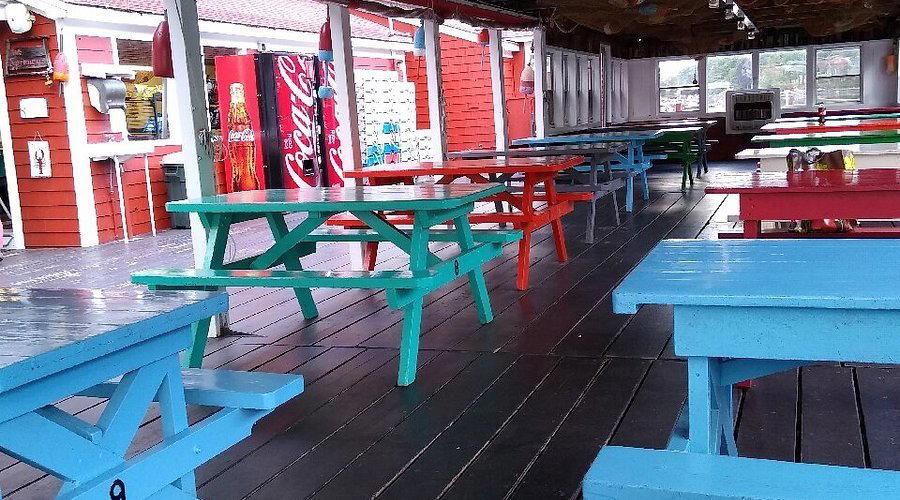
Brightly colored picnic tables in open-air and semi-enclosed areas along the creek, creating a relaxed, nautical atmosphere with scenic water views and casual picnic-style dining.