Cellini
Cellini occupies a considered position on East 54th Street in Midtown Manhattan, where the Italian dining tradition meets the quieter register of New York's corporate fine-dining corridor. The room draws a clientele that values consistency and discretion over spectacle, placing it in a comparable set defined more by repeat custom than by awards-season noise. For visitors tracking the city's Italian table, it belongs on the shortlist alongside the neighbourhood's other long-standing addresses.
Pearl is the En Primeur Club membership app — saves, bookings, and concierge access live there. Same editors, same standards.
- Address
- 65 E 54th St, New York, NY 10022
- Phone
- +12127511555
- Website
- cellinirestaurant.com
- Directions
- Get directions
 Saves & bookings on Pearl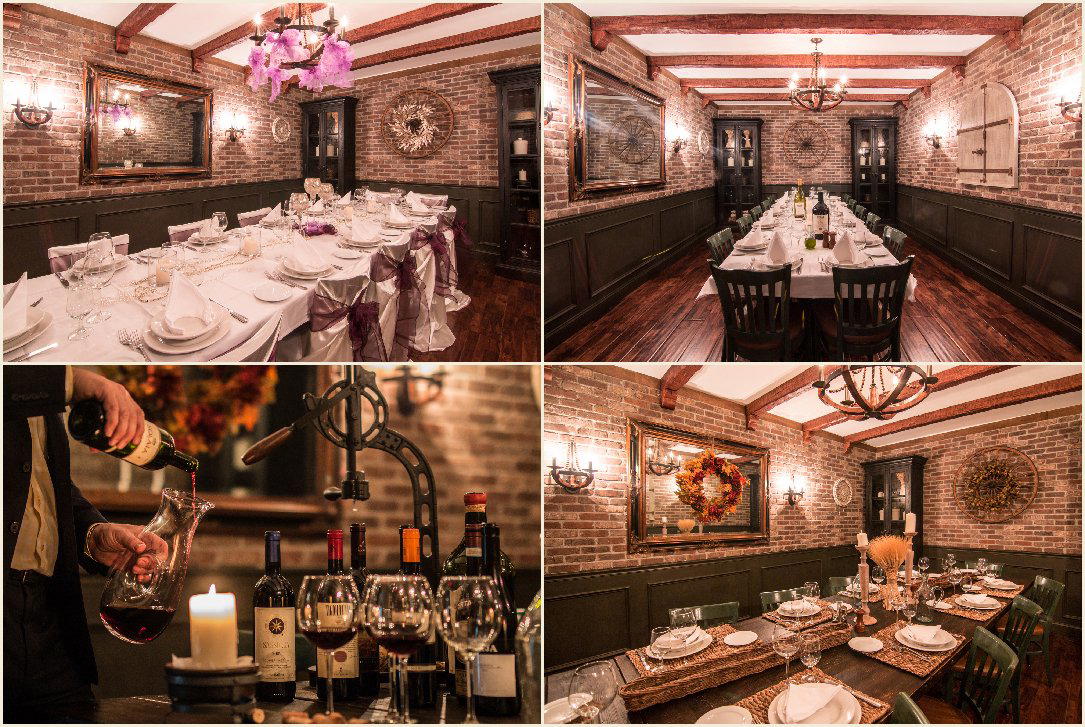
A Particular Kind of Midtown Quiet
East 54th Street between Park and Lexington operates on a different frequency from the theatrical fine-dining corridors of the West Village or the tasting-menu circuit around Eleven Madison Park. The block is corporate in posture but serious about the table, and Cellini, at number 65, fits that register precisely. This is Italian dining in a key that Midtown has historically done well: composed, unhurried, built for the two-hour lunch and the returning client rather than the first-visit Instagram moment. The room asks nothing dramatic of you, which in a city that increasingly frames every dining experience as an event is its own kind of statement.
Midtown's Italian dining tradition runs deep. The neighbourhood gave New York some of its most durable addresses across the twentieth century, houses where the focus stayed on the plate and the pacing rather than the concept. Cellini sits inside that lineage. Its address on East 54th puts it within a few blocks of where several of those defining rooms operated, and the clientele it draws, regulars who know what they want and return for it, reflects that accumulated local culture. Compare that with the $$$$ omakase counters at Masa or the contemporary French architecture of Per Se, and Cellini occupies a clearly different position: less about revelation, more about reliable depth.
The Atmosphere as the Argument
Italian dining rooms at this tier in Manhattan tend to work through accumulation: the weight of white linen, the low-grade hum of a room that knows itself, the particular smell of butter and sage that arrives before the first course does. These are sensory environments built over years rather than designed in a single renovation cycle. Rooms like this one earn their atmosphere through repetition, the same lunch service run to a consistent standard across years rather than months.
The sound profile matters here. This is not the ambient roar of a downtown brasserie or the pointed silence of a counter restaurant. Midtown Italian at this level runs at a conversational register, the kind of room where you can hear the person across the table without effort, where business gets conducted and the meal serves as the setting for it. That is not a compromise. It is the point. The dining culture of the city's premium Italian corridor has always understood that some rooms are not theatre but context, and that context has its own discipline to maintain.
Seasonality in rooms of this kind tends to express itself through the menu rather than through dramatic interior changes: the arrival of white truffle in autumn, the shift toward lighter preparations in summer, the return of braised dishes as temperatures drop. These are signals that a kitchen is paying attention, and for regulars, they mark the calendar as reliably as anything else in the city. It is the kind of temporal intelligence that distinguishes a dining room with genuine longevity from one chasing the season on social media.
Where Cellini Sits in the New York Italian Picture
New York's Italian fine-dining field has reorganised considerably over the past two decades. The older generation of white-tablecloth houses has thinned, with closures outnumbering openings at that tier, while a newer wave of osteria-format and regional-Italian concepts has expanded the lower and middle price bands. The upper bracket, rooms that take the Italian table seriously as a formal proposition, is smaller than it was. Cellini operates in that contracting upper register, which means the expectation of consistency is correspondingly higher.
For comparison, Le Bernardin and Atomix represent the city's most decorated rooms at the $$$$ tier, each with sustained critical attention. Cellini does not compete on that axis. Its argument is different: accumulated trust, repeat clientele, and the particular reliability that a room builds when it is not trying to surprise you every service. Across the country, that model appears in different registers, from Frasca Food and Wine in Boulder, which has built a loyal following around Northern Italian rigour, to The Inn at Little Washington, where decades of service have produced a house style that resists easy categorisation. In Italy, the deepest version of that tradition runs through rooms like Dal Pescatore in Runate, where multiple generations of a family have refined a single vision across half a century.
The Italian fine-dining rooms that have lasted in New York tend to share one quality: they know their customer and they do not attempt to convert them. This is not conservatism for its own sake. It is the practical discipline of a room that has worked out what it does well and has decided that doing it consistently is more valuable than chasing what is new. For a visitor working through the city's restaurant map, that consistency is information. It tells you what kind of evening is on offer before you sit down.
Italian Discipline in a City That Moves Fast
The pressure on any New York dining room to update, refresh, and reposition is constant. The city's media cycle is fast and its attention is distributed across hundreds of serious addresses at any given moment. Rooms that operate outside the awards-season conversation, not chasing Michelin stars or 50 Best placements, occupy a structural position that requires a different kind of confidence. They must earn their place through service quality and product consistency rather than through external validation.
That pattern is visible in other American cities too. Emeril's in New Orleans built durable recognition through consistency rather than reinvention. Providence in Los Angeles has maintained its position through sustained seafood sourcing standards. Smyth in Chicago works a different angle, with a tasting menu format that earns Michelin attention, but the underlying discipline, knowing your format and executing it at a high level, is shared. At the farm-driven extreme, Blue Hill at Stone Barns and SingleThread in Healdsburg show what total commitment to a governing idea produces. Lazy Bear in San Francisco and Addison in San Diego each demonstrate that rooms outside the obvious media capital can sustain serious reputations. And at the furthest edge of ingredient-driven Italian thinking, Atelier Moessmer Norbert Niederkofler in Brunico shows how far the tradition can be pushed when a single idea governs every decision.
Cellini makes no such extreme claim. Its proposition is quieter and, for the right visitor, more immediately useful: a serious Italian room in Midtown Manhattan that has decided what it is and stays there.
Planning Your Visit
- Address: 65 East 54th Street, New York, NY 10022
- Neighbourhood: Midtown East, between Park and Lexington Avenues
- Closest transit: Lexington Av/53 St (E, M) and 51 St (6) subway stations are within two blocks
- Price tier: Fine-dining range; expect Midtown Manhattan pricing consistent with the category
- Dress code: smart casual is the observed norm for the room and clientele
- Leading for: Lunch meetings, returning visitors who want reliable Italian at a formal register
Style and Standing
Comparable venues nearby, for context on price, style, and recognition.
| Venue | Cuisine | Price | Notes |
|---|---|---|---|
| CelliniThis venue — the venue you are viewing | Traditional Italian | $$$ | Not listed |
| DeGrezia | Northern Italian | $$$ | East Midtown-Turtle Bay |
| DaMarino NYC | Traditional Italian | $$$ | Midtown-Times Square |
| Orso | Regional Italian Trattoria | $$$ | Hell's Kitchen |
| L'incontro by Rocco | Traditional Italian Trattoria | $$$ | Upper East Side-Yorkville |
| Gjelina | Coastal Italian | $$$ | Greenwich Village |
Continue exploring
More in New York City
Restaurants in New York City
Browse all →
Bars in New York City
Browse all →

Hotels in New York City
Browse all →






At a Glance
- Romantic
- Cozy
- Elegant
- Classic
- Intimate
- Sophisticated
- Date Night
- Business Dinner
- Special Occasion
- Private Dining
- Extensive Wine List
Current opening hours
- Monday
- 12–3 PM, 5–10 PM
- Tuesday
- 12–3 PM, 5–10 PM
- Wednesday
- 12–3 PM, 5–10 PM
- Thursday
- 12–3 PM, 5–10 PM
- Friday
- 12–3 PM, 5–10 PM
- Saturday
- 5–10 PM
- Sunday
- 5–9 PM
Hours can change for holidays and private events. Last verified .
Warm lighting, white tablecloths, and tasteful Tuscan decor create a quiet, refined atmosphere reminiscent of a classic Italian home, ideal for intimate conversations.