
Casa PASCALE brings Sri Lankan curry into Kashiwa’s suburban dining conversation, a category often overshadowed in Japan by ramen, tonkatsu and French-leaning tasting menus. Its selection for Tabelog 100 - Asian cuisine / Ethnic cuisine - EAST - 2024 gives the room a clear credential, while the cooking sits in an accessible price tier rather than a formal destination-restaurant register.
Pearl is the En Primeur Club membership app — saves, bookings, and concierge access live there. Same editors, same standards.
- Address
- 3 Chome-3-8 Fujigokoro, Kashiwa, Chiba 277-0034, Japan
- Phone
- +81 70-1323-3453
- Website
- m.facebook.com
 Saves & bookings on Pearl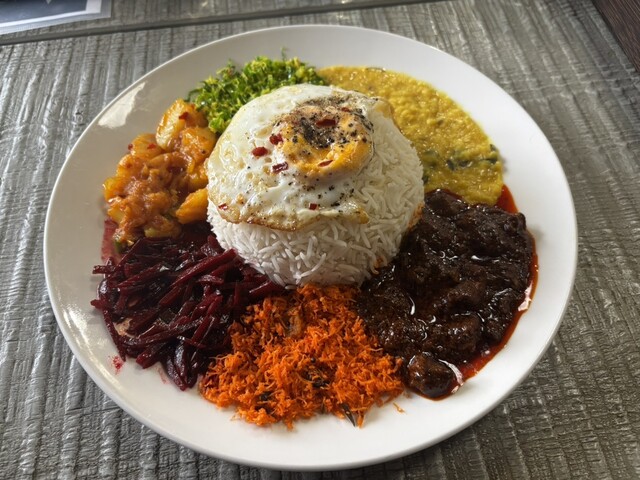
Fujigokoro is not the version of Kashiwa that appears first in travel shorthand. The approach is residential, low-rise and practical, closer to daily Chiba life than to a dining district built for visitors. That setting matters for Sri Lankan cooking in Japan: the strongest addresses in this category often work outside the polished urban circuits, relying on regulars, spice literacy and repeat traffic rather than spectacle.
Casa PASCALE belongs to that quieter map. The category is listed as Sri Lankan and curry, but the broader significance is cultural rather than merely taxonomic. Sri Lankan food in Japan has built a following around rice-and-curry formats, layered condiments, coconut, chilli, lentils, pickles and regional variation. It rewards diners who understand contrast: heat against acidity, softness against crunch, fragrance against bitterness. In a country where curry is often domesticated into roux-based comfort food, Sri Lankan curry offers a sharper, more modular grammar.
Sri Lankan curry, read through a Chiba neighbourhood lens
Kashiwa’s restaurant culture is not one thing. It absorbs Tokyo commuter rhythms, Chiba suburban habits and the appetite of neighbourhood diners who want value without ceremony. That is why a Sri Lankan curry specialist here carries a different meaning from a polished Tokyo import. The point is not to mimic a metropolitan ethnic-dining template; it is to make a spice-driven cuisine part of a local routine.
The award signal helps clarify the level. Selection for Tabelog 100 - Asian cuisine / Ethnic cuisine - EAST - 2024 places Casa PASCALE inside a regional group judged specifically against Asian and ethnic-cuisine peers, not against kaiseki counters or French dining rooms. That distinction is useful. It tells the reader to evaluate the restaurant through category fluency: balance of curry, rice, accompaniments, heat, pacing and everyday generosity, rather than through luxury cues.
The listed score of 3.53 reinforces the same reading. On Tabelog, particularly outside central Tokyo, a mid-3 score paired with a Hyakumeiten selection can indicate a specialist with category credibility rather than a broad mainstream crowd-pleaser. This is a diner’s signal, not a trophy-room signal. For travellers building a Kashiwa itinerary, it points toward a meal that explains how far Japan’s curry culture has expanded beyond its default forms.
How it compares with Kashiwa's stronger local tables
Useful comparison in Kashiwa is not with luxury dining alone. Bunsai Ka operates in a far higher spend bracket, while Mendokoro Nishio and Chuka Soba Sakaeda sit in the lower-priced noodle economy that defines much of suburban Japanese eating. Casa PASCALE occupies a middle lane: accessible enough for repeat use, yet specific enough to justify a detour for diners tracking Sri Lankan cooking in eastern Japan.
That middle lane is important. Ethnic-cuisine awards in Japan often reward restaurants that do not fit the usual hierarchy of formality. A Sri Lankan curry house can carry serious culinary value without linen, elaborate service choreography or a chef-led mythology. The evidence is in format discipline and category recognition: curry as a complete plate, not as a side note to a pan-Asian menu.
There is also a travel lesson here. Kashiwa rewards readers who look beyond the station-area shorthand. The city’s dining range includes bakeries, noodles, Japanese cooking and specialist curry, and a useful plan should treat the area as a network rather than a single destination meal. For that wider view, see Our full Kashiwa restaurants guide, with nearby editorial context across Our full Kashiwa hotels guide, Our full Kashiwa bars guide, Our full Kashiwa wineries guide and Our full Kashiwa experiences guide.
Where the meal fits in a Japan curry itinerary
Japan’s curry map is broad enough now that “curry” alone says too little. Sapporo has its soup-curry culture; Tokyo has spice-curry specialists and South Asian canteens; suburban Chiba has smaller restaurants that build loyalty through repetition. The restaurant is useful because it sits in the Sri Lankan branch of that map, where the meal is less about a single sauce over rice and more about assembling a plate through contrasts.
Readers comparing the Kashiwa scene can place it alongside Anbai, Bunsai Ka, 66, AYUBOWAN and Bakery Feve to see how different categories shape local eating. For broader cross-Japan contrast, the curry conversation extends to [Curry Senmon Ten] Maruyama Kyoju. in Sapporo, while Asian cooking in Japan can be read through addresses such as (Shoku) Vietnam in Kawasaki. The comparison is not about sameness; it shows how imported and adapted foodways settle into different Japanese cities.
For travellers linking Kashiwa with a larger Japan route, context can widen further: -Grilled beef Sukiyaki- KAMAKURA TANUKIAN 鎌倉 たぬき庵 in Kamakura represents a more Japanese meat-focused tradition. 鮪と炭火焼き うお炭 秋葉原店 in Tokyo points toward tuna and charcoal cooking.cafe in Osaka sits in a cafe register and.know in Kumamoto adds another regional lens. Even outside Japan, casual-format specificity matters at places like Jōdo Saké Bar in Los Angeles and Onigiri Time in Pasadena, where Japanese food culture is translated through different urban habits.
The editorial verdict is simple: this is a category-led stop, not a luxury detour. Go for Sri Lankan curry’s place within Japan’s wider spice culture, and for the way a residential Kashiwa address can carry credible recognition without the theatre of a central-city dining room. The Tabelog 100 selection gives it the external marker; the stronger reason to care is what that marker reveals about where serious ethnic cooking now lives in suburban Japan.
Cost Snapshot
Comparable venues by cuisine and price in the same metro.
| Venue | Cuisine | Price | Notes |
|---|---|---|---|
| Casa PASCALEThis venue — the venue you are viewing | Sakasai, Sri Lankan curry restaurant | $ | Not listed |
| Chuka Oshima | Kashiwa, Casual Indian Curry House | $ | Not listed |
| 66 | Kashiwa, American Burgers | $$$ | Not listed |
| Curry no Mise Bombay Honten | Kashiwa, Japanese curry house | $ | Not listed |
| Tonkatsu Hisago | Kashiwa, Tonkatsu & Japanese Curry | $$ | Not listed |
| Takeyabu Kashiwa honten | Not listed | $$$ | Kashiwa, Traditional handmade soba & tempura |
Recognition history
Dated appearances from independent guides and award organizations, with the underlying list record or original source where available.
Tabelog 100 #65 · No. 65
Tabelog · Tabelog 100 - Asian cuisine / Ethnic cuisine - EAST - 2024









At a Glance
- Cozy
- Casual Hangout
- Family
- Group Dining
- Solo
- Standalone
Current opening hours
- Monday
- 11:30 AM–3 PM, 5:30–10:30 PM
- Tuesday
- Closed
- Wednesday
- 11:30 AM–3 PM, 5:30–10:30 PM
- Thursday
- 11:30 AM–3 PM, 5:30–10:30 PM
- Friday
- 11:30 AM–3 PM, 5:30–10:30 PM
- Saturday
- 11:30 AM–3 PM, 5:30–10:30 PM
- Sunday
- 12–10:30 PM
Hours can change for holidays and private events. Last verified .
Casual, homey curry house atmosphere with a relaxed, non‑smoking dining room that feels like a local low-profile address near Sakasai Station.