
On Rue Censier in the 5th arrondissement, Carl Marletti operates within a Parisian pâtisserie tradition that prizes technical discipline over novelty. The address has become a reference point for serious pastry in the Left Bank, sitting in a neighbourhood where cafés and fromageries set a high bar for everyday excellence. For visitors moving between the city's dining institutions, it offers a grounded counterpoint to the grand-tasting-menu circuit.
Pearl is the En Primeur Club membership app — saves, bookings, and concierge access live there. Same editors, same standards.
- Address
- 51 Rue Censier, 75005 Paris, France
- Phone
- +33143316812
- Website
- carlmarletti.com
- Directions
- Get directions
 Saves & bookings on Pearl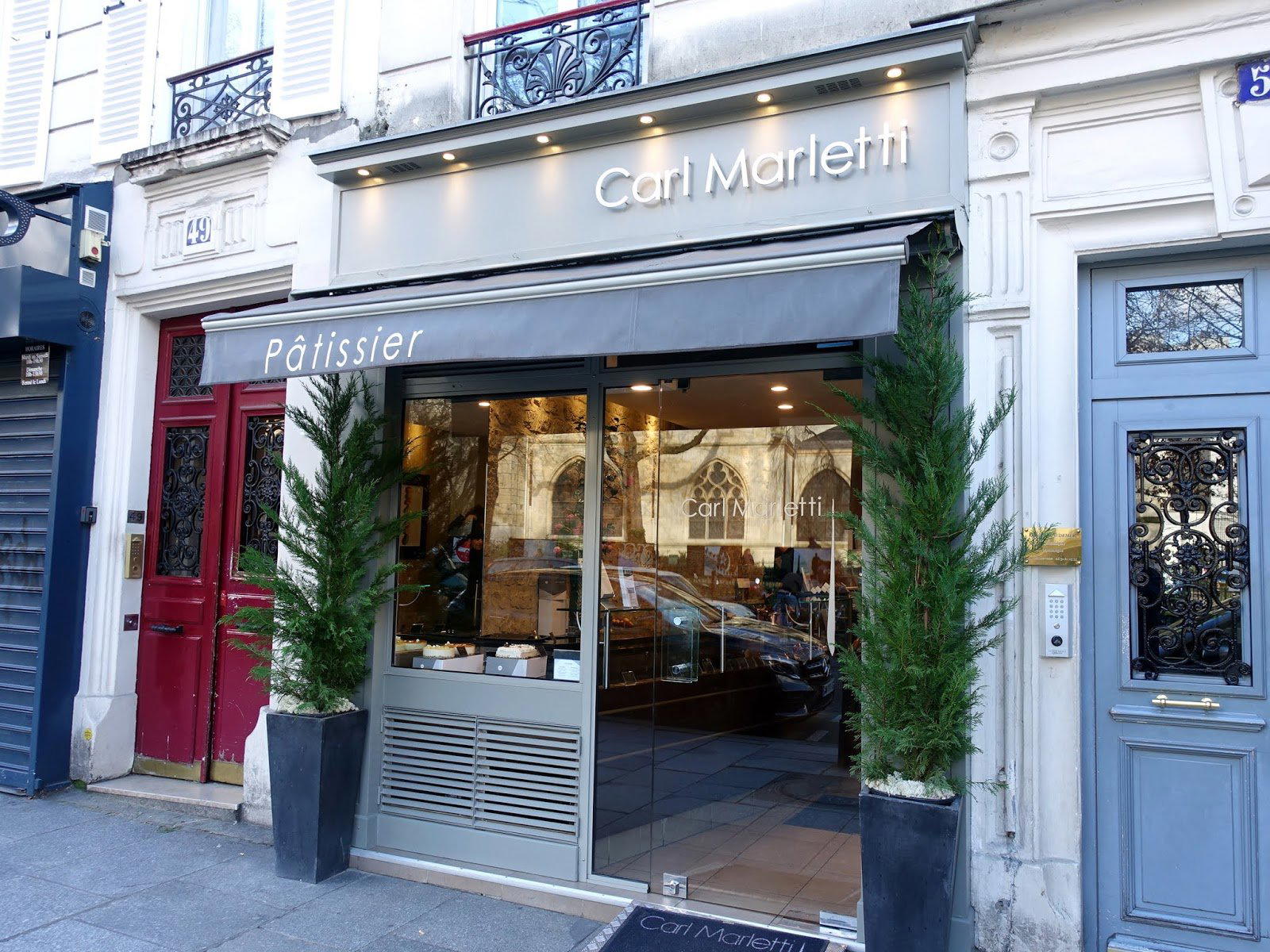
Rue Censier and the Grammar of the Parisian Pâtisserie
There is a particular stillness to the streets around Rue Censier on a weekday morning, before the market crowd at Place Monge has fully dispersed. The 5th arrondissement does not perform its food culture; it assumes it. Fromageries, boulangeries, and specialist épiceries occupy shopfronts with no particular fanfare, and the clientele moves with the confidence of people who have been buying their cheese and bread from the same address for years. Carl Marletti at number 51 fits that register precisely. The shop presents its pastries without elaborate window theatre. What you see is pastry, presented with the kind of compositional seriousness that signals craft over spectacle.
That restraint is itself a statement about where serious Parisian pâtisserie has been heading. The category has split, over the past two decades, between high-concept sugar showrooms in the 1st and 8th arrondissements, where the visual language borrows from couture, and a smaller cohort of neighbourhood-anchored addresses that compete on taste and texture rather than theatre. Carl Marletti belongs to the latter group. The Left Bank location places it in a catchment of students, academics, and long-settled residents who apply the same critical attention to a mille-feuille that their counterparts on the Right Bank apply to a wine list.
The French Pastry Tradition This Address Represents
To understand Carl Marletti in context, it helps to understand what the Parisian pâtisserie actually is as an institution. It is not a bakery. The distinction matters. A boulangerie's primary obligation is bread; pastry is secondary. A pâtisserie's entire productive logic revolves around precision confectionery: the management of sugar saturation, fat content, lamination geometry, and the kind of temperature-sensitive assembly work that makes a well-executed millefeuille structurally coherent right up to the moment the fork enters it. These are technical disciplines with centuries of codified practice behind them, and they are taught through apprenticeship and competition circuits that have produced a recognisable professional culture across France.
That culture has international reach. French pastry training underpins the dessert programs at addresses as geographically distant as Le Bernardin in New York City and informs the rigour that Michelin-starred kitchens from Mirazur in Menton to Flocons de Sel in Megève apply to their sweet courses. The standalone pâtisserie, though, operates under different pressures: no tasting menu to subsidise the pastry section, no brigade of thirty to distribute the labour. Every éclair, tart shell, and choux sphere that leaves the counter at a shop like Carl Marletti is the product of a smaller operation held to the same standard.
In Paris specifically, that standard is set against formidable competition. The city's pastry tier includes maisons with century-long histories and global retail footprints. That a neighbourhood address in the 5th arrondissement holds its position in serious food conversations alongside those institutions says something meaningful about the quality threshold being maintained.
The 5th Arrondissement as Culinary Geography
The Latin Quarter and its immediate surroundings have a complicated relationship with destination dining. The area draws enough tourist traffic that undiscriminating operations can survive without meeting local expectations. But the residential core around Rue Mouffetard, Place de la Contrescarpe, and the streets south toward the Jardin des Plantes runs on a different logic. These are blocks where regulars are genuinely regular, where quality failures are noted and where a patisserie that coasts will lose its neighbourhood standing quickly. Rue Censier sits in that zone.
The 5th is not where you come for the tasting-menu tier that defines addresses like L'Ambroisie or Le Cinq. Nor does it share the creative-contemporary register of Alléno Paris au Pavillon Ledoyen or the Franco-Japanese precision of Kei. What the neighbourhood offers is something different: a food culture built on daily repetition and consistent craft, where the measure of a patisserie is not a single extraordinary visit but the reliability of the hundredth croissant or the twentieth tart. That is the comparable set the restaurant operates within.
Visitors building a Paris itinerary around the grand rooms, whether that means Arpège or any of the three-star tables along the established circuit, will find that the 5th offers useful ballast. An afternoon on Rue Censier before or after the Jardin des Plantes is a different register of Parisian food culture, and deliberately so.
Carl Marletti in the Wider French Pastry Conversation
France's serious food culture does not concentrate exclusively in Paris. The multi-generation temple restaurants, the kind represented by Paul Bocuse - L'Auberge du Pont de Collonges, Troisgros, Bras, Auberge de l'Ill, Les Prés d'Eugénie, Georges Blanc, and Auberge du Vieux Puits, among others, have shaped a national culinary identity in which pastry is not an afterthought but a discipline with equal standing to sauce work or butchery. The standalone pâtisserie is, in some ways, the purest expression of that: a business whose entire proposition rests on the pastry section, unpadded by a menu of composed plates.
The restaurant's address on Rue Censier makes it part of that longer tradition expressed at neighbourhood scale. Its comparable set is not the grand provincial maisons or the destination restaurant tables, but it draws on the same professional grammar. You can see that at La Table du Castellet or Lazy Bear in how French pastry methodology travels: the techniques are portable; what stays rooted is the daily relationship with a particular neighbourhood's expectations. For more on the Paris food scene, see our full Paris restaurants guide.
Planning Your Visit
The restaurant is a retail pâtisserie, which means the operating model differs entirely from the reservation-led restaurants that dominate premium Paris dining coverage. Stock moves through the day and popular pieces sell out; arriving in the late morning gives access to the widest selection. The address at 51 Rue Censier in the 5th arrondissement is walkable from the Censier-Daubenton metro stop on Line 7. Its walk-in format means no reservations; the dress code is casual.
Address: 51 Rue Censier, 75005 Paris, France.
In Context: Similar Options
Comparable venues nearby, for context on price, style, and recognition.
| Venue | Cuisine | Price | Notes |
|---|---|---|---|
| Carl MarlettiThis venue — the venue you are viewing | Classic French Patisserie | $$$ | Not listed |
| Brasserie de l'Isle Saint-Louis | Classic French Brasserie with Alsatian Specialties | $$$ | Ile Saint-Louis |
| Huguette | French Seafood Bistro | $$$ | Saint-Germain-des-Prés |
| La Table des Copains | Traditional French Bistro | $$$ | Montparnasse |
| Le Dôme | Classic French Seafood Brasserie | $$$ | Montparnasse |
| Le Square Trousseau | Classic French Bistro | $$$ | Bastille |
Recognition history
Dated appearances from independent guides and award organizations, with the underlying list record or original source where available.
AD France 2026 AD France 28 Best Pâtisseries in Paris
AD France
Continue exploring
More in Paris
Restaurants in Paris
Browse all →
Bars in Paris
Browse all →
Hotels in Paris
Browse all →



At a Glance
- Classic
- Cozy
- Casual Hangout
- Standalone
Current opening hours
- Monday
- Closed
- Tuesday
- 10 AM–7 PM
- Wednesday
- 10 AM–7 PM
- Thursday
- 10 AM–7 PM
- Friday
- 10 AM–7 PM
- Saturday
- 10 AM–7 PM
- Sunday
- 10 AM–1:30 PM
Hours can change for holidays and private events. Last verified .
Cozy boutique atmosphere with refined pastry displays evoking classic French patisserie charm.