Čarda kod Baranjca sits on Biljska cesta in Podravlje, on the outskirts of Osijek, and operates in the tradition of the Slavonian čarda: a riverine or rural tavern format with deep roots in Baranja regional cooking. For visitors moving through eastern Croatia's agricultural heartland, it represents the more grounded, locality-specific end of the Osijek dining spectrum.
Pearl is the En Primeur Club membership app — saves, bookings, and concierge access live there. Same editors, same standards.
- Address
- Biljska cesta 54, 31000, Podravlje, Croatia
- Phone
- +385915011722
- Website
- cardakodbaranjca.eatbu.hr
- Directions
- Get directions
 Saves & bookings on Pearl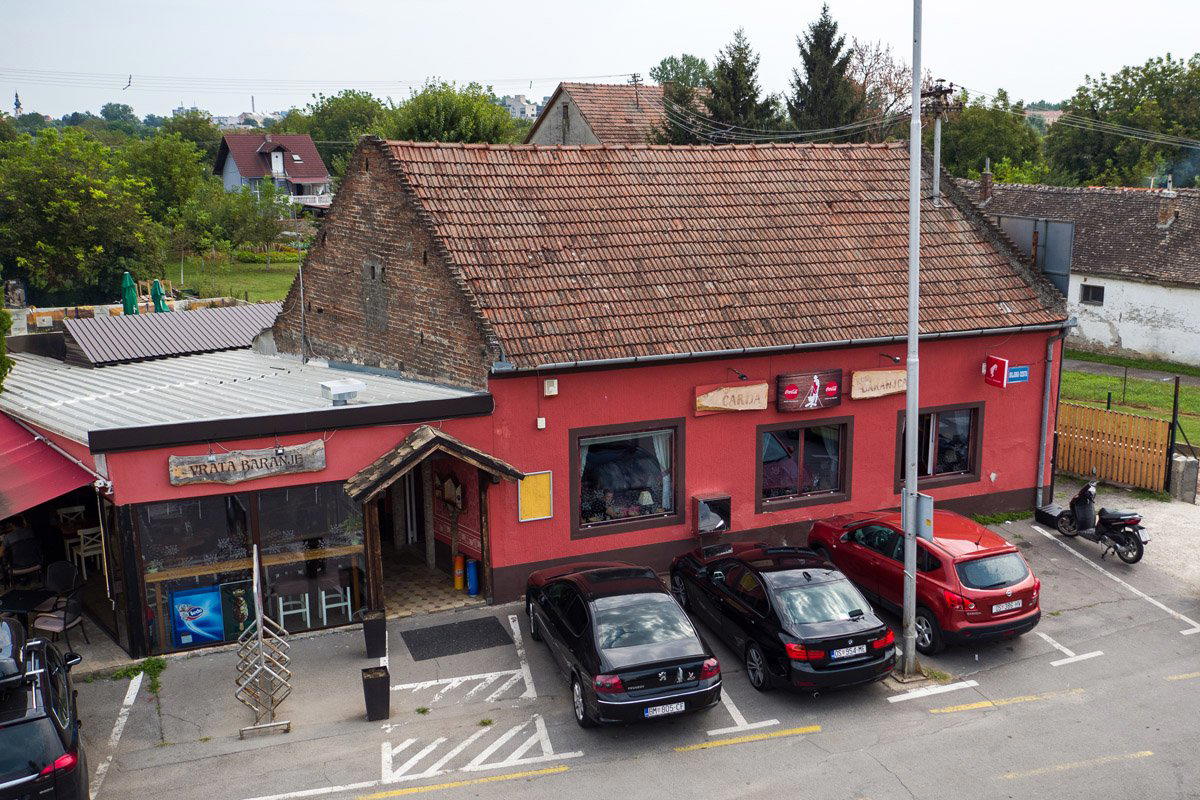
Baranja on a Plate: The Čarda Tradition in Eastern Croatia
The čarda is one of the more legible dining formats in the Croatian east. Derived from the Hungarian csárda tradition that spread across the Pannonian plain, these rural taverns historically occupied land near rivers, marshes, or agricultural estates, serving the kind of food shaped entirely by what the surrounding terrain produced. In Slavonia and Baranja specifically, that meant freshwater fish pulled from the Drava and Danube tributaries, paprika-heavy stews, game from the Kopački Rit wetlands, and air-dried meats cured in the dry continental winds that define the region's winters. The format survived industrialisation and the socialist period largely by retreating into the countryside, and in Osijek's outlying zones, several čarda establishments have preserved the format with varying degrees of fidelity to its origins.
Čarda kod Baranjca on Biljska cesta in Podravlje occupies that outer-ring position: physically removed from Osijek's Tvrđa old town and city-centre dining corridor, and oriented instead toward the Baranja hinterland that gives it its name. The address alone signals what kind of restaurant this is. You are not arriving at a converted urban building or a design-led room. The čarda as a type sits in counterpoint to the more polished end of the Osijek scene, venues like Franz Koch or Bijelo-plavi, which pursue a different register entirely.
What the Baranja Region Produces
Understanding what a čarda in this part of Croatia serves requires a brief geography lesson. Baranja is the triangular territory north of Osijek, wedged between the Drava and Danube rivers and sharing a border with Hungary. It is flat, fertile, and historically multicultural, with Hungarian, Croatian, and German agricultural traditions layered over centuries. The food that emerged from this overlap is assertive: paprika appears in almost everything, fish broths are reduced to a depth that takes hours to achieve, and the preference for fat and smoke reflects a climate where winters are serious and caloric density was a practical necessity, not an aesthetic choice.
The regional dish most associated with this territory is fiš paprikaš, a carp or catfish stew cooked in a copper pot over an open fire, seasoned with quantities of sweet and hot paprika that would alarm a kitchen further west. In the čarda context, this dish is not plated with any modernist restraint; it arrives in the pot it was cooked in, with bread for the broth, and it is treated as a communal rather than individual proposition. Alongside this, kulen, the protected Slavonian salami spiced with paprika and garlic and cured through the winter months, appears on most traditional tables in the region. Croatia's broader fine-dining circuit, from Pelegrini in Sibenik to Agli Amici Rovinj on the Istrian coast, operates in a parallel universe from this tradition, one defined by Adriatic produce and Mediterranean technique. The čarda occupies the continental interior's equivalent position: rooted, calorie-dense, and entirely comfortable with that identity.
Where Čarda kod Baranjca Sits in the Osijek Dining Pattern
Osijek's restaurant scene divides fairly cleanly between the city-centre options along and near the Drava riverbank and the suburban or rural establishments that serve a more local, less tourist-facing clientele. The inner ring includes Karaka, Kod Javora, and Lipov hlad, all of which operate within reach of the city's walkable core. Čarda kod Baranjca, addressed to Podravlje and oriented toward Biljska cesta, belongs to the outer ring: the kind of place where the clientele arrives by car, where family tables of eight are the norm on weekends, and where the menu reflects the surrounding agricultural economy rather than any attempt to position the venue for external recognition.
This is not a criticism. The čarda format's integrity depends precisely on its separation from urban dining conventions. When a traveller visiting Croatia has already encountered the Dalmatian and Istrian coasts, landmarks like LD Restaurant in Korčula, Boskinac in Novalja, or Restaurant 360 in Dubrovnik, coming to eastern Croatia and sitting in a čarda produces a genuinely different understanding of what Croatian food actually is. The country's culinary identity is not coastal or Mediterranean by default; the continental interior has an older, heavier, and in some ways more distinctly Central European food culture, and the čarda is the format that carries it most directly.
The Regional Dining Tradition in Broader Croatian Context
Croatian fine dining has increasingly sought international validation, with venues such as Nebo by Deni Srdoč in Rijeka, Korak in Jastrebarsko, Alfred Keller in Mali Lošinj, Dubravkin Put in Zagreb, and Krug in Split representing the country's more internationally visible dining tier. Against that backdrop, the čarda operates as a deliberately vernacular counterweight. It does not seek Michelin recognition or position itself against restaurants like Le Bernardin in New York City or Lazy Bear in San Francisco. Its reference points are the agricultural calendar, local producers, and a cooking tradition that predates modern restaurant culture by centuries.
For the reader planning a trip through Slavonia, the practical question is not whether a čarda like this competes with Croatia's fine-dining circuit; it does not, and that is beside the point. The question is whether it represents its own tradition faithfully. The address in Podravlje, the Baranja reference in the name, and the format type all suggest a venue whose identity is tightly tied to its region. That regional specificity is the reason to seek it out. For a broader orientation to the Osijek scene before visiting, the full Osijek restaurants guide provides context on where this kind of establishment fits within the city's overall dining range.
Planning Your Visit
Reaching Čarda kod Baranjca on Biljska cesta 54 in Podravlje requires a car or taxi from Osijek's centre, as the Podravlje address sits outside walking or cycling distance from the city's main accommodation corridor. The čarda format in this region tends toward long, unhurried meals, particularly on weekend afternoons when the fish stew format rewards patience, and booking ahead for larger groups is advisable in the warmer months when outdoor terrace seating fills with local families. The restaurant is recommended for reservations, and the opening hours are Monday closed; Tuesday through Thursday 10 AM to 8 PM, Friday and Saturday 10 AM to 10 PM, and Sunday 10 AM to 5 PM.
Booking and Cost Snapshot
Comparable venues nearby, for context on price, style, and recognition.
| Venue | Cuisine | Price | Notes |
|---|---|---|---|
| Čarda kod BaranjcaThis venue — the venue you are viewing | Osijek, Traditional Croatian Fish & Meat | $$ | Not listed |
| Merlon | Tvrđa, Modern European Pub with Burgers | $$ | Not listed |
| Pépé pizza place | Osijek center, Neapolitan Pizza | $$ | Not listed |
| Bijelo-plavi | Not listed | $$ | Osijek center, Traditional Croatian Barbecue |
| Karaka | Osijek, Croatian Grill & Pizza | $$ | Not listed |
| Lipov hlad | Not listed | $ | near KBC Osijek, Croatian Pizza and European |

At a Glance
- Rustic
- Cozy
- Classic
- Group Dining
- Casual Hangout
- Family
- Waterfront
- Standalone
- Local Sourcing
- Waterfront
Current opening hours
- Monday
- Closed
- Tuesday
- 10 AM–8 PM
- Wednesday
- 10 AM–8 PM
- Thursday
- 10 AM–8 PM
- Friday
- 10 AM–10 PM
- Saturday
- 10 AM–10 PM
- Sunday
- 10 AM–5 PM
Hours can change for holidays and private events. Last verified .
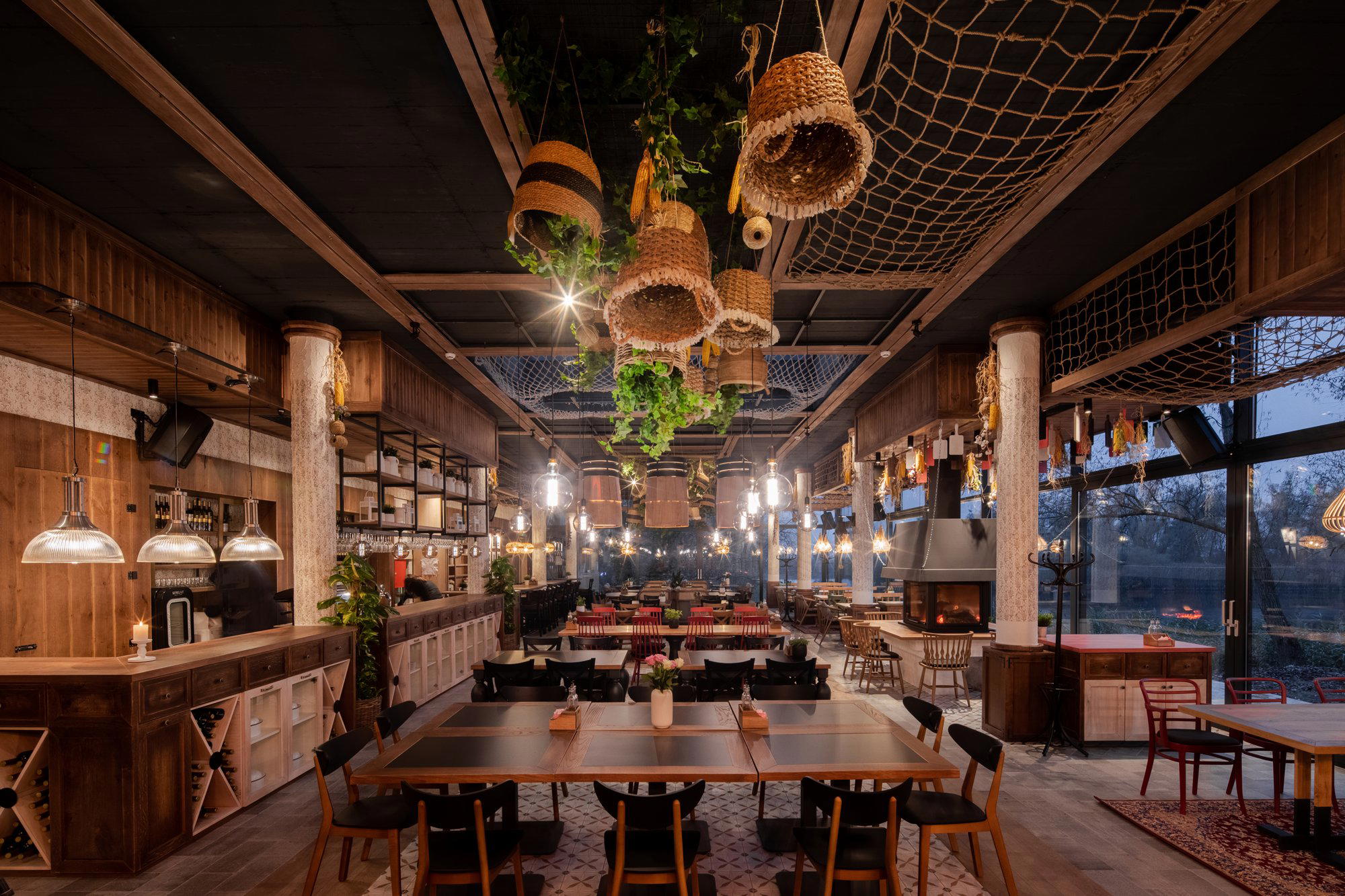
Warm and welcoming rural atmosphere with traditional Slavonian charm, located near the Drava River with easy accessibility from Osijek.