
Carcasse brings Hendrik Dierendonck's artisan butchery philosophy to Knokke's Oosthoekplein, with a refrigerated aging cabinet and open kitchen at its core. The menu centres on rare Belgian breeds — Oedslach ribeye, Belgian red cattle tongue, Menapii pork — prepared with a precision that treats sourcing as the main event. Sharing is encouraged, which means the full range of the menu is genuinely accessible in a single sitting.
Pearl is the En Primeur Club membership app — saves, bookings, and concierge access live there. Same editors, same standards.
- Address
- Oosthoekplein 1
- Phone
- +32 50 89 76 76
- Website
- carcasse.be
- Directions
- Get directions
 Saves & bookings on Pearl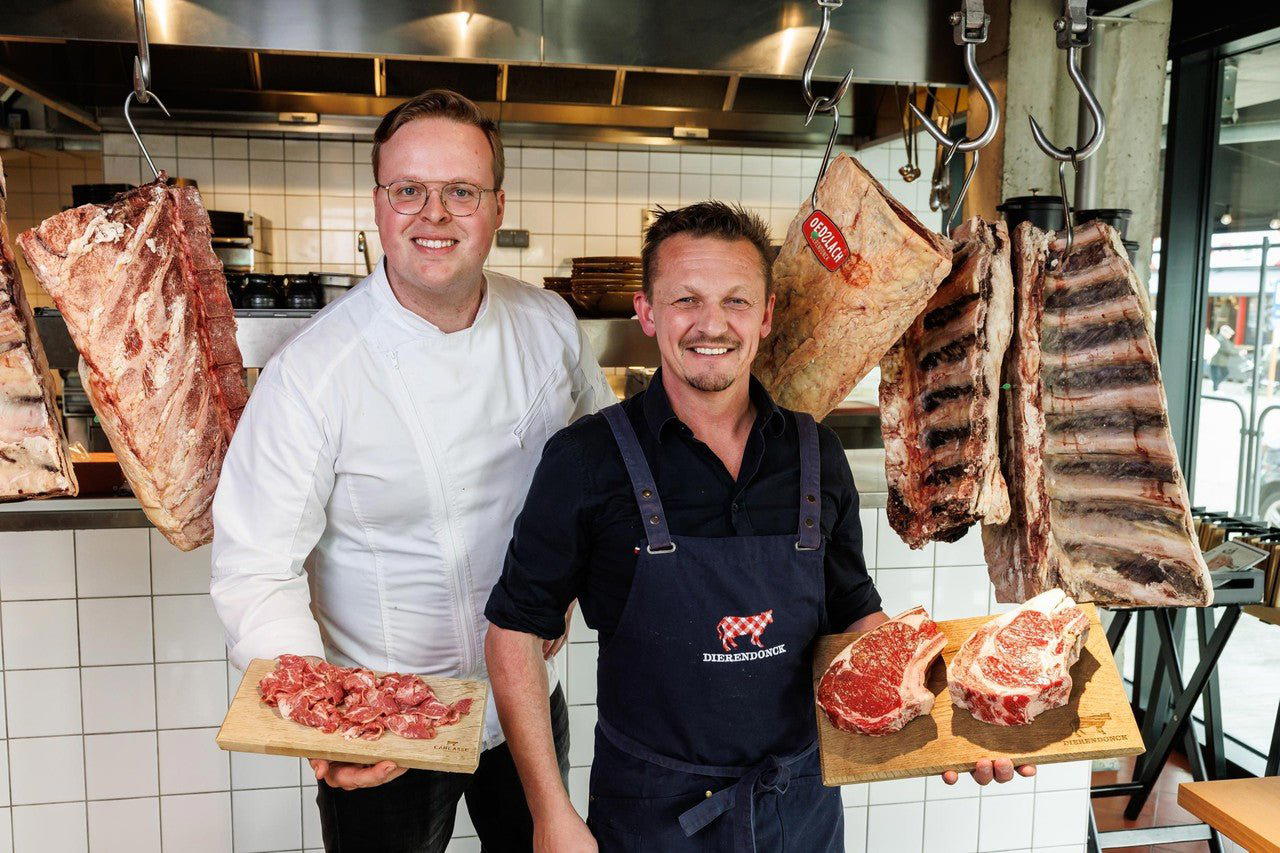
Where the Meat Comes From Is the Whole Point
Walk into Carcasse on Knokke's Oosthoekplein and the room's hierarchy is immediately clear. Before the tables, before the open kitchen, your eye settles on two focal points: a refrigerated counter displaying cuts with the calm authority of a serious wine cellar, and a massive glazed aging cabinet that functions less as a piece of kitchen equipment and more as a declaration of intent. In Belgian fine dining, sourcing credentials are often gestured at through a line on the menu. Here, they are architectural.
This is the first offshoot of Hendrik Dierendonck's butchery operation, and it carries that lineage into the dining room in a way that shapes every decision about what ends up on the plate. Dierendonck is one of Belgium's most respected artisan butchers, with a reputation built on rare native breeds and long-cycle ageing rather than volume throughput. That background explains why Carcasse reads differently from a conventional steakhouse: the sourcing is not a talking point added to a restaurant concept — it is the concept.
The Breeds Behind the Menu
Belgian meat culture has a distinct identity within European butchery traditions, rooted in native cattle breeds that fell out of commercial favour as commodity production scaled up. The Oedslach — a heritage strain of Belgian cattle, and the Belgian red are among the breeds that artisan producers have been working to restore, not as heritage tourism but because their flavour profiles and fat distribution make a technical case that industrial alternatives cannot match. Carcasse's menu is organised around this argument. Oedslach ribeye and tongue of Belgian red cattle appear not as curiosities but as the main event, treated with side dishes designed to add nuance rather than to compete.
The Menapii pig, another Belgian native breed that nearly disappeared from the food supply, follows the same logic. A grilled Menapii pork cutlet, coated in a creamy tarragon emulsion with a mousse of thyme and coarsely ground hazelnuts, served on herb-seasoned fregula, is a dish that only works if the pork itself is worth the attention. The preparation is deliberate and technically accomplished, but the cuts hold the argument. Belgium's coastal dining scene has moved significantly in recent years toward sourcing transparency, and Carcasse positions itself at the more rigorous end of that shift, closer to the farm-to-counter ethos you might associate with Hof van Cleve - Floris Van Der Veken in Kruishoutem or Boury in Roeselare than to the resort-adjacent brasserie format common along this stretch of coast.
An Open Kitchen as Editorial Statement
The open-plan kitchen at Carcasse is worth noting not for theatrical effect but for what it signals about the cooking approach. Watching chefs work with Dierendonck's produce puts the preparation in direct visual relationship with the raw material displayed in the aging cabinet. In a city where restaurants at the higher price tier, places like Sel Gris and Cuines 33, compete partly on technique and presentation, Carcasse stakes its claim on something more fundamental: the quality of what arrives before any cooking begins. The kitchen's job, as the room frames it, is to honour rather than transform.
That philosophy extends to the format. Diners are actively encouraged to share dishes, which allows a table to cover the breadth of the menu rather than committing each person to a single track. This is not unusual in contemporary Belgian dining, but at a meat-focused restaurant it has particular value: it means a group can move across Oedslach cuts, offal preparations, and pork in a single sitting. The sharing format also shifts the social register of the room slightly, away from the formal, course-by-course progression that characterises Knokke's higher-end options and toward something more expansive.
Knokke's Dining Range and Where Carcasse Fits
Knokke operates across a wider price and format range than its reputation as a wealthy coastal resort might suggest. At the accessible end, Boo Raan and Blanco occupy a mid-price tier with distinct national cuisines. Cédric represents a more casual French-leaning option. Carcasse sits in the upper portion of that range by virtue of its ingredient costs and artisan positioning, placing it in a peer group that includes the creative and French-fine-dining establishments rather than the neighbourhood bistro tier. For the Belgian coast more broadly, the relevant comparison set extends south to Bartholomeus in Heist and Willem Hiele in Oudenburg, both of which have built serious reputations around rigorous sourcing from the coastal and polders landscape.
Nationally, Carcasse connects to a broader Belgian conversation about high-end meat cookery that surfaces across the country's serious dining rooms, including Zilte in Antwerp and Bozar Restaurant in Brussels, even if their formats and style differ considerably. Internationally, the logic of a butcher-founded restaurant prioritising native breeds over imported or commodity product has parallels at places like Le Bernardin in New York City (where the sourcing of fish plays an analogous structural role) and Emeril's in New Orleans in its regional ingredient emphasis, though the execution and register are quite different.
Planning Your Visit
Carcasse is located at Oosthoekplein 1, Knokke, placing it in the eastern residential fringe of the town rather than the commercial centre. The Oosthoekplein area is quieter than the shopping streets closer to the coast, which makes the room's focused, counter-and-kitchen aesthetic feel appropriate rather than studied. Given the sourcing model and the artisan-butchery positioning, this is a venue where advance reservations are advisable, particularly during summer weekends when Knokke's population increases substantially. The sharing format means tables of two to four generally get the most from the menu structure, though the dishes are designed to work individually as well. For a full picture of where Carcasse sits among the town's options, [our full Knokke restaurants guide]() covers the range across price tiers and cuisines. Planning around dining should also account for accommodation and other activity, [our full Knokke hotels guide](), [bars guide](), experiences guide, and [wineries guide]() provide the relevant context.
How Carcasse Knokke compares with similar nearby venues.
| Venue | Cuisine | Price | Awards |
|---|---|---|---|
| Carcasse | Not listed | Not listed | Michelin Guide Belgium & Luxembourg 2026, Plate, Carcasse |
| Escabèche | Creative French | €€€ | Not listed |
Recognition history
Dated appearances from independent guides and award organizations, with the underlying list record or original source where available.
Michelin Plate
Michelin
At a Glance
- Modern
- Minimalist
- Industrial
- Date Night
- Special Occasion
- Business Dinner
- Open Kitchen
- Local Sourcing
Current opening hours
- Monday
- 12–2 PM, 7–9 PM
- Tuesday
- Closed
- Wednesday
- Closed
- Thursday
- 12–2 PM, 7–9 PM
- Friday
- 12–2 PM, 7–9 PM
- Saturday
- 12–2 PM, 7–9 PM
- Sunday
- 12–2 PM, 7–9 PM
Hours can change for holidays and private events. Last verified .
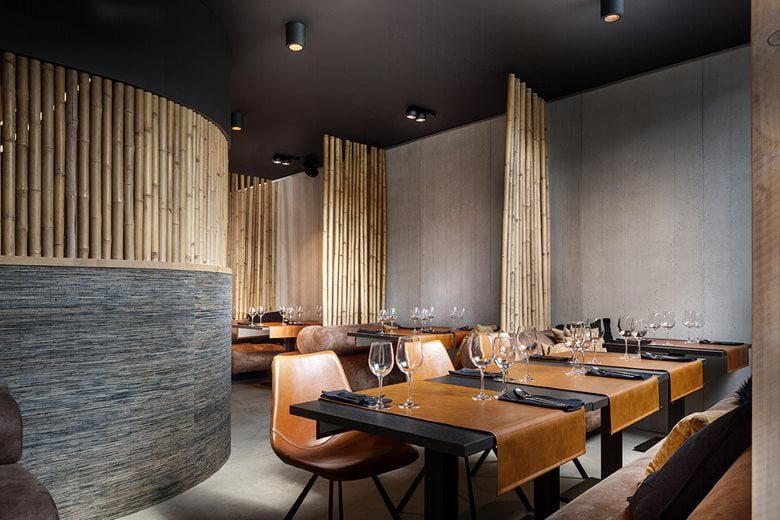
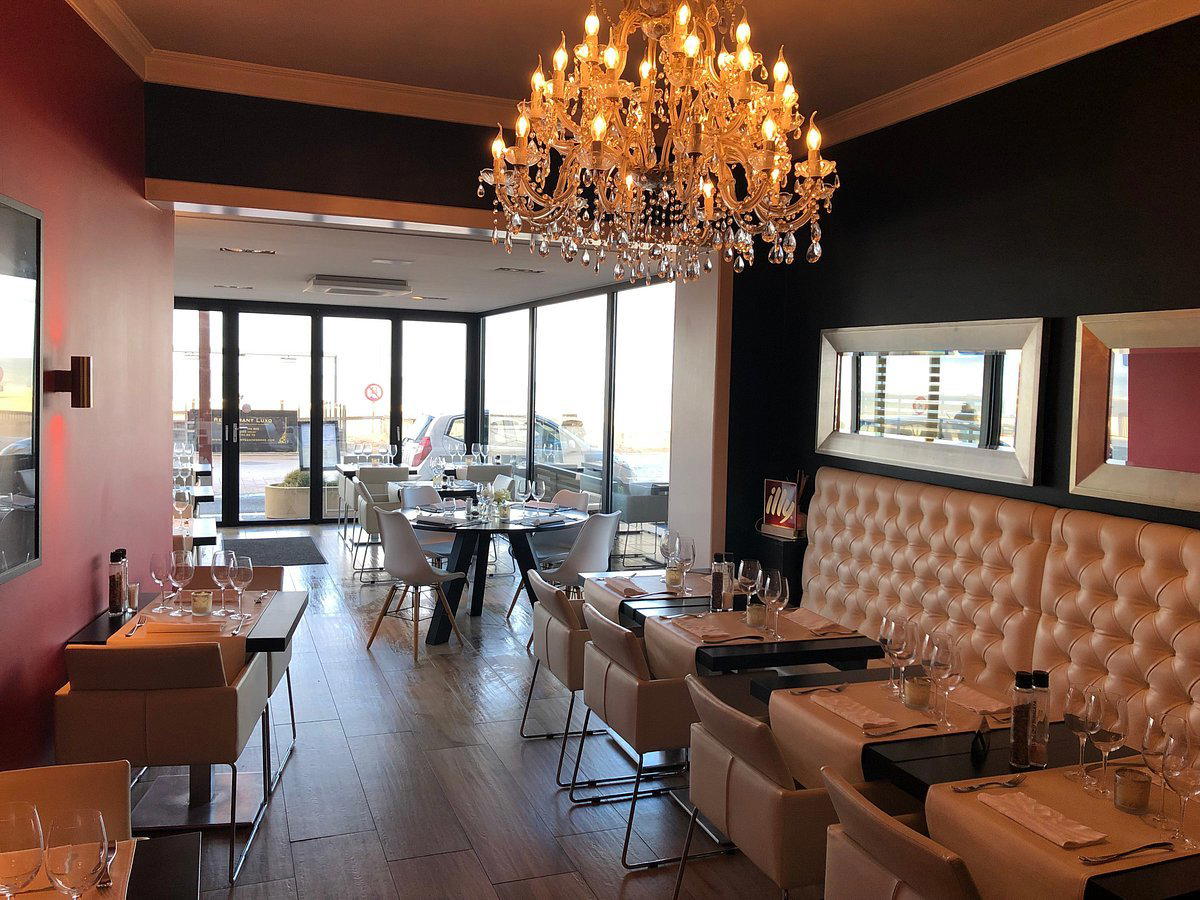
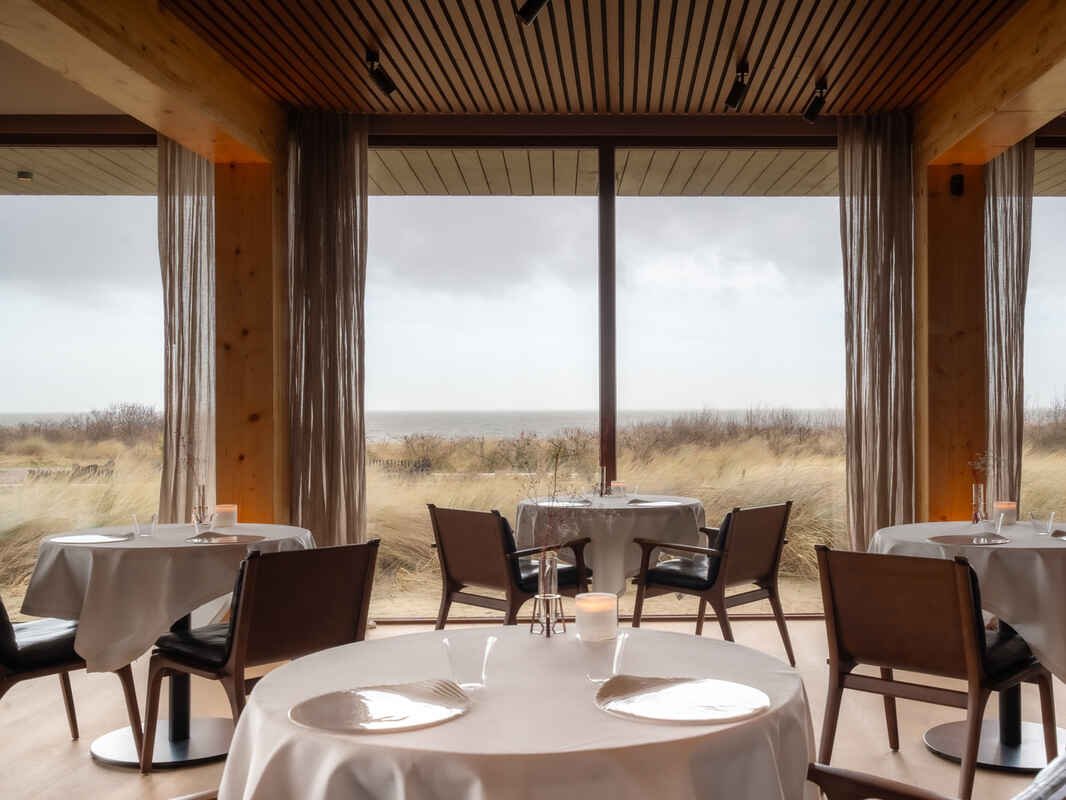
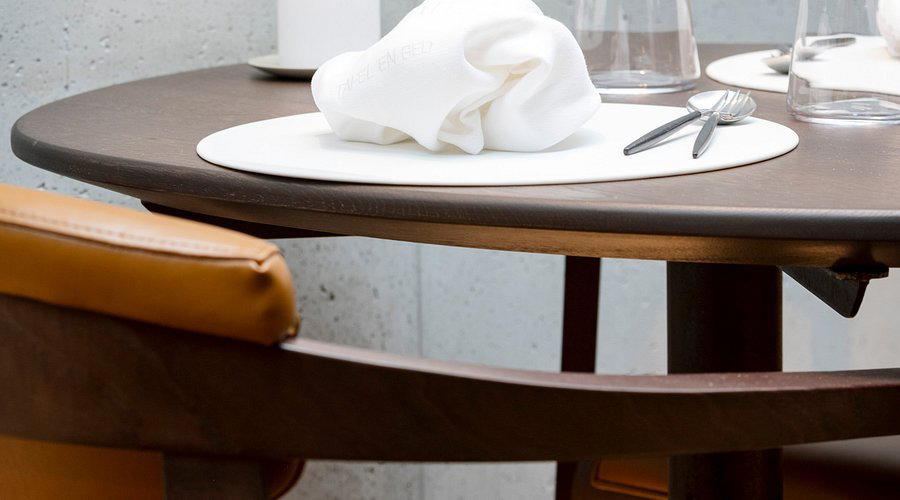
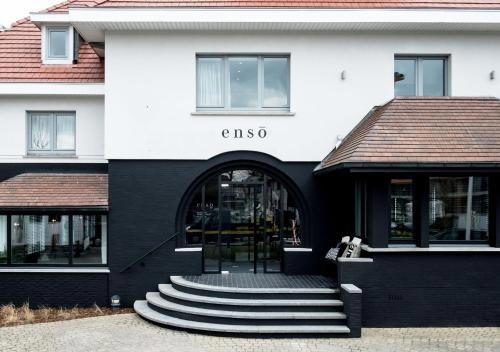
Bold minimalist design evoking a modern butcher's atelier with central refrigerated counters, open kitchen, and white-red accents for an authentic, transparent meat-focused atmosphere.
Know Before You Go
- Getting there
- Oosthoekplein 1