
Michelin Bib Gourmand
Our verdict
A Michelin Bib Gourmand holder in the Valencian town of Alzira, Cami·Vell runs a concise à la carte and three tasting menus built around updated traditional cooking and local Valencian produce. With the second generation now at the helm, the kitchen and dining room have found a sharper rhythm, placing the restaurant among the more compelling value-led addresses in the region.

Pearl is the En Primeur Club membership app, where members save venues, book tables and use the concierge.
Where Alzira Eats Seriously
There is a particular kind of Spanish provincial restaurant that gets passed over by the radar of the larger food press, not because it lacks quality but because it operates in a town that sits between two more celebrated points on the map. Alzira, a market town in the Valencian interior between València city and the citrus-growing plains of the Ribera Alta, is that kind of place. It has a working, local character, and its restaurants reflect that: grounded in regional product, priced for the community that actually lives there, and largely indifferent to the noise of destination dining. Cami·Vell, on Calle Colón, belongs to that tradition, and has earned two consecutive Michelin Bib Gourmand recognitions, in 2024 and 2025, for doing so at the €€ price tier.
The Bib Gourmand designation is Michelin's signal for cooking that delivers genuine quality relative to price, and in Spain's Valencian region, that benchmark is applied against a dense field of competent traditional kitchens. Holding it two years running at a non-destination address in a mid-sized inland town is not a minor achievement. For context, the broader Spanish fine dining circuit runs through addresses like Quique Dacosta in Dénia, Ricard Camarena in València, and further afield, the three-star benchmarks of El Celler de Can Roca in Girona, Arzak in San Sebastián, Azurmendi in Larrabetzu, Aponiente in El Puerto de Santa María, Mugaritz in Errenteria, Cocina Hermanos Torres in Barcelona, DiverXO in Madrid, and Martin Berasategui in Lasarte-Oria. Cami·Vell operates at none of those price points and makes no claim to that register. What it does instead, and does with enough consistency to satisfy Michelin's inspectors twice over, is cook updated traditional Valencian food at a level that makes the town worth a detour.
The Room and What It Says
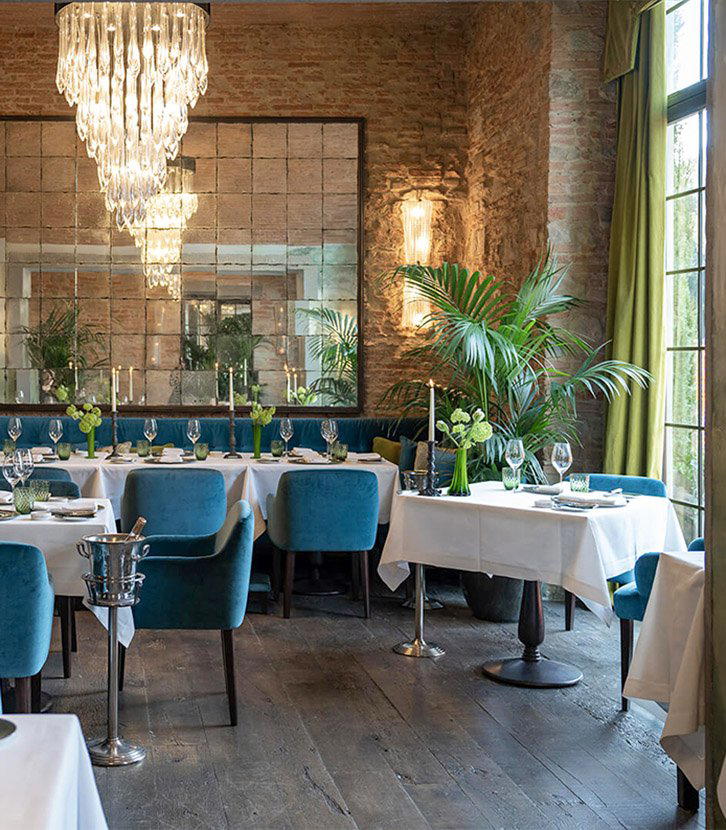
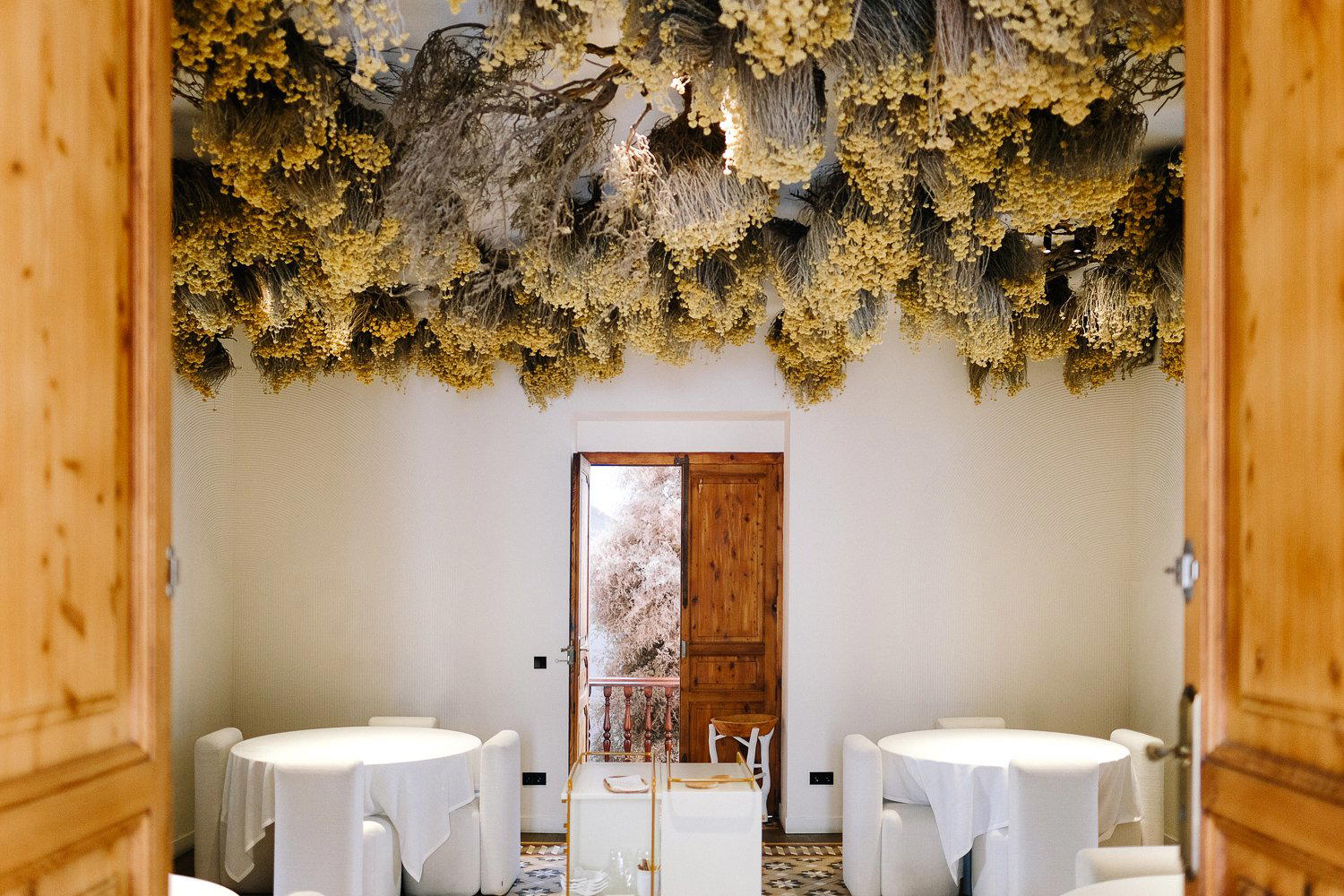
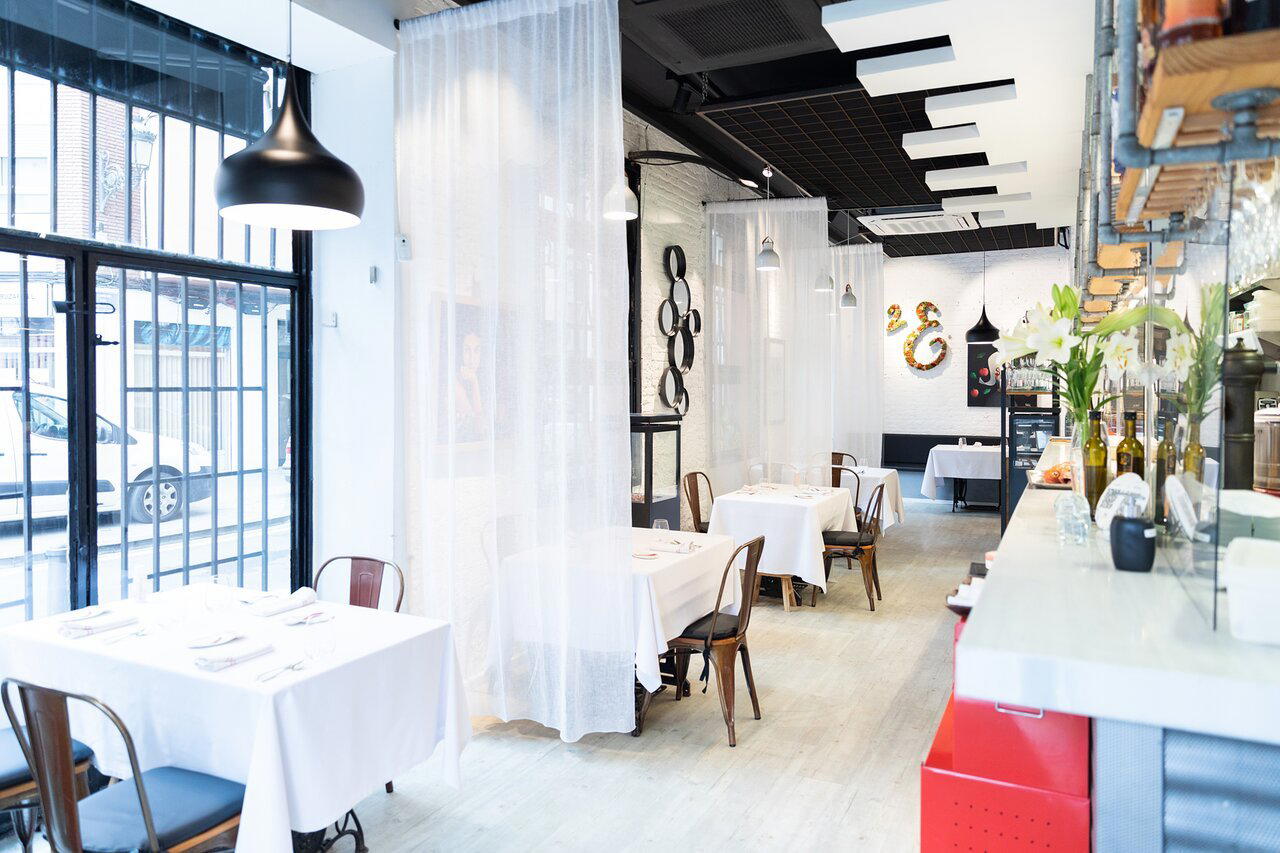
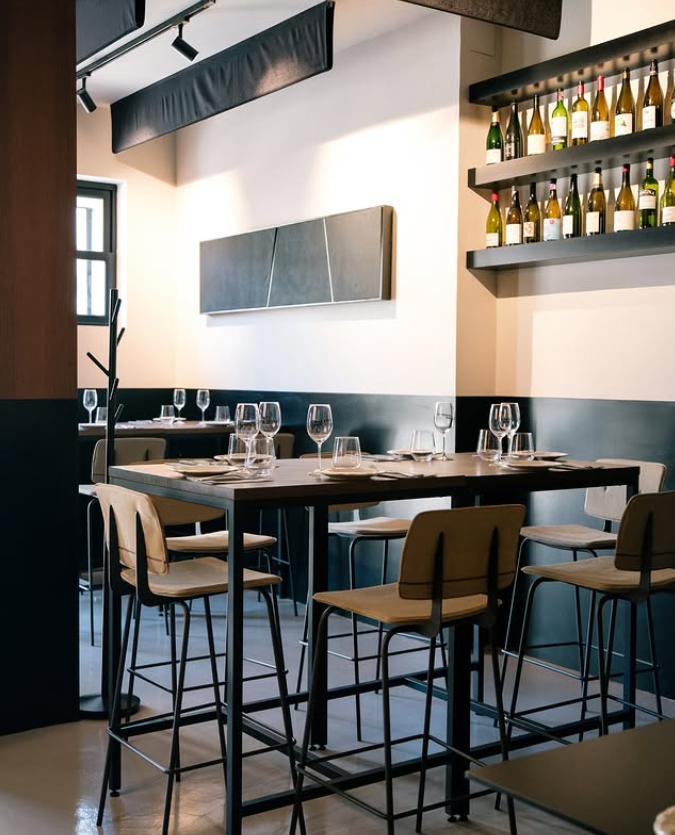
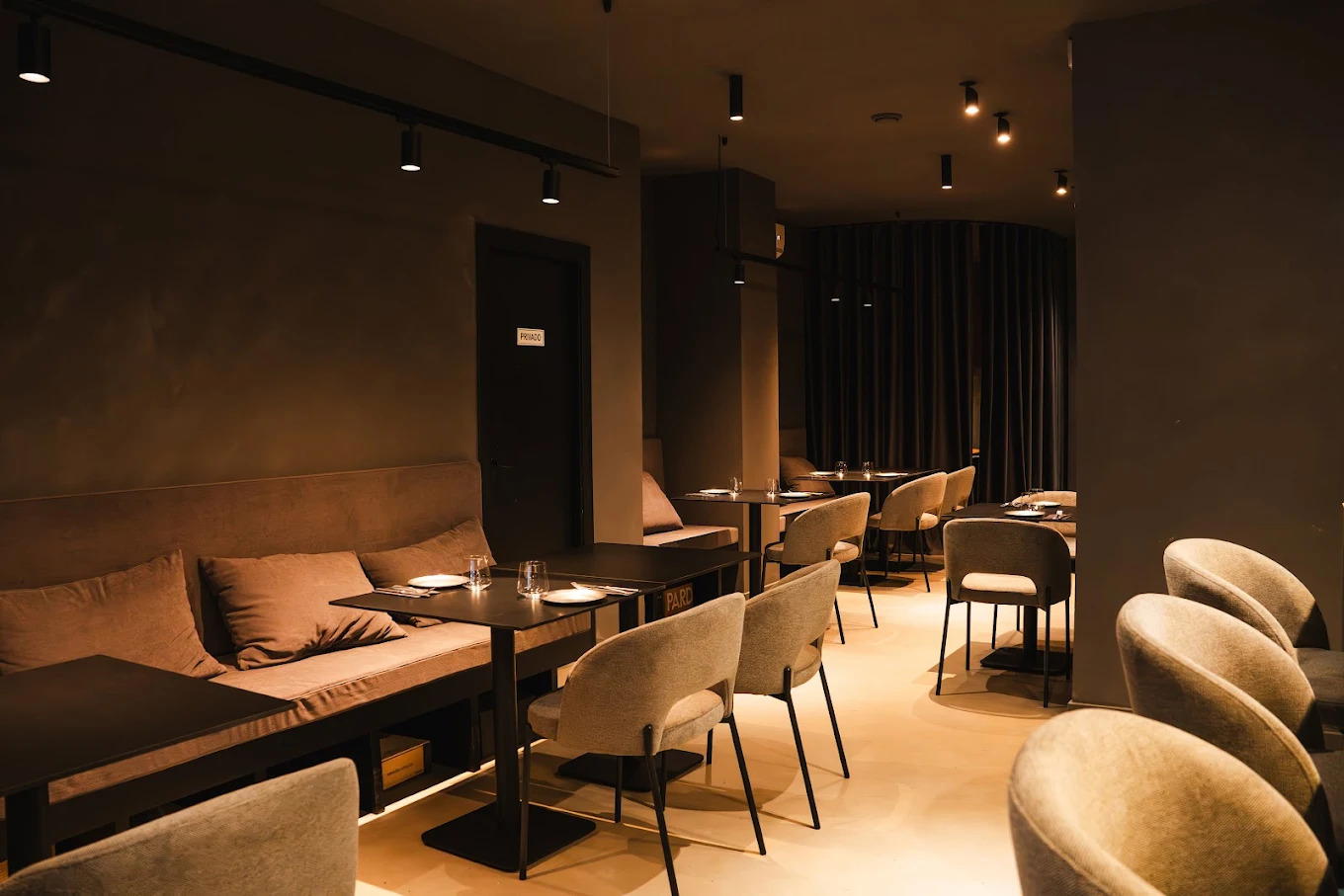
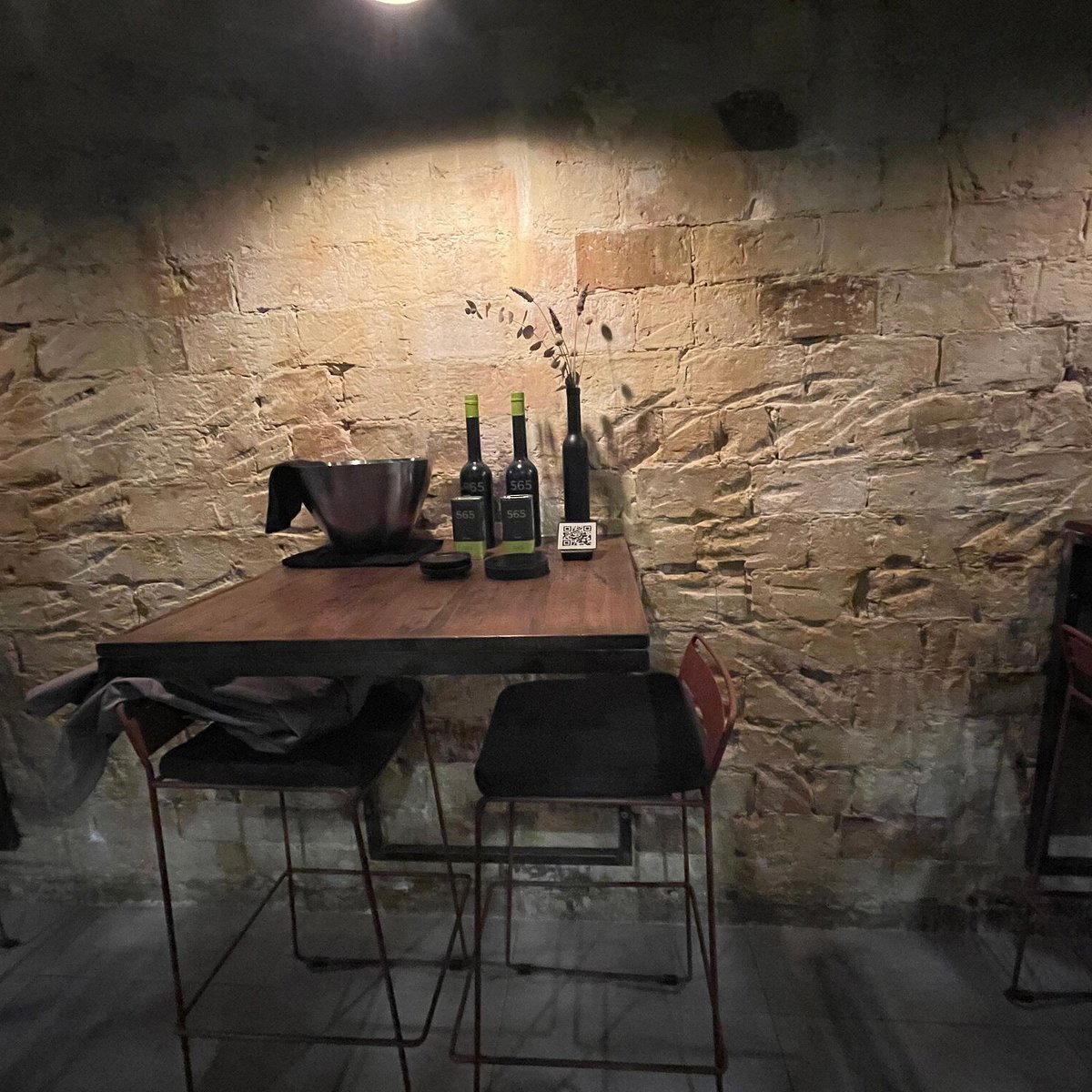
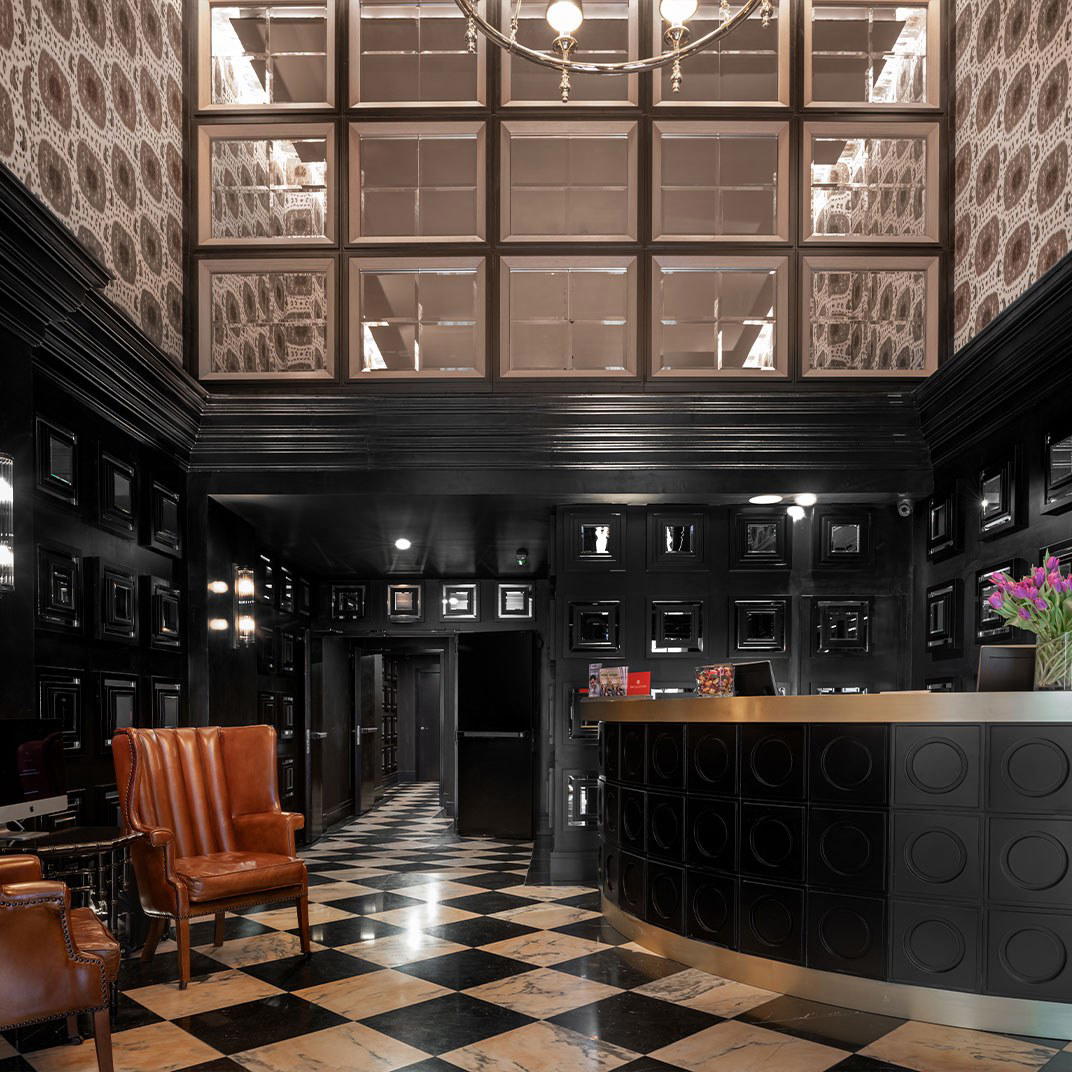
The dining room at Cami·Vell divides across several spaces, with rustic-contemporary decor that does not try too hard in either direction. Attractive azulejo tilework lines sections of the interior, the blue-and-white ceramic tradition that runs through Valencia's architectural identity, from the region's farmhouses to its historic palaces, and an open-view kitchen lets the room maintain a connection to the work happening inside it. This is not minimalist Nordic staging or theatrical open-fire production; it is a Valencian dining room that knows what it is.
Multi-space format means the restaurant can seat different group sizes without the atmosphere collapsing into a single volume of noise. The layout and decor register as a considered answer to that range, rather than a commitment to any single aesthetic position.
The Generational Handover and What It Changed
Generational succession in Spanish family restaurants follows a pattern that is easier to describe than to execute. The founder establishes the identity and the trust of the local clientele; the second generation inherits that trust and has to decide how much to preserve, how much to update, and whether the inherited business can carry a new direction. At Cami·Vell, that transition has been handled by Toni, who runs the front of house, and his brother Iván, who leads the kitchen. Their father, Antonio López, founded the restaurant and, by the account of those who know the place, still appears occasionally, the kind of continued presence that functions less as oversight and more as a reminder of where the institution came from.
What the transition appears to have produced is a sharper, more energised version of the original concept rather than a departure from it. The kitchen's focus remains on updated traditional cuisine with a consistent emphasis on local products, but the menu architecture has been tightened. The à la carte is concise, which in this context is a discipline, not a limitation. The format signals that Iván is cooking what he can do well rather than padding the menu for appearance. Alongside the à la carte, three tasting menus give the kitchen space to develop its language more fully: the Xúquer menu, named for the river that runs through the Alzira area and described as a homage to the restaurant's signature dishes; the Casella menu; and the Murta menu. For the region's traditional produce tradition, that kind of menu naming is editorial as much as it is commercial, anchoring the cooking to the geography it comes from.
The editorial angle of generational succession matters here not as biography but as context. Spain has produced some of its most compelling mid-tier restaurants precisely through this model: a founder-established identity, a second-generation re-sharpening, and a local institution that emerges with more precision than it had before. The same dynamic has played out in different registers across the country, from northern Basque family houses to Catalan village restaurants. Cami·Vell fits that broader pattern, and the Bib Gourmand recognitions suggest the re-sharpening has landed. For comparable traditional formats operating in similarly non-destination settings, see Auga in Gijón or Auberge Grand'Maison in Mûr-de-Bretagne, each working the updated-traditional register in their own regional frame.
Local Product as Editorial Position
The Valencian region's produce identity is specific: citrus from the Ribera Alta, rice from the Albufera, vegetables from the huerta, and a coastline that supplies fish and shellfish to kitchens across the interior. A restaurant in Alzira that commits to local product is committing to a particular larder, one that has its own seasons, its own quality benchmarks, and its own claim on what Valencian cooking should taste like. The concise à la carte at Cami·Vell reads as a product-led document rather than a technique showcase: the dishes exist to express what is available and what is worth cooking, not to demonstrate range for its own sake.
That approach aligns Cami·Vell with a broader movement in Spanish regional cooking that prioritises terroir-anchored sourcing over imported reference points, and it is an approach that Michelin's Bib Gourmand system tends to reward when executed with enough consistency. The restaurant's position in the €€ tier also means that the produce selection has to be made with real discipline: there is no room in the pricing to absorb expensive errors or over-ambitious sourcing. What appears on the menu has to justify its place.
Planning a Visit
Cami·Vell sits at Calle Colón 51 in central Alzira, a town accessible by road and rail from València, roughly 40 kilometres to the north. At the €€ price point, it occupies the accessible end of the serious-cooking spectrum in the region, making it a reasonable proposition for a lunch visit paired with time in the Ribera Alta. The restaurant's format, with both à la carte and tasting menu options, accommodates different levels of commitment to the meal. The three tasting menus offer the clearest view of what Iván and the kitchen are working on at any given time; the à la carte suits diners who know specific dishes they want to order or who prefer to move through a meal at their own pace.
For broader planning in the area, our full Alzira restaurants guide covers the wider dining picture, while the Alzira hotels guide, Alzira bars guide, Alzira wineries guide, and Alzira experiences guide provide context for building a longer stay. For a comparison point at the higher end of the Valencian dining circuit, Ricard Camarena in València and Quique Dacosta in Dénia operate at a different price tier and with a different ambition, but share the same regional produce inheritance. For those tracing the full arc of serious Spanish cooking, Atrio in Cáceres offers another angle on how regional identity anchors a restaurant's identity over time.
Frequently asked questions
What does dinner at Cami·Vell typically cost?
Pricing at Cami·Vell is listed as €€.
What's Cami·Vell's location?
Cami·Vell is located at C/ Colon, 51, 46600 Alzira, València, Spain, Alzira.
Side-by-Side Snapshot
| Venue | Cuisine | Price | Awards | Notes |
|---|---|---|---|---|
| Cami·VellThis venue (the venue you are viewing) | Updated Traditional Valencian | $30–50 | Michelin Bib Gourmand | Not listed |
| Aponiente | Avant-Garde Marine Seafood | $200–300 | 3 Michelin Stars · World's 50 Best #100 | Progressive - Seafood, Creative |
| Arzak | Contemporary Basque Fine Dining | $300–500 | 3 Michelin Stars · World's 50 Best #31 | Modern Basque, Creative |
| DiverXO | Avant-Garde Spanish Tasting Menu | $300–500 | 3 Michelin Stars · World's 50 Best #4 | Progressive - Asian, Creative |
| El Celler de Can Roca | Creative Catalan Fine Dining | $300–500 | 3 Michelin Stars · World's 50 Best #2 | Progressive Spanish, Creative |
| Quique Dacosta | Avant-Garde Spanish Fine Dining | $300–500 | 3 Michelin Stars · World's 50 Best #65 | Creative |
Recognition history
Dated appearances from independent guides and award organizations, with the underlying list record or original source where available.
Michelin Bib Gourmand
Michelin
Full recognition history (3 entries)
Michelin Bib Gourmand
Michelin
Michelin Bib Gourmand
Michelin
Continue exploring
More in Alzira
Restaurants in Alzira
All restaurants in Alzira →
Bars in Alzira
Browse all →


Details
- Rustic
- Elegant
- Cozy
- Classic
- Date Night
- Special Occasion
- Business Dinner
- Open Kitchen
- Extensive Wine List
- Local Sourcing
- A La Carte
- Tasting Menu
- Vegetarian Friendly
- Vegan Options
- Gluten Free Options
Current opening hours
- Monday
- 11 AM–5:30 PM
- Tuesday
- 11 AM–5:30 PM
- Wednesday
- 11 AM–5:30 PM
- Thursday
- 11 AM–5:30 PM
- Friday
- 11 AM–5:30 PM, 8:30–11 PM
- Saturday
- 12–5:30 PM, 8:30–11 PM
- Sunday
- Closed
Hours can change for holidays and private events. Hours as of .
Rustic-contemporary decor with attractive azulejo tiling, divided dining spaces, open kitchen, cozy and elegant atmosphere.