Camelia

James Beard Award Semi Finalist
Our verdict
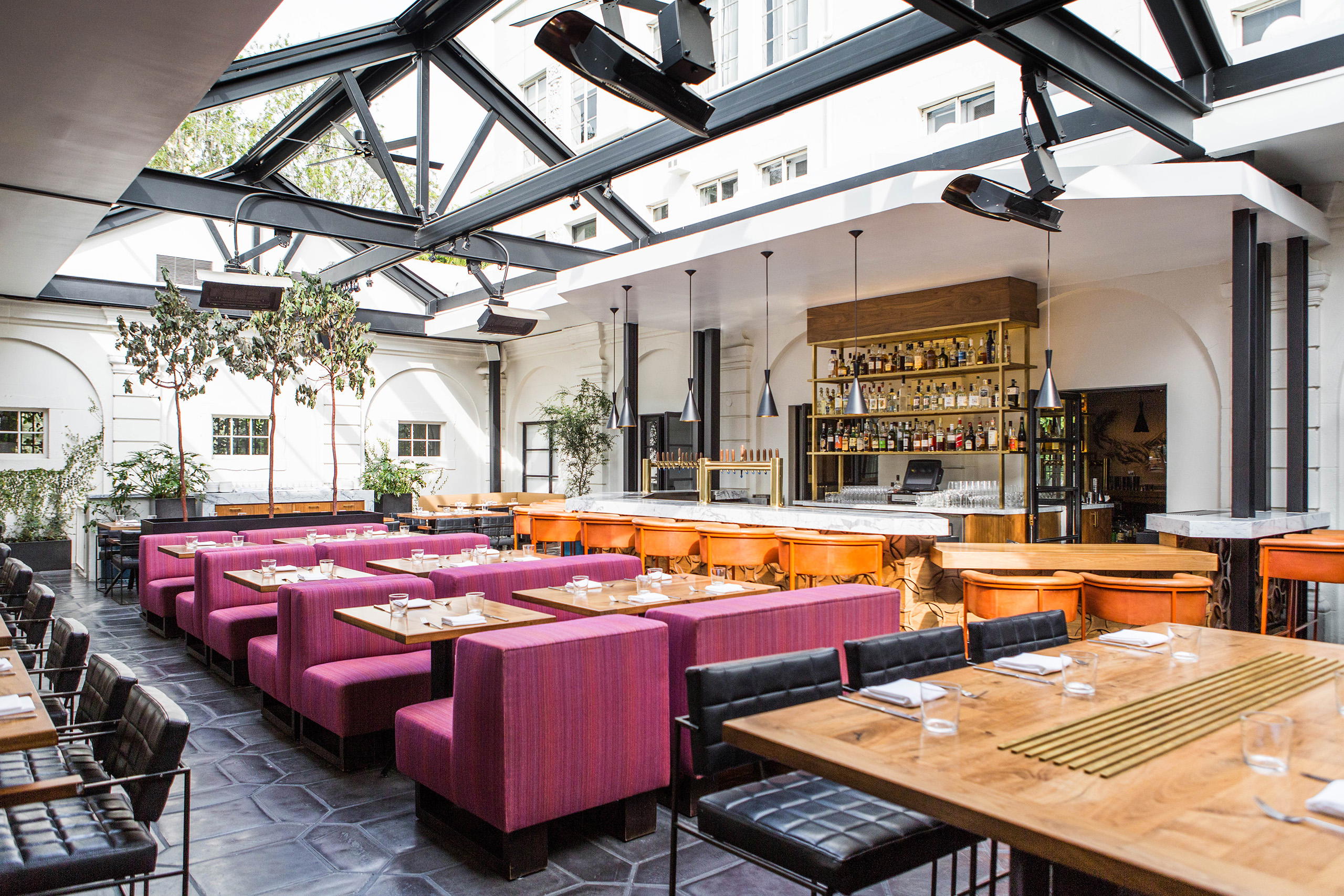
Camelia occupies a converted industrial space on Los Angeles's 1850 Industrial Street, placing it squarely in the Arts District's shift toward destination dining. Compared to the tasting-menu formality of nearby peers, it draws a loyal returning crowd whose habits and preferences have quietly shaped what the room does well. For those already familiar with LA's more recognizable fine-dining tier, Camelia represents a different kind of entry point.

Pearl is the En Primeur Club membership app — saves, bookings, and concierge access live there. Same editors, same standards.
- Address
- 1850 Industrial St, Los Angeles, CA 90021
- Phone
- (213) 800-9750
- Hours
- Mon–Thu 5–10 PMFri–Sat 5–10:30 PMSun 5–10 PM
- Website
- cameliadtla.com
- Directions
- Get directions
- Booking
- Book on OpenTable
The menu
What to order
- Black Sesame Parker House Rolls
- Croque Madame
- Koshihikari Risotto with Grilled Squid
- Koji-Roasted Chicken
The Room That Regulars Built
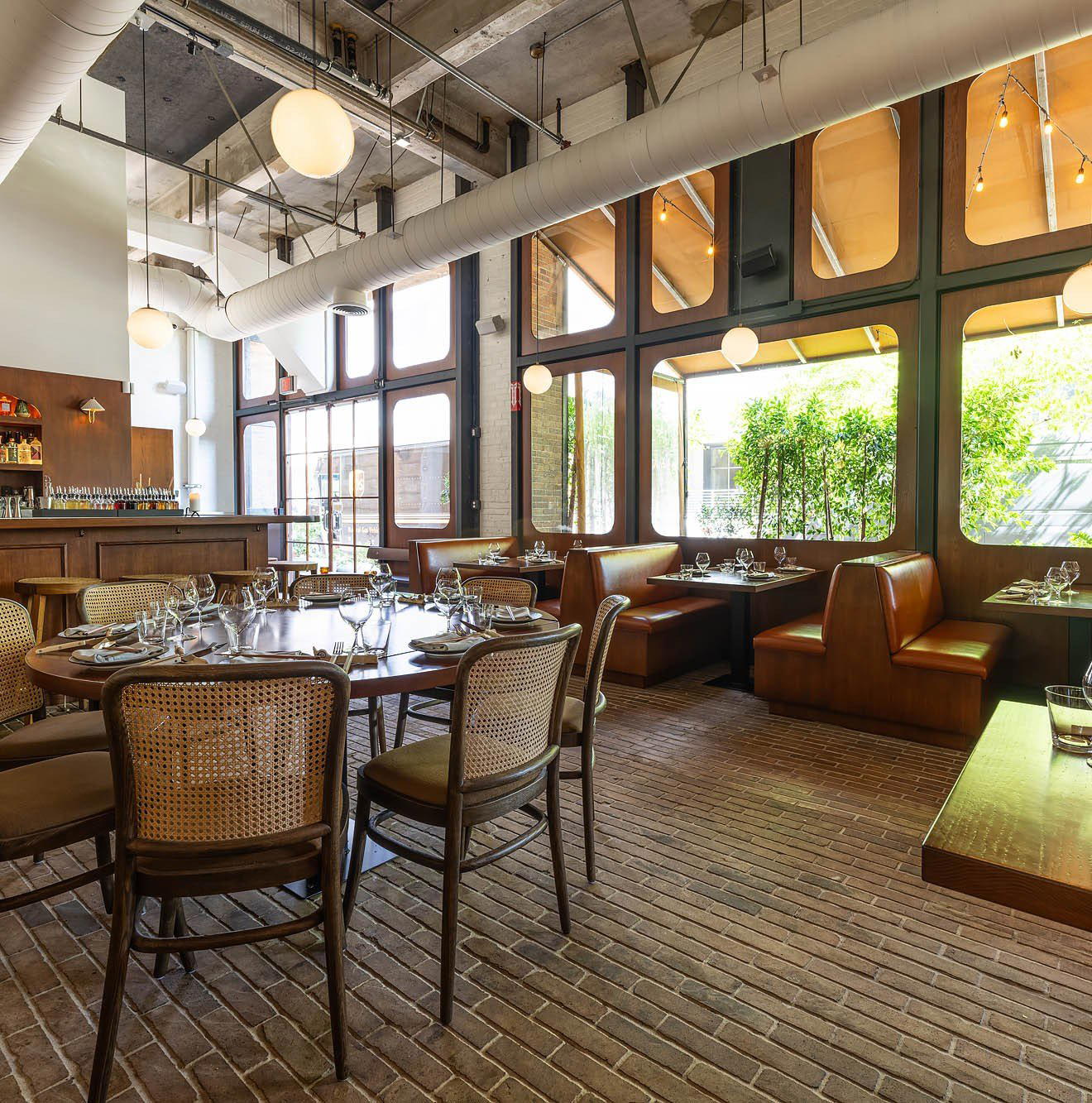
Industrial Street in Los Angeles's Arts District has become a reliable indicator of where the city's dining culture moves before it announces itself publicly. Warehouses that once housed garment operations now hold some of the most closely watched tables in Southern California, and the address at 1850 Industrial Street places Camelia directly inside that broader shift. The building's exterior gives little away, which is part of the point. In a city where restaurants frequently signal their ambitions from the sidewalk, the ones that don't have usually earned the confidence to let the room do the talking.
The Arts District operates differently from West Hollywood or Silver Lake as a dining zone. It attracts a clientele that tends to be self-selecting: people who have already moved past the more publicized tiers of LA dining and are looking for something that rewards repeat visits rather than first impressions. That dynamic shapes the kind of loyalty Camelia has developed. The regulars here are not chasing novelty. They are returning because the room has calibrated itself to them over time, and that calibration is something most new openings take years to develop, if they develop it at all.
What Keeps People Coming Back
The pattern that defines loyal dining clientele at Arts District addresses like this one is specific: they tend to arrive knowing what they want, often before they sit down. The unwritten menu at restaurants that earn this kind of following is not a list of dishes held in reserve for insiders. It is a set of expectations about consistency, pacing, and the quality of attention the room pays to people it recognizes. That kind of relationship between a restaurant and its regulars is harder to build in LA than in denser dining cities like New York or Chicago, where proximity and habit make repeat visits easier. In LA, returning to the same room repeatedly is a deliberate choice, and restaurants that earn it have usually gotten something structurally right about the experience.
Compared to the more codified tasting-menu format at venues like Somni or the deep counter-dining ritual at Hayato, Camelia's position in the Arts District suggests a format built around a different kind of engagement: one where the meal is less theatrical and more relational. That is not a lesser ambition. Some of the most sustained critical attention in American dining over the past decade has gone to rooms that figured out this register. Lazy Bear in San Francisco and Smyth in Chicago both built loyal followings on versions of this premise: technically serious food delivered without the formality that keeps casual regulars at a distance.
The Arts District Context
To understand what Camelia is, it helps to understand what the Arts District has become as a dining zone over the past several years. The neighborhood absorbed a wave of ambitious openings that used industrial architecture as both aesthetic and positioning signal. High ceilings, raw concrete, and exposed ductwork stopped being markers of informality and became the preferred backdrop for some of LA's most considered cooking.
Kato, recognized on the World's 50 Best Restaurants list, operates on a comparable premise of serious cooking in an unexpected setting. Providence, with two Michelin stars, anchors the more formal end of the city's contemporary fine dining. Osteria Mozza represents the Italian-American tradition at a level that has sustained critical and popular loyalty for well over a decade. Camelia occupies a different register from all three, which is precisely what makes its regulars' loyalty worth examining.
Los Angeles's dining geography has never been as neighborhood-concentrated as New York's or as institution-anchored as cities like New Orleans, where Emeril's has held cultural weight for decades. LA's restaurant culture is more diffuse, which means any individual address that builds a consistent returning audience has solved a harder version of the loyalty problem. The regulars at a room like this one have made a real decision about where to spend their time, and they have made it more than once.
Placing Camelia in the Wider American Fine Dining Picture
The current moment in American fine dining has seen a widening of what counts as a serious restaurant. The decade's dominant narrative ran through places like The French Laundry in Napa, Le Bernardin in New York City, and Blue Hill at Stone Barns in Tarrytown: formal, destination-oriented, deeply credentialed. More recently, the conversation has broadened to include rooms that carry technical ambition without formal ceremony, places like Single Thread Farm in Healdsburg, Addison in San Diego, and Atomix in New York City. That broadening has created space for addresses in neighborhoods like the Arts District to develop on their own terms, without needing to slot into the older hierarchy.
Internationally, the movement toward smaller, environment-specific dining formats has produced rooms like Atelier Moessmer Norbert Niederkofler in Brunico, where the surrounding landscape functions as an active part of the meal's logic. Frasca Food and Wine in Boulder built its following on regional specificity and consistent hospitality rather than formal prestige markers. The pattern across these rooms is that sustained loyalty comes from getting the fundamentals right repeatedly, not from announcing an identity loudly at the outset. The Inn at Little Washington represents the older version of that logic, where decades of consistency produced an institution. The Arts District version is still writing its version of that story.
For a fuller picture of how Camelia fits within the city's current dining moment, see our full Los Angeles restaurants guide.
Planning Your Visit
Address: 1850 Industrial Street, Los Angeles, CA 90021, in the Arts District. Timing: The Arts District is most accessible by car; street parking on Industrial Street and surrounding blocks is the standard approach. Dress: The neighborhood's industrial-aesthetic rooms tend toward dressed-down but considered; formal attire is not expected. Budget:
Frequently asked questions
What do regulars order at Camelia?
What the venue's Arts District positioning and returning-clientele dynamic do suggest is a program built around consistency: the kind of menu where the reliable choices matter as much as the seasonal additions. For the most current picture of what the room is doing, the clearest signal comes from visiting or contacting the venue directly. Comparable Arts District addresses with documented menus, such as Kato, offer a useful reference point for the neighborhood's general approach to cuisine and pricing.
Is Camelia reservation-only?
Booking format details for Camelia are not publicly listed at this time. In the Arts District tier of LA dining, reservation-only formats are common, particularly at rooms that have developed a regular clientele, since walk-in availability tends to narrow as loyalty deepens. If you are planning a visit, reaching out to the venue ahead of time is the practical approach regardless of whether reservations are strictly required. For context, comparable rooms in the city's higher-demand tiers, such as Hayato and Somni, operate on advance-booking systems with lead times of several weeks to months.
How does Camelia fit into the Arts District dining scene compared to other LA neighborhoods?
The Arts District has developed into one of LA's more concentrated zones for serious, format-driven dining, distinct from the celebrity-chef anchored corridors of West Hollywood or the more casual density of Silver Lake. At 1850 Industrial Street, Camelia is positioned within a cluster of addresses that prioritize atmosphere and culinary intentionality over conventional restaurant signaling. For visitors already familiar with LA's more publicized fine-dining tier, including Providence or Osteria Mozza, the Arts District represents a different kind of entry point into the city's dining culture, one where the neighborhood context is part of what the room is offering.
A Tight Comparison
Comparable venues nearby, for context on price, style, and recognition.
| Venue | Cuisine | Price | Awards | Notes |
|---|---|---|---|---|
| CameliaThis venue — the venue you are viewing | French-Japanese Bistro | $50–100 | James Beard Award Semi Finalist | Not listed |
| Amiga Amore | Mexitalian | $30–50 | James Beard Award Semi Finalist | Highland Park, Mexitalian |
| ABL | Jamaican-Chinese Fusion | $30–50 | Not listed | Hollywood, Modern Jamaican-Chinese-Soul |
| Kye's | Health-Focused Fusion Burritos | Not listed | Not listed | Sawtelle, Health-Focused Fusion Burritos |
| SoulPhil | Filipino-Soul Food Fusion | $30–50 | Not listed | South Los Angeles, Filipino-Soul Food Fusion |
| Sampa | Filipino-American Fusion | Not listed | Not listed | Arts District, Filipino-American Fusion |
Recognition history
Dated appearances from independent guides and award organizations, with the underlying list record or original source where available.
James Beard Award Semi Finalist
James Beard Award
Full recognition history (2 entries)
James Beard Award Semi Finalist
James Beard Award
Continue exploring
More in Los Angeles
Restaurants in Los Angeles
Browse all →
Bars in Los Angeles
Browse all →
Hotels in Los Angeles
Browse all →
Wineries in Los Angeles
Browse all →
Details
- Trendy
- Elegant
- Romantic
- Modern
- Date Night
- Special Occasion
- Business Dinner
- Open Kitchen
- Extensive Wine List
- Sake Program
- Corkage Allowed
- A La Carte
- Small Plates
- Wine
- Sake
Current opening hours
- Monday
- 5–10 PM
- Tuesday
- 5–10 PM
- Wednesday
- 5–10 PM
- Thursday
- 5–10 PM
- Friday
- 5–10:30 PM
- Saturday
- 5–10:30 PM
- Sunday
- 5–10 PM
Hours can change for holidays and private events. Last verified .
Warm, lively, and enveloping atmosphere with creative, genre-blurring cuisine.