Cafe Vivaldi occupies a streetside address at Ahlgade 41 in central Holbæk, placing it within easy reach of the town's compact dining circuit. The café format positions it as a daytime anchor rather than a destination dinner venue, drawing from a local clientele that returns for reliable, mid-register fare. For visitors tracing Danish provincial café culture, it offers a straightforward point of entry into the Holbæk scene.
Pearl is the En Primeur Club membership app — saves, bookings, and concierge access live there. Same editors, same standards.
- Address
- Ahlgade 41, 4300 Holbæk, Denmark
- Phone
- +4559445262
- Website
- cafevivaldi.dk
- Directions
- Get directions
 Saves & bookings on Pearl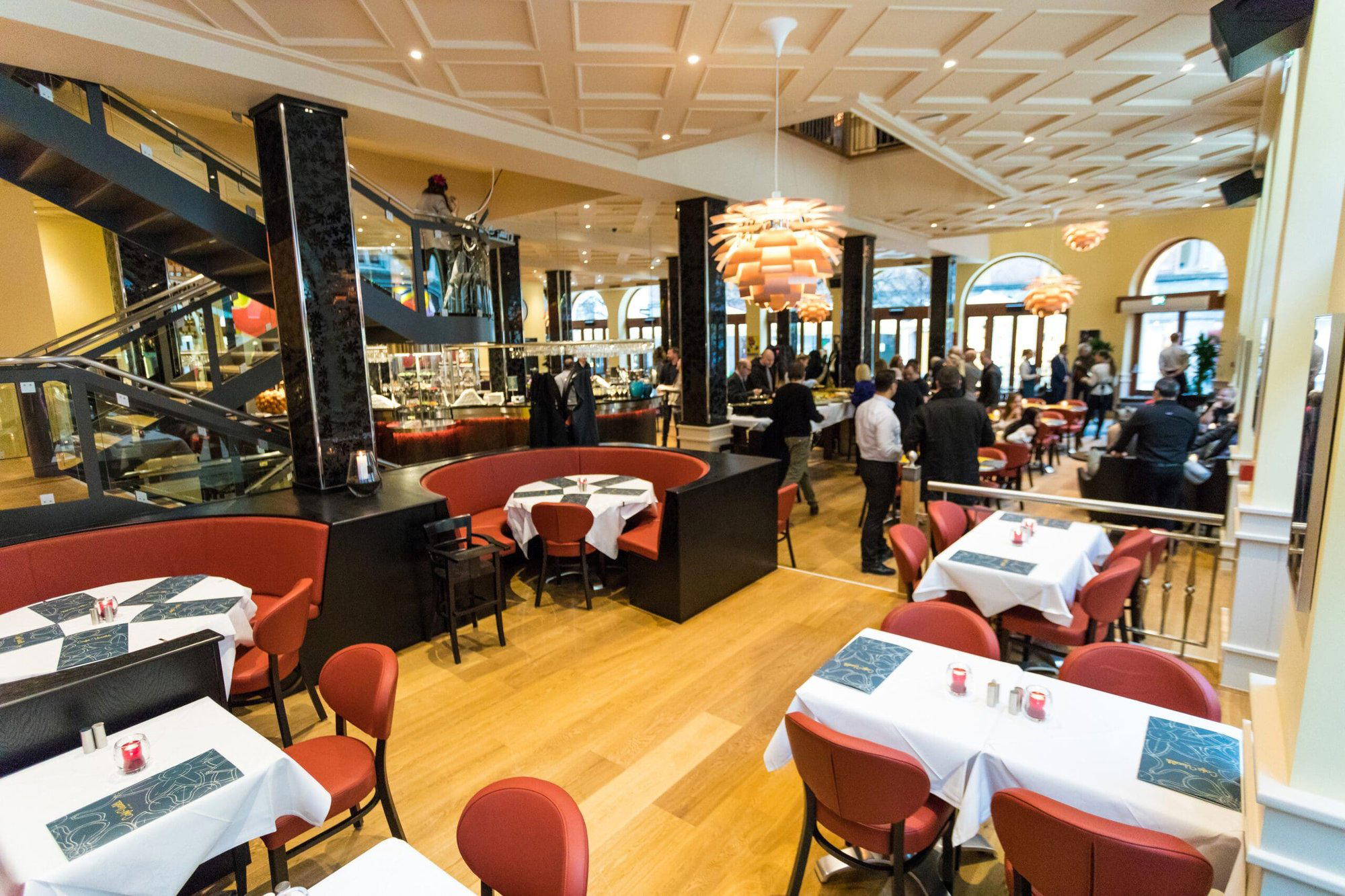
A Café Address on Holbæk's Main Corridor
Ahlgade is the spine of central Holbæk: a pedestrian-accessible street where the town's commercial and social life converges before spreading out toward the fjord. The address at number 41 puts Cafe Vivaldi at one of the more trafficked points along that corridor, where the rhythm is set less by destination dining and more by the consistent passage of residents running errands, meeting for coffee, or stopping mid-afternoon for something light. This is not the register of a tasting menu restaurant or a chef-driven concept. It is the register of the European town café, a format with its own distinct architecture and social logic.
That format deserves some framing. Danish provincial café culture occupies a specific niche in the country's food economy: not the fine-dining ambition you find at Jordnær in Gentofte or the hyper-seasonal Nordic precision of Geranium in Copenhagen, but not the tourist-facing superficiality of airport-adjacent chains either. Holbæk's cafés sit somewhere between neighbourhood institution and low-key social infrastructure, serving coffee, open sandwiches, and simple cooked food across long daytime hours. The expectation is consistency and familiarity, not surprise.
What the Café Format Reveals About Its Menu
The editorial angle worth examining with any café operating under a format like this is what the menu structure actually communicates about the kitchen's priorities and audience. Cafés in smaller Danish towns tend to build their menus around two or three reliable pillars: morning pastry and coffee service, a midday smørrebrød or sandwich rotation, and an afternoon cake-and-hot-drinks offering that keeps covers turning through the quieter hours. This layered, daypart-driven architecture is distinct from the fixed tasting formats at properties like Frederikshøj in Aarhus or the long-format dinners at Henne Kirkeby Kro in Henne, where the kitchen controls pace and sequence. A café's menu, by contrast, puts that control in the hands of the guest.
What that means practically is that a visit to a place like Cafe Vivaldi is structured by the hour you arrive. Come at nine and the offer is coffee and baked goods. Come at noon and you are in smørrebrød territory, where the quality of the bread, the freshness of the toppings, and the ratio of filling to base tell you most of what you need to know about the kitchen's standards. Come at three and the question becomes whether the cake selection has turned over from the morning or whether you are eating what was left from the opening hours. This temporal architecture is not a weakness of the format. It is the format, and the cafés that do it well use each daypart to signal something coherent about their overall approach.
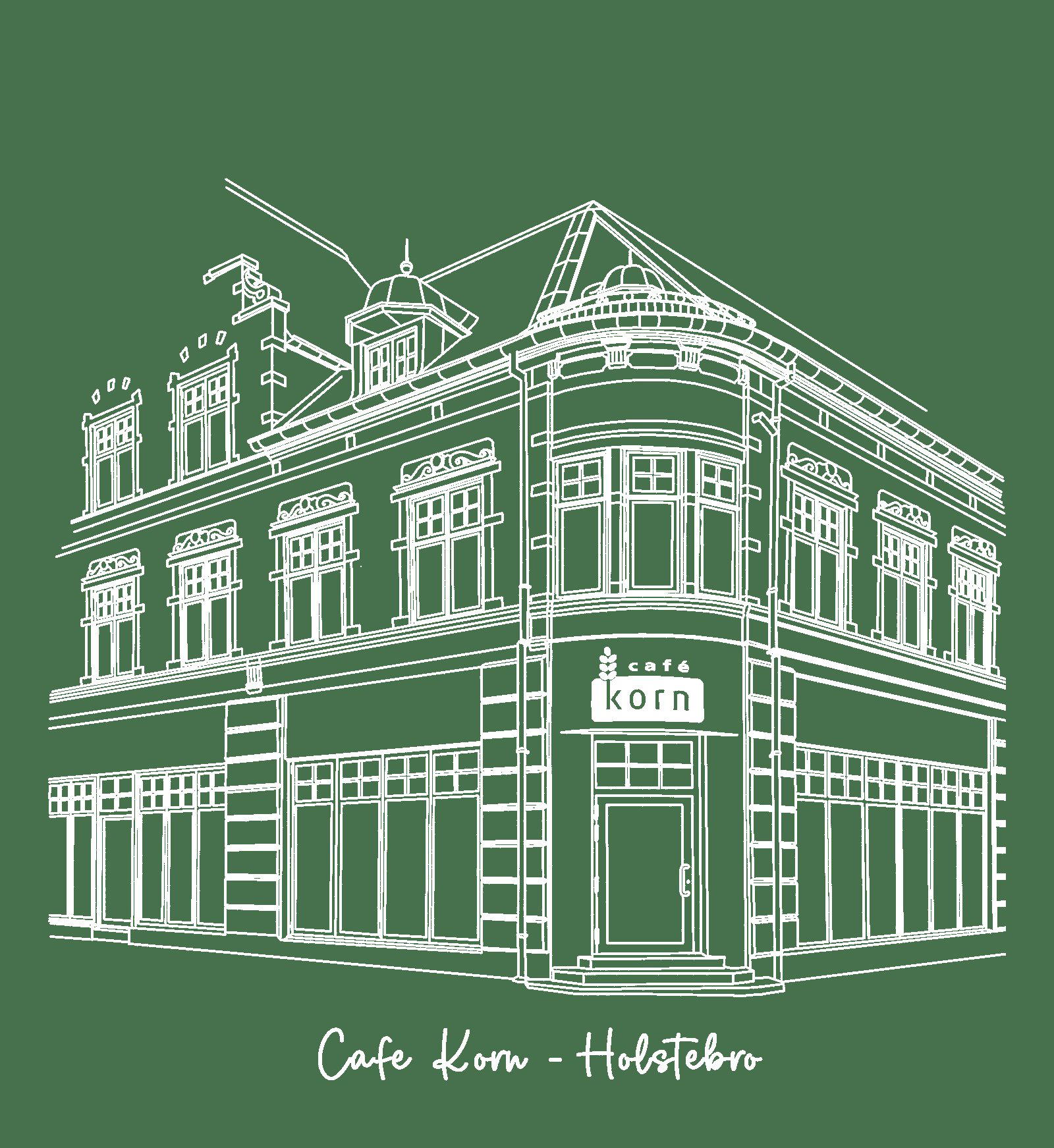
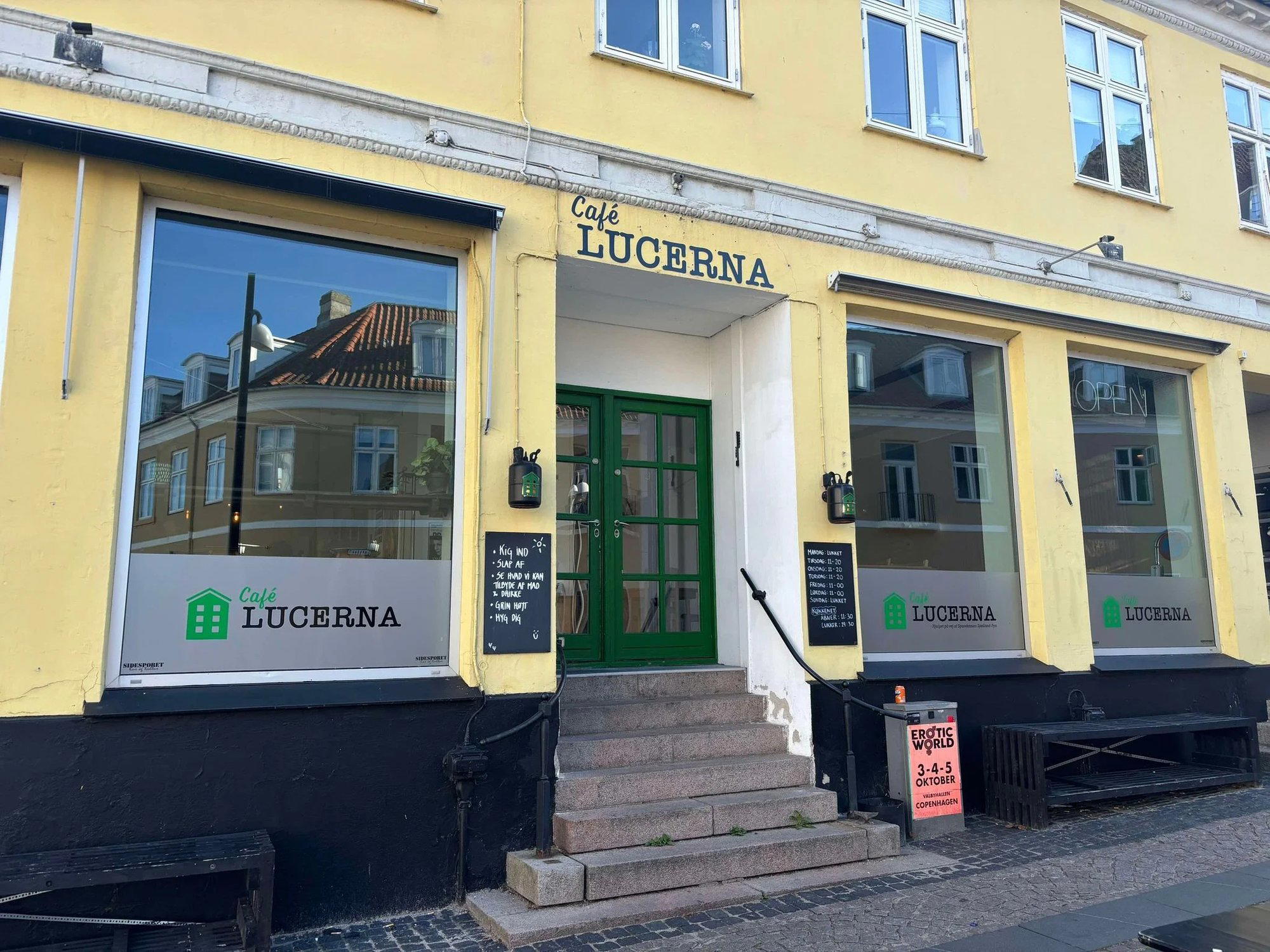
Holbæk's café circuit, which includes Cafe Svanen, Cafe Zehros, Café Korn, and Café Lucerna, operates within this same structural logic. Each address competes on the same daypart cycle, which means differentiation comes from small but legible signals: the quality of the coffee programme, the sourcing of bread, the cake rotation, the level of attention in service. These are not dramatic differentiators, but they are the ones that build local loyalty over time.
Holbæk in the Wider Danish Dining Picture
It is worth placing Holbæk itself on the regional map. The town sits on the western edge of Isefjord in West Zealand, roughly 60 kilometres from Copenhagen. It is not a dining destination in the same sense as the coastal towns or the regional cities that have attracted serious kitchen talent in recent years. For high-ambition cooking in the wider region, the pull runs toward Copenhagen or, to the south, properties like Frederiksminde in Præstø or the rural-rooted format of Dragsholm Slot Gourmet in Hørve, which is notably close to the Holbæk area and represents a very different ambition tier. West Zealand has the ingredients for serious local cuisine, including good coastal produce and agricultural land, but the café culture of its market towns has not, by and large, moved toward the ingredient-led positioning you find at places like Ti Trin Ned in Fredericia or LYST in Vejle.
That is not a criticism of Holbæk's café scene. It is a description of what the town's food culture is and what it serves. Visitors arriving with the expectations built by a meal at Tri in Agger or Pearl by Paul Proffitt in Kruså will be recalibrating toward a different set of pleasures. The reward here is in the quotidian, not the ambitious. For a broader orientation to what Holbæk has on offer across price points and formats, the full Holbæk restaurants guide maps the scene more completely.
Comparing Provincial and Metropolitan Café Cultures
It is instructive, if only for orientation, to consider how the town café format in provincial Denmark compares to the café cultures of cities operating at a different scale entirely. The all-day café has gone through substantial reinvention in major international food cities: the daypart-layered format has been applied with considerable technical seriousness at places like Lazy Bear in San Francisco, where the communal-table model borrows from café informality while operating with a tasting-menu kitchen behind it. At the other extreme, the precision of a place like Le Bernardin in New York City represents the maximum distance from the town café register. The point of comparison is not to judge Holbæk's cafés against those benchmarks, but to clarify what the town café format is optimised for: social ease, daily repeatability, and a price-value relationship built for regulars rather than occasion dining.
Cafe Vivaldi, on its Ahlgade address, operates squarely within that logic. The Holbæk dining scene also includes more formal sit-down options such as Bistrot La Cannelle, which points toward a different evening register for those looking to move beyond the café format.
Planning a Visit
Cafe Vivaldi is located at Ahlgade 41, 4300 Holbæk, in the commercial centre of town and accessible on foot from the main bus connections and the train station, which sits roughly ten minutes' walk away. As with most Danish town cafés, the busiest period runs through the late morning and lunchtime hours, with the midday smørrebrød service drawing the most consistent covers. The price point for a café of this format in a Danish provincial town typically sits in the accessible mid-range, though specific current pricing should be verified at the venue. For anyone building a fuller picture of the town's options before visiting, the Holbæk restaurants guide covers the complete scene.
Continue exploring
More in Holb K
Restaurants in Holb K
Browse all →
Bars in Holb K
Browse all →
Hotels in Holb K
Browse all →

At a Glance
- Casual Hangout
Current opening hours
- Monday
- 10 AM–9:30 PM
- Tuesday
- 10 AM–9:30 PM
- Wednesday
- 10 AM–9:30 PM
- Thursday
- 10 AM–9:30 PM
- Friday
- 10 AM–11 PM
- Saturday
- 10 AM–11 PM
- Sunday
- 10 AM–9:30 PM
Hours can change for holidays and private events. Last verified .
Know Before You Go
- Getting there
- Ahlgade 41, 4300 Holbæk, Denmark