Cafe Pacific
Our verdict
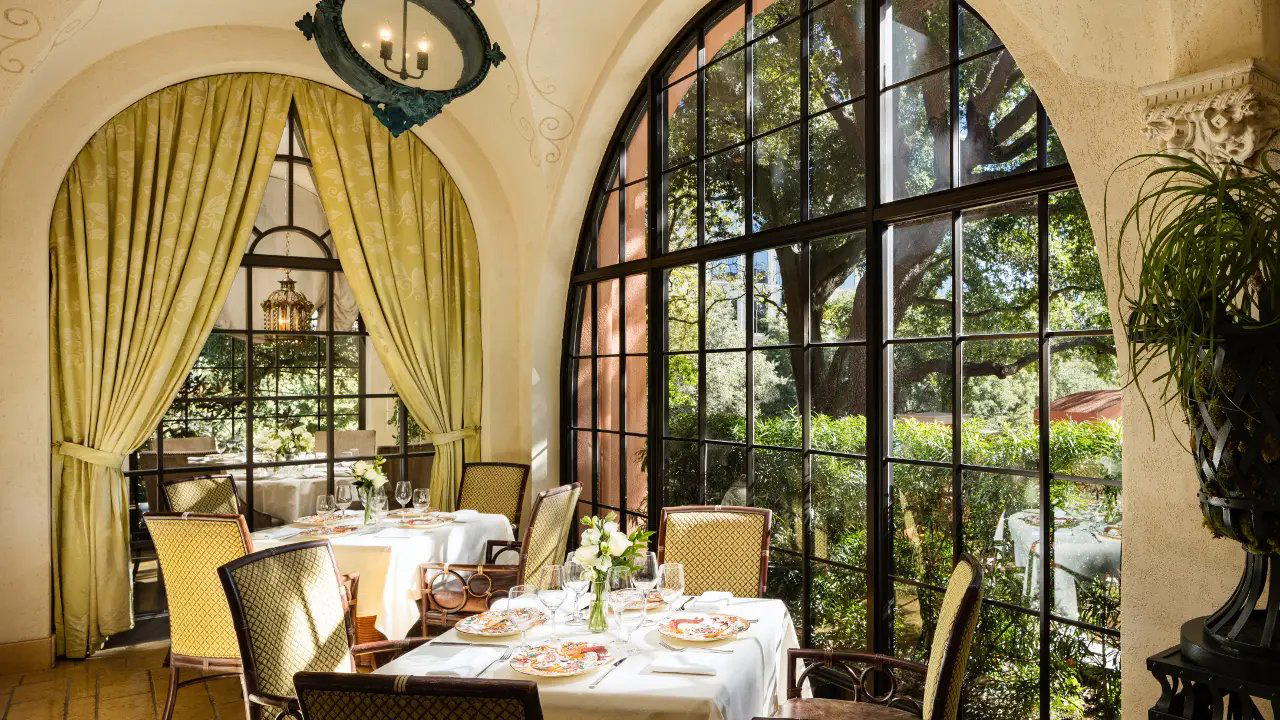
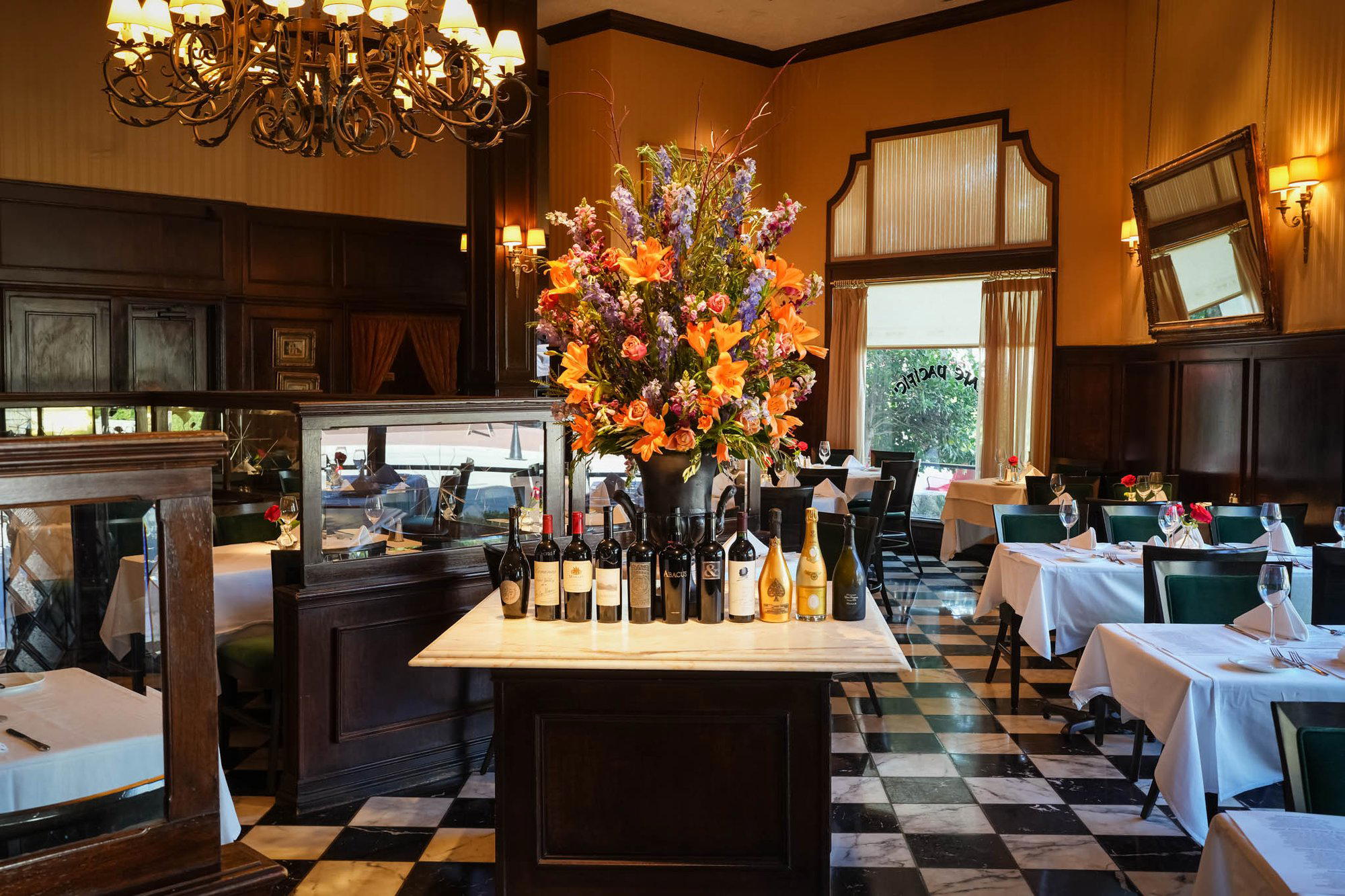
Cafe Pacific has anchored Highland Park Village's dining scene for decades, operating as one of Dallas's most enduring addresses for refined seafood. The address at 24 Highland Park Village places it inside one of the country's most storied retail and dining enclaves, where the kitchen's approach to Gulf and ocean-sourced product has built a loyal following among the city's established dining class.

Pearl is the En Primeur Club membership app — saves, bookings, and concierge access live there. Same editors, same standards.
- Address
- 24 Highland Park Village, Dallas, TX 75205
- Phone
- (214) 526-1170
- Hours
- Mon–Sat 11 AM–10 PMSun 11 AM–9 PM
- Website
- cafepacificdallas.com
- Directions
- Get directions
- Booking
- Book on the venue's website
The menu
What to order
- Herb Crusted Chilean Sea Bass
- Maryland Style Jumbo Lump Crab Cake
- Cafe Pacific Pepper Steak
Highland Park Village and the Seafood Tradition It Sustained
Highland Park Village, completed in 1931, is the oldest planned shopping center in the United States, and the restaurants that have survived within it have done so by serving a clientele that rewards consistency and punishes complacency in equal measure. The dining enclave at 24 Highland Park Village operates under different pressures than a downtown Dallas address: the walk-in traffic is wealthy and local rather than tourist-driven, the competition is primarily social rather than media-generated, and longevity is the metric that matters most. Cafe Pacific has met those conditions across multiple decades, making it one of the few Dallas seafood addresses with genuine institutional standing.
That kind of staying power is not accidental in the Texas market. Dallas restaurants tend to cycle faster than those in cities with more entrenched neighborhood dining cultures, and seafood specifically is a high-attrition category: the margin pressures, sourcing logistics, and the challenge of building a loyal base in a city whose dining identity has historically been steak-centric all work against it. The addresses that survive do so by offering something the steakhouse corridor cannot replicate, and at Cafe Pacific that has meant a sustained focus on ocean-sourced product treated with technique rather than spectacle.
Where Dallas Seafood Sits in the Wider American Picture
The American fine-dining seafood tier is anchored by a handful of addresses that have defined how coastal technique travels inland. Le Bernardin in New York City set the benchmark for French-influenced seafood precision; Providence in Los Angeles extended that tradition with a California sourcing philosophy. Further along the spectrum, addresses like Single Thread Farm in Healdsburg and Blue Hill at Stone Barns in Tarrytown have folded hyper-local agricultural sourcing into the fine-dining proposition entirely. The interesting question for a Dallas seafood address is where it fits relative to those poles: how much of the menu reflects local and regional Gulf product, and how much relies on flown-in Atlantic or Pacific sourcing?
Dallas sits roughly four hours from the Gulf Coast, which puts it in a more favorable position for Gulf seafood logistics than Chicago or New York, but still dependent on supply chains that require careful management. The kitchens at addresses like Smyth in Chicago or Addison in San Diego resolve the local-versus-technique tension differently depending on their geographic and competitive contexts. For a Dallas institution, the calculus involves Gulf shrimp and redfish alongside oysters sourced from both Gulf and Pacific beds, the kind of dual-origin sourcing that requires kitchen discipline to execute consistently.
The Local-Ingredients, Global-Technique Intersection
The editorial angle that matters most for understanding Cafe Pacific's position in Dallas is not simply that it serves seafood, but that it represents a particular moment in American regional dining when imported classical technique was applied to domestic coastal product. That combination produced a specific kind of restaurant: one that reads as formal and European in its service register while drawing from Gulf Coast supply chains that were being more seriously valued by fine-dining kitchens from the 1980s onward.
That approach has parallels across American fine dining. Emeril's in New Orleans built its reputation on a similar tension between classical French training and deep-South coastal ingredients. The French Laundry in Napa resolved it differently, subordinating regional product to a technique-led grammar. What separates the Dallas context is that the local dining culture applied its own filter: a preference for generous portions, direct service, and a room that reads as socially comfortable for the established Highland Park clientele rather than architecturally austere in the way that some technique-forward addresses present themselves.
Restaurants that have pursued the local-ingredient, global-technique combination most rigorously, such as The Inn at Little Washington in Washington or Atomix in New York City, tend to do so within a tasting-menu format that gives the kitchen control over pacing and portion. A Highland Park Village address serving an established membership-style clientele is more likely to operate as a à la carte room, which imposes different demands on sourcing consistency and kitchen organization.
Within Dallas specifically, Cafe Pacific occupies a different competitive register than the city's steakhouse corridor or its newer wave of chef-driven addresses. Mamani and Tatsu Dallas represent the more recent wave of Dallas fine dining, where the reference points are global and the format tends toward either omakase or tasting structures. 12 Cuts Brazilian Steakhouse anchors a different tradition entirely, and 3Eleven Kitchen and Cocktails occupies the more casual end of the polished dining spectrum. Cafe Pacific sits closest in profile to Fearing's in its combination of formal-leaning service, substantial portions, and a clientele drawn from the city's established social tier rather than its media-driven dining scene.
The comparison with 360 Brunch House and Pecan Lodge illustrates how wide Dallas's dining range runs: from casual weekend formats to decades-old fine dining institutions, the city supports a genuinely pluralistic restaurant culture that does not resolve neatly into a single identity. Seafood within that context is a consistent minor key rather than a dominant one, which gives an address like Cafe Pacific a degree of category ownership that would be harder to sustain in a coastal market.
For readers building a broader picture of the American fine-dining seafood tradition and how it travels to inland cities, our full Dallas restaurants guide maps the competitive set in more detail. Readers interested in the furthest extreme of local-ingredient discipline in fine dining should also look at Lazy Bear in San Francisco and Atelier Moessmer Norbert Niederkofler in Brunico, both of which push that intersection to its logical conclusion.
Know Before You Go
| Address | 24 Highland Park Village, Dallas, TX 75205 |
| Neighborhood | Highland Park Village |
| Hours | |
| Reservations | |
| Price Range | Contact venue for current pricing |
| Dress Code | Smart casual to business casual is appropriate given the Highland Park Village context |
Frequently asked questions
How do I find Cafe Pacific?
Cafe Pacific is located at 24 Highland Park Village, Dallas, TX 75205, Dallas.
Is Cafe Pacific a good choice for a special occasion dinner in Dallas?
Highland Park Village has anchored Dallas's most formally social dining district for nearly a century, and the restaurants that have sustained themselves there tend to carry the room formality the setting demands.
What do people recommend at Cafe Pacific?
Specific dish recommendations require direct confirmation with the venue, as menus shift seasonally. What the restaurant's multi-decade standing at Highland Park Village signals is a kitchen that has maintained consistent execution on seafood long enough to build a loyal repeat clientele — the clearest indicator of reliable ordering across the menu.
How hard is it to get a table at Cafe Pacific?
At an address like 24 Highland Park Village, where the dining room draws an established Dallas clientele rather than walk-in tourist traffic, weekend availability fills through regulars and repeat reservations. Booking several days to a week in advance is the practical approach for Friday and Saturday evenings; weekday lunch and early dinner typically offer more flexibility.
What is Cafe Pacific known for?
Cafe Pacific has built its Dallas reputation on refined seafood in a formal-leaning setting within Highland Park Village, which has operated as the city's most socially established retail and dining district since 1931. The restaurant occupies a different register than Dallas's steakhouse corridor, positioning itself as the default address for seafood-focused business dining and occasion meals on the north side of the city.
Cost Snapshot
| Venue | Cuisine | Price | Awards | Notes |
|---|---|---|---|---|
| Cafe PacificThis venue — the venue you are viewing | Seafood & Steakhouse | $50–100 | Not listed | Not listed |
| Lucia | Contemporary Italian | $50–100 | Michelin Bib Gourmand · James Beard Award Semi Finalist | Italian |
| Tei-An | Japanese Soba House | $100–150 | Michelin Plate | Izakaya, Japanese |
| Fearing's | Southwestern American Steakhouse | $100–150 | Michelin Plate · Wine Spectator Award of Excellence | Southwestern, American |
| Tatsu Dallas | Traditional Edomae Omakase | $150–200 | 1 Michelin Star | Japanese |
| Pecan Lodge | Texas BBQ | $20–30 | Diners, Drive-Ins and Dives Featured Restaurant | Barbecue |