Our verdict
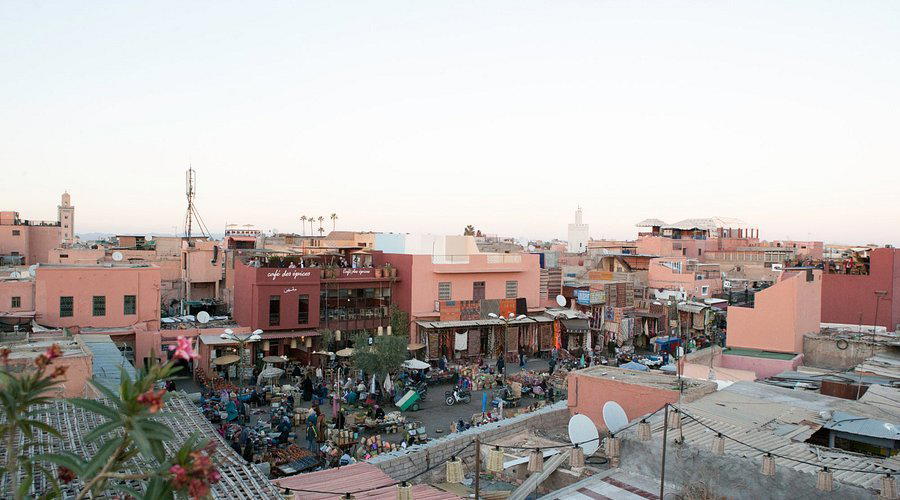
Café des Épices belongs to the Medina café tradition rather than Marrakech’s palace-dining circuit: open-air, market-facing, and built around the everyday grammar of mint tea, salads, grills, spices, and people-watching. Its value is context as much as cooking, placing visitors inside the Rahba Lakdima rhythm where food, commerce, and the city’s ingredient culture meet at close range.

Pearl is the En Primeur Club membership app — saves, bookings, and concierge access live there. Same editors, same standards.
The menu
What to order
- Beldi breakfast
- Sardine dumplings
- Fresh fruit juices
- Moroccan salads
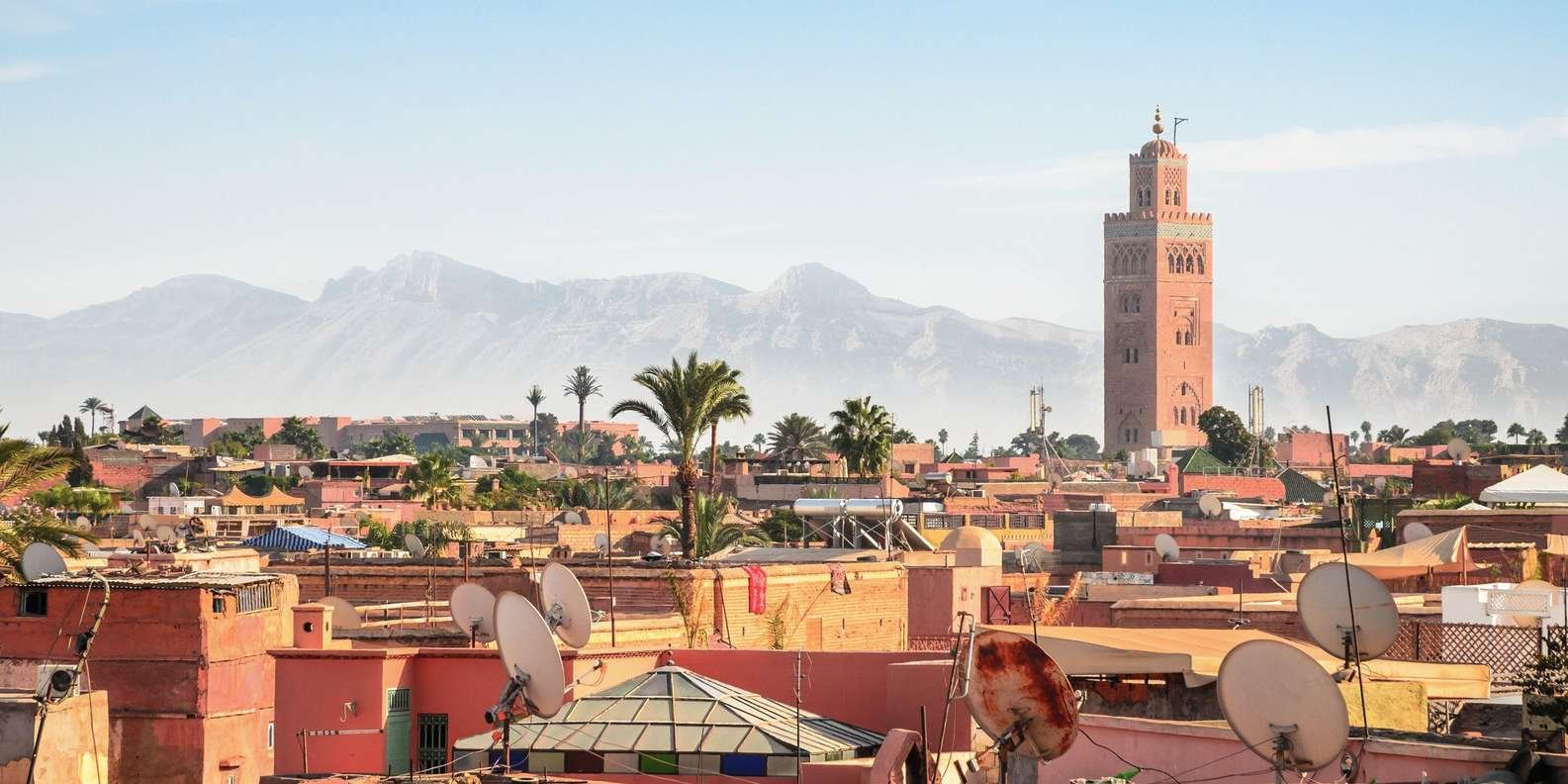
The approach to Marrakech is a lesson in compression: baskets of spices, dried flowers, olives, leather slippers, mopeds, bargaining, and the call-and-response of the city all arrive before the table does. Café des Épices works because it does not try to remove diners from that friction. It belongs to the open-air café tradition that makes more sense beside daily trade than behind a hotel gate, where the city’s ingredients are not abstract talking points but visible commerce.
That distinction matters in Marrakech. The city’s restaurant map splits between intimate dining rooms, hotel courtyards, internationalized rooftops, and city cafés that turn proximity into part of the meal. In that last category, the draw is not a chef’s biography or a trophy narrative; it is the way a local pantry moves from stall to kitchen to table. Spices, herbs, citrus, olives, dried fruit, grains, and tea are not decorative references here. They are part of the working vocabulary of the surrounding food economy.
Market-facing cooking, not palace theatre
Marrakech’s grand dining rooms often translate the meal into ceremony: long menus, layered service, and rooms designed to slow the evening down. The café format runs on a different tempo. It favors shorter decisions, sharper turnover, and food that fits the heat, the foot traffic, and the mixed audience of locals, shoppers, and travelers. That makes ingredient sourcing less about luxury claims and more about immediacy. When a café sits inside Marrakech’s market orbit, the point is not rarity; it is adjacency.
Café des Épices sits in that practical middle ground. It is not competing with the city’s most formal dining rooms or hotel-polished restaurants, and it has a different rhythm from the staged rooftop moods associated with Nomad Marrakech and Le Salama. It is closer to Marrakech’s everyday eating grammar, where simple plates, drinks, and breaks in the day make sense because they are tied to the city’s shopping patterns and climate. The better comparison is not a tasting menu; it is the pause between bargaining and walking again.
The cooking should be read through that lens. The pleasure depends on balance more than excess: freshness, warmth, sweetness, acidity, texture, and the usefulness of bread or grains alongside a plate. A café in this setting succeeds when it keeps those elements legible rather than dressing them in hotel language. That is why the market context carries weight. The same pantry cues that anchor home cooking and stall trade also define what casual visitors understand as Marrakech flavor.
Why the Marrakech setting changes the meal
Marrakech is not a neutral backdrop. The city’s trade in spices, apothecary goods, baskets, and small crafts gives the meal a frame that more insulated restaurants cannot replicate. The sensory pressure of the city can exhaust first-time visitors, but it also clarifies the food. Tea tastes less like a tourist ritual when herbs are being sold nearby. Spices read differently after passing sacks of color and scent in the lanes. This is ingredient education by proximity, not explanation.
That is also why Café des Épices has a different role from Marrakech’s more formal dining addresses. A traveler planning one serious dinner may look toward a polished dining room; a hotel-led itinerary may pull in a resort restaurant; a contemporary city circuit might include other Marrakech dining rooms. This café answers a different question: where can the city’s ingredient culture be understood without turning lunch into an occasion?
The answer is especially useful because Marrakech can push visitors toward extremes: ornate dinner productions on one side, transactional snack stops on the other. The stronger cafés occupy the space between those poles. They give enough structure to sit, look, order, and reset, but they keep the city in the foreground. Café des Épices belongs in that bracket, with Marrakech doing part of the editorial work.
How to place it in a Marrakech itinerary
The right use case is daytime or early evening, when Marrakech is already part of the plan. Pairing it with wandering, shopping, and a reset makes more sense than crossing town for the meal alone. This is a category where timing affects the experience more than formality: the appeal is tied to the city’s movement, its terrace culture, and the short distance between looking, ordering, drinking, and eating.
For broader planning, use Our full Marrakech restaurants guide to separate cafés from more formal dining rooms and hotel restaurants. The same trip may need Our full Marrakech hotels guide, Our full Marrakech bars guide, Our full Marrakech wineries guide, and Our full Marrakech experiences guide. For Morocco beyond the city, compare how regional dining shifts in other destinations. Out-of-country references show the opposite model: tightly defined specialist formats rather than a market café shaped by its immediate surroundings.
The verdict is simple: Café des Épices is strongest when treated as a Marrakech lens, not as a destination restaurant in isolation. Its value is the alignment between place, pantry, and pace. The city’s food culture is often packaged for visitors; here, the better reading is more direct. Sit where ingredients and daily trade remain close, eat within that context, then return to the lanes with a clearer sense of what the city’s table is built from.
Frequently asked questions
Is Café des Épices good for families?
For families already spending time in Marrakech, Café des Épices can work as an easy stop. It suits a daytime break between city wandering more than a formal evening outing.
Is Café des Épices formal or casual?
It reads as casual rather than formal, shaped by its Marrakech setting. The experience signals a city café, not a dining room built around ceremony.
Where is Café des Épices located?
Marrakech.
How far ahead should I plan for Café des Épices?
Plan it as part of a Marrakech itinerary instead of treating it like a table that requires long-range planning. It works well for lunch or an early evening stop during city wandering.
What do critics highlight about Café des Épices?
The setting is the main argument for Café des Épices: Marrakech gives it context as a place to eat within the city’s everyday movement, not away from it.
A Quick Peer Check
Comparable venues by cuisine and price in the same metro.
| Venue | Cuisine | Price |
|---|---|---|
| Café des ÉpicesThis venue — the venue you are viewing | Moroccan café-restaurant with rooftop terrace | $10–20 |
| Nomad Marrakech | Modern Moroccan | $30–50 |
| Le Salama | Moroccan Fine Dining with Modern Flair | $30–50 |
| Le Bistro Arabe - Moroccan Jazz Restaurant in Marrakech | Moroccan Jazz Bistro | $30–50 |
| Pepe Nero | Italian-Moroccan Fine Dining | $30–50 |
Continue exploring
More in Marrakech
Restaurants in Marrakech
All restaurants in Marrakech →
Bars in Marrakech
All bars in Marrakech →
Hotels in Marrakech
All hotels in Marrakech →
Wineries in Marrakech
Browse all →
Details
- Scenic
- Lively
- Cozy
- Rustic
- Well Known
- Bohemian
- Casual Hangout
- Solo
- Group Dining
- Family
- Late Night
- Rooftop
- Terrace
- Panoramic View
- Historic Building
- Standalone
- Design Destination
- Zero Proof
- Mountain
- Street Scene
- A La Carte
- Tea And Coffee
- Fresh Juices
- Soft Drinks
- Vegetarian Friendly
- Vegan Options
- Pescatarian Friendly
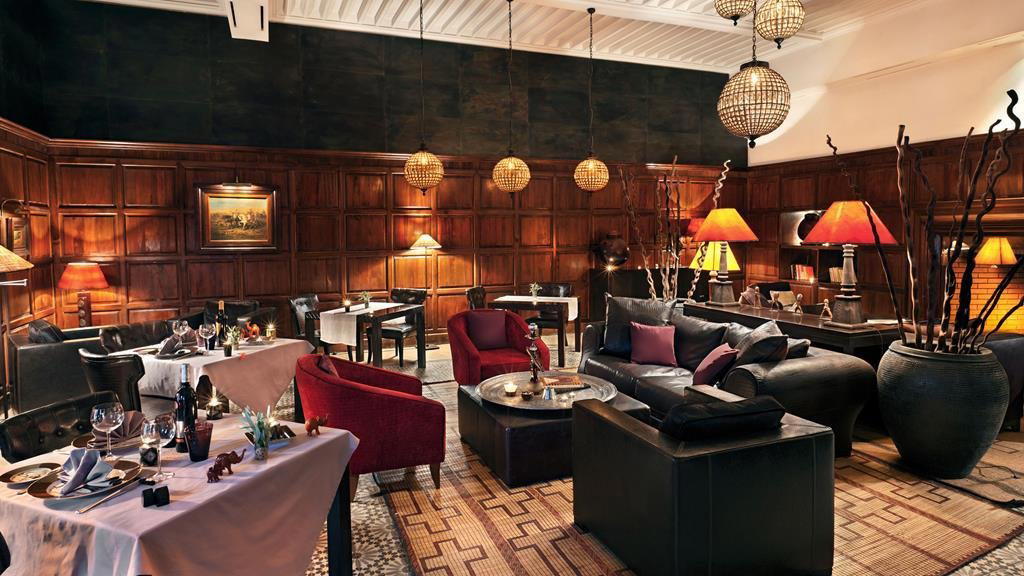
Bustling but relaxed rooftop café set over multiple floors, with warm red tadelakt walls, wooden furniture, Berber cushions and a fireplace, offering a cozy, atmospheric escape above the busy spice square.