Our verdict
On Karl-Liebknecht-Straße, Leipzig's most culturally layered dining strip, CÀ PHÁO brings together Japanese sushi technique and Vietnamese cooking in a neighbourhood better known for its independent café culture than formal dining. The combination sits within a broader German-city trend of small operators working across Asian culinary traditions. A practical stop for those exploring the Südvorstadt food scene.

Pearl is the En Primeur Club membership app — saves, bookings, and concierge access live there. Same editors, same standards.
- Address
- Karl-Liebknecht-Straße 114, 04275 Leipzig, Germany
- Phone
- +4934165874821
- Hours
- Mon–Fri 11:30 AM–10 PMSat–Sun 12–10 PM
- Website
- ca-phao-leipzig.de
- Directions
- Get directions
- Booking
- Book on the venue's website
Karl-Liebknecht-Straße and the Logic of Fusion Dining in Leipzig
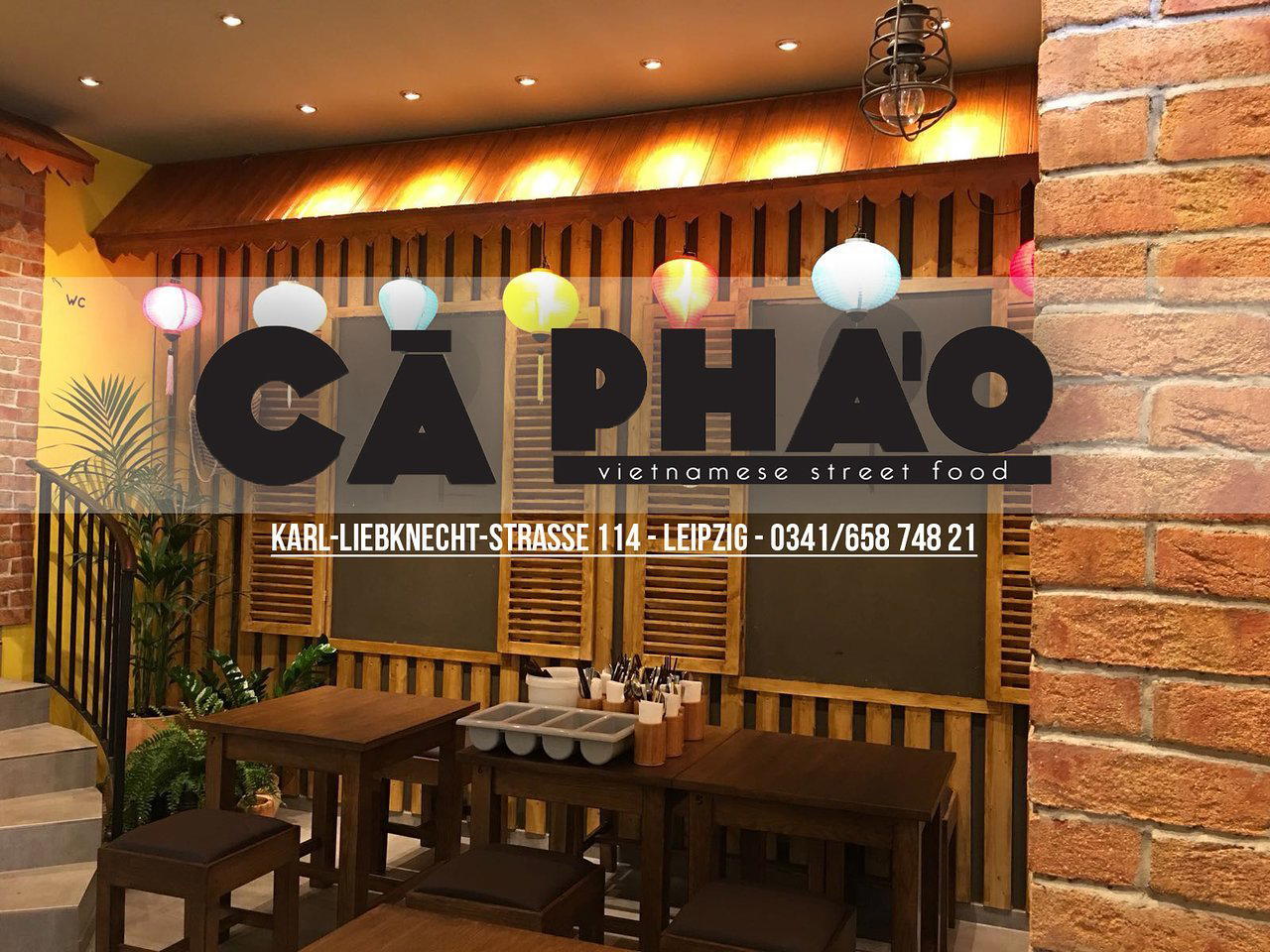
Karl-Liebknecht-Straße — known locally as the KarLi — runs south from the city centre through Südvorstadt and into Connewitz, and it functions less as a restaurant row than as a continuous experiment in independent hospitality. Bookshops, vinyl cafés, craft beer bars, and small international kitchens occupy the same stretch, creating a dining context that rewards curiosity more than it rewards prestige-seeking. CÀ PHÁO – Sushi & Vietnamese Food sits at number 114, inside a corridor where the operative logic is neighbourhood loyalty and culinary specificity rather than trophy-hunting.
The combination of sushi and Vietnamese cooking is not accidental. Across German cities with smaller but established Asian communities, hybrid operators have learned that maintaining two related but distinct culinary traditions under one roof serves a diner base that might not sustain separate specialist formats. Vietnamese and Japanese cuisines share structural affinities, rice, fresh herbs, clean broths, raw and lightly treated proteins, that make the pairing more coherent than it might appear on paper. The KarLi's demographic, skewing younger and internationally aware, provides exactly the audience that finds this format natural rather than compromised.
Vietnamese Cooking and What It Brings to the German Table
Vietnamese cuisine arrived in Germany through a specific historical channel. Following agreements between the German Democratic Republic and Vietnam in the 1980s, a significant Vietnamese community established itself across eastern German cities, including Leipzig. That community built a food culture that over several decades moved from canteen-style informal eating to more considered neighbourhood restaurants. The cooking tradition carried across is predominantly northern Vietnamese in character, lighter broths, less coconut, more reliance on herb freshness and dipping sauce precision than on richness.
In practice, this means that Vietnamese restaurants in Leipzig's eastern-German context tend toward dishes like phở, bún bò, and gỏi cuốn rather than the southern-influenced, sweeter profiles more common in cities with communities drawn from later migration waves. CÀ PHÁO's name itself gestures to this specificity: cà pháo is a small Vietnamese pickled eggplant, a table condiment rather than a centrepiece, the kind of detail that signals familiarity with the cuisine's texture rather than its tourist-facing highlights.
For Leipzig diners approaching Vietnamese food through this lens, the context matters. The city has a longer relationship with Vietnamese cooking than most western German counterparts, and the baseline expectation among regular customers is correspondingly more precise. A restaurant operating on the KarLi in this tradition is not introducing the cuisine to a blank audience.
Sushi in a City Without a Sushi Establishment
Leipzig does not have the depth of Japanese dining infrastructure found in Frankfurt, Hamburg, or Berlin. The sushi tier in the city runs primarily through delivery-oriented operations and multi-Asian menus rather than dedicated omakase or counter-focused formats. Venues like 997 Sushi Restaurant represent the category as it exists here: accessible, practical, positioned for repeat neighbourhood use rather than occasion dining.
Within that context, sushi at CÀ PHÁO sits in the same practical tier. The format, Vietnamese food alongside sushi rolls and nigiri, reflects how Japanese technique has been absorbed into the German casual dining market: not as a standalone culinary statement, but as a complementary protein-and-rice proposition that broadens menu appeal without requiring specialist sourcing infrastructure. This is a pattern repeated across mid-sized German cities where the audience for sushi is wide but the audience for a dedicated omakase counter is thin.
For comparison, the higher reaches of German dining, venues like Schwarzwaldstube in Baiersbronn, Aqua in Wolfsburg, or JAN in Munich, operate in an entirely separate register, as do destination formats like Vendôme in Bergisch Gladbach or CODA Dessert Dining in Berlin. CÀ PHÁO is not competing in that space. It operates where the city actually eats on a weeknight: neighbourhood-anchored, accessible by price and format, and valued for consistency within a specific culinary lane.
Where CÀ PHÁO Sits in Leipzig's Broader Dining Picture
Leipzig's restaurant scene has developed unevenly. The upper end is anchored by a small cluster of ambitious operators: Kuultivo at the modern cuisine tier, Stadtpfeiffer at the creative fine-dining level, and a handful of internationally oriented mid-range rooms. Below that layer, the city runs on independent neighbourhood operations with loyal local followings and limited visibility outside their immediate catchment areas.
CÀ PHÁO belongs to that independent neighbourhood tier. Its address on the KarLi places it in company with operators like Addis Café and Alfa Restaurant, both of which serve communities defined more by culinary identity than price ambition. This is a zone of the city where repeat custom matters more than destination visits, and where a restaurant's value is measured against the neighbourhood's daily rhythms rather than against national benchmarks.
Visitors who have spent time at destination-level European dining, venues like Victor's Fine Dining by Christian Bau in Perl, ES:SENZ in Grassau, Schanz in Piesport, or Waldhotel Sonnora in Dreis, and who find themselves in Leipzig for the first time should calibrate expectations accordingly. CÀ PHÁO is neighbourhood infrastructure, not a destination in its own right. The same holds for Restaurant Haerlin in Hamburg or Le Bernardin in New York City comparisons: different categories, different purposes, different audiences entirely.
The useful frame for CÀ PHÁO is the KarLi itself. On a street that rewards walking and grazing, this is a kitchen offering two Asian culinary traditions with roots in Leipzig's own demographic history. Whether you arrive from the direction of the city centre or from Connewitz, it reads as part of the street's fabric rather than an outlier within it. See the full Leipzig restaurants guide for broader orientation across the city's neighbourhoods and price tiers, including options at Lazy Bear in San Francisco-level ambition for those planning well in advance around rarer formats.
Planning a Visit
CÀ PHÁO is located at Karl-Liebknecht-Straße 114, 04275 Leipzig. The KarLi is well-served by tram from the city centre, making the street easy to reach without a car. Given the neighbourhood format and likely seat count, walk-ins are plausible, but for weekend evenings on a street with high foot traffic, confirming in advance avoids uncertainty.
Frequently asked questions
How do I find CÀ PHÁO – Sushi & Vietnamese Food?
CÀ PHÁO – Sushi & Vietnamese Food is located at Karl-Liebknecht-Straße 114, 04275 Leipzig, Germany, Leipzig.
Is CÀ PHÁO in Leipzig suitable for diners who want Vietnamese food rather than sushi?
CÀ PHÁO positions itself as a dual-cuisine venue, combining sushi with Vietnamese cooking under one menu in Leipzig's Südvorstadt neighbourhood. Vietnamese cuisine has a documented presence in Germany stretching back to the GDR period, and Leipzig itself has an established Vietnamese community, meaning the city has a reference point for what that cooking should taste like. Diners focused on Vietnamese rather than Japanese food are not arriving at a compromise venue — the Vietnamese offer appears to be a co-equal part of the format, not a secondary add-on.
What's the best thing to order at CÀ PHÁO – Sushi & Vietnamese Food?
The menu spans two distinct culinary traditions: sushi on one side, Vietnamese cooking on the other. Leipzig has limited Japanese dining infrastructure compared to Frankfurt or Berlin, so the sushi offer at Karl-Liebknecht-Straße 114 fills a gap that few restaurants on the KarLi address. The Vietnamese side draws on a cooking tradition that arrived in Germany through GDR-era bilateral agreements, giving it a longer local lineage than most diners expect. Without current menu documentation, the safest approach is to ask staff which dishes are prepared in-house that day.
How far ahead should I plan for CÀ PHÁO – Sushi & Vietnamese Food?
The KarLi is one of Leipzig's more active dining corridors, and restaurants along it that operate a dual-format menu tend to draw both neighbourhood regulars and visitors from the city centre, which is easily reached by tram. Booking at least a few days ahead for weekend visits is a reasonable precaution. Current reservation policy and hours are not published online, so contacting the venue directly at Karl-Liebknecht-Straße 114 is the most reliable step before visiting.
| Venue | Cuisine | Price | Awards | Notes |
|---|---|---|---|---|
| CÀ PHÁO – Sushi & Vietnamese FoodThis venue — the venue you are viewing | Vietnamese & Sushi | Not listed | Not listed | Not listed |
| Kuultivo | Modern Creative Cuisine | $100–150 | 1 Michelin Star | Modern Cuisine |
| Stadtpfeiffer | Modern European Fine Dining | $150–200 | 1 Michelin Star · La Liste Top Restaurants | Creative |
| Falco | Modern European Fine Dining | $100–150 | Falstaff Bar - 92 Falstaff Points | Not listed |
| C'est la vie | Modern French Fine Dining | $100–150 | Michelin Plate | Not listed |
| Michaelis | Seasonal German Fine Dining | $50–100 | Michelin Plate | Not listed |