Our verdict
Set within the Snow Town National Forest Park in China's northeastern Yanbian region, 阿玛尼韩食馆 occupies a position where Korean culinary tradition meets one of Jilin Province's most dramatic natural environments. The surrounding forest and its seasonal rhythms shape both the setting and the sourcing logic of the kitchen. Visitors travelling to Snow Town should factor this into their planning early.

Pearl is the En Primeur Club membership app — saves, bookings, and concierge access live there. Same editors, same standards.
- Address
- Snow Town National Forest Park-China's Snow Town Scenic Area, Yanbian, 吉林
- Directions
- Get directions
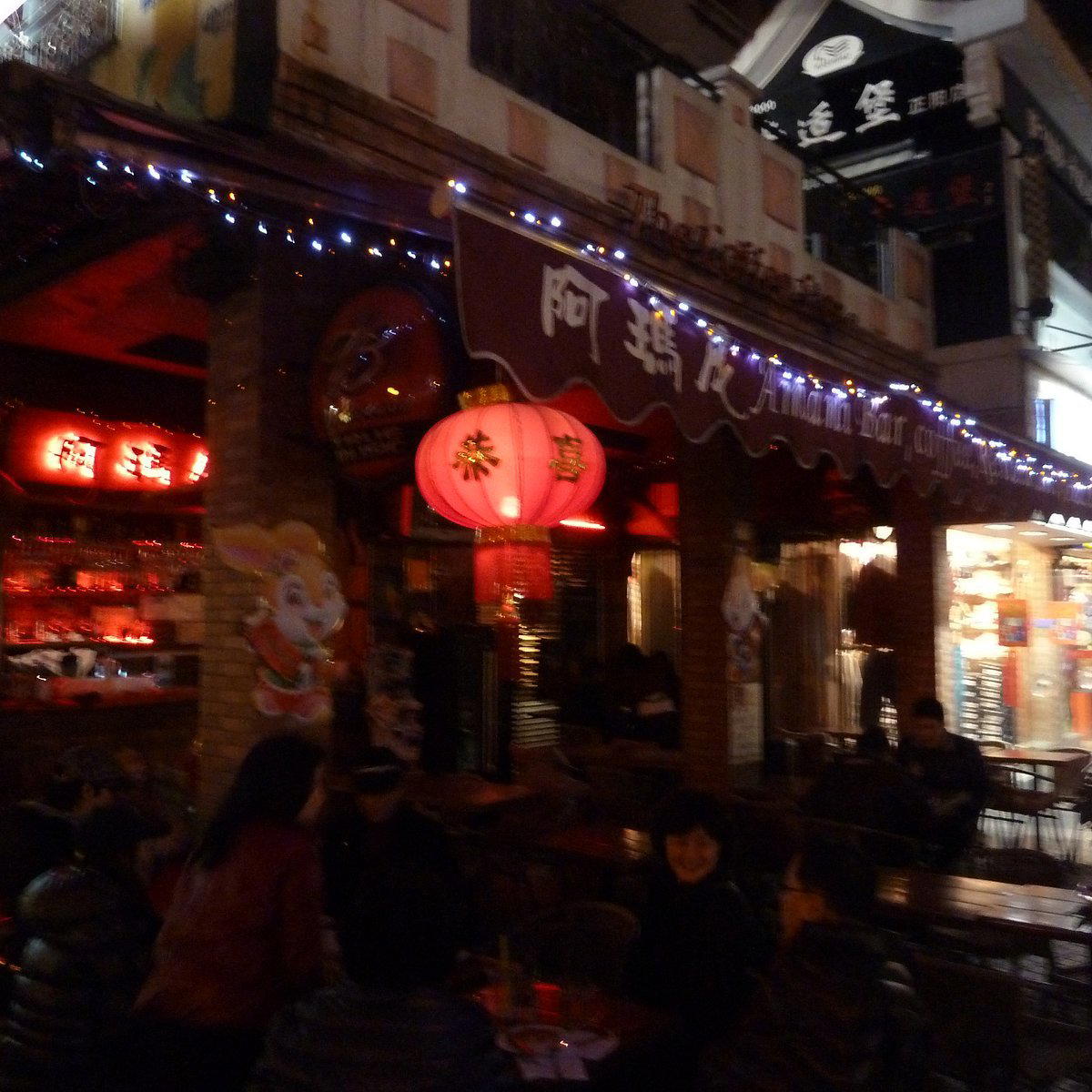
Where the Forest Sets the Table
Snow Town National Forest Park sits at the northeastern edge of Jilin Province, inside the Yanbian Korean Autonomous Prefecture, a region where the Korean cultural presence is not a culinary affectation but a matter of several generations of settlement and agricultural practice. The landscape here, particularly in the colder months when the area draws visitors for its heavy snow accumulation and frosted pine canopy, creates conditions that define what local restaurants can realistically source, and how they think about food. 阿玛尼韩食馆 operates within this context, positioned as a Korean restaurant inside one of the park's main scenic zones.
The broader pattern across Yanbian's food culture is worth understanding before arrival. Unlike Korean restaurant districts in cities such as Beijing or Shanghai, where the cuisine is largely imported in both ingredient and concept, Yanbian's Korean food tradition is embedded at the producer level. Kimchi fermentation, doenjang aging, and wild mountain vegetable foraging are not restaurant marketing points here; they are carried practices that predate the tourism infrastructure. A restaurant operating inside the Snow Town scenic area draws on that regional baseline, even if the tourist volume in the area creates a different kind of dining pressure than you'd find in Yanji, the prefecture's main city.
The Sourcing Logic of Jilin's Korean Kitchen
The ingredient story in Yanbian Korean cooking begins with geography. The Changbai Mountain range, which forms the broader environmental frame for Snow Town, produces a set of wild ingredients, including various mountain greens, bracken fern, and several mushroom varieties, that appear consistently in the region's cooking. These ingredients are harvested seasonally and preserved through methods, principally salting, drying, and fermentation, that reflect a long history of cold-climate food storage. For a restaurant in this location, the access to those ingredients is a structural advantage, not something that requires a supply chain to manufacture.
This matters because Korean cuisine at its core is a fermentation and preservation tradition. Doenjang, ganjang, gochujang, and kimchi are not condiments in the Western sense; they are the foundational flavor architecture of the cuisine, developed over months of controlled fermentation. In Yanbian, producers working in that tradition have been doing so for generations, and the regional versions carry flavor profiles shaped by the local climate. Cold winters slow fermentation in ways that affect depth and acidity differently than in warmer production regions in South Korea. That distinction is real and worth knowing when you are eating in this part of China rather than in Seoul or even in a Yanbian restaurant elsewhere in the country. For a broader look at how Chinese cities handle regional culinary identity at the premium end, Ru Yuan in Hangzhou and Xin Rong Ji in Chengdu offer instructive comparisons in how place-based sourcing translates to dining room decisions.
Snow Town as a Dining Context
The Snow Town scenic area is a purpose-built tourism destination organized around its winter conditions, and dining within it operates on a different rhythm than city restaurant culture. Visitor numbers concentrate heavily in the December-to-February window, when snow accumulation in this part of Jilin can reach levels that close roads and reshape daily logistics. Restaurants in this environment serve a predominantly transient guest population, which shapes everything from portion logic to the pace of service. The setting itself, surrounded by dense conifer forest, heavy snowfall, and the particular quiet of a managed scenic zone, creates an atmospheric frame that is genuinely different from eating Korean food in an urban restaurant context.
That atmospheric particularity is one reason to seek out a meal here rather than waiting until you return to a city. The pairing of the food tradition with its actual geographic origin, in a region where the cuisine and the terrain developed together, produces a different reading of familiar dishes. Comparing the experience to something like Local Old Town Home in Kashgar, another restaurant where cuisine and built environment are inseparable from their regional context, points to a pattern: some meals derive part of their meaning from where they happen to be.
Planning a Visit
Yanbian Korean Autonomous Prefecture is accessible by air through Yanji Chaoyangchuan International Airport, which connects to several major Chinese cities. Snow Town itself requires onward road travel from Yanbian's urban centers, and conditions in winter make advance planning for transport essential. The scenic area operates under a managed entry system, and accommodation within or adjacent to the park is limited, meaning reservations for both lodging and dining should be secured well ahead of the peak winter season. For travellers building a broader northeastern China itinerary that includes premium dining, our full Yanbian restaurants guide provides additional context on the prefecture's food scene. Those comparing notes on Chinese restaurant experiences at different tiers might also reference Chef Tam's Seasons in Macau, Imperial Treasure Fine Chinese Cuisine in Guangzhou, or Dai Yuet Heen in Nanjing for a sense of how different regional frameworks approach quality signals. For Korean cuisine at the internationally recognized end of the spectrum, Atomix in New York City offers a point of reference for how the tradition translates in a fine-dining context abroad.
The absence of a confirmed website or phone contact suggests that reservations may operate through the park's general infrastructure rather than independently.
Frequently asked questions
Is 阿玛尼韩食馆 suitable for children?
The restaurant sits within the Snow Town National Forest Park scenic area in Yanbian, a destination that draws family groups specifically for its winter landscape. Korean cuisine in this region tends toward shared table formats with rice, soups, and grilled proteins, which work practically for families.
What kind of setting is 阿玛尼韩食馆?
The restaurant is located inside the Snow Town National Forest Park scenic area, part of the Yanbian Korean Autonomous Prefecture in Jilin Province. Dining here operates within a purpose-built winter tourism zone, meaning the setting is tied to the park's seasonal character rather than a standalone urban restaurant environment. Expect a context shaped by forest surroundings and the concentrated visitor flow that Snow Town attracts during peak winter season.
What makes dining at 阿玛尼韩食馆 different from Korean restaurants in other Chinese cities?
The restaurant operates inside a national forest park in Yanbian Korean Autonomous Prefecture, a region where Korean culinary traditions have developed continuously over generations rather than arriving as a transplanted trend. Yanbian sits adjacent to the Changbai Mountain range, which directly shapes the ingredient supply available to local kitchens. That geographic and cultural specificity separates the cooking here from generic Korean dining found in larger Chinese urban centres.
What should I order at 阿玛尼韩食馆?
Yanbian Korean cooking draws on the Changbai Mountain range for its ingredient base, with cold-weather staples, mountain vegetables, and Korean-influenced preparations that reflect the prefecture's cross-cultural food tradition.
Comparable Spots, Quickly
| Venue | Cuisine | Price | Awards | Notes |
|---|---|---|---|---|
| 阿玛尼韩食馆This venue — the venue you are viewing | Korean Food | Not listed | Not listed | Not listed |
| Fu He Hui | Modern Seasonal Vegetarian Fine Dining | $200–300 | 2 Michelin Stars · World's 50 Best #11 | Vegetarian |
| Aji | Asian Bistronomy (Nikkei Fusion) | $50–100 | 1 Michelin Star · Wine Spectator Best of Award of Excellence | Nikkei, Innovative |
| Five Foot Road | Modern Sichuan Fine Dining | Not listed | 1 Michelin Star · La Liste Top Restaurants | Sichuan |
| Jing | Modern French with Asian Influences | $300–500 | 1 Michelin Star · Black Pearl 1 Diamond | French Contemporary |
| Lai Heen | Michelin-Starred Cantonese | $50–100 | 1 Michelin Star · Forbes 5-Star | Cantonese |
Details
- Casual Hangout
- Standalone
- A La Carte
温馨 casual Korean eatery