Perched within the medieval fabric of Nideggen's castle district, Burgrestaurant Nideggen sits at the intersection of regional German cooking and ancient fortress architecture. The restaurant draws visitors making the journey into the Rureifel, where the surrounding landscape shapes what ends up on the plate. For travellers covering western Germany's quieter dining circuit, it belongs on the same itinerary as the Eifel region's more documented addresses.
Pearl is the En Primeur Club membership app — saves, bookings, and concierge access live there. Same editors, same standards.
- Address
- Kirchgasse 10a, 52385 Nideggen, Germany
- Phone
- +4924279091066
- Website
- burgrestaurant-nideggen.de
- Directions
- Get directions
 Saves & bookings on Pearl
Stone Walls and Sourced Plates: Dining Inside Nideggen's Castle Quarter
Burgrestaurant Nideggen is a restaurant in Nideggen, Germany, serving Modern German Fine Dining at Kirchgasse 10a. Burgrestaurant Nideggen, at Kirchgasse 10a in the old castle town of Nideggen, operates inside that category. The approach to the restaurant leads through a medieval quarter where the castle ruins of Burg Nideggen define the skyline, and the architecture around you has been accumulating history since the thirteenth century. Before a single dish arrives, the setting has already made an argument: this is a place shaped by where it exists, not by the conventions of a broader dining trend.
Nideggen sits in the Rureifel, the forested plateau country of western Germany that runs between Aachen and Cologne, cut through by the Rur river valley. It is not a city with a dense restaurant scene. The handful of addresses worth considering here are spaced far apart in character as much as in geography. That relative scarcity concentrates attention: a restaurant in this setting carries more contextual responsibility than it would in a major urban dining district, because it often represents the region to visitors who have made a specific effort to arrive.
What the Rureifel Puts on the Plate
German regional cooking in the Eifel has long drawn from a specific larder: game from managed forests, freshwater fish from river systems including the Rur and its tributaries, root vegetables from smallholdings, and dairy from farms on the plateau. These are not abstract culinary references but practical sourcing realities that have shaped what cooks in this area work with across generations. A restaurant positioned physically inside a castle district, surrounded by the kind of terrain that produces this larder, exists in a direct relationship with that supply chain whether it chooses to foreground it or not.
The strongest regional kitchens in Germany's less-visited areas tend to make that relationship explicit. The model at places like Kaiserblick, also in Nideggen and operating under a farm-to-table framework, shows how a kitchen in this geography can build its identity around provenance rather than technique alone. Nearby, Burg Nideggen - Brockel Schlimbach takes a modern cuisine approach from within the same castle setting, demonstrating that the site sustains multiple culinary interpretations simultaneously.
This sourcing-first framework matters beyond Nideggen itself. Germany's upper-tier kitchens, from Schwarzwaldstube in Baiersbronn to Waldhotel Sonnora in Dreis and Vendôme in Bergisch Gladbach, have each built part of their argument on the specificity of regional ingredients, even when technique and presentation operate at an international level. The conversation about where the food comes from is no longer confined to farm-focused concepts. It runs across price tiers and formats throughout western Germany.
The Architecture of the Experience
Castle-adjacent dining in Europe divides into two broad types. The first uses heritage architecture as backdrop, with the kitchen operating in a register largely disconnected from the setting. The second treats the physical environment as genuinely constitutive of the experience, so that what you eat and where you are exist in dialogue. The Nideggen castle quarter, with its compressed medieval streetscape and the ruins above, applies pressure toward the second type. A restaurant here that did not acknowledge its context would be squandering one powerful asset the address provides.
For visitors making the journey, the practical reality of Nideggen should inform expectations. This is a small town, and the dining options are limited by design as much as by circumstance. You are not browsing between a dozen alternatives; you are choosing to come here for a specific kind of experience, and the experience begins with the drive through the Rureifel and the walk up through the old town.
Where Nideggen Sits in the Wider German Dining Map
Western Germany's dining geography rewards those willing to travel between smaller towns rather than anchoring in a single city. The Michelin-recognised rooms that define the region's upper tier, including Bagatelle in Trier, Schanz in Piesport, and GästeHaus Klaus Erfort in Saarbrücken, each occupy towns that require a deliberate detour from major transit routes. Nideggen follows this pattern. It is approximately equidistant between Aachen and Cologne, accessible by car, and sits within a day-trip range that makes it combinable with other Rureifel stops.
For those building a longer German itinerary, the contrast with urban fine dining is part of the point. Aqua in Wolfsburg, JAN in Munich, and CODA Dessert Dining in Berlin all operate in contexts where the restaurant is the primary draw and the surrounding city provides density and alternatives. A place like Burgrestaurant Nideggen operates differently: the town, the valley, and the ruins are co-equal draws, and the meal is one element of a day spent in a landscape that does not feel like anywhere else in the region.
International reference points are useful here. The model of destination dining attached to a specific historical or geographic site, rather than to a chef's reputation or an urban address, has clear parallels at restaurants like Lazy Bear in San Francisco, where the format itself generates the narrative, and at heritage-anchored European addresses. Le Bernardin in New York City represents the opposite pole: a kitchen where sourcing matters intensely but where the urban context is incidental to the experience. Nideggen belongs firmly to the former category, where place is inseparable from plate.
Planning a Visit
The restaurant is at Kirchgasse 10a, in the heart of the castle quarter. Nideggen is most practically reached by car from Aachen or Cologne. The town is compact, and the restaurant is within walking distance of the castle ruins, which makes combining both into a single afternoon direct. Given the limited scale of dining in Nideggen, booking ahead is the sensible approach regardless of season. The Rureifel draws visitors particularly in autumn, when the forested valley takes on colour and game season aligns with what regional kitchens have historically done well.
Quick Comparison
Comparable venues nearby, for context on price, style, and recognition.
| Venue | Cuisine | Price | Awards | Notes |
|---|---|---|---|---|
| Burgrestaurant NideggenThis venue — the venue you are viewing | Modern German Fine Dining | $$$$ | Not listed | Not listed |
| Kaiserblick | Regional German Farm-to-Table | $$$ | Michelin Plate | Burg Nideggen |
| Burg Nideggen - Brockel Schlimbach | Modern German Fine Dining with French Influences | $$$$ | Michelin 1 Star | Nideggen |
| Brogsitter Gasthaus Sanct Peter | Modern German Fine Dining | $$$$ | Not listed | Walporzheim |
| Sandhof Restaurant "Dirk Maus" | Modern German Fine Dining | $$$$ | Not listed | Heidesheim am Rhein |
| Wettsteins Restaurant | Regional German Cuisine | $$$$ | Michelin Plate | Langerwehe |
Continue exploring
More in Nideggen
Restaurants in Nideggen
Browse all →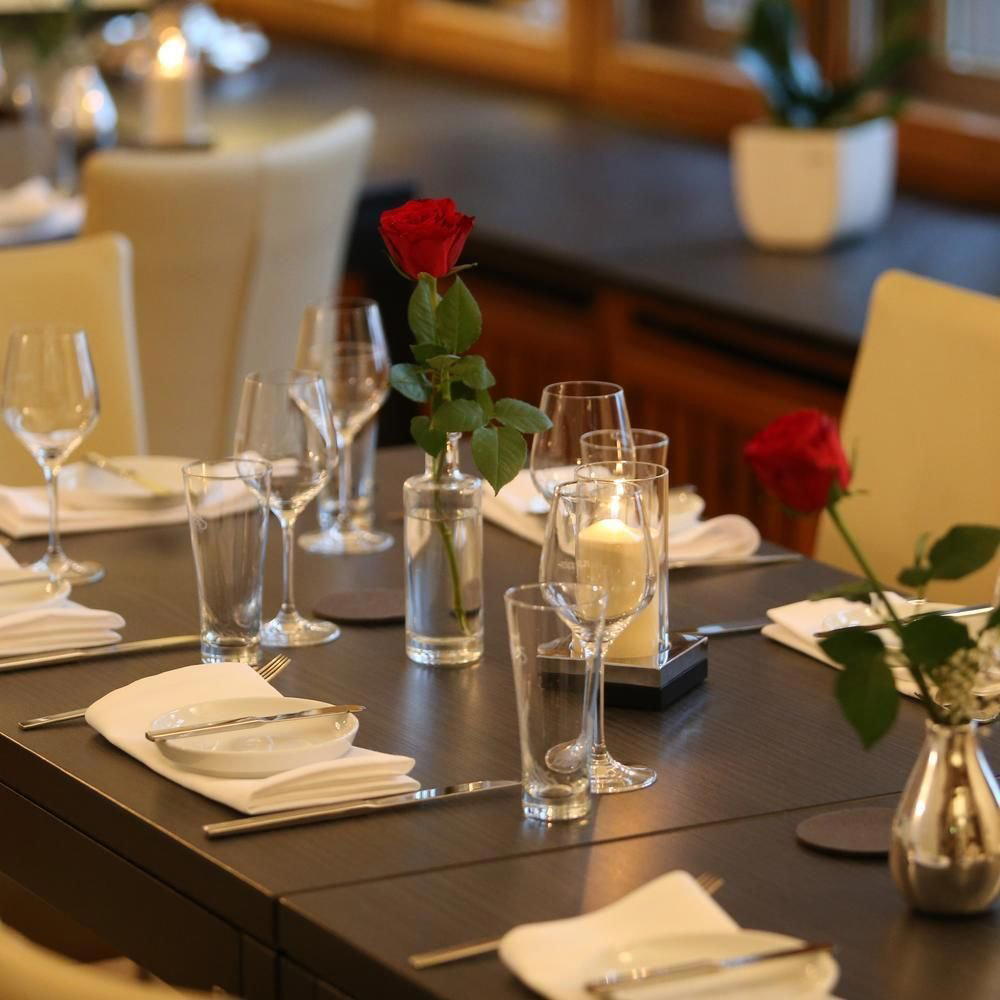
Bars in Nideggen
Browse all →
Hotels in Nideggen
Browse all →
Wineries in Nideggen
Browse all →
At a Glance
- Elegant
- Rustic
- Scenic
- Cozy
- Special Occasion
- Date Night
- Celebration
- Historic Building
- Local Sourcing
Current opening hours
- Monday
- Closed
- Tuesday
- Closed
- Wednesday
- Closed
- Thursday
- 6–11 PM
- Friday
- 12–2:30 PM, 6–11 PM
- Saturday
- 12–2:30 PM, 6–11:30 PM
- Sunday
- 12–2:30 PM, 6–11 PM
Hours can change for holidays and private events. Last verified .
Light-flooded historic castle setting with elegant and sophisticated atmosphere, attentive service, and a focus on high-quality, aroma-rich dishes.