Buenos Aires Café
Inviting cafe with bold tango spirit and charm.
 Discover on Pearl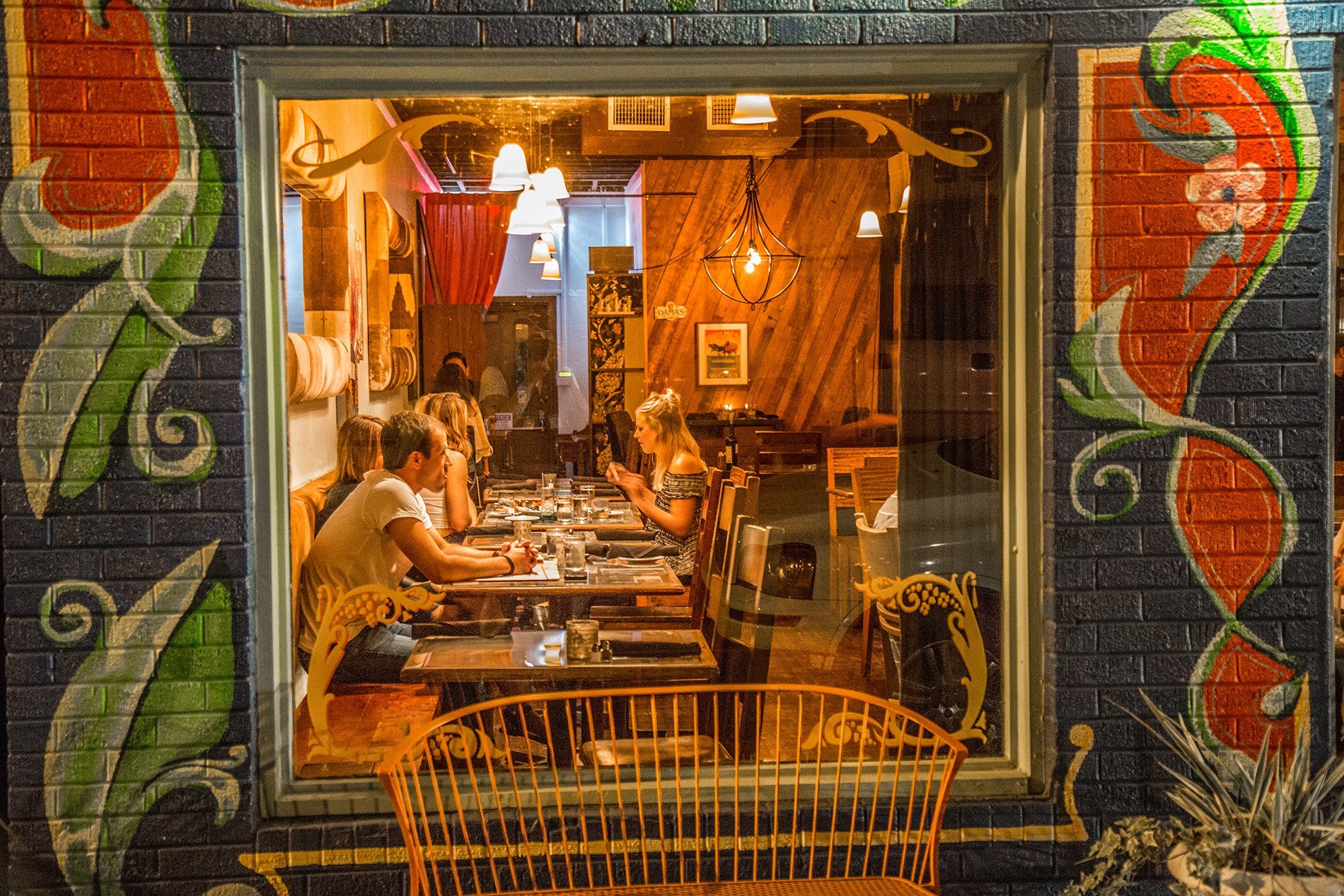
East Sixth Street and the Argentine Presence in Austin
East 6th Street has spent the better part of a decade sorting itself out. What began as a corridor of low-rent creative spaces has compressed into something denser and more intentional: wine bars with serious lists, taco counters with cult followings, and a handful of restaurants drawing explicit lines between imported culinary traditions and the local products available in central Texas. Buenos Aires Café, at 1201 E 6th St, sits inside that pattern. The address places it in walking distance of the strip's established anchors, though the kitchen's reference point is the Río de la Plata rather than the Hill Country smokepits that define Austin's wider food identity.
Argentine café culture operates on its own logic. The parrilla — the grill — is central, but so is the ritual of sitting for extended stretches over coffee and something sweet. Porteño dining rooms in Buenos Aires are built for duration, not throughput. When that format travels to a city like Austin, which has its own deeply embedded outdoor-fire cooking culture through la Barbecue and InterStellar BBQ, the overlap and the friction between the two traditions become the interesting story. Both Argentine and Texas cooking center the fire. The techniques diverge sharply: low-and-slow rendered Texas brisket versus the higher-heat, shorter-contact asado of the Southern Cone. Buenos Aires Café occupies the intersection of those two grilling philosophies, in a city that pays close attention to how meat meets flame.
The Argentine Kitchen in a Texas Context
Argentine cuisine is frequently reduced to steak and chimichurri in the popular imagination, which understates the sophistication of the actual tradition. The Pampas beef supply is genuinely different from grain-finished American cattle , grass-fed, leaner, with a different fat profile that rewards high heat and short cook times rather than the low-and-slow approach that suits marbled brisket. Techniques brought from Italy and Spain over two centuries of immigration layered onto indigenous and gaucho traditions to produce something that is simultaneously European in its café culture and deeply South American in its relationship to fire, offal, and fermented dairy. Chimichurri itself is a case study in this synthesis: herbaceous, sharp with vinegar, built to cut fat rather than add it, and calibrated to the specific fat content of grass-finished beef.
In Austin, where ingredient sourcing has become a genuine differentiator , Barley Swine has built its New American identity around hyper-local Texas products, and Hestia anchors its live-fire program in locally sourced proteins , an Argentine kitchen has a productive set of questions to answer. Does it import its beef philosophy wholesale, or does it adapt to Texas ranching supply? Does the café format hold, or does the pace of the East 6th dining market push it toward something faster? These are the questions a kitchen in this position has to work through.
The broader American conversation around live-fire and global grill traditions has grown substantially in sophistication. Restaurants like Smyth in Chicago and Blue Hill at Stone Barns in Tarrytown have pushed the dialogue around fire and local ingredients toward fine-dining register. At the other end of the formality scale, the Argentine-inflected café format , empanadas, medialunas, mate, a glass of Malbec at midday , represents a different entry point into the same conversation about what cooking over or near flame actually means when the ingredients and the cultural context shift.
Where Buenos Aires Café Sits in Austin's Dining Spread
Austin's restaurant market has bifurcated in familiar ways. The high-end tier has grown more technically ambitious: Craft Omakase and the refined tasting-menu format have found committed audiences. The mid-market is crowded. A café operating on Argentine rhythms , where breakfast extends late, where lunch is unhurried, where the pastry case matters as much as the dinner menu , occupies a format that doesn't map neatly onto Austin's existing categories. That format adjacency is an advantage when it works. The café structure sidesteps the direct competition with steakhouses and barbecue institutions while still addressing the city's appetite for serious meat cookery and fire-centered technique.
For reference, Argentine café-restaurants in American cities have historically found their footing in neighborhoods with sufficient residential density and a dining culture that supports non-meal-period visits. East 6th has that density now. The question of whether the neighborhood's foot traffic skews toward the late-night bar circuit or toward the extended afternoon café visit is a real operational consideration that shapes how a room like this one performs across dayparts.
Compared to the formal intensity of Le Bernardin in New York City, The French Laundry in Napa, or Addison in San Diego , all of which operate in a register defined by white-tablecloth precision and multi-hour commitment , the Argentine café format is deliberately more elastic. You come for an empanada and a cortado at noon or you come for a full asado-anchored dinner at nine. Both are valid. That flexibility is structurally built into the Argentine dining tradition in a way it isn't in most fine-dining formats, and it's a meaningful differentiator in a market where reservation-required, fixed-menu dining has grown as a category.
Planning Your Visit
Buenos Aires Café is located at 1201 E 6th St, Austin, TX 78702, on the central stretch of East 6th Street where the density of venues is highest and parking is easier to manage outside of weekend evenings. East 6th is walkable from several of the inner east side's residential blocks and reachable via rideshare from downtown Austin in under ten minutes. For broader context on Austin's dining scene across price tiers and neighborhoods, the EP Club Austin restaurants guide maps the city's major corridors and places venues in their competitive and geographic context. Those planning trips that extend beyond Austin might find relevant comparisons in American restaurants working at the intersection of regional ingredients and global technique, including Lazy Bear in San Francisco, Emeril's in New Orleans, Providence in Los Angeles, Single Thread Farm in Healdsburg, The Inn at Little Washington, Atomix in New York City, and Atelier Moessmer Norbert Niederkofler in Brunico , all of which approach the imported-technique-meets-local-ingredient question from different angles and in different price brackets.
Frequently Asked Questions
- What is the signature dish at Buenos Aires Café?
- The Argentine café tradition centers on empanadas, asado-style grilled meats, and house-made pastries. Buenos Aires Café draws on those conventions as its culinary anchors. For current menu specifics, the venue's address at 1201 E 6th St is the leading starting point for a direct inquiry, as detailed dish-level information is not publicly confirmed through third-party sources at this time.
- Do I need a reservation for Buenos Aires Café?
- In Austin's mid-market dining tier, walk-in availability varies significantly by day and time. Argentine café formats typically handle both casual daytime visits and busier dinner services, which can affect wait times on weekends. Given East 6th Street's foot traffic patterns, calling ahead or visiting during off-peak hours reduces the risk of a wait, particularly as the area draws larger crowds Thursday through Saturday evenings.
- What is the signature at Buenos Aires Café?
- The kitchen's Argentine orientation points toward fire-centered meat preparation and the café staples of the Río de la Plata tradition. In that culinary context, the parrilla program and the empanada selection are the most structurally central elements of any Argentine café menu. Confirming the current offerings directly with the venue will give you the most accurate picture of what the kitchen is running at any given time.
- Is Buenos Aires Café good for vegetarians?
- Traditional Argentine dining is meat-forward, but Argentine café culture does include a range of vegetable-based empanada fillings, dairy-rich pastries, and produce-centered sides that work well for vegetarians. Austin's dining culture has also pushed most restaurants to expand their non-meat options. For current vegetarian availability, checking directly with the venue at 1201 E 6th St is the most reliable approach, as menu composition shifts seasonally.
- How does Buenos Aires Café compare to other Argentine restaurants in Austin?
- Argentine restaurants in Austin remain a relatively thin category compared to the city's well-documented strength in Texas barbecue and New American cooking. Buenos Aires Café's East 6th Street address places it in one of the city's more active dining corridors, giving it neighborhood visibility that standalone Argentine spots in less trafficked areas lack. Its café format, which spans pastry and coffee service alongside a full cooking program, offers a broader daypart range than a parrilla-only operation, which is a meaningful structural difference within the local Argentine dining cohort.
The Quick Read
A compact peer snapshot based on similar venues we track.
| Venue | Notes | Price |
|---|---|---|
| Buenos Aires Café | This venue | |
| Olamaie | Southern, $$$ | $$$ |
| la Barbecue | Barbecue, $$ | $$ |
| Barley Swine | New American, Contemporary, $$$$ | $$$$ |
| Terry Black’s BBQ | Texas Barbecue, $$ | $$ |
| Jeffrey's | French - Steakhouuse, Contemporary, $$$$ | $$$$ |
Need a table?
Our members enjoy priority alerts and concierge-led booking support for the world's most difficult tables.
Get Exclusive Access