Brassica Kitchen
Our verdict
Brassica Kitchen sits on Washington Street in Jamaica Plain, a neighbourhood where independent restaurants have quietly built one of Boston's more interesting dining corridors. The kitchen draws on vegetable-forward cooking traditions at a moment when that approach has moved from the margins to the centre of serious American dining. It belongs to a cluster of neighbourhood restaurants worth planning a visit around.

Pearl is the En Primeur Club membership app — saves, bookings, and concierge access live there. Same editors, same standards.
- Address
- 3712 Washington St, Jamaica Plain, MA 02130
- Phone
- (617) 477-4519
- Hours
- Mon–Tue ClosedWed–Thu 5–9 PMFri 5–10 PMSat 10 AM–2 PM, 5–10 PMSun 10 AM–2 PM
- Website
- brassicakitchen.com
- Directions
- Get directions
- Booking
- Book on OpenTable
The menu
What to order
- Hardy Bolognese
- Tuna Tartare
- Hamachi Crudo
Washington Street and the Neighbourhood That Built Its Own Dining Identity
Washington Street in Jamaica Plain runs through a neighbourhood that resists easy categorisation. It is neither a destination dining district marketed to tourists nor a purely local strip indifferent to culinary ambition. Over the past decade, a collection of independent operators has settled along this corridor and created something rarer: a scene driven by community loyalty and genuine cooking rather than by real estate speculation or chef celebrity. Brassica Kitchen at 3712 Washington St sits inside that broader pattern, occupying a stretch of the street where a thoughtful diner can move between Ethiopian cooking at Blue Nile Restaurant, farm-to-table neighbourhood dining at Ten Tables, and Mexican-inflected fast-casual at The Purple Cactus or Casa Verde Taqueria within a few blocks. That density of independent kitchens is the context in which Brassica Kitchen operates, and it matters for understanding what the restaurant is trying to do.
The Cultural Argument for Vegetable-Forward Cooking
The name itself signals a culinary position. Brassica is the plant genus that encompasses cabbage, kale, broccoli, Brussels sprouts, kohlrabi, and mustard greens, vegetables with deep roots in peasant and agricultural cooking traditions across Europe, East Asia, and the Mediterranean. Naming a restaurant after that genus is a declaration of intent: this kitchen takes the vegetable seriously as a primary subject rather than as a supporting element around a protein anchor.
That stance has moved considerably closer to the mainstream since the early 2010s, when restaurants centred on produce were still positioned as niche or dietary-driven. The shift in American dining has been tracked by the broader recognition earned by kitchens like Blue Hill at Stone Barns in Tarrytown, which built its reputation around farm-sourced, agriculture-led menus, and by the ecological cooking focus at Atelier Moessmer Norbert Niederkofler in Brunico, a kitchen that has demonstrated how a produce-centred philosophy can earn the highest tier of formal recognition. At the neighbourhood level, the same logic plays out differently: the ambition is less about accolades and more about whether a kitchen can make plant-driven cooking compelling enough to draw repeat diners who are not necessarily ideologically committed to it.
Brassica Kitchen operates in that neighbourhood register. The cultural significance of brassica vegetables across culinary traditions gives the kitchen a wide lexicon to draw from: fermented cabbage preparations from Korean and Central European traditions, bitter greens cooked in rendered fat from Italian and Southern American cooking, roasted root-family vegetables that appear across North African and Levantine food. Whether a kitchen actually draws on that breadth or keeps its frame narrower is the kind of distinction worth exploring when visiting, but the conceptual territory is genuinely wide.
Jamaica Plain as a Dining Destination
Boston's dining conversation tends to concentrate on the Back Bay, the South End, and increasingly Seaport. Jamaica Plain sits outside that loop, which has historically meant lower rents, longer tenure for independent operators, and a dining public that skews toward regulars rather than first-time visitors chasing reservation trophies. That combination tends to produce restaurants with more settled cooking and less performative pressure than venues that open into high-profile neighbourhoods with heavy media attention from day one.
The comparison set for Brassica Kitchen within Jamaica Plain is instructive. Ten Tables has operated in the neighbourhood for years and built its reputation on small-format, carefully sourced cooking that earns loyalty without chasing awards. Blue Nile Restaurant represents the neighbourhood's cultural range, with Ethiopian cooking that serves both community diners and food-curious visitors from elsewhere in the city. Brassica Kitchen fits into this pattern of operators who have chosen neighbourhood scale deliberately, positioning themselves against community appetite rather than metropolitan hype cycles. For a fuller picture of what the area offers, the full Jamaica Plain restaurants guide maps the corridor in more detail.
Where Brassica Kitchen Sits in American Dining More Broadly
Vegetable-forward cooking at the neighbourhood level occupies a different position than it does at destination restaurants. Kitchens like Smyth in Chicago, Single Thread Farm in Healdsburg, or Lazy Bear in San Francisco approach produce-driven cooking through elaborate tasting menu formats with significant investment in sourcing infrastructure and prix-fixe pricing that places them in a different tier entirely. At the other end, farm-to-table language has become so pervasive in American casual dining that it has nearly lost meaning.
The more relevant comparison for Brassica Kitchen is with kitchens that operate between those poles: neighbourhood restaurants with genuine culinary intent, working at accessible price points, without the formal apparatus of tasting menu service. That category includes some of the more durable and honest cooking in American cities. Venues like Frasca Food and Wine in Boulder have demonstrated that regional, ingredient-focused cooking can build long-term reputations outside the major metropolitan markets. Emeril's in New Orleans and Providence in Los Angeles represent kitchens that built local identity through consistent execution rather than format novelty. The durability question for any neighbourhood restaurant is whether it is cooking something with enough internal logic to outlast opening-year interest, and plant-centred kitchens with a clear cultural framework have a structural advantage in answering that question affirmatively.
High-profile destination kitchens like The French Laundry in Napa, Le Bernardin in New York City, Addison in San Diego, The Inn at Little Washington, and Atomix in New York City operate at a remove from the neighbourhood restaurant logic entirely. They are useful reference points for what ambitious cooking can achieve at scale, but they are not the framework against which to assess what Brassica Kitchen is doing on Washington Street.
Planning a Visit
Brassica Kitchen is located at 3712 Washington Street in Jamaica Plain, accessible via the MBTA Orange Line at the Green Street or Stony Brook stations, both within a walkable distance of the restaurant. Jamaica Plain rewards spending time in the neighbourhood rather than treating any single restaurant as the sole reason to visit: the density of independently operated kitchens along Washington Street makes an evening that moves between venues genuinely practical. Booking details, current hours, and any reservation process are best confirmed directly, as operational specifics for neighbourhood restaurants in this tier shift seasonally. The address is fixed; everything else warrants a check before arrival.
Frequently asked questions
Where is Brassica Kitchen in Jamaica Plain?
Brassica Kitchen is located at 3712 Washington St, Jamaica Plain, MA 02130, Jamaica Plain.
Is Brassica Kitchen a good option for vegetarians visiting Boston?
A kitchen named for a plant genus and anchored on Washington Street in Jamaica Plain is structured around vegetable-centred cooking rather than offering it as an accommodation. For vegetarian diners in Boston looking beyond the South End's more profile-heavy options, it sits in a neighbourhood corridor with a track record of independent, produce-driven restaurants.
What dish is Brassica Kitchen famous for?
Diners on Washington Street in Jamaica Plain should expect produce to carry the plate rather than accompany it.
What's the best way to book Brassica Kitchen?
Neighbourhood restaurants along Washington Street in Jamaica Plain typically operate at a scale where walk-ins are viable, particularly on weeknights, though weekend demand in the corridor has grown as Jamaica Plain has drawn more deliberate diners from across Boston.
What's the standout thing about Brassica Kitchen?
Its position in Jamaica Plain's independent dining corridor is as much a defining factor as the cooking. Washington Street sits outside the Back Bay and South End circuits that dominate Boston's dining conversation, which means the restaurant operates within a neighbourhood that built its own dining identity rather than inheriting one. The name itself is a culinary declaration rather than a marketing exercise.
Budget and Context
Comparable venues nearby, for context on price, style, and recognition.
| Venue | Cuisine | Price | Notes |
|---|---|---|---|
| Brassica KitchenThis venue — the venue you are viewing | New American Fermentation-Forward | Not listed | Not listed |
| Casa Verde Taqueria | Mexican Taqueria | $20–30 | Jamaica Plain, Modern Mexican Taqueria |
| Blue Nile Restaurant | Ethiopian | $20–30 | Jamaica Plain, Ethiopian |
| Ten Tables | Seasonal American Bistro | Not listed | Jamaica Plain, Seasonal American Bistro |
| The Purple Cactus | California-Style Mexican Burritos & Wraps | $10–20 | Jamaica Plain, California-Style Mexican Burritos & Wraps |
| Hampshire House | New England American Fine Dining | Not listed | Beacon Hill, New England American Fine Dining |
Continue exploring
More in Jamaica Plain
Restaurants in Jamaica Plain
Browse all →
Bars in Jamaica Plain
Browse all →
Hotels in Jamaica Plain
Browse all →
Wineries in Jamaica Plain
Browse all →

Details
- Modern
- Cozy
- Trendy
- Date Night
- Brunch
- Special Occasion
- Open Kitchen
- Farm To Table
- Local Sourcing
- A La Carte
- Small Plates
- Vegetarian Friendly
- Vegan Options
- Gluten Free Options
Current opening hours
- Monday
- Closed
- Tuesday
- Closed
- Wednesday
- 5–9 PM
- Thursday
- 5–9 PM
- Friday
- 5–10 PM
- Saturday
- 10 AM–2 PM, 5–10 PM
- Sunday
- 10 AM–2 PM
Hours can change for holidays and private events. Last verified .
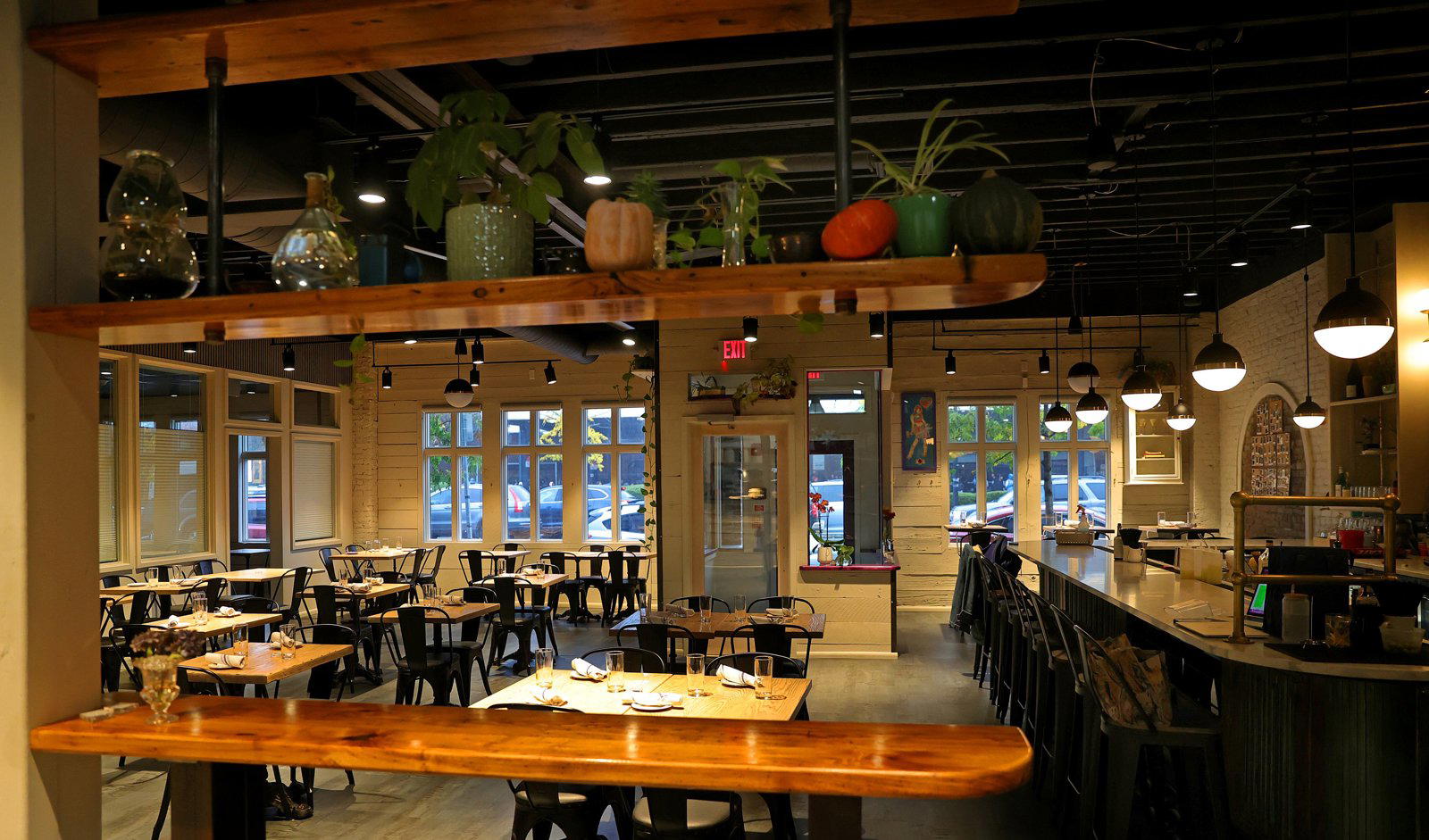
Bright and sunny cafe by day transforming into a sophisticated, modern atmosphere at night with moderate noise levels.