
Michelin Plate
Our verdict
Four tables, fourteen covers, and a weekly-changing set menu rooted in classical French technique with Asian and Levantine accents: BOU4 in Zams operates at a scale that is rare even by Alpine standards. Located inside the Hotel Jägerhof on Hauptstraße, the Bouvier family's small restaurant demands advance booking and rewards the effort with cooking that is both technically demanding and clearly focused on flavour.

Pearl is the En Primeur Club membership app — saves, bookings, and concierge access live there. Same editors, same standards.
- Address
- Hauptstraße 52
- Phone
- +43 5442 62642
- Website
- jaegerhof-zams.at
- Directions
- Get directions
Four Tables in the Tyrolean Inn
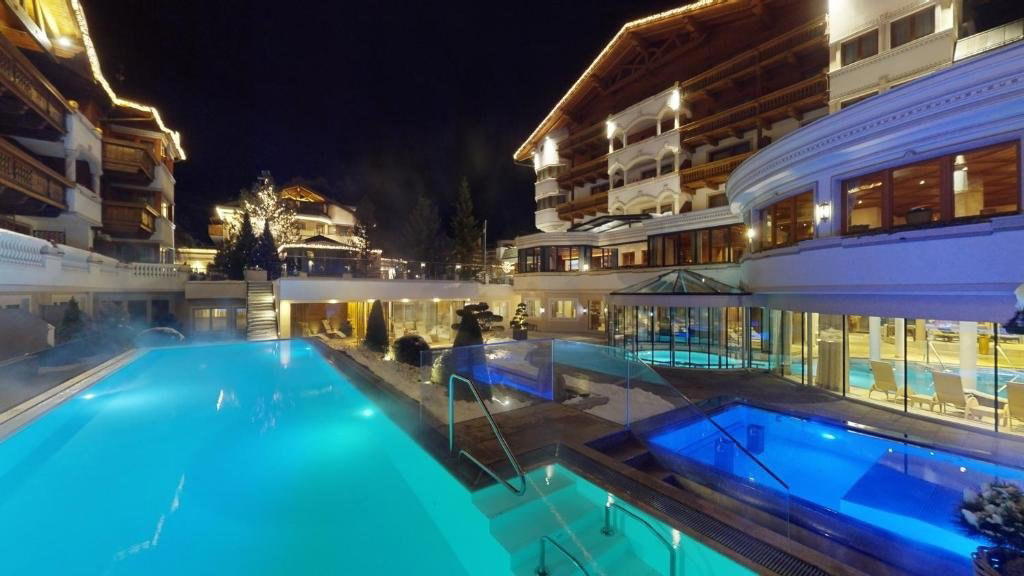
The hotel dining room as a serious culinary address is a long-established format in the Austrian Alps. What distinguishes the stronger examples from the merely convenient is a combination of scale, intention, and a kitchen willing to take technical risks for a small, captive audience. BOU4, inside the Hotel Jägerhof on Hauptstraße 52 in Zams, fits that pattern closely. The room seats a maximum of fourteen diners across four tables, the curved black wooden surfaces set against a pared-back, modern interior that signals ambition without theatre. There is nothing rustic about the space, which places it in a different register from the beamed-ceiling Stuben that dominate Alpine dining at this price tier.
Zams sits in the Inn Valley corridor of Tyrol, a stretch that connects the more celebrated resort towns of the Arlberg to the west with Innsbruck to the east. It is not a destination that attracts the same volume of culinary tourism as Griggeler Stuba in Lech or Stüva in Ischgl, yet that relative obscurity is precisely what makes the format viable: a small, local clientele supplemented by travellers who seek out the reservation rather than stumbling upon it. For a fuller picture of dining in the area, see our full Zams restaurants guide.
What the Kitchen Is Actually Doing
Chef Christoph Gschwendtner's cooking is grounded in classical French technique, a foundation that remains the most reliable framework for the kind of elaborate, multi-component plating that a four- or six-course set menu demands. French classicism as a base does not mean a static repertoire, however. The menu incorporates Asian and Levantine accents — spice registers, acidic counterpoints, and textural layering that French technique alone does not supply. The same structural instinct that produces a precise sauce gribiche also governs how a Levantine element is deployed: as a defined contribution to the dish's balance, not as decoration.
The calf head praline cited in the restaurant's own description is an instructive example. Calf head is offal cookery at its most technically demanding: the collagen-rich cut requires long, careful cooking, and the praline format demands that the result hold shape and colour through service. A golden-brown exterior with a juicy interior alongside fleur de sel and sauce gribiche is not a simple outcome. It places the kitchen in the tradition of French bistronomy — where demanding cuts are treated with the precision of haute cuisine, rather than in the comfort-food Alpine register that many comparable rooms default to. That lineage connects, at some distance, to the standards set by Steirereck im Stadtpark in Vienna, where technique and Austrian identity intersect at the highest level, and to the classical rigour of Landhaus Bacher in Mautern an der Donau.
Sourcing Logic at Small Scale
Fourteen covers is a format that imposes its own sourcing discipline. A kitchen operating at that scale cannot absorb the waste tolerances of a larger restaurant, which means purchasing decisions become more deliberate. The weekly menu rotation at BOU4 reflects this: rather than engineering a fixed menu around reliable year-round supply, the kitchen changes dishes weekly, which in practice means building around what is available, what is in condition, and what the format can absorb without compromise. This is how small Alpine restaurants in the Austrian tradition, from Obauer in Werfen to Kräuterreich by Vitus Winkler in Sankt Veit im Pongau, have historically maintained seasonal relevance without the infrastructure of a larger kitchen brigade.
Tyrol's position as a transit corridor between Italy and Germany has historically shaped what is available in its markets: the region sits at the intersection of Central European and Mediterranean supply chains, which makes the Levantine and Asian accents in Gschwendtner's cooking less of a departure than they might appear. The proximity to northern Italian producers and the broader Alpine agricultural system means the classical French framework is supplied, in part, by ingredients with a different geographic origin than the tradition assumes. That tension between technique and raw material geography is where a good deal of the interest in contemporary Austrian fine dining resides, as kitchens at Ikarus in Salzburg and Restaurant 141 by Joachim Jaud in Mieming have also demonstrated.
The Experience in Practice
All diners sit down at 6pm, a fixed start time that is unusual in a European fine dining context, where staggered reservations are the norm, but entirely logical at fourteen covers. It eliminates the service pressure of multiple seatings, allows the kitchen to pace a single service, and means that Julian Bouvier's front-of-house management functions more like a private dinner than a restaurant shift. Gschwendtner himself moves between kitchen and dining room to present dishes, a practice that reinforces the domestic-scale intimacy of the format without tipping into the informality that can undermine serious cooking.
The choice between a four- or six-course format gives some flexibility within an otherwise fixed structure. At this scale, the menu is effectively a single, evolving sequence rather than a collection of individually orderable dishes, which is the correct format for cooking of this technical complexity. Comparable experiences at this end of the Austrian spectrum, the focused tasting menus at Schwarzer Adler in Hall in Tirol or the intimate rooms at Gourmetrestaurant Tannenhof in Sankt Anton am Arlberg, operate on similar logic: a single kitchen vision expressed through a progression of dishes, with the diner's role being to follow rather than direct.
For context on the broader hospitality offer in Zams, see our full Zams hotels guide, our full Zams bars guide, our full Zams wineries guide, and our full Zams experiences guide.
Planning Your Visit
BOU4 seats fourteen diners across four tables, and the name is not incidental, capacity is the defining constraint. Advance booking is essential: at this scale, the restaurant fills from a small number of reservations, and late enquiries will encounter a full house more often than not. The fixed 6pm start time means there is no flexibility on arrival, and the set menu format means the kitchen prepares for a known number of covers and a known sequence of dishes. Coming without a reservation is not a viable approach. The restaurant is located within the Hotel Jägerhof at Hauptstraße 52, Zams, which provides the simplest orientation point for planning. Visitors exploring Tyrolean fine dining more broadly will find useful references at Ois in Neufelden and, for the broader French-classical tradition that informs Gschwendtner's approach, at Le Bernardin in New York City and Emeril's in New Orleans.
Frequently asked questions
Is BOU4 suitable for children?
BOU4 is better suited to adult diners. The format is a multi-course set menu with a fixed 6pm start time for all guests simultaneously, and the intimate room holds a maximum of 14 people — a setting that prioritises quiet concentration over flexibility.
Is BOU4 formal or casual?
The interior is modern and pared-back, with curved black wooden tables rather than white-tablecloth formality. That said, Chef Christoph Gschwendtner personally presents dishes at the table and Julian Bouvier manages the room attentively, so the cooking and service carry weight — dress accordingly.
Is BOU4 Michelin-listed?
BOU4 has received recognition including: First things first: be sure to book, because the Bouvier family's small restaurant has just four tables (hence the name "BOU4"). Junior manager Julian Bouvier attentively hosts a maximum of 14 diners. Chef Christoph Gschwendtner also joins ….
What's the must-try dish at BOU4?
The calf head praline with fleur de sel and sauce gribiche is the kitchen's most cited appetiser — technically demanding and grounded in classical French execution. It signals the approach across the rest of the menu: precise technique applied to ingredient-led ideas.
How do I find BOU4?
BOU4 is located at Hauptstraße 52, Zams.
How far ahead should I plan for BOU4?
With only four tables and a maximum of 14 covers per service, BOU4 fills quickly. Booking well in advance is advisable, particularly for weekends or peak Alpine travel periods — the name is a direct reference to the capacity constraint, not incidental branding.
At-a-Glance Comparison
Comparable venues nearby, for context on price, style, and recognition.
| Venue | Cuisine | Price | Awards | Notes |
|---|---|---|---|---|
| BOU4This venue — the venue you are viewing | Modern French Fine Dining | Not listed | Michelin Plate | Not listed |
| Brasserie Leonis | French-Austrian Brasserie | $50–100 | Michelin Plate | Schruns |
| Black Sheep | Modern Alpine Fine Dining | $150–200 | Michelin Plate | Sölden |
| Silva | Modern Forest-Inspired French Fine Dining | $200–300 | Michelin Plate | Leogang |
| Murmeli | Classic Austrian Fine Dining | $50–100 | Michelin Plate · Falstaff Restaurant - 93 Falstaff Points | Oberlech |
| Fliana Gourmet | Modern Austrian Fine Dining | $50–100 | Michelin Plate | Ischgl |
Recognition history
Dated appearances from independent guides and award organizations, with the underlying list record or original source where available.
Michelin Plate
Michelin
Continue exploring
More in Zams
Restaurants in Zams
Browse all →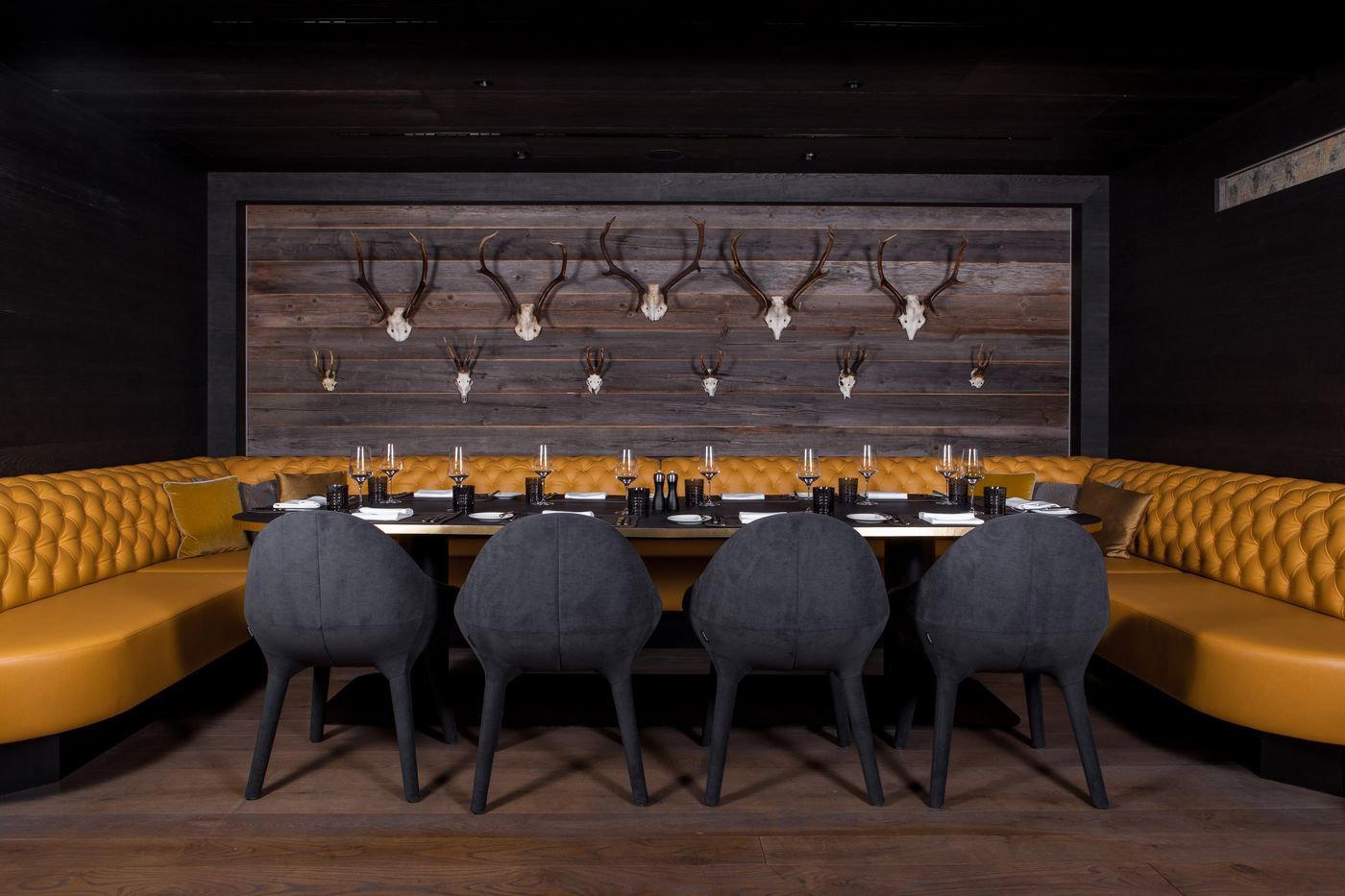
Bars in Zams
Browse all →

Hotels in Zams
Browse all →

Details
- Elegant
- Modern
- Sophisticated
- Intimate
- Special Occasion
- Celebration
- Date Night
- Open Kitchen
- Private Dining
- Hotel Restaurant
- Local Sourcing
- Tasting Menu
Elegant and refined setting within the Hotel Jägerhof, designed as a sophisticated fine dining room with modern styling.