
Our verdict
One of Paris's oldest operating brasseries, Bofinger has anchored the Bastille quarter since 1864, serving Alsatian standards, choucroute, plateaux de fruits de mer, and steak frites, beneath a Belle Époque dome that has changed little in a century and a half. Lunch service begins at noon; Friday and Saturday kitchens run until midnight.

Pearl is the En Primeur Club membership app, where members save venues, book tables and use the concierge.
The Brasserie Tradition and Where Bofinger Sits Within It
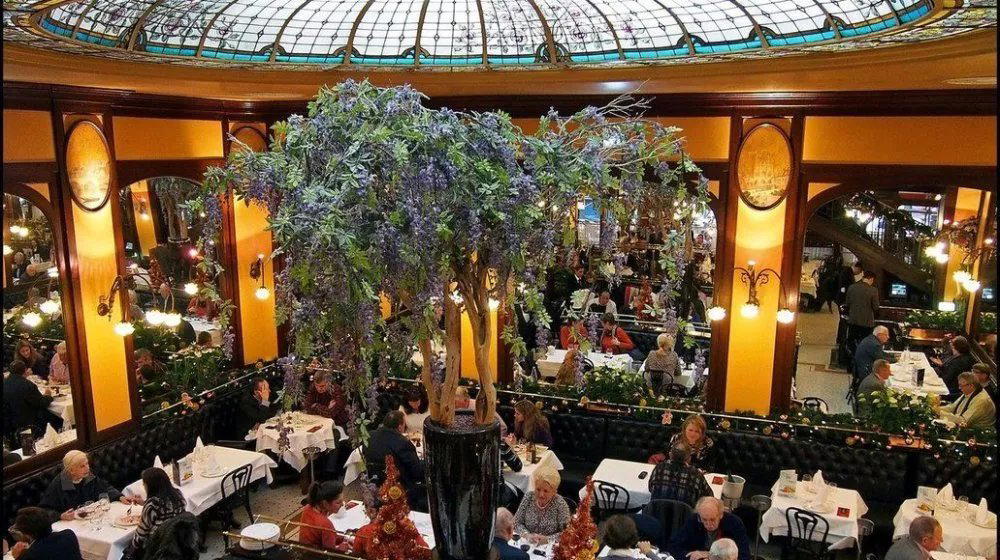
The Parisian brasserie as a format is older than most dining categories its international visitors compare it to. The word itself derives from the Alsatian brewing tradition, and the earliest Paris brasseries were established by Alsatian migrants who brought their choucroute, their lager, and their preference for large, high-ceilinged rooms with them. That origin story matters because it explains why the most architecturally intact examples of the type, places where the zinc bar, the marquetry, the etched glass, and the domed skylights survived twentieth-century renovation, are almost always Alsatian in menu identity as well. Bofinger, operating at 5-7 Rue de la Bastille since 1864, is the clearest surviving expression of that link between format and provenance.
Paris has a handful of brasseries that compete on heritage grounds: Brasserie Balzar on the Left Bank serves a similar canon to a different neighbourhood crowd. What separates Bofinger within that peer group is the scale and condition of its interior, which includes what many architectural historians regard as the oldest intact brasserie dome in the city. The dining room operates as a working space rather than a preserved exhibit, the distinction matters, because rooms that become museums tend to shed the particular social energy that made brasseries worth preserving in the first place.
The Room: What You Encounter Before the Menu
Approaching from the Bastille metro, the facade announces itself in polished brass fittings and period lettering across a corner building that predates the modern Place de la Bastille layout. Inside, the ground floor opens into a main room where the stained-glass dome is the immediate reference point: it rises above a central section of tables, filtering natural light through coloured panels that shift the quality of the room across the afternoon service. The woodwork is dark and original, the banquettes are leather, and the floor tiles follow a geometric pattern consistent with late nineteenth-century brasserie construction.
This level of interior preservation carries an implicit operational argument. Brasseries with heritage rooms of this calibre tend to commit to a corresponding conservatism in the menu, because updating the cooking philosophy too aggressively creates a dissonance that guests feel even when they cannot name it. The Alsatian canon, choucroute garnie, plateaux de fruits de mer, onion tart, foie gras, is not here because the kitchen lacks ambition. It is here because the room demands a certain register, and meeting that demand is itself a form of editorial discipline.
The Alsatian Menu in a Paris Context
Alsatian cuisine occupies a specific and somewhat isolated position in French food culture. It draws on Germanic technique and ingredient logic, cured pork, fermented cabbage, riesling-based braising liquids, freshwater fish from the Rhine catchment, while operating within a French service framework. In Paris, the cuisine appears primarily through brasserie formats rather than through fine dining, which means it has never accumulated the Michelin apparatus that surrounds, say, the haute cuisine of the Île-de-France or the gastronomic tradition of Lyon represented by venues like Paul Bocuse - L'Auberge du Pont de Collonges. Alsace does have its own serious fine dining lineage: Auberge de l'Ill in Illhaeusern represents that tradition at its most sustained. But in Paris, Alsatian cooking exists within a popular register, which is both a constraint and a kind of freedom.
Chef Patrice Maccrez oversees a kitchen that sits within that popular register deliberately. The question worth asking of any heritage brasserie kitchen is not whether it innovates but whether it executes its traditional canon with sufficient rigour to justify the premium over a neighbourhood bistro. The Opinionated About Dining 2024 ranking at #615 in Casual Europe places it within a recognised peer group of established European casual-dining institutions, a credible position for a brasserie of its age and format.
Sourcing and the Sustainability Dimension
The sustainability conversation in French dining has tended to concentrate on fine dining, where chefs like Arpège's Alain Passard built supply chains around biodynamic growing. But the brasserie format, with its dependence on specific regional products, has its own sourcing logic that predates contemporary sustainability rhetoric. A choucroute that works depends on fermented cabbage from a particular agricultural zone in Alsace. A plateau de fruits de mer depends on seasonal shellfish cycles and traceable coastal supply chains from Brittany and Normandy. These are not sustainability marketing claims; they are functional requirements for cooking that tastes of what it claims to be.
The shellfish service at a brasserie of Bofinger's standing operates within the established French oyster-grading and provenance-labelling system, which requires producers to document origin and growing conditions. That traceability infrastructure is embedded in the supply chain rather than applied as a communications overlay. The same applies to the Alsatian charcuterie component of the menu, where regional appellation requirements govern what can legitimately be called by traditional names. This is sourcing integrity expressed through regulatory compliance rather than through press releases, which tends to be how the older French food institutions handle it.
For guests whose dining choices factor in provenance and waste reduction, the case for a well-run traditional brasserie is stronger than it might initially appear. Fixed menus, predictable volumes, and a kitchen anchored to a defined regional canon all support tighter stock management than a restaurant pivoting frequently between seasonal concepts. The Alsatian format also makes structural use of whole-animal preparations, the charcuterie, the cured components of choucroute, the offal-adjacent items that appear on serious brasserie menus, which represents the kind of ingredient utilisation that sustainability-focused cooking explicitly advocates.
Positioning Against the Broader Paris Scene
The Paris restaurant spectrum runs from Michelin three-star tasting menus at Alléno Paris au Pavillon Ledoyen, Kei, or L'Ambroisie down through a deep middle tier of bistros, wine bars, and brasseries. Bofinger does not compete with those upper-tier venues; it competes with the question of whether a heritage dining room with a regional menu can justify itself on terms other than nostalgia.
For visitors planning broader French dining, the regional restaurant tradition extends well beyond Paris: Mirazur in Menton, Flocons de Sel in Megève, Troisgros in Ouches, and Bras in Laguiole represent the kind of terrain-rooted cooking that connects to the same sourcing principles Bofinger applies within its brasserie format. For international comparisons across the Atlantic, the commitment to a defined regional tradition finds loose parallels in restaurants like Le Bernardin or Atomix in New York City, though the format and register differ entirely.
Planning Your Visit
Bofinger opens seven days a week for both lunch and dinner, with service beginning at noon. On weekdays, the kitchen runs from 12 to 3 pm and reopens at 6:30 pm, closing at 11 pm Sunday through Thursday. On Fridays and Saturdays, the evening service extends to midnight, and Saturday and Sunday lunch stretches to 3:30 pm, a schedule that accommodates late arrivals from the Bastille opera or weekend afternoon plans. The address at 5-7 Rue de la Bastille places it within a short walk of the Bastille metro station on lines 1, 5, and 8. For broader planning across the city, consult our full Paris restaurants guide, Paris hotels guide, Paris bars guide, Paris wineries guide, and Paris experiences guide.
Frequently asked questions
What's the must-try dish at Bofinger?
The choucroute garnie is the reference point for any first visit. It is the dish most directly tied to the Alsatian brasserie tradition the room embodies, and its quality speaks directly to kitchen discipline and sourcing standards. The plateaux de fruits de mer are the second structural reason to come, particularly given the traceability requirements built into the French shellfish supply chain. Chef Patrice Maccrez oversees a kitchen whose credibility, evidenced by the OAD 2024 Casual Europe ranking at #615, rests on executing exactly these preparations with the consistency the format demands.
Cost Snapshot
Comparable venues nearby, for context on price, style, and recognition.
| Venue | Cuisine | Price | Notes |
|---|---|---|---|
| BofingerThis venue (the venue you are viewing) | Classic Alsatian Brasserie | $50–100 | Not listed |
| Les Cartes Postales | French-Japanese Fusion | $50–100 | Louvre/Palais-Royal, French-Japanese Fusion |
| La Belle Maison | Classic French Bistro | $50–100 | Montmartre, Classic French Bistro |
| Karl et Érick | Modern French Bistro | $50–100 | Plaine de Monceaux, Modern French Bistro |
| Cavapapa | Seasonal French Bistro | $30–50 | 15th arrondissement, Seasonal French Bistro |
| L'Ecailler du Bistrot | French Seafood Bistro | $50–100 | 11e Arr. – Popincourt, French Seafood Bistro |
Recognition history
Dated appearances from independent guides and award organizations, with the underlying list record or original source where available.
Opinionated About Dining Casual in Europe Recommended
Opinionated About Dining
Full recognition history (2 entries)
Opinionated About Dining Casual in Europe Ranked #615
Opinionated About Dining
Continue exploring
More in Paris
Restaurants in Paris
All restaurants in Paris →
Bars in Paris
All bars in Paris →


Details
- Classic
- Elegant
- Well Known
- Historic
- Sophisticated
- Special Occasion
- Date Night
- Group Dining
- Historic Building
- Extensive Wine List
- A La Carte
- Prix Fixe
- Vegetarian Friendly
Current opening hours
- Monday
- 12–3 PM, 6:30–11:30 PM
- Tuesday
- 12–3 PM, 6:30–11:30 PM
- Wednesday
- 12–3 PM, 6:30–11:30 PM
- Thursday
- 12–3 PM, 6:30–11:30 PM
- Friday
- 12–3 PM, 6:30 PM–12 AM
- Saturday
- 12–3 PM, 6:30 PM–12 AM
- Sunday
- 12–3:30 PM, 6:30–11 PM
Hours can change for holidays and private events. Hours as of .
Elegant historic atmosphere with dramatic art nouveau glass dome, white linen tablecloths, and classic Parisian brasserie charm under warm lighting.