Bánh Mì Má Lúm
Our verdict
Prague's Vietnamese community has long maintained a presence in the city's outer districts, and Bánh Mì Má Lúm in Libuš sits within that tradition. The address, away from the tourist circuits of the centre, positions this as a neighbourhood proposition rather than a destination restaurant. For travellers willing to travel south on the metro, it represents a direct encounter with the city's working Vietnamese food culture.

Pearl is the En Primeur Club membership app, where members save venues, book tables and use the concierge.
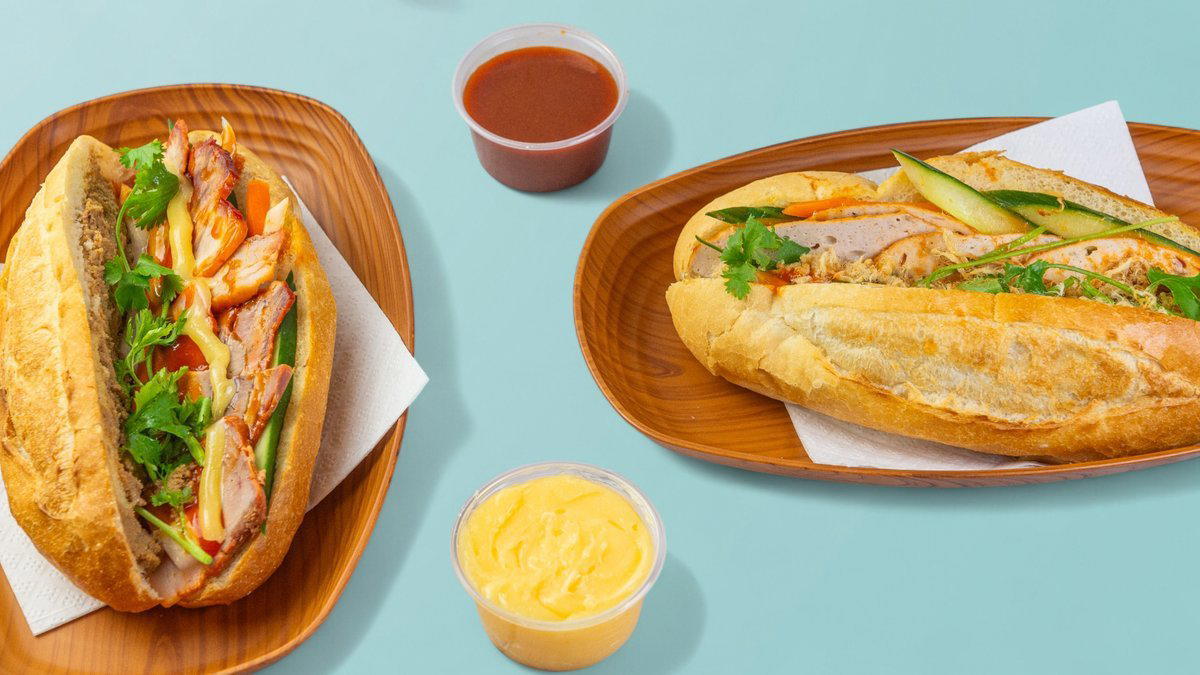
The menu
What to order
- Bánh Mì Má Lúm
- Bánh Mì Xá Xíu
Prague's Outer Districts and the Vietnamese Food Circuit
Vietnamese cuisine occupies a specific and well-documented role in Czech food culture. Prague's Vietnamese community, one of the largest in Central Europe, has been present in the country since the socialist-era labour exchange programmes of the 1970s and 1980s. What followed over subsequent decades was not a restaurant scene built for export or tourism, but a parallel food economy: market stalls, community canteens, and small family-run operations that serve the community first and curious locals second. Bánh Mì Má Lúm, located at Libušská 319/126 in the Libuš district in the city's south, operates within this tradition. It is not a concept designed for the city centre's dining circuit, and that positioning tells you something important about what to expect.
The contrast with Prague's formal restaurant tier is instructive. Operations like La Degustation Bohême Bourgeoise or Alcron occupy the city's European fine-dining register, with tasting menus and reservation systems calibrated to an international clientele. Bánh Mì Má Lúm functions at the other end of the spectrum, not as a lesser alternative but as a different category altogether: fast, specific, and embedded in a neighbourhood rather than a hospitality district. Understanding that distinction is the first step in deciding whether the journey south from the centre is worth making.
The Libuš Address and What It Means for Your Visit
Libuš sits well outside Prague's tourist geography. The district is residential, predominantly working-class, and home to a significant Vietnamese population. The food operations in this part of the city reflect those demographics: practical, affordable, and aimed at people who eat there regularly rather than visitors arriving with a review in hand. Getting to Libušská from the centre requires a metro ride to Háje on Line C, Prague's southernmost metro stop, followed by a tram or bus connection. Allow thirty to forty minutes from the Old Town depending on connections. This is not an inconvenient journey by Prague standards, but it does require planning in a way that dinner at Alma or Amano in the centre does not.
The address itself, a stretch of suburban commercial frontage in a housing district, is part of the experience. Visitors arriving expecting the design cues of a contemporary Vietnamese restaurant in a European capital will find something closer to the community-canteen model that characterises Czech-Vietnamese food culture at its most direct. That is not a deficiency; it is the point. The food traditions that this type of venue carries are precisely those that get diluted when the same cuisine moves into a tourist-facing context.
Bánh Mì as a Category: What the Name Tells You
The name signals the format clearly. Bánh mì, the Vietnamese baguette sandwich that carries the influence of French colonial food culture in Vietnam, has become one of the most widely recognised Vietnamese exports. In its home context, it is street food: fast, cheap, and built around a precise balance of meat or protein, pickled vegetables, fresh herbs, and chilli inside a light, airy baguette with a crackling crust. The bread itself is the technical marker that separates a serious bánh mì operation from a casual approximation. Vietnamese bakers adapted the French baguette to local wheat varieties and climatic conditions, producing a lighter, crispier loaf than the French original. That textural quality is what defines the format.
In Prague specifically, the bánh mì has circulated through the Vietnamese community for decades without achieving the mainstream restaurant visibility it has in cities like London, Amsterdam, or Berlin. The Libuš address positions Bánh Mì Má Lúm as a community-facing operation rather than a market entrant competing in the city's broader food scene. For the visitor, that means authenticity in the literal sense: the product is calibrated for a customer base that knows what it should taste like, not for a newcomer audience that needs the format explained.
Planning the Visit: What You Need to Know Before You Go
These are not operations that publish reservation windows or maintain booking platforms. Social media channels, particularly Facebook, are often where Vietnamese food businesses in the Czech Republic post operational updates, and searching the venue name directly is the most reliable pre-visit step available.
The walk-in format typical of bánh mì operations means seating and queuing norms differ from what applies at a restaurant like 420 Restaurant or the formal booking systems used at higher-tier Prague addresses. Expect a counter service or very limited seating arrangement, with orders placed directly and food turned around quickly. Peak hours for this type of operation tend to align with lunchtime, when the surrounding working population is eating. Visiting mid-afternoon or early evening may mean a shorter wait and more direct engagement with the staff.
For context on how other serious food destinations in the Czech Republic handle the walk-in versus reservation question, it is worth noting that operations outside Prague, such as Long Story Short Eatery and Bakery in Olomouc or Chapelle in Písek, often operate with similarly minimal booking infrastructure despite strong local reputations. The pattern is not unique to Vietnamese food; it reflects a broader Czech regional food culture where neighbourhood credibility matters more than reservation management.
Visitors building a broader Czech food itinerary might also consider Na Spilce in Pilsen, Tlustá Kachna in Chrudim, Cattaleya in Čeladná, Pavillon Steak House in Brno, Dvůr Perlová voda in Budyně nad Ohří, Perk Restaurant in Šumperk, ARRIGŌ in Děčín, and V Bezovém Údolí in Kryštofovo Údolí as part of a wider read on what Czech regional dining looks like beyond the capital. For international reference points on what a serious food operation built around a single format can achieve, both Le Bernardin in New York City and Lazy Bear in San Francisco demonstrate, in very different registers, how format clarity and community credibility translate into lasting reputation. Our full Prague restaurants guide covers the city's dining range from neighbourhood operations like this one through to its Michelin-level addresses.
Frequently asked questions
What part of town is Bánh Mì Má Lúm in?
Bánh Mì Má Lúm is located at Libušská 319/126, 142 00 Praha, Prague.
Is Bánh Mì Má Lúm in Prague's city centre, and how does its Libuš location affect the experience?
Libuš is a residential outer district well removed from Prague's tourist geography, and that distance is the point. The neighbourhood carries one of the city's highest concentrations of Vietnamese residents, meaning venues like Má Lúm at Libušská 319/126 operate within a genuine community food circuit rather than an adapted one. Visitors making the trip are arriving at a working-district address, not a café positioned for foot traffic.
What dish is Bánh Mì Má Lúm famous for?
The name itself answers the question: bánh mì, the Vietnamese baguette sandwich shaped by French colonial influence on Vietnamese food culture. Prague's Vietnamese community, one of the largest in Central Europe, has maintained this format across dozens of local establishments, and Má Lúm is situated within that established circuit in Libuš.
Do I need a reservation for Bánh Mì Má Lúm?
No phone number or website is publicly listed for Bánh Mì Má Lúm, which is consistent with the walk-in, counter-service format typical of community-facing Vietnamese sandwich spots in Prague. The Libušská 319/126 address is the most reliable reference point for planning your visit.
What's the defining dish or idea at Bánh Mì Má Lúm?
The bánh mì format defines the operation: a short-format sandwich served from a community-rooted venue in Libuš, Prague's predominantly Vietnamese residential district. The category carries specific culinary logic, combining French baguette structure with Vietnamese fillings and condiments, a product of Vietnam's colonial food history that has travelled intact into Central Europe.
How does Bánh Mì Má Lúm handle allergies?
Given the counter-service format typical of this address and district, the practical approach is to raise dietary requirements directly on arrival at Libušská 319/126.
In Context: Similar Options
Comparable venues nearby, for context on price, style, and recognition.
| Venue | Cuisine | Price | Notes |
|---|---|---|---|
| Bánh Mì Má LúmThis venue (the venue you are viewing) | Authentic Vietnamese Bánh Mì | $10–20 | Not listed |
| Bánh cuốn Huyền Long | Northern Vietnamese Bánh Cuốn | Not listed | Písnice |
| Phở Tùng | Traditional Northern Vietnamese Pho | $10–20 | Little Hanoi |
| Gao Den | Modern Vietnamese | $20–30 | Stodulky |
| Burger Service | American Fast Food Burgers | $10–20 | Josefov |
| Bee's Tapas & Restaurant | Mediterranean Tapas & Mezze | $20–30 | Vinohrady |
Continue exploring
More in Prague
Restaurants in Prague
All restaurants in Prague →
Bars in Prague
All bars in Prague →
Details
- Cozy
- Casual Hangout
- A La Carte
- Vietnamese Coffee