In a country where the ocean is both geography and pantry, Blue Ocean Restaurant occupies a dining scene shaped almost entirely by what the surrounding Pacific provides. Funafuti's restaurant options are few and deliberate, and Blue Ocean sits within that compact field as a reference point for visitors trying to understand how a low-lying atoll nation feeds itself and its guests.
 Discover on Pearl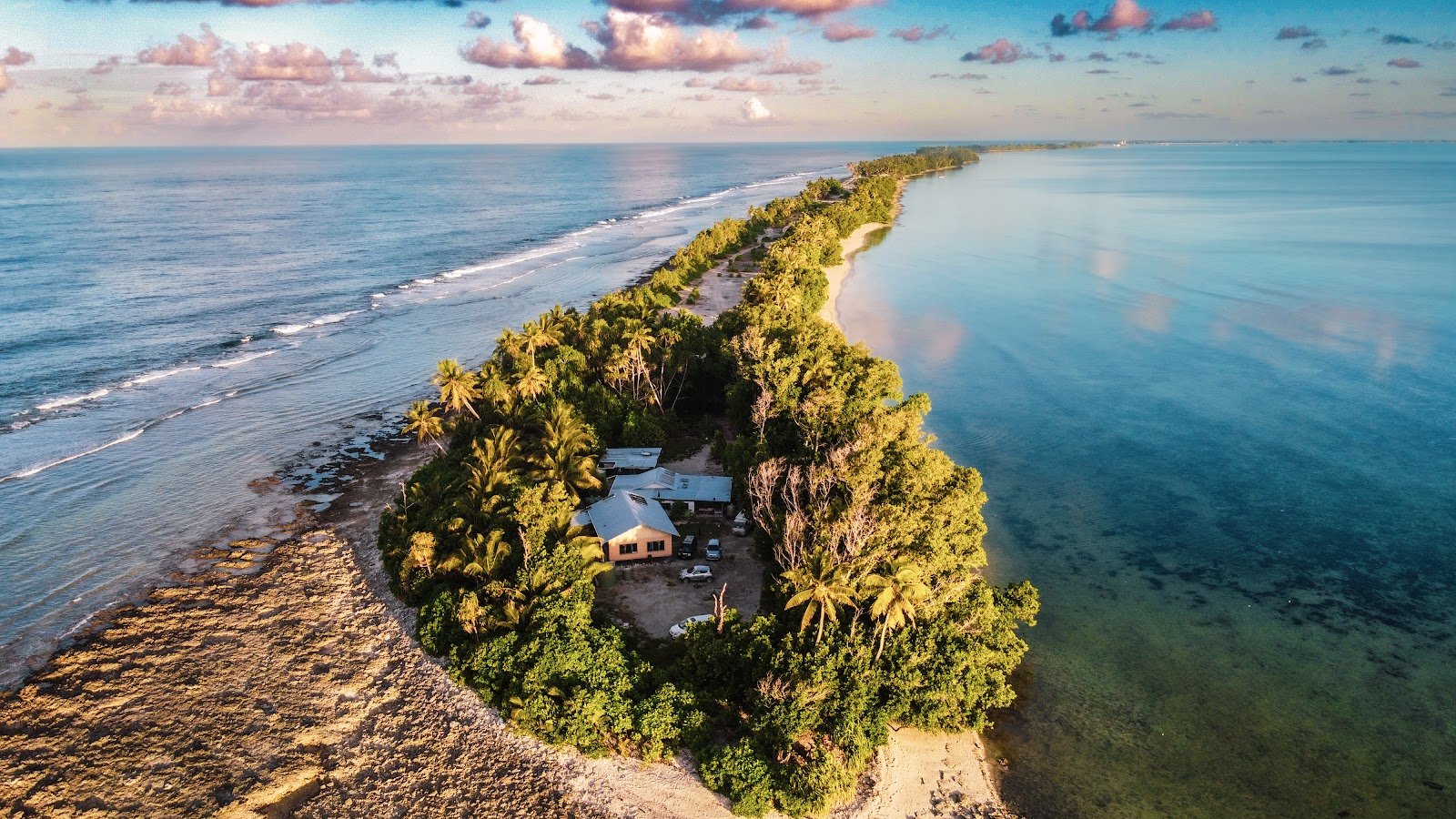
Eating at the Edge of the Pacific: Funafuti's Dining Context
Tuvalu is one of the smallest and most remote nations on earth, a chain of nine atolls whose total land area barely exceeds 26 square kilometres. Funafuti, the capital, sits on a narrow strip of coral between a vast lagoon and the open Pacific, and that geography determines almost everything about how food works here. Supply chains are long and expensive. Refrigerated shipping is intermittent. What the sea provides daily is, by default, the freshest ingredient available. Understanding that context is the only meaningful frame for reading any restaurant on the island, including Blue Ocean Restaurant.
The dining scene in Funafuti is compact by any measure. A handful of establishments serve visitors and the local population, and the competitive set is shaped less by ambition than by logistics. This is not a city where restaurants position themselves against peer counters in the way that, say, the omakase counters of Ginza do, or where chefs compete for tasting-menu inches the way kitchens do at places like Alléno Paris au Pavillon Ledoyen or Arpège in Paris. In Funafuti, the act of sourcing is itself the culinary statement.
The shortlist, unlocked.
Hard-to-book tables, cellar releases, and concierge-planned trips.
Get Exclusive Access →Where the Ingredients Come From — and Why That Shapes the Plate
The ingredient sourcing reality of an atoll restaurant is worth examining in some detail, because it affects every dimension of the dining experience. Tuvalu has no agricultural hinterland to speak of. Fresh vegetables and fruit arrive by ship from Fiji or by the twice-weekly Air Pacific connection, meaning anything that doesn't grow locally is expensive, often days old on arrival, and subject to weather delays that can make supply unpredictable for days at a stretch.
What the local environment does provide is a lagoon and an ocean rich in pelagic fish. Yellowfin tuna, mahi-mahi, wahoo, and reef fish form the protein backbone of Tuvaluan cooking in the same way that grass-fed beef anchors the menus of New Zealand or heritage pork drives the menus of restaurants in Spain's Basque country, such as Arzak in San Sebastián. The difference is that in Tuvalu, the reliance on local protein is less a philosophical choice than a practical necessity, though the result is largely the same: the fish on the plate was almost certainly in the water within the previous 24 hours.
Coconut is the other foundational local ingredient. Coconut flesh, coconut cream, and coconut water thread through Pacific Island cooking across the region, and Tuvaluan food is no exception. These ingredients require no refrigeration and no importation, which makes them both economical and reliable. A restaurant operating in this environment either works with these conditions or fights them; any kitchen that makes peace with what the atoll provides is likely to produce more coherent food than one that tries to replicate a continental menu against the grain of the supply chain.
Blue Ocean Restaurant, operating in this setting, sits within a dining category that global restaurant culture rarely examines: the small-nation restaurant without formal awards recognition, operating in a market where the logistics of food procurement are as consequential as any cooking technique. For readers accustomed to researching restaurants at the level of Aponiente in El Puerto de Santa María, where chef Ángel León's research into marine ingredients has earned three Michelin stars, or Aqua in Wolfsburg, the shift in frame is significant. Here, the credential is proximity to the source, not the elaboration of it.
The Atmosphere on a Coral Atoll
Approaching a restaurant in Funafuti, the sensory register is shaped by the island itself before any interior is reached. The lagoon is visible from much of the town. The air carries salt and the low-frequency sound of the reef. Funafuti operates at a pace that reflects both the heat and the isolation: things move deliberately, service is unhurried, and the transactional pressure that characterises dining in dense urban markets is largely absent.
Visitors arriving from high-production dining environments — the kind associated with Alinea in Chicago, Atomix in New York, or Lazy Bear in San Francisco , will notice the absence of ambient theatre. There are no narrated courses, no lighting designed to cue emotional transitions, no pre-arrival questionnaires. What replaces those signals is the directness of a meal produced in close relationship to a specific geography. That directness has its own register. It tends to reward patience and punish impatience.
The atmosphere at a Funafuti restaurant like Blue Ocean is also shaped by the community scale of the island. Tuvalu's total population is approximately 11,000, and Funafuti holds the majority of that population. The dining room, wherever it sits, is a neighbourhood room by default. Local residents, government workers, NGO staff, and the occasional visitor from the shipping trade or aid sector are more likely to be the regular clientele than international leisure tourists. That mix changes the energy of a room in ways that are difficult to replicate in a tourist-heavy destination.
Situating Blue Ocean in Funafuti's Dining Field
Within Funafuti's small field of dining options, Blue Ocean Restaurant represents one reference point among a limited set. Halavai Restaurant is another name that surfaces in the local dining conversation, and the two together constitute much of what a visitor researching Funafuti restaurants will encounter. For a fuller picture of options across the island, our full Funafuti restaurants guide maps the available choices against neighbourhood and format.
Neither venue operates with the formalised credential infrastructure that defines restaurant ranking in larger markets. There are no Michelin inspectors visiting Funafuti, no James Beard nominations, no 50 Best representation. The absence of those frameworks is itself a data point: restaurants here are evaluated by their community and their visitors on much more immediate grounds, primarily whether the fish is fresh, the cooking is honest, and the room is comfortable in the heat. Those are not lesser criteria. They are simply different ones.
Restaurants at the other end of the prestige spectrum , Le Bernardin in New York City, 8 1/2 Otto e Mezzo Bombana in Hong Kong, Amber in Hong Kong, or Alain Ducasse at Louis XV in Monte Carlo , share with Blue Ocean one foundational quality: they are accountable to a specific place. The difference is the scale of resources available to act on that accountability. In Funafuti, the accountability is immediate and unmediated by production budgets or forager networks. The ocean is right there.
Planning a Visit
Visitors to Funafuti typically arrive via Fiji, with Fiji Airways operating the primary air connection. Given the limited tourist infrastructure across the island, advance research into accommodation and dining is practical, as options fill quickly during government meeting periods or regional summits. Restaurants in Funafuti generally do not operate reservation systems comparable to those of urban fine dining, and visiting at off-peak hours is the most reliable way to secure a table without logistical friction. Dress code expectations across Funafuti dining are informal, consistent with the tropical climate and the island's pace. Carrying local currency (Australian dollars are widely accepted in Tuvalu alongside the local dollar) is advisable, as card payment infrastructure is limited across the island's hospitality sector.
The shortlist, unlocked.
Hard-to-book tables, cellar releases, and concierge-planned trips.
Get Exclusive Access →Frequently Asked Questions
Comparable Spots, Quickly
These are the closest comparables we have in our database for quick context.
| Venue | Cuisine | Price | Awards | Notes |
|---|---|---|---|---|
| Blue Ocean Restaurant | This venue | |||
| Halavai Restaurant |
Need a table?
Our members enjoy priority alerts and concierge-led booking support for the world's most difficult tables.
Get Exclusive AccessThe shortlist, unlocked.
Hard-to-book tables, cellar releases, and concierge-planned trips.
Get Exclusive Access →