Blue Collar

On Biscayne Boulevard's stretch between Wynwood and the Upper East Side, Blue Collar occupies the kind of unpretentious middle ground that Miami's dining scene keeps threatening to abandon. The room draws regulars who come not for occasion dining but for consistency and comfort, a counter-programming move against the city's louder, more spectacle-driven restaurant culture.
Pearl is the En Primeur Club membership app — saves, bookings, and concierge access live there. Same editors, same standards.
- Address
- 6789 Biscayne Blvd, Miami, FL 33138
- Phone
- +13057560366
- Website
- bluecollarmiami.com
- Directions
- Get directions
 Saves & bookings on Pearl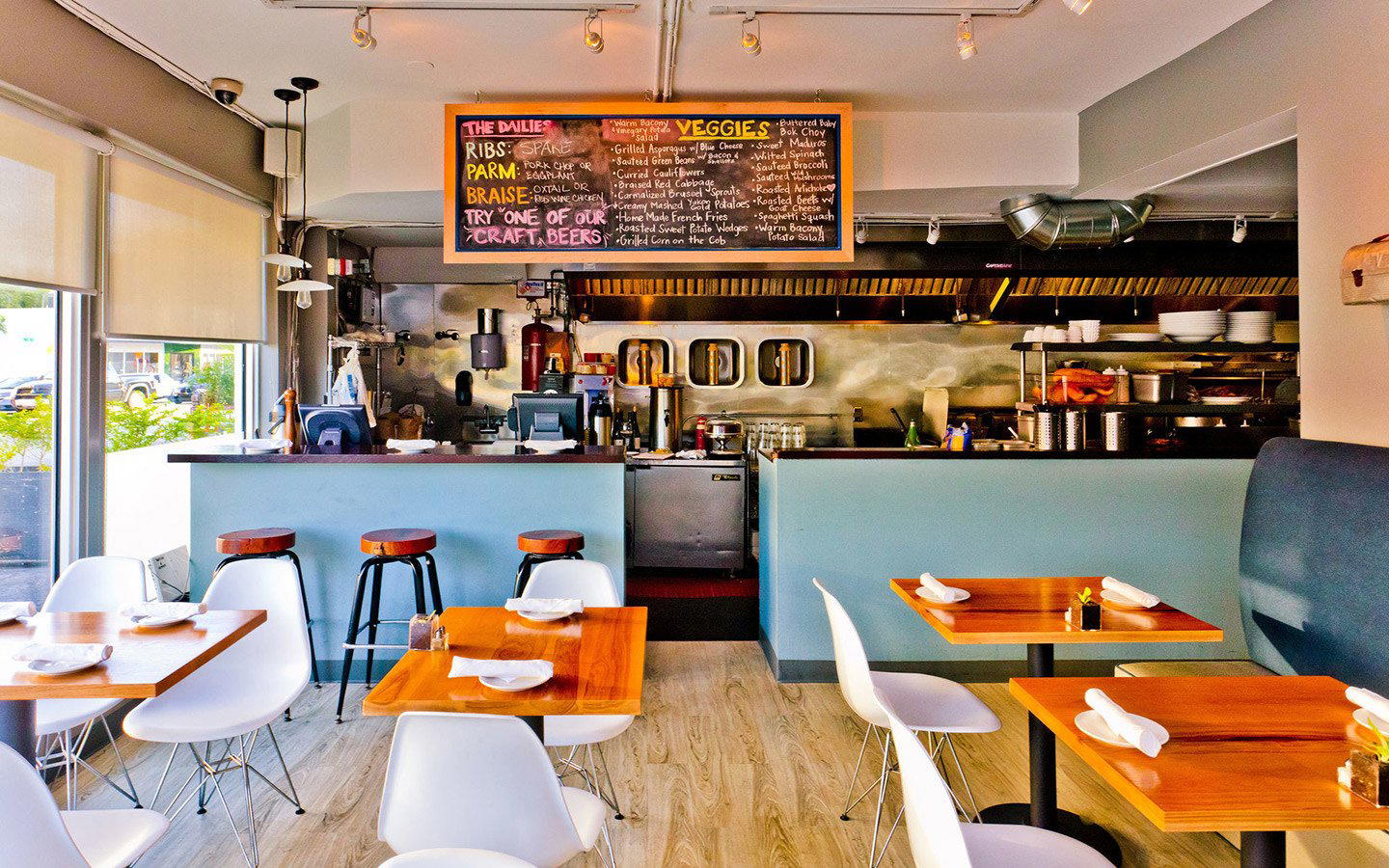
Biscayne Boulevard and the Case for the Neighborhood Restaurant
Miami's dining conversation rarely lingers on Biscayne Boulevard north of downtown. The press cycles through Wynwood pop-ups, Brickell tasting menus, and South Beach hotel restaurants, and the stretch near the Upper East Side gets skipped over in favor of more photogenic addresses. That relative neglect is precisely why a place like Blue Collar, at 6789 Biscayne Blvd, has been able to build the kind of loyal, repeat audience that most Miami restaurants spend years chasing and never find. The regulars here are not coming because the room was reviewed in a glossy magazine. They are coming back because the room feels like theirs.
In a city where the restaurant business often performs for an audience of tourists, seasonal residents, and social media traffic, the neighborhood-anchored model operates on different terms. The calculus shifts from novelty to reliability, from spectacle to consistency. Blue Collar sits in that second category, occupying the same zip code as a residential Miami that most visitors never encounter. The Upper East Side's dining corridor has quietly developed a character distinct from the Design District's luxury-brand adjacency or Wynwood's gallery-circuit energy, and Blue Collar is part of what gives that corridor its texture.
What Keeps Regulars Returning
The regulars' relationship with a restaurant like this is built differently than loyalty earned through tasting menus or Michelin-star dining rooms. At the higher end of Miami's market, venues like L'Atelier de Joël Robuchon Miami hold their audience through technical precision and prestige, while Cote Miami commands repeat visits through a format — the Korean steakhouse experience — that takes multiple visits to fully understand. Blue Collar operates at a different register. The draw is familiarity rather than revelation, and that is not a lesser thing. A dining room that knows its audience and serves them consistently is harder to build than one that impresses a first-time guest.
The unwritten menu, the off-menu knowledge that regulars accumulate over time, the preferred table, the right moment to arrive, the dishes that never left even when the printed menu changed, is a feature of this kind of restaurant. It rewards the guest who comes back rather than the one who checks a box. Miami's most-discussed openings tend to optimize for the first impression. The neighborhood restaurant optimizes for the tenth visit.
Compare that to the broader Miami restaurant categories that generate the most editorial attention. Ariete in Coconut Grove has carved out a modern American identity with enough critical weight to draw destination diners alongside its neighborhood base. Boia De, the Italian-leaning small room in Little Haiti, has a cult following built partly on its size, under thirty seats, and partly on a wine list that draws serious collectors. Both represent a Miami dining mode that is critically legible, award-adjacent, and regularly cited. Blue Collar exists in the space those restaurants don't occupy: lower profile, higher repeat-visit frequency, and embedded in a residential block rather than a destination corridor.
The Biscayne Corridor in Context
To understand what Blue Collar represents, it helps to understand what Biscayne Boulevard has become north of the Wynwood Arts District boundary. The Upper East Side's residential character has attracted a dining population that wants something other than the performance-heavy rooms closer to downtown. The neighborhood's clientele skews toward Miami lifers and long-term renters rather than the transient population that keeps South Beach and Brickell restaurants full through high season. That creates a different kind of pressure on a restaurant. Novelty-chasing doesn't sustain you when your core audience lives eight blocks away.
Nationally, the neighborhood restaurant model has produced some of the most durable dining institutions in American cities. Smyth in Chicago built its reputation across two formats, the downstairs tavern and the upstairs tasting menu, serving a West Loop audience before the neighborhood became a dining destination. Emeril's in New Orleans earned its place partly through consistency across decades rather than any single moment. The restaurants that outlast their initial buzz in American cities tend to have developed a regular clientele that doesn't need external validation to keep showing up. Blue Collar's Biscayne address places it in that tradition.
For guests accustomed to the ambition level of ITAMAE's Peruvian-Japanese counter or the format intensity of Miami's more conceptual rooms, Blue Collar represents a deliberate gear shift. The value of that shift is context-dependent. If you're spending a week in Miami moving through the city's more technically ambitious restaurants, a meal at a place built around neighborhood rhythms rather than culinary ambition offers a different kind of calibration. The contrast is part of the experience.
Placing Blue Collar Against a Wider Map
Miami's restaurant scene in the mid-2020s spans a wider range than its reputation for excess suggests. The same city that has imported L'Atelier de Joël Robuchon and drawn international culinary attention also sustains blocks of unglamorous, high-frequency neighborhood dining that never makes the lists. The latter category is what produces a city's actual eating culture rather than its magazine version. Blue Collar belongs to that category on Biscayne Boulevard.
For reference, the ambition spectrum at the top of the American market runs from farm-integrated destination restaurants like Blue Hill at Stone Barns in Tarrytown and Single Thread Farm in Healdsburg, through technically rigorous urban rooms like Atomix in New York and Providence in Los Angeles, down to the neighborhood-scale operations that anchor residential corridors. Blue Collar sits at the ground-level end of that spectrum, and that positioning is a choice, not a limitation. The Miami restaurant scene needs all of these tiers to function as an ecosystem. See our full Miami restaurants guide for a broader orientation across price points and neighborhoods.
Know Before You Go
- Address: 6789 Biscayne Blvd, Miami, FL 33138
- Neighborhood: Upper East Side / Biscayne Corridor
- Dress code: Casual, this is a neighborhood room, not a hotel dining room
How Blue Collar Miami compares with similar nearby venues.
| Venue | Cuisine | Price |
|---|---|---|
| El Bagel | Bagels | Not listed |
| Phuc Yea | Vietnamese | $$ |
Recognition history
Dated appearances from independent guides and award organizations, with the underlying list record or original source where available.
Diners, Drive-Ins and Dives Featured Restaurant
Diners, Drive-Ins and Dives · 2026 Diners, Drive-Ins and Dives Featured Restaurants
Continue exploring
More in Miami
Restaurants in Miami
Browse all →
At a Glance
- Rustic
- Cozy
- Casual
- Casual Hangout
- Family
- Group Dining
- Brunch
- Open Kitchen
Current opening hours
- Monday
- 12–10 PM
- Tuesday
- 12–10 PM
- Wednesday
- 12–10 PM
- Thursday
- 12–10 PM
- Friday
- 12–10:30 PM
- Saturday
- 11:30 AM–10:30 PM
- Sunday
- 11:30 AM–9 PM
Hours can change for holidays and private events. Last verified .
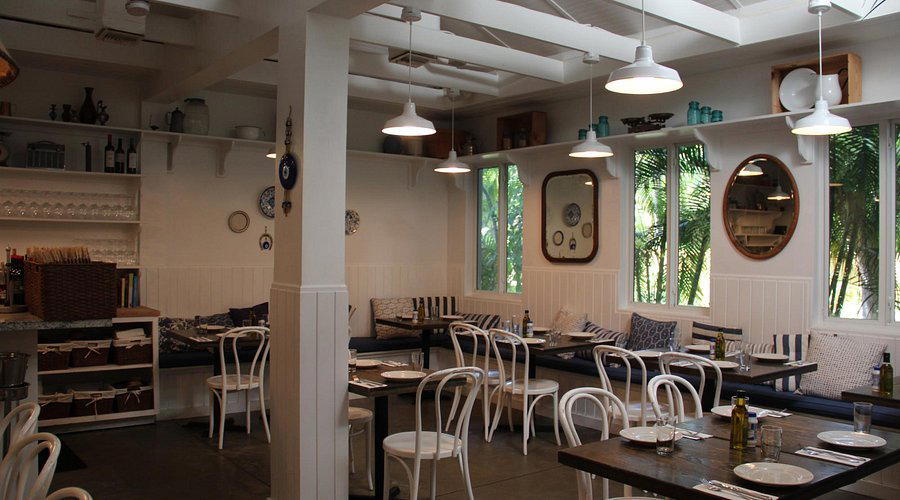
Relaxed and casual atmosphere with a heavy helping of friendship, like an upscale diner in the historic MiMo district.
Know Before You Go
- Getting there
- 6789 Biscayne Blvd, Miami, FL 33138