blindekuh Basel
blindekuh Basel on Dornacherstrasse offers something that few dining formats in Switzerland attempt seriously: a meal conducted entirely in the dark, guided by servers who are blind or visually impaired. The concept reframes how guests receive and interpret food, drink, and company. In a Basel dining scene dominated by precision French technique, this is a genuinely different proposition.
Pearl is the En Primeur Club membership app — saves, bookings, and concierge access live there. Same editors, same standards.
- Address
- Dornacherstrasse 192, 4053 Basel, Switzerland
- Phone
- +41613363300
- Website
- blindekuh.ch
- Directions
- Get directions
 Saves & bookings on Pearl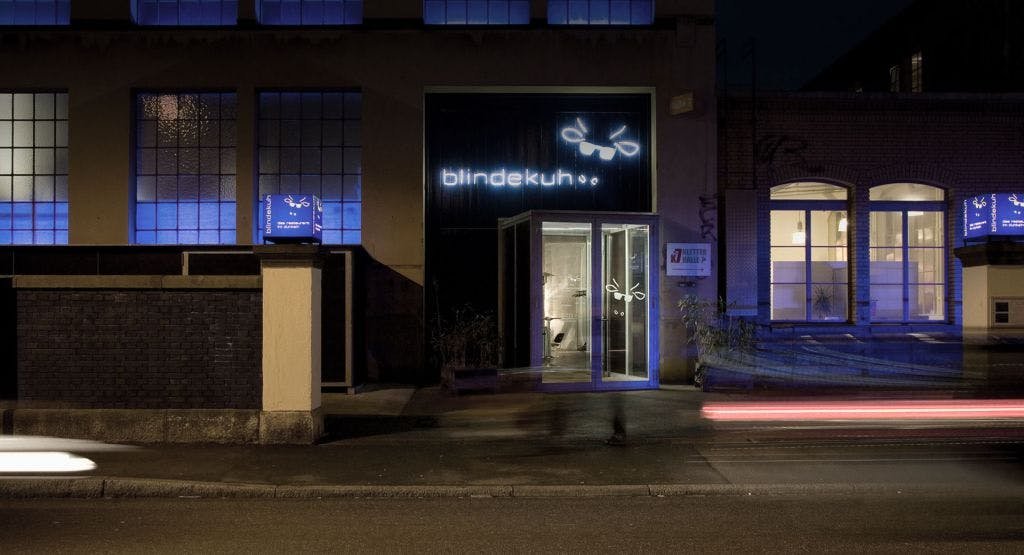
Eating Without Sight in a City Built on Precision
Basel's dining identity has been shaped, over decades, by the kind of rigour that produces multiple Michelin stars and deep wine cellars. Cheval Blanc by Peter Knogl and Stucki - Tanja Grandits represent that tradition at its most accomplished: classical technique, carefully plated, in rooms where every visual detail is considered. Against that backdrop, blindekuh Basel, on Dornacherstrasse 192, operates on a completely different set of principles. The room is not merely dim. It is dark, completely and deliberately, in a way that forces a genuine recalibration of how a guest engages with what is on the plate, in the glass, and across the table.
The blindekuh concept originated in Zurich in 1999, drawing on a social model developed first as a temporary exhibition rather than a permanent restaurant. The Basel iteration extends that tradition to a city whose cultural confidence — rooted in Art Basel, its pharmaceutical industry, and its position at the intersection of Switzerland, Germany, and France — has always had room for format-led thinking. What makes blindekuh relevant in this context is not novelty alone. A meal in total darkness removes the visual scaffolding that most diners rely on unconsciously: the plating, the colour of the sauce, the height of the reduction. Flavour and texture carry the entire communicative load, which places unusual demands on the kitchen and the cellar alike.
The Cellar in the Dark: Why Wine Selection Matters Here
Across Swiss fine dining, the wine list tends to reflect either the French proximity of a venue, with Burgundy and Rhône selections dominating at addresses like roots and 1777, or a commitment to Swiss production, which remains underexposed internationally despite strong Valais and Graubünden output. At blindekuh Basel, the wine dimension acquires a particular editorial interest: without visual identification of label, colour, or bottle shape, the guest is relying entirely on what the glass communicates. This is as close as most people get to the conditions under which professional blind tasting takes place.
The practical consequence is that the sommelier's role shifts. At a conventional table, wine service is partly theatre: the presentation of the bottle, the pour, the label confirmation. In the dark, none of that is available. Guidance becomes verbal and structural rather than visual. What the sommelier chooses to describe, and how, becomes the entire frame through which a guest builds expectation. This makes curation philosophy more consequential, not less. A list organised around textural contrast, aromatic register, or regional coherence communicates more usefully in darkness than one arranged by price tier or producer prestige. Whether blindekuh Basel's cellar is constructed with that logic in mind is something guests discover on the night; the format at least makes the question worth asking.
Switzerland's wine culture has broadened significantly in the past decade. Regions like the Valais, Graubünden, and Vaud produce serious Pinot Noir, Chasselas, and Cornalin that rarely leave the country. For comparison, ambitious Swiss cellars at venues such as Schloss Schauenstein in Fürstenau and Memories in Bad Ragaz draw on both Swiss and international depth. At blindekuh, the wine list serves a population of guests whose primary frame is experiential rather than connoisseurial, which opens the possibility of introducing them to Swiss production precisely because the usual visual cues, the unfamiliar label, the regional name they cannot place, are removed from the equation entirely.
The Format and What It Demands of Guests
Arriving at Dornacherstrasse 192, guests deposit phones and other light-emitting devices before entering the dining room. The servers are blind or visually impaired, which means the dynamic inverts from a conventional restaurant: the staff are competent and oriented; the guests are the ones who need orientation. This structural inversion is not incidental to the experience, it is the point. The social dimension of the meal shifts as a result. Conversation between guests deepens without visual distraction. Attention to the food intensifies in ways that guests frequently report as surprising.
For travellers comparing Basel's more format-driven dining options, blindekuh sits in a different tier from the Michelin-anchored kitchens of the city. It is not competing with Ackermannshof on Mediterranean precision or with the French classicism of Cheval Blanc. It belongs instead to a smaller international category of concept-led dining formats that use sensory constraint as the organising principle, a category that has gained traction across cities with active cultural programming, from London to Tokyo. Internationally, restaurants like Lazy Bear in San Francisco and Le Bernardin in New York City demonstrate how format specificity, when sustained over time, builds a reputation that sits outside conventional critical hierarchies.
Basel as Context: A City That Supports Format Diversity
Basel's dining scene is smaller than Zurich's but more concentrated. The city's Art Basel connection brings an international audience with high expectations for experience-led propositions, which has historically supported format experimentation at the mid and upper tiers. Venues like Maison Wenger in Le Noirmont and Einstein Gourmet in Sankt Gallen illustrate how Swiss fine dining outside the major cities develops its own character. Within Basel itself, blindekuh occupies a position that the Michelin-starred kitchens do not: it is accessible to guests who want an event-like dining experience without the formality of a tasting menu, but who want something more structurally interesting than a standard brasserie dinner.
For those building a multi-day Basel itinerary around food, the practical sequence matters. The high-concentration fine dining addresses, Stucki - Tanja Grandits, roots, demand advance booking, often weeks ahead. blindekuh Basel similarly operates on a reservation model given the format constraints; walk-in availability in the dark-dining room is limited by the need to brief and seat guests safely. Booking ahead is the practical default. The venue sits in the Gundeldingen quarter on the south side of the city, a neighbourhood with a more residential and working character than the tourist-facing Old Town, which means the journey there sets a tone before the meal begins. See our full Basel restaurants guide for broader context on the city's dining geography.
For those expanding a Swiss dining itinerary beyond Basel, the format-led and experience-driven end of the market includes addresses worth comparing: focus ATELIER in Vitznau, The Japanese Restaurant in Andermatt, Da Vittorio in St. Moritz, Mammertsberg in Freidorf, and La Table du Valrose in Rougemont. Each occupies a distinct position, and taken together they illustrate how widely Swiss hospitality has diversified from its classical French base. Hotel de Ville Crissier in Crissier remains the reference point for the country's classical summit.
Planning Your Visit
blindekuh Basel is at Dornacherstrasse 192, 4053 Basel. Given the format, advance booking is strongly recommended; the seating and briefing process for dark-dining rooms does not accommodate spontaneous arrival well. Guests with photosensitive conditions or claustrophobic responses to enclosed, darkened spaces should consider the format carefully before booking. The Gundeldingen neighbourhood is accessible by tram from Basel's main station, making the logistics direct from most central Basel hotels. Contact details and current hours are best confirmed directly with the venue, as operational schedules for concept-format restaurants can vary by season.
Continue exploring
More in Basel
Restaurants in Basel
Browse all →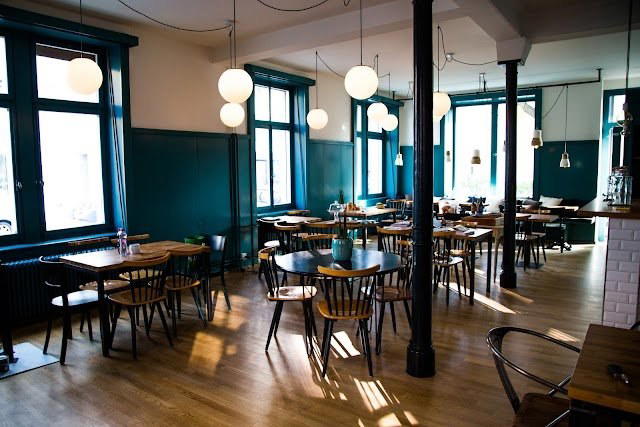
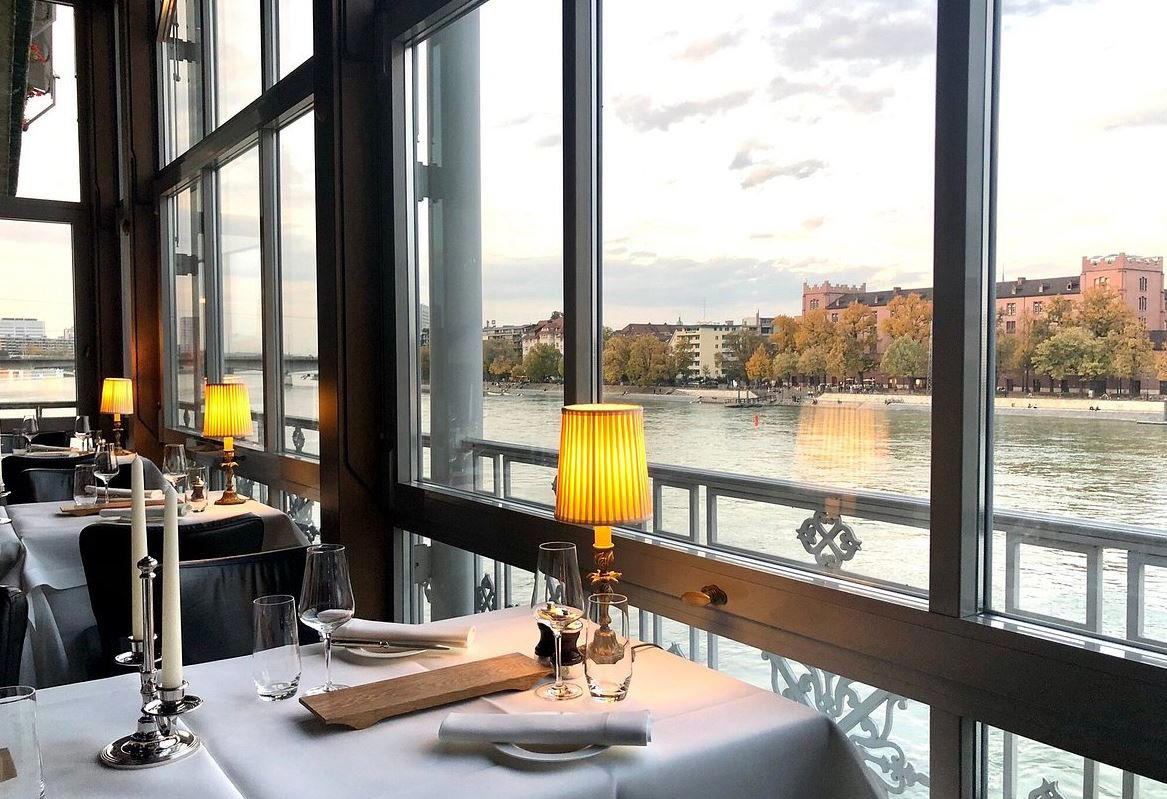
Bars in Basel
Browse all →


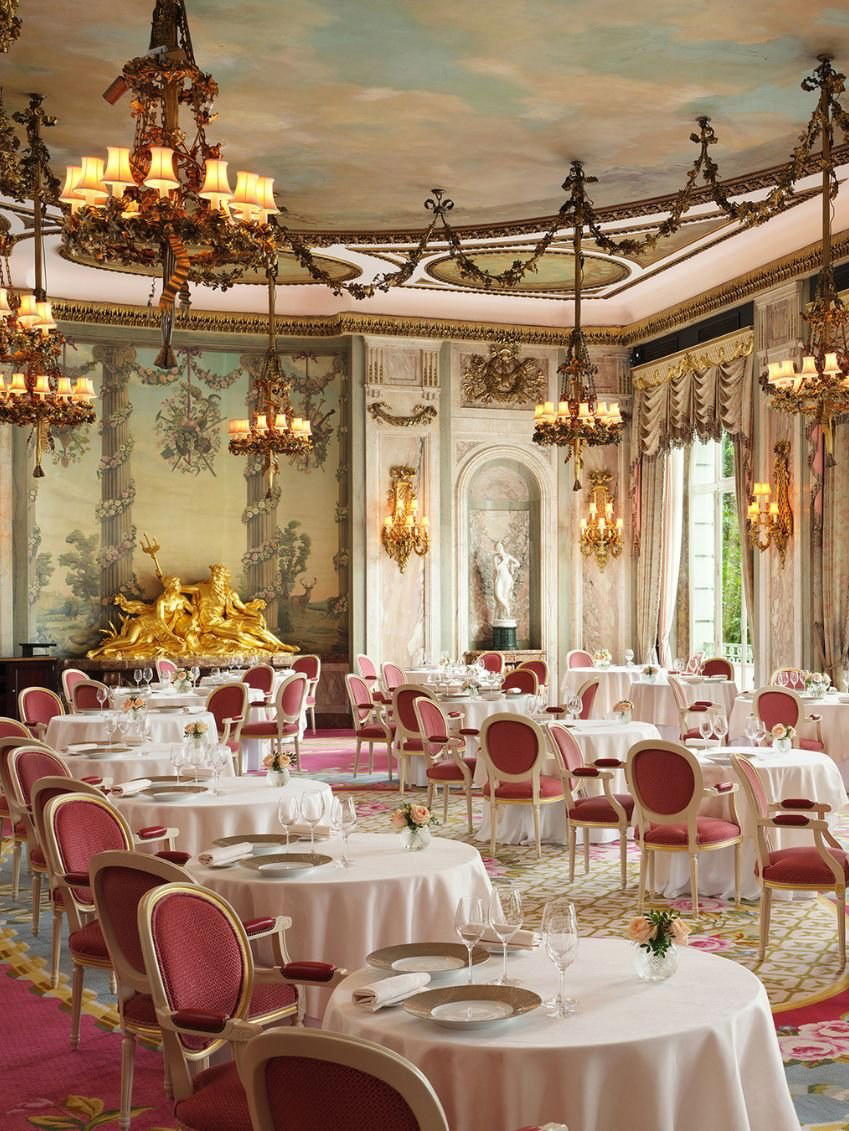
Hotels in Basel
Browse all →

At a Glance
- Intimate
- Whimsical
- Special Occasion
- Date Night
- Standalone
Current opening hours
- Monday
- Closed
- Tuesday
- Closed
- Wednesday
- 6:30–11 PM
- Thursday
- 6:30–11 PM
- Friday
- 6–11 PM
- Saturday
- 6–11 PM
- Sunday
- Closed
Hours can change for holidays and private events. Last verified .
Complete darkness creates an immersive, sensory-focused atmosphere emphasizing taste, touch, and sound.
Know Before You Go
- Getting there
- Dornacherstrasse 192, 4053 Basel, Switzerland