Bibim Shack
Bibim Shack sits on Hardstrasse 320 in Zurich's District 5, a neighbourhood where Korean and pan-Asian casual dining has quietly found an audience among the city's international residents and food-curious locals. The format fits the area's pattern of low-ceremony, high-flavour spots that trade on bold seasoning and familiar comfort rather than fine-dining presentation.
Pearl is the En Primeur Club membership app — saves, bookings, and concierge access live there. Same editors, same standards.
- Address
- Hardstrasse 320, 8005 Zürich, Switzerland
- Phone
- +41442715430
- Website
- bibimshack.com
- Directions
- Get directions
 Saves & bookings on Pearl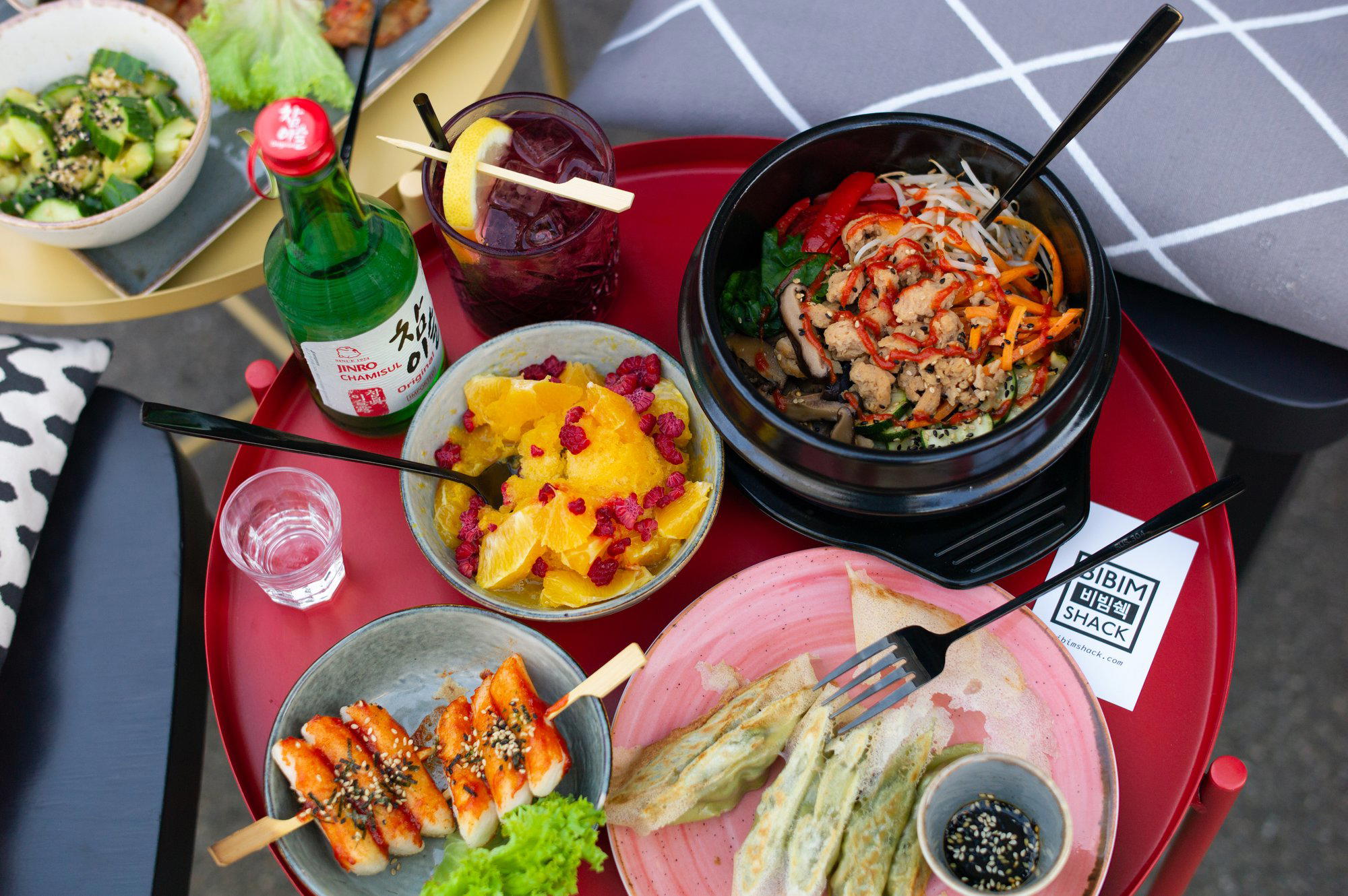
District 5 and the Case for Korean Casual in Zurich
Hardstrasse runs through Zurich's fifth district like a spine connecting the city's more working-class, industrially inflected west to the rail corridor near Zürich HB. Over the past decade, the strip and its side streets have accumulated a particular kind of restaurant: places where the food travels further than the room would suggest, where the clientele is younger and less formally dressed than in Zurich's old town, and where the price point is calibrated to students, creative professionals, and the lunchtime overflow from nearby offices. Bibim Shack at number 320 occupies that territory. Korean casual dining, which has expanded steadily across European capitals since the mid-2010s, is still a relatively thin category in Zurich compared with cities like Berlin or London, which means venues in this niche operate with less direct competition and more room to define the format on their own terms.
The name references bibimbap, the Korean rice dish built on layered vegetables, fermented pastes, and often a protein, assembled either cold or with the rice still warm from the stone bowl. The dish's architecture, colour contrast, and reliance on fermented condiments like gochujang make it one of the more visually immediate foods in the Korean repertoire, and it has functioned as a gateway dish for Korean cuisine in Western markets much as ramen did for Japanese food a generation earlier. A venue anchoring its identity to that reference is making a deliberate choice about accessibility and recognisability.
The Sensory Register of a Neighbourhood Korean Spot
The experience of a Korean casual restaurant in Europe tends to be defined by two competing sensory registers: the warmth and slight funk of fermented ingredients that arrives before the food does, and the visual density of a bowl or plate where nothing is monochrome. Gochugaru's brick-red, the deep green of blanched spinach, the yellow of egg yolk against white rice: bibimbap specifically rewards the eye before the palate. In a dining room where the design vocabulary tends toward the informal, that visual load the food carries does a lot of atmospheric work on its own.
In Swiss dining more broadly, the spectrum runs from the technically demanding tasting menus at venues like IGNIV Zürich by Andreas Caminada and The Restaurant to the heritage comfort of Widder and the creative mid-market positioning of The Counter. Bibim Shack sits well outside that established hierarchy, which is partly the point. It belongs to a different peer group entirely: the small, unfussy neighbourhood restaurants that fill a city's daily dining needs rather than its occasion-driven ones.
Korean Cuisine in the European Context
Korean food's European expansion has followed a recognisable arc. It began with diaspora-focused grocers and restaurants in the 1980s and 1990s, accelerated through K-pop and streaming culture in the 2010s, and is now mainstream enough that Korean fried chicken, tteokbokki, and banchan appear on menus well beyond Korean-owned establishments. Switzerland has been slower to absorb this shift than Germany, France, or the UK, partly because its restaurant market is smaller and more conservative, and partly because the cost of opening and operating in a Swiss city is high enough to favour established categories with proven demand. That makes Korean casual spots in Zurich worth noting as early indicators of a broader category shift rather than isolated novelties.
Fermentation is the through-line in Korean cooking that most distinguishes it from neighbouring East Asian cuisines in European perception. Kimchi, doenjang, ganjang, and gochujang are not seasonings added at the end but foundational flavour elements that have been developing for weeks or months before a dish is assembled. That time investment is invisible on the plate but present in every mouthful, which is why Korean food tends to land differently to diners who encounter it seriously for the first time: the depth comes from process, not from technique applied at the stove.
Where Bibim Shack Sits in Zurich's Dining Map
Zurich's restaurant scene is unusually compressed for a city of its size. With a population of around 430,000 and some of the highest average dining spend in Europe, the city supports a remarkable density of both high-end and mid-market dining, but the casual international category, the everyday Korean, Vietnamese, or Ethiopian spots that in London or Paris would number in the hundreds, remains comparatively thin. That compression means venues like Bibim Shack occupy a gap rather than competing within a saturated field.
For context on the broader Swiss dining culture that surrounds this kind of spot, the country's formal restaurant tradition is anchored by multi-Michelin-starred institutions: Hotel de Ville Crissier in Crissier, Schloss Schauenstein in Fürstenau, Memories in Bad Ragaz, and Cheval Blanc by Peter Knogl in Basel all operate at the country's highest recognition tier. Further afield, Maison Wenger in Le Noirmont, Einstein Gourmet in Sankt Gallen, Da Vittorio in St. Moritz, Mammertsberg in Freidorf, focus ATELIER in Vitznau, and La Table du Valrose in Rougemont map the range of what serious Swiss dining looks like outside Zurich's city limits. Bibim Shack operates at the opposite end of that formality axis, which is not a criticism. The two tiers serve different moments and different kinds of hunger.
For readers tracking the full range of what Zurich's restaurant scene offers, from this kind of casual neighbourhood format through to tasting-menu territory, our full Zurich restaurants guide maps the city by cuisine, price, and occasion. Internationally, the contrast between a casual neighbourhood Korean spot and the formal precision of places like Le Bernardin in New York City or Lazy Bear in San Francisco illustrates how wide the register of serious restaurant-going actually runs. For Italian-leaning casual dining in the same Zurich price neighbourhood, Eden Kitchen & Bar occupies a comparable slot with a different culinary tradition.
Planning Your Visit
Know Before You Go
- Address: Hardstrasse 320, 8005 Zürich, Switzerland
- Neighbourhood: District 5 (Industriequartier), western Zurich
- Cuisine: Korean casual, bibimbap-focused
- Reservations: No booking information currently available; walk-in likely given the format
- Website / Phone: Not listed at time of publication
- Getting there: Hardstrasse is served by tram lines running between Zurich HB and the western districts; the address is accessible on foot from Hardbrücke
Continue exploring
More in Zürich
Restaurants in Zürich
Browse all →
Bars in Zürich
Browse all →

Hotels in Zürich
Browse all →

At a Glance
- Casual
- Trendy
- Casual Hangout
- Open Kitchen
Current opening hours
- Monday
- 11 AM–2 PM, 5–10 PM
- Tuesday
- 11 AM–2 PM, 5–10 PM
- Wednesday
- 11 AM–2 PM, 5–10 PM
- Thursday
- 11 AM–2 PM, 5–10 PM
- Friday
- 11 AM–2 PM, 5–10 PM
- Saturday
- Closed
- Sunday
- Closed
Hours can change for holidays and private events. Last verified .
Casual take-away atmosphere with loud staff interactions and limited seating.
Know Before You Go
- Getting there
- Hardstrasse 320, 8005 Zürich, Switzerland