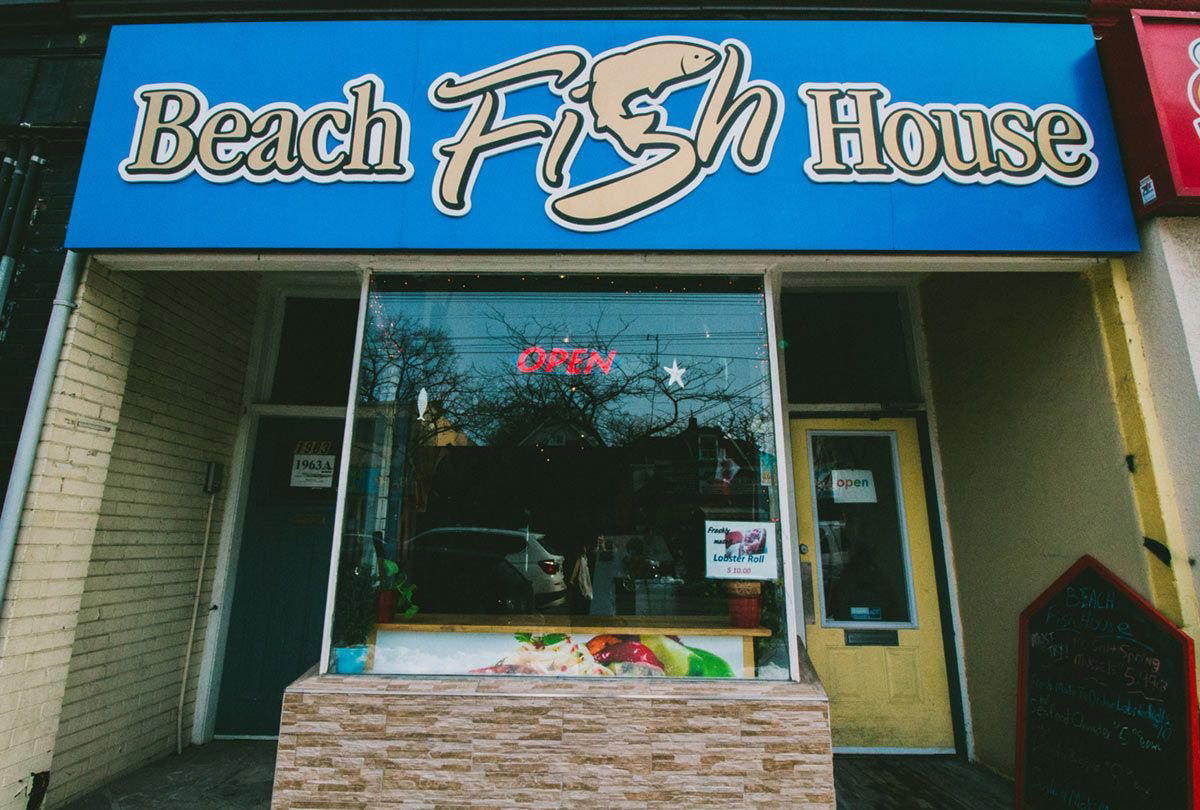
Beach Fish House on Queen Street East sits inside Toronto's Beaches neighbourhood, where the gap between casual shoreside dining and serious seafood cookery has quietly narrowed. The address signals a particular kind of local institution: a fish house that answers to the rhythms of the lake rather than the downtown fine-dining circuit. For readers tracking where Toronto's neighbourhood restaurant culture does its most honest work, this is one address to hold.
- Address
- 1963A Queen St E, Toronto, ON M4L 1H9, Canada
- Phone
- +1 647 350 3474
- Website
- m.facebook.com
- Directions
- Get directions
Queen East and the Neighbourhood Fish House Tradition
Beach Fish House is a casual seafood restaurant in Toronto's Beaches neighbourhood, with a price tier of 2, at 1963A Queen St E. Where restaurants around King West or the financial district price and programme against each other in a tight competitive cluster, the Beaches end of Queen runs closer to neighbourhood habit: regulars who walk from nearby streets, seasonal visitors drawn by the waterfront, and a local appetite for food that fits the setting rather than arguing against it. A fish house on this stretch is not an outlier. It is, in some ways, one coherent possible answer to what the neighbourhood wants.
Beach Fish House, at 1963A Queen Street East, occupies that position. It is permanently closed. The address places it firmly in the eastern Beaches pocket, where the restaurant density thins out from the busier Queen West corridor and individual spots carry more weight in local identity. Across Canada's serious seafood dining tier, the poles are well-established: Le Bernardin in New York City sets a global reference point for what refined fish cookery can mean at the formal end, while institutions like Fogo Island Inn Dining Room in Joe Batt's Arm anchor the conversation around provenance and place at the remote, hyper-local end. The neighbourhood fish house sits at neither extreme. Its authority comes from consistency and community embeddedness, not from tasting menus or destination tourism.
The Rhythm of a Fish House Meal
Fish house dining has its own set of unwritten protocols that distinguish it from the broader casual restaurant experience. The pacing tends to be direct rather than ceremonial: little preamble, clear choices, food that arrives without elaborate tableside narration. This is not a format that rewards overthinking the menu or expecting elaborate sequencing. The assumption is that the diner knows what a fish house is for and arrives with a specific hunger rather than an open-ended appetite for discovery.
That directness is itself a tradition with deep roots. Along the eastern seaboard and Great Lakes regions, the fish house has historically served as the working link between the catch and the community, keeping preparation close to the ingredient and presentation honest. Toronto's own relationship with Lake Ontario fish, and with Atlantic supply chains that run north through established distribution networks, gives the city's fish houses a dual identity: local and imported product sit side by side, and the kitchen's job is to handle both credibly. At the more formal end of Toronto's seafood spectrum, Aburi Hana brings Japanese kaiseki discipline to fish, and Sushi Masaki Saito operates in the omakase tier where the ritual of the meal is as significant as the ingredient. The fish house tradition is the secular, less choreographed counterpart to those formats.
Where Beach Fish House Sits in Toronto's Dining Map
Toronto's restaurant culture has developed a clear split over the past decade. Downtown fine dining, represented by operations like Alo and Don Alfonso 1890 at the $$$$ end of the market, programmes against a national and international comparable set. Italian-forward rooms like DaNico occupy a middle register where cooking ambition and neighbourhood function coexist. And then there is the tier of address-specific, community-embedded spots where the draw is reliability and fit rather than occasion dining.
The Beaches is a neighbourhood with strong residential identity and seasonal swing. Summer brings significant foot traffic from the beach itself; the shoulder months return it to a local crowd that treats its restaurants as extensions of the neighbourhood rather than destinations sought out from across the city. A fish house in this context earns its standing not through single notable meals but through repeated visits across seasons, which is a different kind of reputation than the one built by tasting menu counters or chef-driven destination spots. Across Canada, restaurants that build this kind of embedded standing tend to outlast trendier competition: Cafe Brio in Victoria and AnnaLena in Vancouver both hold neighbourhood-institution status that sits separately from their critical recognition.
Canadian Seafood Dining in Broader Context
Canada's seafood restaurant tradition is geographically distributed in ways that make the inland city fish house an interesting case. Maritime and Pacific Coast institutions draw on proximity to source as their primary credential. Ontario, removed from both coasts, built its fish restaurant culture around distribution infrastructure and, historically, Great Lakes species that have since declined in commercial availability. The modern Toronto fish house navigates that gap by sourcing broadly and being transparent about it.
That sourcing conversation increasingly touches restaurants across the country. Narval in Rimouski works close to the St. Lawrence and its Atlantic-adjacent supply. Restaurant Pearl Morissette in Lincoln approaches Ontario's own agricultural produce with a hyper-local discipline that has influenced how other Ontario restaurants think about provenance. Even places like Eigensinn Farm in Singhampton have pushed the province's appetite for knowing where food comes from. A Queen East fish house operates in a city that has absorbed those conversations, and the expectation around sourcing transparency has filtered down from tasting-menu dining into neighbourhood formats. Comparable formats in other cities, like Lazy Bear in San Francisco or Jérôme Ferrer - Europea in Montréal, have navigated similar pressure to connect sourcing narrative to dining identity.
Planning a Visit
The restaurant sits at 1963A Queen Street East in the Beaches neighbourhood, reachable by the Queen streetcar east from the downtown core. The surrounding area is walkable and the stretch of Queen near Woodbine supports an easy pre or post-dinner wander. For those exploring what Toronto's neighbourhood dining looks like outside the downtown axis, this end of Queen East offers a different character than the west end, with fewer venues competing for the same visitor attention. The Pine in Creemore and Tanière³ in Quebec City round out useful comparisons for readers tracking where Canada's more ambitious cooking is happening outside major city centres.
Pricing, Compared
Comparable venues nearby, for context on price, style, and recognition.
| Venue | Cuisine | Price | Notes |
|---|---|---|---|
| Beach Fish HouseThis venue — the venue you are viewing | The Beaches, Fresh Seafood Shop | $$ | Not listed |
| Honest Weight | The Junction, Modern Seafood | $$ | Not listed |
| Hooked Inc. | Not listed | $$ | South Riverdale, Sustainable Seafood Fishmonger |
| Newport Fish & Seafood | Davenport, Fresh Seafood Market | $ | Not listed |
| Astoria Shish Kebob House -Danforth | Not listed | $$ | Playter Estates-Danforth, Authentic Greek |
| The Fry | Not listed | $$ | Bay Street Corridor, Korean Fried Chicken |
Continue exploring
More in Toronto
Restaurants in Toronto
Browse all →
Bars in Toronto
Browse all →
Hotels in Toronto
Browse all →



At a Glance
- Cozy
- Classic
- Casual Hangout
- Local Sourcing
Cozy atmosphere with friendly service.