On Tkalčićeva Street, Zagreb's most animated pedestrian corridor, Barbieri's occupies a position in a neighbourhood where the city's dining culture is at its most concentrated. The address places it among a mix of casual and serious tables, with the street's evening rhythm setting a particular kind of scene that rewards those who arrive with time rather than a schedule.
Pearl is the En Primeur Club membership app — saves, bookings, and concierge access live there. Same editors, same standards.
- Address
- Ul. Ivana Tkalčića 90, 10000, Zagreb, Croatia
- Phone
- +385916111111
- Website
- barbieris.hr
- Directions
- Get directions
 Saves & bookings on Pearl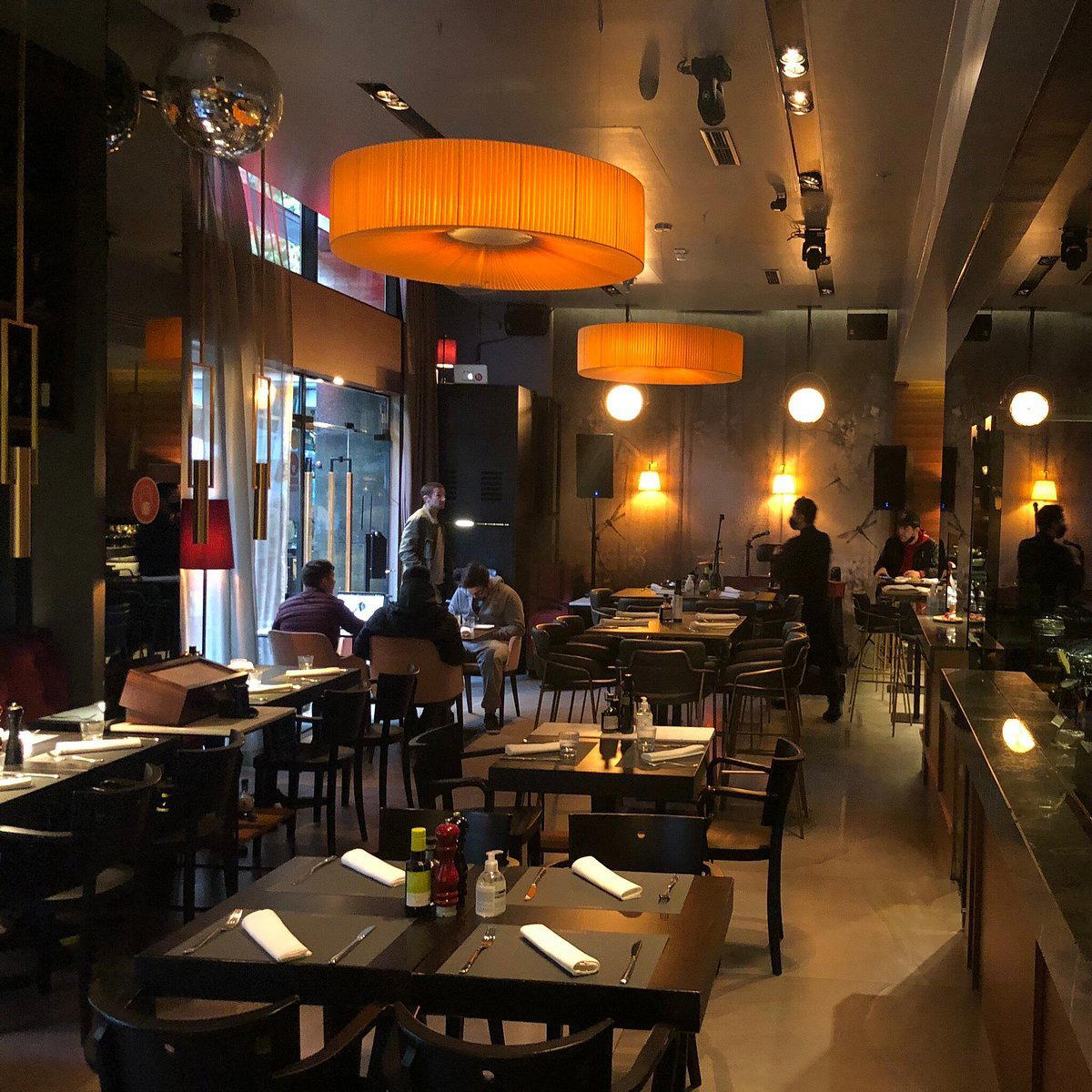
Tkalčićeva and the Architecture of a Zagreb Evening
Zagreb's dining identity has never been easy to pin down. The city sits at a crossroads of Central European restraint and Mediterranean looseness, and nowhere does that tension resolve itself more visibly than along Ulica Ivana Tkalčića. The street runs through Gornji Grad's lower fringe, a long pedestrian channel lined with former artisan workshops now converted into bars, restaurants, and cafes. By early evening, the whole corridor hums with a specific social energy: locals on their way somewhere, tourists slightly unsure which direction to walk, and a steady stream of regulars who treat the street as an extension of their living rooms.
Barbieri's at number 90 sits toward the quieter end of that stretch, which in practical terms means the foot traffic thins slightly and the tables, when weather allows them outside, have a little more breathing room than the heavier blocks closer to the Ban Jelačić Square end. This is still Tkalčićeva, though, so the atmosphere is never absent. The street does not stop performing.
The Service Dynamic as the Real Story
In Zagreb's emerging restaurant scene, the conversation around quality has shifted. A decade ago, the benchmark was almost entirely about what appeared on the plate. Now, the city's more attentive diners are beginning to judge a room by how its different functions work in relation to each other: whether the person taking your coat and the person describing the wine are reading from the same script, or whether front-of-house operates as a sequence of disconnected transactions. The better rooms in Zagreb have started closing that gap.
On Tkalčićeva, the pressure to perform is different from, say, the white-tablecloth restaurants in Zagreb's more formal dining tier. Here the expectation is warmth over ceremony, and the challenge for any kitchen-and-floor team is to deliver something that feels considered without feeling stiff. The gap between a well-run neighbourhood spot and a tourist trap on this street is maintained almost entirely by service discipline and the relationship between what the kitchen sends out and what the floor communicates about it. When that alignment works, you feel it quickly. When it doesn't, the street's ambient noise fills the silence where hospitality should be.
For context on how Zagreb's more formally structured operations handle that kitchen-to-floor dynamic, Noel at the €€€€ level represents one end of that spectrum, and Dubravkin Put offers a Mediterranean-inflected middle ground worth benchmarking against.
Where Barbieri's Sits in the Zagreb Picture
Zagreb's restaurant map has sorted itself into reasonably legible tiers. At the leading, a small group of ambitious tables are pushing toward international recognition, with Noel among the names that serious visitors put on their itinerary before anything else. In the middle, a larger cohort of neighbourhood-facing restaurants handles the city's everyday dining life with varying degrees of seriousness. Below that, the tourist-oriented ground floor of Tkalčićeva and the Lower Town squares serves volume at the expense of almost everything else.
Barbieri's address places it in a zone where all three tiers have some claim. The street is used by everyone. What separates a room that earns repeat local custom from one that subsists on tourist turnover is largely invisible from the outside: it lives in prep work, in sourcing decisions, in whether the person serving you knows enough about what they're bringing to tell you something useful. Zagreb's more serious casual tables, including Izakaya on the Japanese contemporary side and Al Dente in the Italian space, have each found ways to hold their footing in that middle tier without surrendering to the street-level noise around them.
Croatia's Broader Fine Dining Trajectory
To understand what Zagreb's better restaurants are working against and toward, it helps to look at what's happening at the summit of the Croatian dining register along the coast. Agli Amici Rovinj in Istria and Pelegrini in Šibenik have demonstrated that Croatia can sustain serious kitchen ambition with international recognition. Nebo by Deni Srdoč in Rijeka, LD Restaurant in Korčula, and Boskinac in Novalja all point to a coastal circuit where the sourcing conversation is heavily shaped by proximity to the Adriatic and access to Istrian and Dalmatian producers.
Zagreb operates at a remove from that coastal energy. The city's kitchens work with the same Croatian produce network but without the built-in tourism premium that the coast commands. That constraint can work as a discipline: Zagreb restaurants serving local clientele have less margin for sloppy sourcing or poorly calibrated menus, because their customers come back regularly and notice. The restaurants that have held ground in Zagreb over time, from Amfora to the newer entrants, have generally done so by building genuine neighbourhood relationships rather than relying on seasonal visitor flows.
Planning a Visit
The address at Ulica Ivana Tkalčića 90 is direct to reach on foot from the city centre; the street begins a short walk north of Ban Jelačić Square and runs uphill toward Gornji Grad. Tkalčićeva fills quickly on weekend evenings from spring through early autumn, so arriving with a confirmed arrangement rather than hoping for a walk-in is the more reliable approach during those months. For visitors building a broader Croatian itinerary, the coastal reference points at Krug in Split, Restaurant 360 in Dubrovnik, Alfred Keller in Mali Lošinj, San Rocco in Brtonigla, and Korak in Jastrebarsko round out a serious dining circuit across the country.
Budget Reality Check
Comparable venues nearby, for context on price, style, and recognition.
| Venue | Cuisine | Price | Notes |
|---|---|---|---|
| Barbieri'sThis venue — the venue you are viewing | Not listed | $$$ | Not listed |
| Oxbo | Not listed | $$$ | business district, Modern Steakhouse Grill |
| Carpaccio | Not listed | $$$ | Center, Classic Italian with Seasonal Croatian Influences |
| Lari & Penati | Lower Town, Croatian Bistro | $$ | Not listed |
| YEZI | Central Zagreb, Modern Pan-Asian Fusion | $$$ | Not listed |
| SOI fusion | Donji Grad, Asian Fusion Street Food | $$ | Not listed |
Continue exploring
More in Zagreb
Restaurants in Zagreb
Browse all →
Bars in Zagreb
Browse all →
Hotels in Zagreb
Browse all →

At a Glance
- Lively
- Elegant
- Trendy
- Energetic
- Date Night
- Group Dining
- Special Occasion
- Live Music
- Craft Cocktails
- Local Sourcing
Current opening hours
- Monday
- 4 PM–12 AM
- Tuesday
- 8:30 AM–12 AM
- Wednesday
- 8:30 AM–1 AM
- Thursday
- 8:30 AM–2 AM
- Friday
- 8:30 AM–2 AM
- Saturday
- 8:30 AM–2 AM
- Sunday
- 4 PM–12 AM
Hours can change for holidays and private events. Last verified .
Low light suede and dark leather interior creating a sleek, sophisticated atmosphere with excitement and ease.