Banh Mi Huynh Hoa
Among Ho Chi Minh City's street-food institutions, Banh Mi Huynh Hoa occupies a distinct position: a bánh mì counter so consistently in demand that queues form before service begins. Placed against the city's broader spectrum of Vietnamese street food, from quick-turn district stalls to the reinterpreted formats at Anan Saigon, Huynh Hoa represents the unreconstructed original, a benchmark against which the rest of the scene measures itself.
Pearl is the En Primeur Club membership app — saves, bookings, and concierge access live there. Same editors, same standards.
- Address
- Ho Chi Minh City, Vietnam
- Directions
- Get directions
 Saves & bookings on Pearl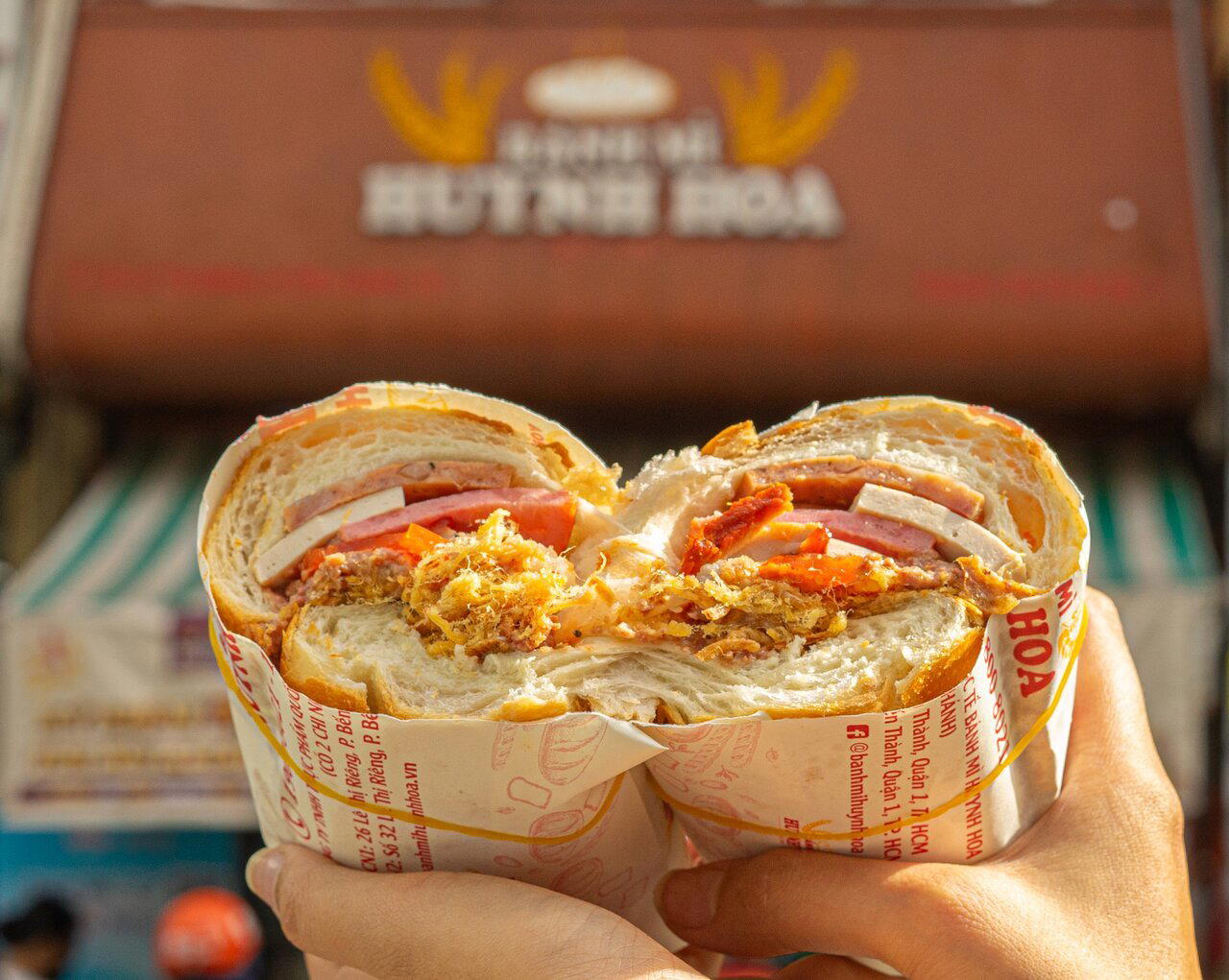
The Queue as Context
On Lê Thị Riêng Street in District 1, the pavement outside Banh Mi Huynh Hoa tells you everything before you reach the counter. The line, a consistent feature, not an occasional event, reflects something particular about how Ho Chi Minh City's street-food culture operates at its most concentrated. In a city where bánh mì vendors exist on nearly every block, the ones that sustain real demand across decades do so not through novelty or rebranding, but through a narrow, disciplined focus on a single format executed at a level that the broader market rarely matches. Huynh Hoa sits in that smaller category: a counter where the crowd is the credential. Banh Mi Huynh Hoa is a casual Vietnamese banh mi counter in Ho Chi Minh City, priced around $3 per person.
Ho Chi Minh City's street-food scene has split along increasingly visible lines. On one side, formats like Anan Saigon work Vietnamese street-food traditions through a contemporary lens, repositioning ingredients and techniques for a dining-room audience. On the other, a smaller group of long-running street counters has continued exactly as before, resisting the upward pressure to formalize, and Huynh Hoa belongs firmly to that second group. Understanding where it sits in that split is the starting point for deciding whether a visit makes sense for you.
What the Bánh Mì Format Actually Requires
The bánh mì is one of the more demanding tests of ingredient sourcing in Vietnamese street food, precisely because the format is so spare. A short baguette, its crust a product of the French colonial period adapted over generations to local wheat and climate, carries a small number of fillings with nowhere for a weak component to hide. The bread-to-filling ratio, the fat content of the pâté, the balance between pickled daikon and fresh coriander: each element is load-bearing in a way that a more complex dish can obscure.
Huynh Hoa's reputation in Ho Chi Minh City rests on its position at the high end of this format's ingredient range. The counter is consistently cited by food writers and local residents as the reference point for what a well-sourced, generously filled bánh mì looks like, larger and more ingredient-heavy than most competitors, with a cost that reflects those inputs. Placed against the city's entry-level street stalls (represented at one affordable tier by counters analogous to simpler regional formats elsewhere in Vietnam), Huynh Hoa prices at a premium for the street category, though still well below the formal dining tier occupied by restaurants like Akuna or CieL.
Sourcing and the Street-Food Supply Chain
The editorial angle on sustainability in Ho Chi Minh City's street-food sector is rarely about certification or formal programs; it operates through a different logic. The long-running counters that have supplied the same neighbourhoods for decades tend to maintain supplier relationships that newer, higher-turnover operations do not. Consistency of sourcing is both an economic and a quality argument: when a counter's reputation depends on a single product, the incentive to protect the supply chain is higher than in a diversified restaurant kitchen.
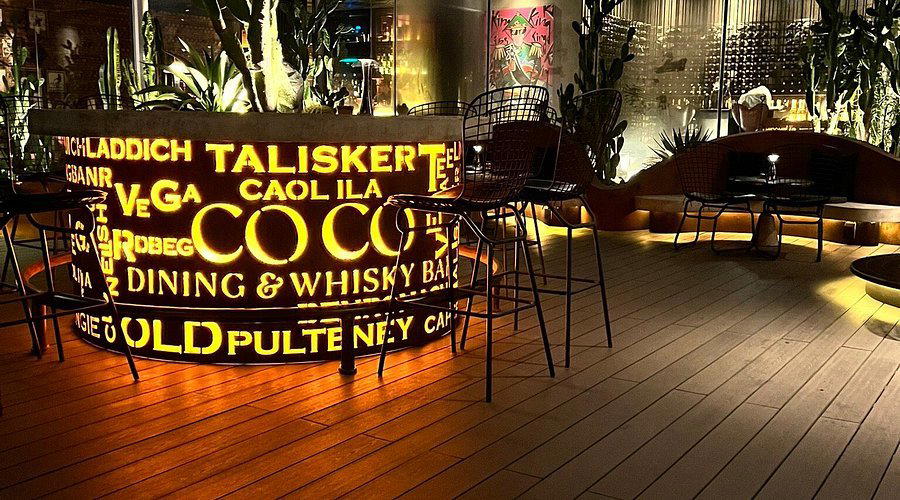
In this respect, the street-food tier that Huynh Hoa represents functions differently from the farm-to-table frameworks common in Western fine dining or in Ho Chi Minh City's newer innovative restaurants like Coco Dining. The sustainability argument here is structural: low waste by design, high ingredient utilization per item, no extended cold chain, and a production model calibrated to daily sell-through rather than inventory accumulation. The bánh mì format, at the volume Huynh Hoa operates, is materially efficient in ways that more elaborate formats are not.
Across Vietnam, similar dynamics play out in different registers. The sourcing discipline visible at a long-running counter in Ho Chi Minh City has parallels in Hanoi's ingredient-led approach at restaurants like Gia, or in the tightly sourced regional seafood formats along the coast, such as the operations tracked in Ha Long's seafood sector. The methods differ, but the underlying logic, short supply lines, daily freshness, no structural over-ordering, connects them.
Positioning Against the Hoi An and Da Nang Comparison
Bánh mì has geographic variants across Vietnam, and the Ho Chi Minh City style differs from the Hoi An version in ways that matter to anyone comparing across the country. Hoi An's bánh mì, associated with venues like White Rose and its peer counters, tends toward a lighter, less loaded format. The southern version, of which Huynh Hoa is a known example, runs heavier on protein and fat, with pâté and multiple meat fillings stacked into a larger roll. Neither is a degraded version of the other; they represent different regional evolutions of the same French-Vietnamese hybrid form.
Da Nang's premium dining, anchored by formal hotel restaurants like La Maison 1888, operates in an entirely separate register. The comparison is useful not to evaluate one against the other, but to map the range of experiences available across Vietnam's dining spectrum, from a pavement counter in District 1 to a multi-course French-influenced service in a colonial-era property. Both are legitimate, and the traveller's itinerary should account for both registers.
Planning a Visit
Banh Mi Huynh Hoa operates on Lê Thị Riêng Street in District 1, accessible from most central Ho Chi Minh City hotels on foot or by short taxi ride. No reservation is possible or necessary, the counter runs on a first-come basis, and the queue moves at pace given the high-volume, single-product format.
For visitors building a broader Ho Chi Minh City itinerary, Huynh Hoa makes most sense as part of a street-food-focused day rather than as a standalone destination. The surrounding District 1 area supports that kind of programming: the Cantonese dining available at Long Trieu and the innovative formats tracked in our full Ho Chi Minh City restaurants guide provide the context to understand where Huynh Hoa sits in the city's overall food geography.
At a Glance
Comparable venues nearby, for context on price, style, and recognition.
| Venue | Cuisine | Price | Notes |
|---|---|---|---|
| Banh Mi Huynh HoaThis venue — the venue you are viewing | Bến Thành, Vietnamese Banh Mi | $ | Not listed |
| Ốc Đào | Not listed | $ | Quan 1, Vietnamese Shellfish and Snail Specialist |
| Phở Hoàng | Not listed | $ | Quan 10, Traditional Vietnamese Pho |
| Cơm Niêu Sài Gòn | Not listed | $$ | Quan 3, Traditional Vietnamese Clay Pot Rice |
| Pho Le | Not listed | $ | Quan 5, Authentic Southern Vietnamese Pho |
| Bếp Người Hội An | Not listed | $ | Quan 3, Central Vietnamese (Hội An-style) |
Continue exploring
More in Ho Chi Minh City
Restaurants in Ho Chi Minh City
Browse all →
Bars in Ho Chi Minh City
Browse all →
At a Glance
- Well Known
- Lively
- Casual Hangout
- Standalone
Busy street-side shop with a lively atmosphere from constant crowds and the energy of quick service.