Bamboo Garden Vegetarian Cuisine
Bamboo Garden Vegetarian Cuisine on Roy Street occupies a quiet but established position in Seattle's plant-based dining scene, drawing on Chinese vegetarian traditions at a time when the city's broader restaurant culture increasingly values produce-led cooking. The address places it within reach of South Lake Union and lower Queen Anne, two neighbourhoods where dining habits have shifted considerably over the past decade.
- Address
- 364 Roy St, Seattle, WA 98109
- Phone
- +1 206 282 6616
- Website
- bamboogardenseattle.com
- Directions
- Get directions
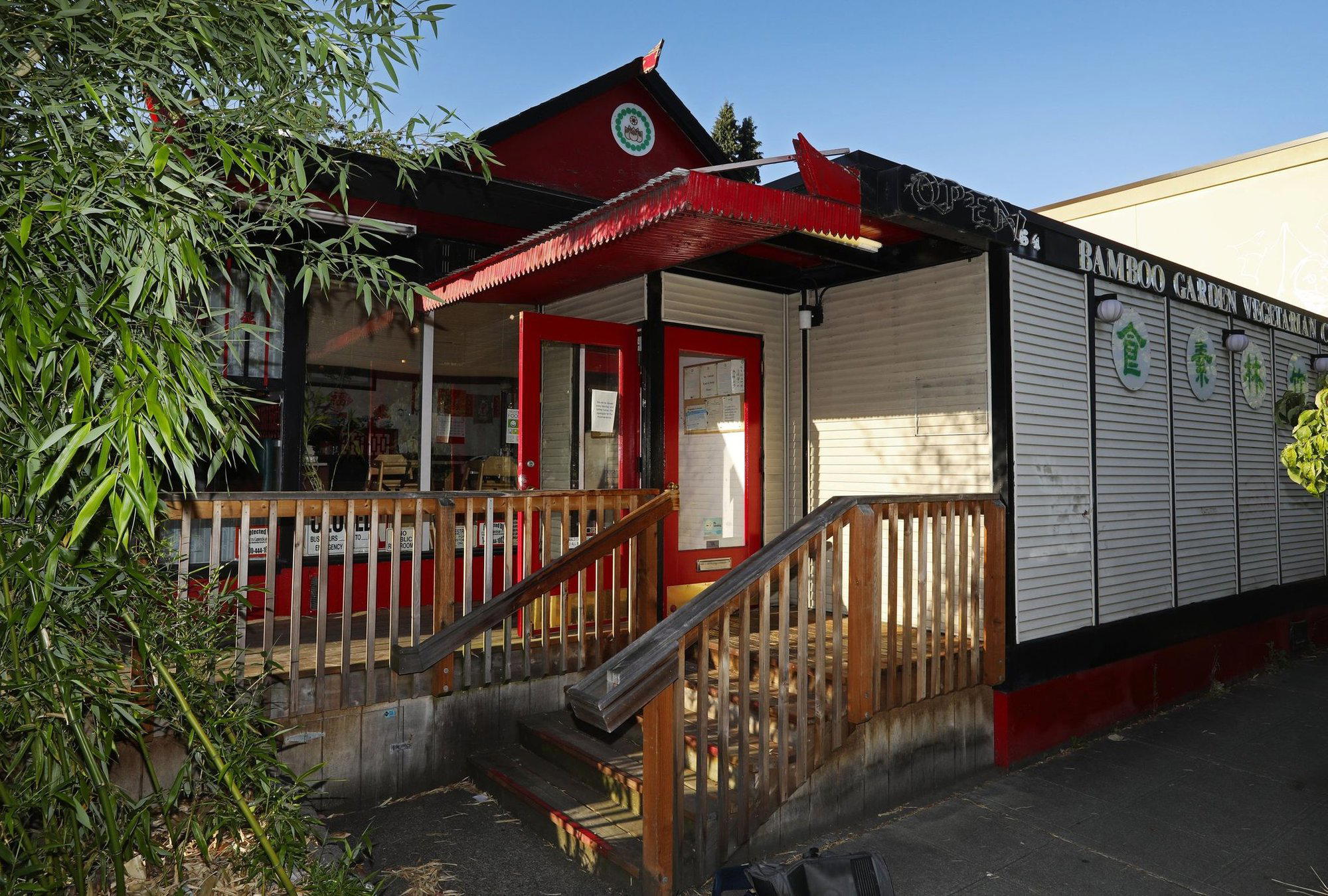
Roy Street and the Geometry of Seattle's Plant-Based Dining
Queen Anne's southern edge is not where most visitors begin a restaurant search in Seattle. The neighbourhood sits between the louder gravitational pulls of Capitol Hill and South Lake Union, and Roy Street itself carries the quiet confidence of a block that doesn't need to announce itself. That context matters for Bamboo Garden Vegetarian Cuisine, which has operated at 364 Roy St in a city that has, over the past decade, developed a genuinely sophisticated conversation around plant-based cooking, one that now runs parallel to the farm-to-table ethos visible at places like Blue Hill at Stone Barns in Tarrytown and, in a different register, Single Thread Farm in Healdsburg. Bamboo Garden Vegetarian Cuisine is a casual, walk-in-friendly vegetarian Chinese restaurant in Seattle.
The physical approach along Roy Street is low-key: a residential-commercial mix where the restaurant occupies street-level space without the design theatrics that newer Seattle openings tend to favour. That restraint is itself a signal. In a city where Canlis commands hillside views and Joule operates with New Asian ambition, Bamboo Garden has maintained a different posture: functional, neighbourhood-rooted, and oriented around the food rather than the room.
Chinese Vegetarian Tradition in a Pacific Northwest Frame
The broader tradition Bamboo Garden draws from is worth understanding on its own terms. Chinese Buddhist vegetarian cooking has a documented history stretching back more than a thousand years, developed in temple kitchens where the challenge was not simply to eliminate meat but to produce dishes with structural and textural complexity that could sustain daily monastic life. The techniques that emerged, layered braising, gluten-based protein preparation, fermentation, and careful spice calibration, represent a culinary methodology that predates most of what the contemporary West calls plant-based innovation.
What makes the Seattle context interesting is the intersection those techniques find with Pacific Northwest produce. The region produces particularly compelling raw materials in North America: Dungeness crab country notwithstanding, the vegetable and mushroom output from western Washington and Oregon is substantial. Wild mushrooms, chanterelles, morels, matsutake, arrive seasonally at farmers' markets from Pike Place to the Eastside. Locally grown Asian brassicas, long beans, and specialty alliums are staples at producers serving the region's substantial Chinese, Vietnamese, and Japanese communities. A kitchen working in the Chinese vegetarian tradition has access, in Seattle, to ingredients that align naturally with the methods, which is a different situation from operating the same format in a city without that agricultural and cultural infrastructure.
This intersection of imported technique and regional product is the same logic that animates celebrated kitchens elsewhere. Smyth in Chicago and Addison in San Diego both structure their identity around the proximity of specific producers. In Korean-inflected fine dining, Atomix in New York City has shown how a tradition-rooted approach, applied with technical precision and local sourcing, produces results that speak to both communities simultaneously. Bamboo Garden operates in a more neighbourhood register than any of those rooms, but the structural logic, tradition plus local material, is the same.
Positioning Within Seattle's Restaurant Ecosystem
Seattle's restaurant culture has matured in ways that reward specificity. The city that produced 1415 1st Ave and the operations at 1744 NW Market St and 2963 4th Ave S has developed an appetite for restaurants that occupy distinct culinary positions rather than broad, crowd-pleasing categories. In that context, a restaurant committed to Chinese vegetarian cooking occupies a specific niche, one with few direct competitors at the neighbourhood level.
The comparison set for Bamboo Garden is not Seattle's fine-dining circuit. It sits closer to the category of established ethnic specialists: places like Maneki, one of Seattle's oldest Japanese restaurants, or the soba house Kamonegi, which has built a loyal following around a single, technically demanding format. These restaurants succeed not through spectacle but through consistency and depth within a defined tradition. That model has proven durable in Seattle, where diners have shown they will return repeatedly to kitchens that execute a focused repertoire with care.
Bamboo Garden fits within a category of specialist neighbourhood restaurants that reward curiosity from visitors willing to move beyond the waterfront and Capitol Hill circuit.
Seasonal Considerations
Seasonal produce shapes the menu throughout the year. Pacific Northwest wild mushroom season runs from late July through November, with peak matsutake and chanterelle availability in September and October. Chinese vegetarian cooking has deep applications for both varieties, braised, incorporated into stuffings for wheat gluten preparations, or served as the structural centrepiece of a dish. A kitchen with access to those materials and the technical repertoire to apply them is, during those months, working at the intersection of regional abundance and culinary tradition in a way that is difficult to replicate at other times of year. Winter brings its own produce logic, root vegetables, preserved ingredients, long-cooked preparations, but autumn is when the alignment between what the Pacific Northwest produces and what Chinese vegetarian cooking does with it is most acute.
Spring, when Pacific Northwest ramps and early alliums appear, offers a secondary window. Chinese cooking has extensive applications for young alliums, and a kitchen paying attention to the seasonal calendar can shift its emphasis accordingly. These cycles matter for a cuisine where the quality of plant material determines the quality of the dish far more directly than in meat-centred cooking, where protein quality can be stabilised through sourcing relationships that are less weather-dependent.
Planning a Visit
Bamboo Garden is located at 364 Roy St, Seattle, WA 98109, on the southern slope of Queen Anne. The address is accessible by bus from downtown Seattle and within walking distance of the Seattle Center, which puts it in range for visitors staying in the Lower Queen Anne hotel corridor. For those comparing it against other neighbourhood-scale specialists in the region, or against the broader category of ingredient-focused restaurants represented nationally by places like Lazy Bear in San Francisco or Providence in Los Angeles, Bamboo Garden occupies a different price tier and format entirely, the comparison is structural and conceptual rather than directly competitive.
Comparable Options
Comparable venues nearby, for context on price, style, and recognition.
| Venue | Cuisine | Price | Notes |
|---|---|---|---|
| Bamboo Garden Vegetarian CuisineThis venue — the venue you are viewing | Vegetarian Chinese | $ | Not listed |
| Little Ting's Dumplings | Authentic Northern Chinese Dumplings | $ | Broadview |
| Mike's Noodle House | Cantonese Noodle House | $ | Chinatown |
| Chiang's Gourmet | Authentic Szechuan & Shanghai Chinese | $$ | Roosevelt |
| Tokyo Garden Teriyaki | Seattle-Style Fusion Teriyaki | $ | University District |
| Ping's Dumpling House | Authentic Qingdao-Style Chinese Dumplings | $ | Japantown |
Continue exploring
More in Seattle
Restaurants in Seattle
Browse all →
Bars in Seattle
Browse all →
Hotels in Seattle
Browse all →


At a Glance
- Casual
- Classic
- Casual Hangout
- Group Dining
- Family
- Standalone
Bright, casual atmosphere with pale decor and neon guitar accent; functional rather than upscale, with small bathrooms.