Our verdict
BAGAAN Thakali Kitchen brings the hearty, high-altitude cooking of Nepal's Thakali community to Kathmandu, where the cuisine's reputation for sustaining mountain traders on the trans-Himalayan salt routes now finds an urban setting. Thakali food occupies a distinct position in Nepal's dining culture: structured, spice-forward, and built around the dal-bhat-tarkari framework with regional inflections that set it apart from the broader Nepali canon.

Pearl is the En Primeur Club membership app — saves, bookings, and concierge access live there. Same editors, same standards.
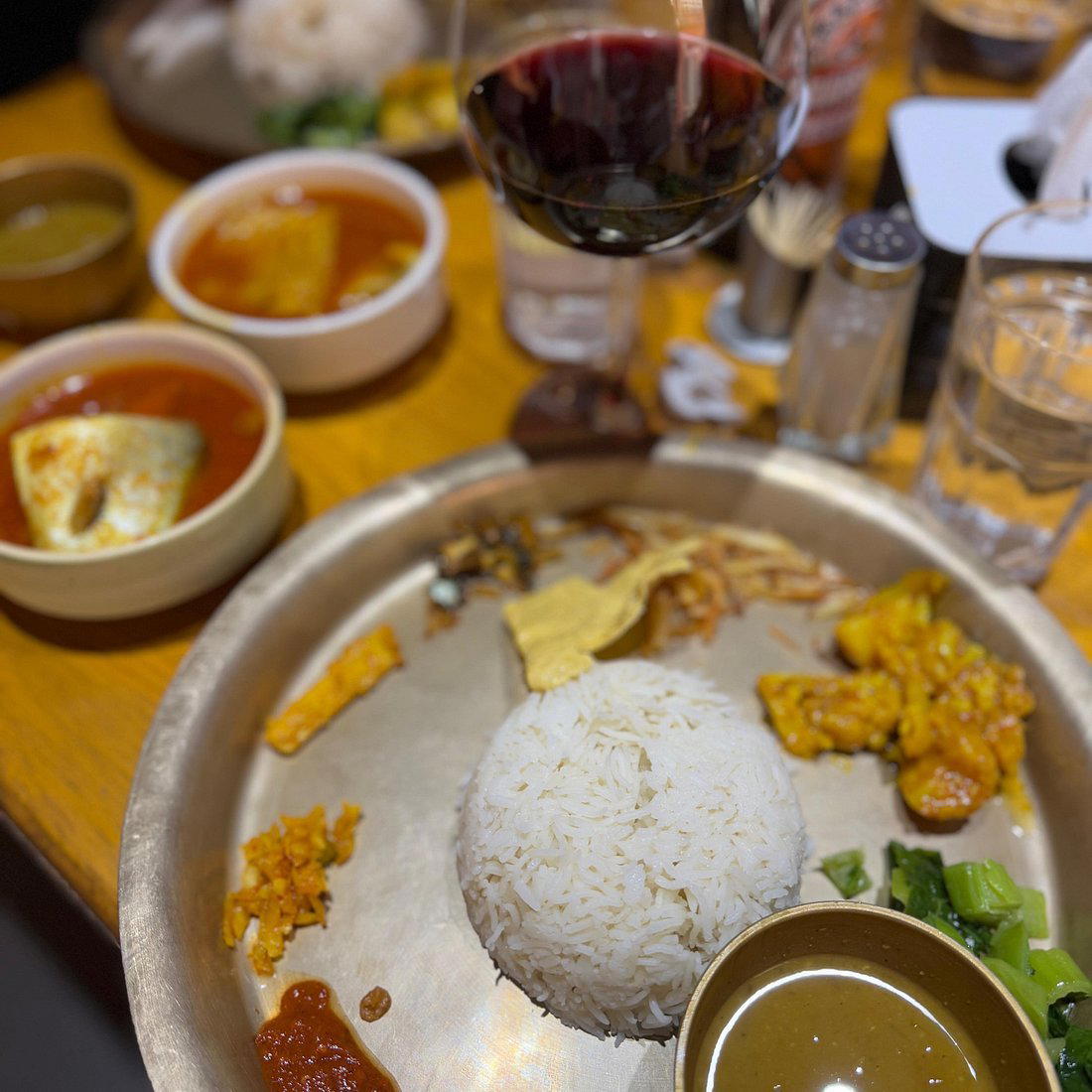
The menu
What to order
- Thakali Thali
- Mutton Jhol Thali
- Chicken Jhol Thali
- Jhol Momos
Where the Salt Route Ends Up on the Plate
There is a particular kind of restaurant that a city like Kathmandu needs more of: one that draws from a specific regional tradition rather than reaching for pan-Nepali generality. Thakali cuisine, originating with the trading communities of the Mustang district who controlled the ancient salt routes between Tibet and the subcontinent, is one of Nepal's most architecturally coherent food traditions. It is structured around a fixed rhythm of courses, built on buckwheat, millet, and mustard oil where the broader Nepali kitchen relies on rice and ghee, and seasoned with timur (Sichuan pepper), a spice that connects this corner of the Himalayas to trade networks that predate modern borders. BAGAAN Thakali Kitchen operates within that tradition in Kathmandu, where Thakali restaurants have carved out a recognisable niche among diners who understand that the city's most interesting food rarely appears on menus designed for international visitors.
The Thakali Table and What It Means
Thakali cooking is worth understanding on its own terms before arriving at any table. The Thakali people of the Kali Gandaki gorge region developed a cuisine shaped by altitude, trade, and necessity. The gorge itself, one of the world's deepest river valleys, was the main corridor for Tibetan salt moving south and Terai grain moving north, and Thakali households ran the inns and kitchens that fed those caravans. That hospitality infrastructure left a culinary inheritance: meals designed to be nourishing, filling, and replicable at scale, but organised with a precision that distinguishes them from roadside dal bhat. The Thakali set meal, or thali, typically presents dal, rice, a seasonal vegetable preparation, a meat curry, pickle, and papad in a specific sequence, with refills understood as part of the offering rather than an extra. This is a meal architecture with genuine functional logic behind it, not a tourist approximation of Nepali food.
In Kathmandu, Thakali restaurants sit in a specific band of the city's dining culture: more structured than street food, less performatively modern than the handful of contemporary Nepali kitchens that have attracted attention from regional food media. They serve a largely local clientele of office workers, families, and travellers who already know what they are ordering. That local orientation is one of the more reliable indicators of a kitchen cooking to its own standard rather than adjusting for outside expectations. For visitors, this means some degree of navigational effort, but Kathmandu's Thakali restaurants are not difficult to find, and many are concentrated in areas with good foot traffic from both residents and domestic tourists. Our full Kathmandu restaurants guide maps the broader dining scene if you are building an itinerary around the city's different food traditions.
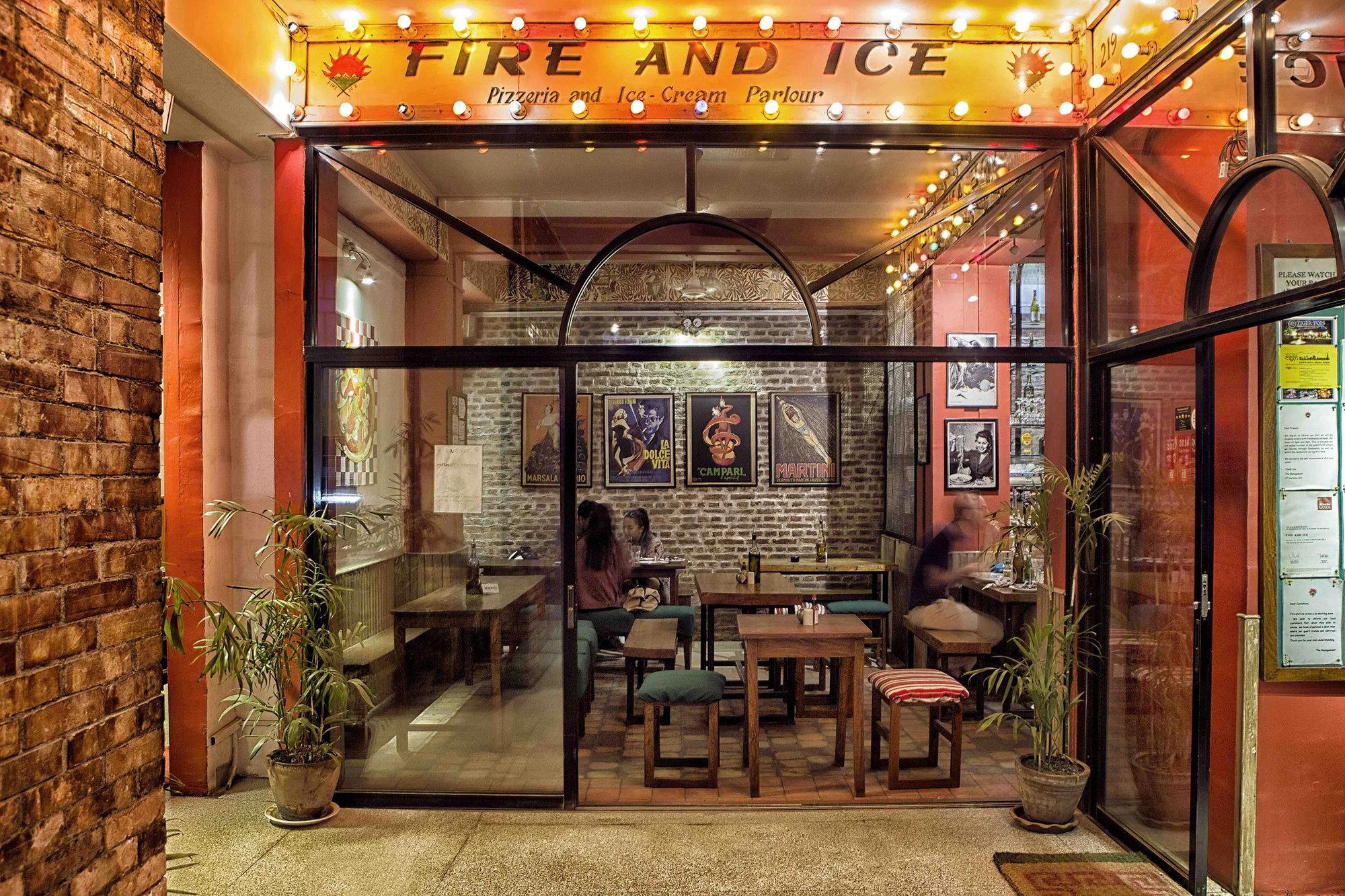
Kathmandu's mid-range dining sector has broadened considerably over the past decade. The city now supports a range of formats across cuisines: Italian at Fire & Ice, which has operated as a reliable benchmark for wood-fired pizza and ice cream since the 1990s; Chinese at Dongfang Palace China; contemporary bar programming at Bitters & Co. and Barc; and grill-led options at Kava Grill & Lounge. Thakali kitchens occupy a different part of this map entirely. They are not competing with international formats or trying to position themselves in a fine-dining bracket. Their competition is other Thakali restaurants, and the metrics that matter are consistency, the quality of the dal, the temperature of the rice, and whether the timur-laced pickle arrives with enough heat to register. These are low-theatre, high-standard environments where the cooking is the entire point.
That positioning places BAGAAN Thakali Kitchen in a category that has genuine significance in how Kathmandu thinks about its own food culture. Where restaurants like Le Bernardin in New York City, Atomix, or Alinea in Chicago define their cities' ambitions through technical refinement and global positioning, Kathmandu's Thakali restaurants define something different: a commitment to a regional culinary identity that exists entirely on its own terms, with no need for international validation. For a city that sits at the intersection of South Asian and Tibetan food cultures, preserving and serving that specificity is its own form of seriousness.
Eating Beyond the Capital
Kathmandu is the entry point, but Nepal's dining geography extends well beyond the city. The mountains produce food traditions that are inseparable from their environments. At Buddha Lodge & Restaurant in Gorak Shep, near the Everest Base Camp trail, the cooking is stripped back to altitude-practical basics: warming soups, noodle dishes, and tea, meals that perform the same functional role Thakali cuisine once served on the salt routes. The Scenic Tea House at Himalayan Hideaway Resort in Pokhara represents a different register: lake-view settings and a more resort-oriented menu aimed at travellers moving through the Annapurna region. Further afield, Tomodachi Restaurant in Sagarmatha Zone reflects the Japanese-inflected trekker culture that has built up around the Everest region over decades. And in the Terai, Butwal veg & vegan Restaurants offers a window into the southern belt's plainland food traditions, which share more with North Indian vegetarian cooking than with the highland traditions of Mustang.
None of these are in direct competition with a Kathmandu Thakali kitchen, but together they illustrate how Nepal's dining culture is deeply geographic. What you eat shifts with elevation, ethnicity, and trade history in ways that no single restaurant can fully represent. BAGAAN Thakali Kitchen is one entry point into a food culture that, at its most considered, connects altitude, economy, and identity in ways that the more internationally familiar restaurants on Kathmandu's dining circuit do not attempt.
Planning Your Visit
Thakali restaurants in Kathmandu typically operate on a lunch-forward schedule, with the dal bhat set meal available through the midday and afternoon hours. Demand peaks at lunchtime among office workers and local families, which is also when the food is freshest and the kitchen is running at capacity. For visitors, arriving slightly before or after the peak lunch window, around noon, gives a better read on the room. Kathmandu's traffic and neighbourhood logistics are worth factoring into any meal plan: the city's streets can be slow, and having a rough sense of which neighbourhood a restaurant is in helps considerably. BAGAAN's address places it within the main urban area of Kathmandu, and the most practical approach is to confirm directions locally or via mapping apps once on the ground, as street-level navigation in the city often relies on landmarks rather than formal addresses.
Frequently asked questions
Where do I go for BAGAAN Thakali Kitchen?
BAGAAN Thakali Kitchen is located at काठमाडौं, Kathmandu.
Is BAGAAN Thakali Kitchen a good option for eating traditional Nepali food in Kathmandu without going to a tourist-oriented restaurant?
BAGAAN Thakali Kitchen sits within Kathmandu's domestic dining circuit rather than the tourist-facing segment of the city's food scene. The Thakali tradition it draws from has its own culinary logic — shaped by high-altitude trade routes and mountain-region ingredients — that predates the homogenised 'Nepali cuisine' most visitor-oriented menus present. That gives it a different point of reference from the trekker-friendly set meals found near Thamel.
What's the must-try dish at BAGAAN Thakali Kitchen?
The Thakali dal bhat set is the dish the kitchen is built around. It differs from the standard Nepali version through the use of Himalayan timur pepper and mustard oil characteristic of Kali Gandaki gorge cooking. If you visit at one time only, the set meal at lunch is the right order.
How far ahead should I plan for BAGAAN Thakali Kitchen?
Thakali restaurants in Kathmandu typically run on a lunch-forward schedule, and dal bhat sets can sell out by early afternoon. For BAGAAN specifically, arriving before the midday peak is advisable.
What is BAGAAN Thakali Kitchen known for?
BAGAAN Thakali Kitchen is known for anchoring its menu in Thakali cooking, a tradition developed by the Thakali people of the Mustang and Kali Gandaki region rather than drawing from the broader, blended register of generic Nepali restaurants in Kathmandu. That specificity of regional focus distinguishes it within the capital's mid-range dining sector.
Budget Reality Check
Comparable venues nearby, for context on price, style, and recognition.
| Venue | Cuisine | Price | Notes |
|---|---|---|---|
| BAGAAN Thakali KitchenThis venue (the venue you are viewing) | Traditional Thakali Kitchen | $1–10 | Not listed |
| Healthy Smoothie Bowl & Pizzeria | Healthy Smoothie Bowls & Neapolitan Pizza | $10–20 | Thamel, Healthy Smoothie Bowls & Neapolitan Pizza |
| Koyla Tandoori Restaurant | Indian Tandoori | $10–20 | Ratopul, Indian Tandoori |
| Bitters & Co. | Cocktail Bar | $10–20 | Lazimpat, Cocktail Bar |
| Fire & Ice | Authentic Italian Pizzeria | Not listed | Thamel, Authentic Italian Pizzeria |
| RoadHouse Café | Wood-Fired Italian Pizza & Fusion | $10–20 | Thamel, Wood-Fired Italian Pizza & Fusion |
Continue exploring
More in Kathmandu
Details
- Cozy
- Rustic
- Casual Hangout
- Family
- Street Scene
- A La Carte
- Vegetarian Friendly
Calm, unpretentious, and clean with a cozy atmosphere overlooking the street hustle.