Our verdict
Baba Ghanouj Restaurant on Phillip Street sits at the heart of Parramatta's increasingly serious dining precinct, where Middle Eastern cooking traditions have found a committed local audience well west of the CBD. The address places it within walking distance of Parramatta's commercial and cultural centre, making it a practical and considered choice for the area's growing population of food-aware diners.

Pearl is the En Primeur Club membership app — saves, bookings, and concierge access live there. Same editors, same standards.
- Address
- 51 Phillip St, Parramatta NSW 2150, Australia
- Phone
- +61426533093
- Hours
- Mon 11:30 AM–10 PMTue–Thu 11:30 AM–10:30 PMFri 11:30 AM–11:30 PMSat 9 AM–11:30 PMSun 9 AM–10:30 PM
- Website
- babaghanouj.com.au
- Directions
- Get directions
- Booking
- Book on OpenTable
Parramatta's Dining Identity and Where Middle Eastern Cooking Fits
Sydney's dining conversation has, for much of the past two decades, been anchored to the CBD, the inner east, and the lower north shore. Places like Rockpool and Saint Peter set the critical benchmarks in those zones, drawing the press and the awards attention that shapes how the city understands its food culture. But Parramatta, sitting roughly 24 kilometres west of the Harbour Bridge, has been building its own dining credibility for years, and the drivers are different here: a dense, diverse residential population, a commercial core that generates its own lunchtime and evening demand, and a diasporic food culture that runs considerably deeper than anything you'd find in a trendy inner-city strip.
Middle Eastern cuisine occupies a particular position within that west Sydney food culture. This is not a cuisine arriving as a trend or a chef's conceptual exercise. It has been a genuine community staple in the Parramatta region for decades, sustained by Lebanese, Turkish, Egyptian, and broader Arab-Australian communities who have made the area home. When a restaurant name references baba ghanouj, the smoky, slow-roasted eggplant dish that appears across Levantine, Egyptian, and broader Arab cooking traditions, it is signalling a kitchen vocabulary that belongs to this geography in a way that is earned rather than affected.
The Address and What It Tells You
Baba Ghanouj Restaurant occupies 51 Phillip Street, Parramatta, a central address that places it close to the civic and commercial spine of the suburb. Phillip Street runs through a part of Parramatta that has been subject to significant redevelopment pressure over the past decade, with new apartment towers and office conversions changing the street-level character of the area. For a restaurant operating in this environment, the immediate surroundings matter: foot traffic here is generated by workers, residents, and visitors to the nearby Parramatta Park and the various government and legal offices that cluster around this part of the city.
This is a different dining context from the waterfront or harbourside settings that define properties like Ormeggio at The Spit in Mosman. There is no view as a selling proposition. What Phillip Street offers instead is accessibility: Parramatta railway station is within comfortable walking distance, the bus interchange is close, and the broader Parramatta CBD is compact enough that the restaurant draws from a wide catchment without requiring its customers to navigate a car park. For a cuisine style that lends itself to shared dining and group occasions, that logistical straightforwardness matters.
Compared to destination restaurants that demand planning months in advance, like Brae in Birregurra or Attica in Melbourne, Parramatta's dining scene operates on a different rhythm. The west Sydney diner is often making a decision the same day, choosing on the basis of what the neighbourhood reliably offers rather than what a booking system allows. Middle Eastern restaurants in this part of Sydney have built their reputations through consistency and volume, not through tasting menu formats or allocation lists.
Reading the Menu Through the Name
A restaurant named after a specific dish is making a commitment. Baba ghanouj as a dish is deceptively simple in its components, fire-roasted eggplant, tahini, lemon, garlic, and olive oil, but its execution is where kitchens distinguish themselves. The degree of char on the eggplant skin, the ratio of tahini to citrus, whether the flesh is roughly hand-mixed or processed to a smooth paste: these are the decisions that separate a kitchen with real command of the tradition from one producing a generic dip. A restaurant that puts this dish at the centre of its identity is inviting assessment on exactly those terms.
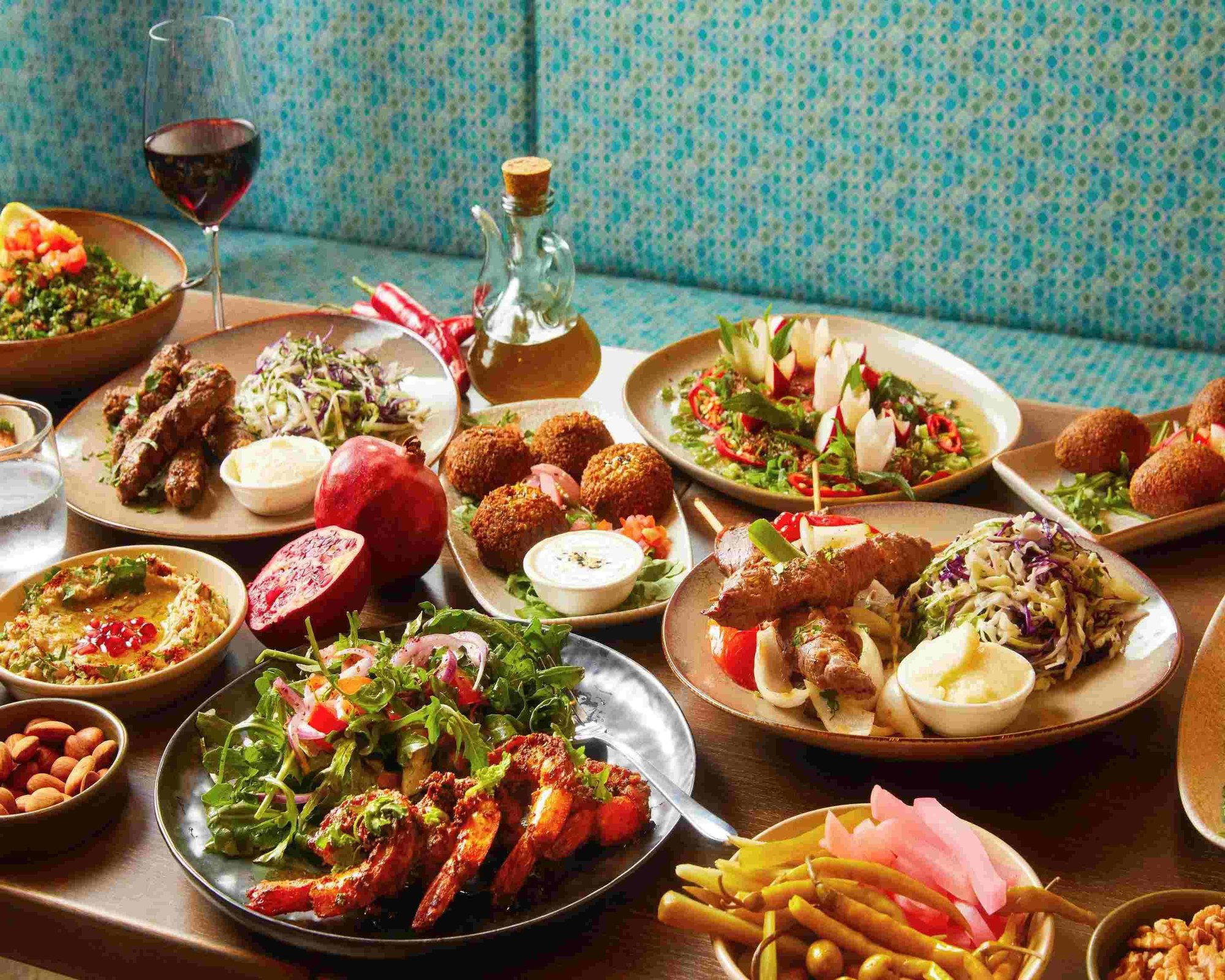
The broader Middle Eastern menu vocabulary that typically surrounds a dish like baba ghanouj includes grilled meats, flatbreads, slow-cooked stews, rice dishes, and an array of cold and warm mezze designed for sharing. This format, multiple smaller plates arriving in sequence or simultaneously, suits the communal dining habits of both the local community audience and the wider Sydney diner who has grown comfortable with shared-table formats over the past decade. For context on how Mediterranean-influenced sharing formats have evolved in Sydney, 1021 Mediterranean offers a useful comparison point, though operating in a different part of the city and at a different price orientation.
West Sydney's Place in Australia's Broader Food Story
The critical conversation about Australian dining tends to cluster around a handful of addresses: the fine dining rooms of Melbourne and Adelaide, coastal destinations like Pipit in Pottsville or Salt Water Restaurant in Cairns, regional producers in places like Seppeltsfield or Beechworth. Internationally, the conversation about what Australian restaurants can achieve at the highest level is illustrated by outliers like Le Bernardin in New York City or Lazy Bear in San Francisco, which set a global reference point for what ambitious dining looks like.
None of that framing is particularly relevant to what Parramatta's dining scene does or aspires to do. The west Sydney food economy serves a different purpose in Australia's dining ecosystem: it preserves and transmits cooking traditions that arrived with migration waves over the past 50 years, and it does so at price points and in formats that make those traditions accessible to broad cross-sections of the community. That is not a lesser function than producing tasting menus for expense accounts. In many respects it is more durable. The restaurants that survive decades in Parramatta do so because they are genuinely useful to the people who live and work nearby, not because they attract annual coverage in food media.
For readers exploring Sydney's wider dining range, the full Sydney restaurants guide maps options across the city's many distinct precincts, from the CBD institutions to suburban specialists. Other Sydney addresses worth considering depending on your brief include 10 Pounds and 10 William St, both operating in a different part of the city and a different register entirely. For premium estate dining outside the metropolitan area, Laura at Pt Leo Estate in Merricks and Lizard Island Resort represent what Australian dining looks like when geography and destination become the primary proposition. Botanic in Adelaide shows how a garden setting can anchor an entirely different kind of tasting experience.
Baba Ghanouj Restaurant on Phillip Street is not competing in any of those registers. It is a neighbourhood restaurant in a western Sydney suburb with a meaningful diaspora community and a growing general dining population. That positioning, when a kitchen executes well within it, is its own form of authority.
Planning Your Visit
Parramatta is directly served by the T1 Western Line from Sydney's City Circle stations, making it reachable from Central or Town Hall in under 35 minutes by train. The restaurant's Phillip Street address is walkable from Parramatta station. As no booking method, hours, or phone number are confirmed in available data, checking current operational details before travelling is advisable.
Frequently asked questions
Where is Baba Ghanouj Restaurant in Sydney?
Baba Ghanouj Restaurant is located at 51 Phillip St, Parramatta NSW 2150, Australia, Sydney.
Is Baba Ghanouj Restaurant a good option for a group meal in Western Sydney?
Parramatta's position as Western Sydney's civic centre makes 51 Phillip Street an accessible point for groups travelling from across the metropolitan area, with the T1 Western Line running directly to Parramatta station. Middle Eastern mezze formats are naturally suited to shared dining, with multiple dishes ordered to the table rather than individual plates. EP Club does not currently hold capacity or private dining data so larger groups should check the venue's official channels to confirm arrangements.
What's the best thing to order at Baba Ghanouj Restaurant?
The name itself is the clearest signal: a restaurant on Phillip Street, Parramatta that takes its identity from baba ghanouj is telling you where to start. Fire-roasted eggplant is a dish that rewards kitchens with confidence in the basics, so the namesake preparation is the logical first order. From there, Middle Eastern menus at this level in the West Sydney dining circuit typically extend to grilled meats and shared mezze. Ask staff what has come in that day.
What's the best way to book Baba Ghanouj Restaurant?
The most reliable approach is to visit 51 Phillip Street directly or search for current contact details through Google Maps, which tends to carry updated hours and phone numbers for Parramatta venues. Walk-ins are common practice at neighbourhood Middle Eastern restaurants in West Sydney.
What's the signature at Baba Ghanouj Restaurant?
A restaurant that names itself after a single dish has committed its reputation to that preparation. Baba ghanouj, properly made, requires charring eggplant over direct flame until the flesh collapses, then balancing the smoky result with tahini, lemon, and salt. That process is the signature, and it is a more demanding benchmark than it appears. Everything else on the menu sits downstream of that opening statement at 51 Phillip Street, Parramatta.
What if I have allergies at Baba Ghanouj Restaurant?
Middle Eastern cooking at this level in the Parramatta dining scene typically involves sesame-based preparations like tahini, tree nuts, and wheat in flatbreads, all common allergens that require direct confirmation with the kitchen. EP Club's database does not carry allergen documentation for Baba Ghanouj Restaurant. Contact the venue before your visit and ask specifically about the dishes you intend to order rather than relying on a general assurance.
Cuisine and Credentials
| Venue | Cuisine | Price | Awards | Notes |
|---|---|---|---|---|
| Baba Ghanouj RestaurantThis venue — the venue you are viewing | Authentic Lebanese | $20–30 | Not listed | Not listed |
| Rockpool | Modern Australian Steakhouse | $150–200 | World's 50 Best #49 · La Liste Top Restaurants | Australian Cuisine |
| Saint Peter | Modern Australian Seafood | $150–200 | World's 50 Best #66 · La Liste Top Restaurants | Australian Seafood |
| BENTLEY Restaurant & Bar | Modern Australian Fine Dining | $150–200 | La Liste Top Restaurants · Star Wine List | Australian Modern |
| Bennelong | Modern Australian Fine Dining | $200–300 | La Liste Top Restaurants · Star Wine List | Australian Cuisine |
| Bistecca | Florentine Steakhouse | $100–150 | Star Wine List | Not listed |