Awazé Ethiopisch Restaurant - Addis Amersfoort
Ethiopian dining in the Netherlands occupies a niche where communal eating traditions and spice-forward sourcing rarely cross paths with Dutch restaurant conventions. Awazé Ethiopisch Restaurant - Addis, on Kamp 48 in central Amersfoort, sits in that gap, bringing the shared-platter format and fermented-grain foundations of Addis Ababa's table culture to a city whose dining scene leans heavily French and Modern European.
Pearl is the En Primeur Club membership app — saves, bookings, and concierge access live there. Same editors, same standards.
- Address
- Kamp 48, 3811 JJ Amersfoort, Netherlands
- Phone
- +31337370029
- Website
- awazerestaurant.nl
- Directions
- Get directions
 Saves & bookings on Pearl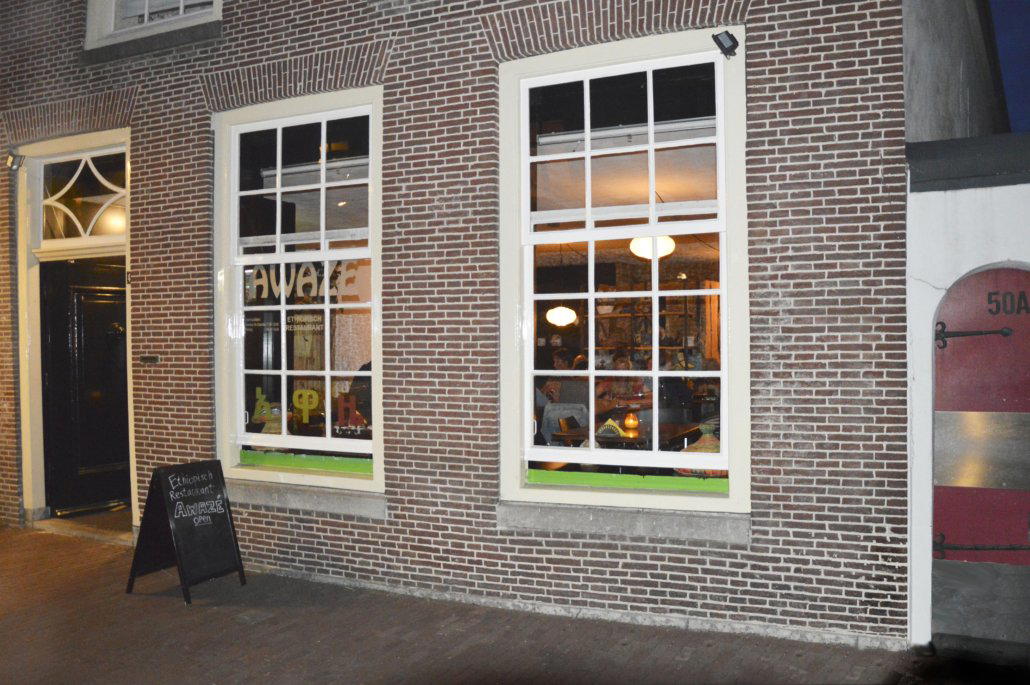
Where Ethiopian Grain Culture Meets a Dutch City Centre
Walk along Kamp in central Amersfoort and the street reads, generally, as a catalogue of the city's European dining preferences: brasserie formats, French contemporary menus, and the occasional modern Dutch kitchen. Awazé Ethiopisch Restaurant - Addis is an Authentic Ethiopian restaurant at Kamp 48 in Amersfoort. Ethiopian restaurants in mid-sized Dutch cities are sparse enough that their presence tends to shift the local dining conversation rather than blend into it, and Amersfoort is no exception.
The city's restaurant scene is anchored at its upper end by creative and French-leaning kitchens. De Saffraan operates at the €€€ tier with a creative format, while De Monnikendam and De Aubergerie represent the €€ French contemporary and modern cuisine categories. Bergpaviljoen and Het Bloemendaeltje round out a roster dominated by Western European traditions. Against that backdrop, a kitchen rooted in the spice logic and grain culture of the Horn of Africa occupies a position with no direct local peer.
The Sourcing Logic Behind Ethiopian Cooking
Ethiopian cuisine is, at its structural core, a cuisine of fermented grains and slow-cooked spice pastes. The injera, the spongy flatbread that functions simultaneously as plate, utensil, and starch, depends on teff, a grain native to the Ethiopian highlands. Teff is gluten-free, high in iron, and fermented for two to three days before cooking, which gives injera its characteristic tang and its porous surface, designed to absorb the stewed proteins and legumes placed on leading. Sourcing teff outside Ethiopia has historically been a logistical challenge for diaspora kitchens in Europe; the ingredient is now cultivated in the Netherlands and Belgium in limited quantities, but the supply chain remains more constrained than for wheat or rye.
The spice architecture of Ethiopian cooking is equally specific. Berbere, the foundational spice blend, typically combines dried chillies, fenugreek, coriander, black pepper, korarima (Ethiopian cardamom), and rue, a herb rarely used in European cooking. Niter kibbeh, the clarified spiced butter used as a cooking fat across many dishes, carries flavours of black cumin, turmeric, and sacred basil. These are not spices that Dutch wholesale distributors stock as standard lines. Kitchens committed to accuracy in this tradition are, by definition, sourcing from specialist importers or community supply networks, and the integrity of the result depends on that sourcing chain holding.
This matters editorially because Ethiopian food made with substitute spice blends tastes categorically different from the tradition it represents. The depth of slow-cooked wots, stews built over long reduction times, depends on berbere carrying its full aromatic complexity. A kitchen willing to maintain that supply chain in a city like Amersfoort is making a statement about culinary priority that separates it from kitchens that approximate ethnic cuisines for convenience.
Eating in the Ethiopian Format
Ethiopian dining is one of the more deliberately communal formats in global food culture. The tradition of gursha, the act of feeding a companion by hand from a shared platter, is embedded in the social logic of the meal. Injera is laid across a large shared tray, and the various wots, tibs (sautéed meats), and vegetable preparations are arranged on leading. Diners tear the bread and scoop from the communal surface. There are no individual plates in the conventional sense.
This format has implications for how the meal is experienced in a European context. It slows the pace of eating in a way that a sequence of individually plated courses does not. It requires some willingness to share space with companions at the table in a literal, physical sense. For groups, this makes Ethiopian dining a format with a built-in social architecture that few Western restaurant traditions match. For solo diners or pairs unfamiliar with the format, the arrangement is worth understanding before arrival.
The vegetarian range in Ethiopian cooking is also structurally significant rather than incidental. Fasting days in the Ethiopian Orthodox calendar, known as tsom, prohibit animal products for a significant portion of the year, which means Ethiopian kitchens historically developed an extensive repertoire of plant-based preparations: lentil wots in red and yellow variations, gomen (collard greens cooked with spices), tikil gomen (cabbage and carrots), and split pea dishes that carry their own distinct spice profiles. This is a cuisine where vegetable dishes are not accommodations for dietary restrictions but central, technically developed preparations in their own right.
Amersfoort as a Context for Specialty Dining
Amersfoort is a city of roughly 160,000 residents, with a historical centre that draws visitors primarily for its medieval architecture and its position as a rail hub between Utrecht and the eastern Netherlands. Its restaurant density is reasonable for its size, but its dining profile trends toward the established Western European format, a pattern recognisable across comparably sized Dutch cities. The conditions that produce specialty ethnic kitchens with strong sourcing discipline tend to emerge in larger diaspora communities or in cities with a more pronounced food-culture self-image.
That makes the presence of an Ethiopian kitchen at this address somewhat countercyclical to the usual urban pattern. Ethiopian restaurants in the Netherlands are concentrated most heavily in Amsterdam and Utrecht, where the Ethiopian community is larger and specialist ingredient supply is more accessible. In that context, the Kamp 48 address operates with less local infrastructure support than a comparable kitchen in either of those cities would have. Dutch gastronomy at the high end has increasingly engaged with non-European culinary traditions, one thinks of the sourcing-focused menus at places like De Nieuwe Winkel in Nijmegen or the ingredient-led approaches at De Librije in Zwolle, but that engagement has happened primarily within a Western fine-dining frame. Authentic diaspora kitchens operating on their own culinary terms represent a different category of cultural presence in the Dutch food scene.
For those travelling to the region and interested in mapping the wider field of Dutch restaurant ambition, Inter Scaldes in Kruiningen, De Lindehof in Nuenen, Tribeca in Heeze, De Groene Lantaarn in Staphorst, Brut172 in Reijmerstok, De Bokkedoorns in Overveen, De Treeswijkhoeve in Waalre, and De Lindenhof in Giethoorn provide a full cross-section of what serious Dutch kitchens are producing. For international reference points on ingredient-led dining at larger scale, Le Bernardin in New York City and Lazy Bear in San Francisco represent the sourcing-first ethos applied to different culinary traditions.
Planning Your Visit
Awazé Ethiopisch Restaurant - Addis is located at Kamp 48, 3811 JJ Amersfoort, in the central part of the city and accessible on foot from Amersfoort Centraal station in under ten minutes. Reservations are recommended, and the restaurant is open Tuesday through Saturday from 5 to 11 PM and Sunday from 5 to 10 PM, with Monday closed.
Comparable Venues
Comparable venues nearby, for context on price, style, and recognition.
| Venue | Cuisine | Price | Awards | Notes |
|---|---|---|---|---|
| Awazé Ethiopisch Restaurant - Addis AmersfoortThis venue — the venue you are viewing | Authentic Ethiopian | $$ | Not listed | Not listed |
| RAUW | Modern Steakhouse | $$$ | Not listed | Kamp |
| Merlot | Modern French | $$$ | Not listed | Industriekwartier |
| Bergpaviljoen | Modern French Seafood Bistro | $$$ | Michelin Plate | Amersfoortse Berg |
| Jiwa Jawa Indonesische Keuken | Authentic Javanese Indonesian | $$ | Not listed | Hof |
| Tollius | Modern French-Asian Fusion | $$$ | Michelin Plate | De Berg Zuid |
Continue exploring
More in Amersfoort
Restaurants in Amersfoort
Browse all →
Bars in Amersfoort
Browse all →
Hotels in Amersfoort
Browse all →
Wineries in Amersfoort
Browse all →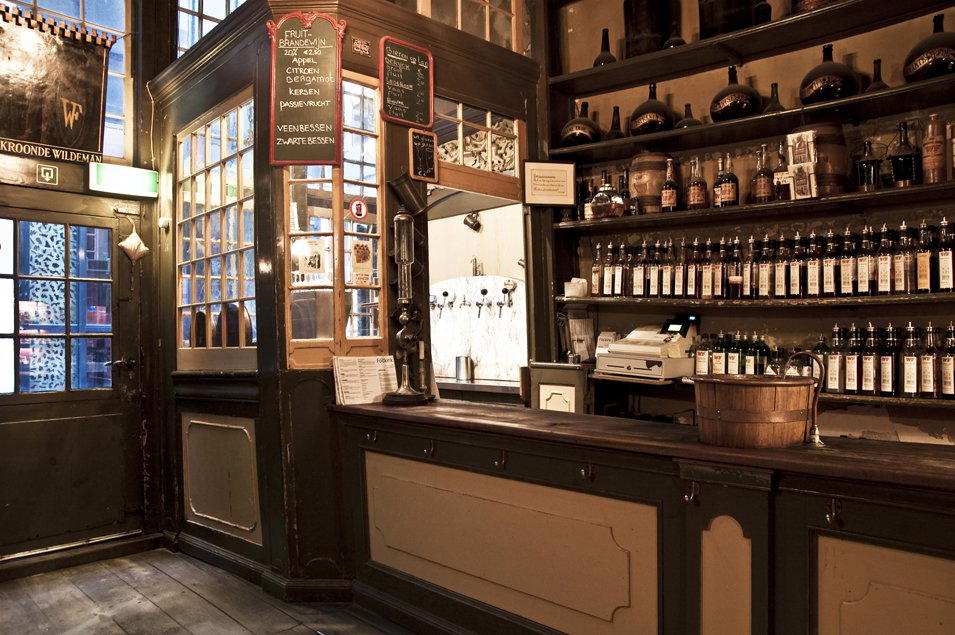
At a Glance
- Cozy
- Intimate
- Date Night
- Casual Hangout
Current opening hours
- Monday
- Closed
- Tuesday
- 5–11 PM
- Wednesday
- 5–11 PM
- Thursday
- 5–11 PM
- Friday
- 5–11 PM
- Saturday
- 5–11 PM
- Sunday
- 5–10 PM
Hours can change for holidays and private events. Last verified .
Charming and cozy atmosphere ideal for enjoying flavorful Ethiopian meals.