
1 Michelin Star
Our verdict
A one-Michelin-starred address in the 11th arrondissement where Japanese chef Nobuyuki Akishige applies classical French technique to seasonal produce with notable restraint. The pared-back bistro interior and tightly edited menu make Automne one of the more considered options at the €€€€ tier in eastern Paris. Lunch service offers a more compact window into the same kitchen logic at a pace that suits the neighbourhood.

Pearl is the En Primeur Club membership app, where members save venues, book tables and use the concierge.
The menu
What to order
- Aged_tuna_with_caviar
- Rabbit
- Dessert
Eastern Paris and the Case for Restraint
The 11th arrondissement has spent the last decade building a credible fine-dining identity without attempting to replicate the formality of the 8th or the tourist-facing grandeur of the Left Bank. Rue Richard Lenoir sits at the quieter end of that shift, a residential stretch where the dining proposition is defined by precision rather than spectacle.
At the €€€€ tier in Paris, the comparison set runs deep. Three-star addresses like Paul Bocuse - L'Auberge du Pont de Collonges, Troisgros - Le Bois sans Feuilles, and Paris mainstays like L'Ambroisie and Le Cinq occupy the ceremonial upper register. Automne prices at the same bracket but operates on a different register entirely: intimate format, spare interior, no theatrical service ritual. That positioning is a choice, not a limitation.
What the Room Tells You Before the Menu Arrives
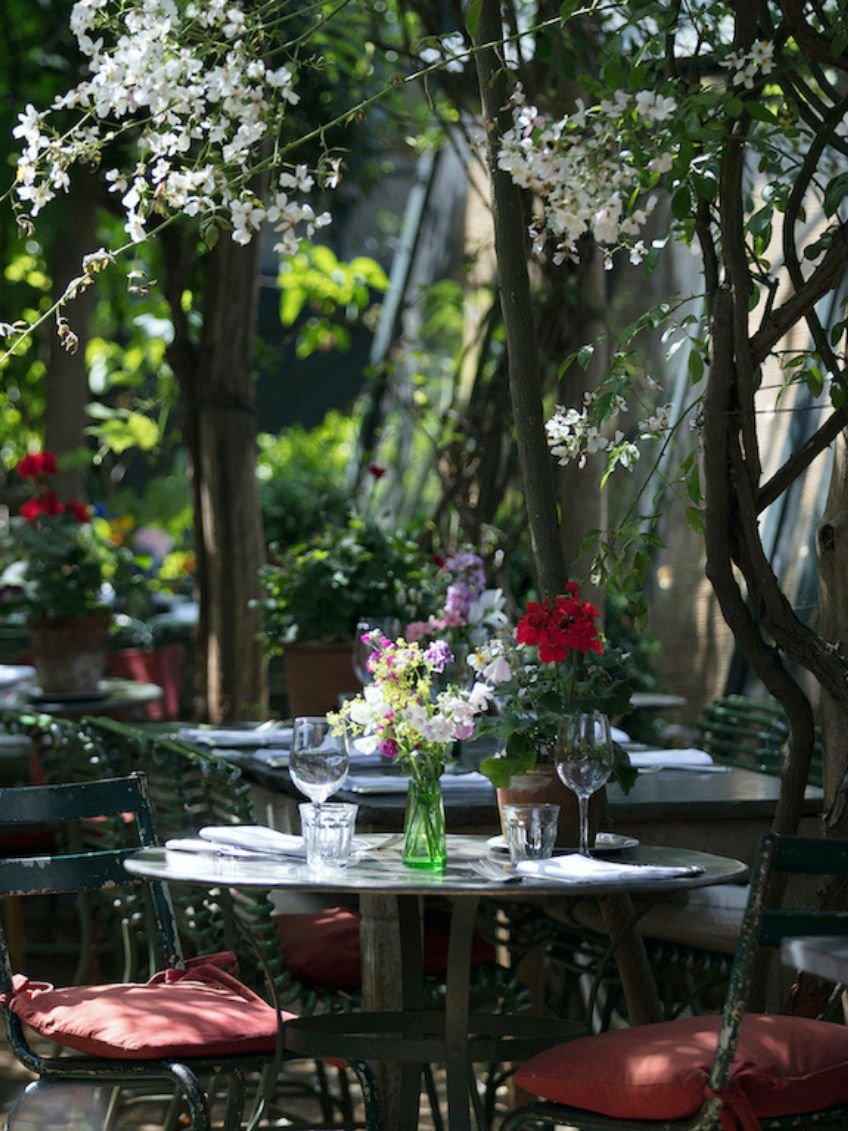
The bistro interior at Automne functions as a deliberate editorial statement. In a city where one-star rooms have trended toward either ostentatious design or conspicuous minimalism, this space lands on something closer to honest simplicity. The setting removes ambient noise from the equation, there is nothing to look at except the food and the people across the table. For a kitchen whose output depends on the reader paying close attention to subtle seasonality and restrained technique, that environment is load-bearing.
Classical French kitchens built their reputations on exactitude: the correct temperature, the correct texture, the correct acid balance. What distinguishes Automne's approach is the application of that classical vocabulary through a sensibility shaped by Japanese culinary training. Nobuyuki Akishige's track record runs through L'Atelier du Peintre in Colmar, La Vague d'Or in Saint-Tropez under Arnaud Donckele, Le K2 in Courchevel, and La Pyramide in Vienne, a progression through some of the more technically demanding kitchens in French regional cooking. At Automne, that training produces dishes where the ingredient leads and the technique follows, rather than the reverse.
Dishes cited in the Michelin citation include white asparagus with sorrel and almonds, and meagre with courgettes, hand-dived razor shells, and verbena. Both point toward a kitchen logic built around complementary acidity, textural contrast, and seasonal produce windows rather than architectural plating or heavy sauce work. This is a kitchen that makes deliberate choices about what to leave out.
The Lunch vs. Dinner Divide at Automne
Few distinctions in Paris restaurant culture are more practically significant than the difference between a venue's midday and evening services, and at Automne the gap is worth examining carefully before booking.
The lunch window is narrow by design. Wednesday through Friday, the kitchen runs from noon to 1:30 PM; on Saturday and Sunday, that closes further to noon to 1 PM. There is no Monday or Tuesday service. This is not a restaurant offering a leisurely two-hour weekday lunch. What it offers instead is a compressed, focused version of the kitchen's seasonal logic, more suited to a solo diner, a working lunch at a specific level of taste, or a traveller building a day around several distinct experiences rather than one long table.
Evening service runs Wednesday through Sunday, 7:30 PM to 9:30 PM for last entry. This is where the full expression of the menu sits. The pacing over dinner allows the kitchen to sequence dishes in a way that the abbreviated lunch format cannot, and the room at night carries a different energy, quieter, more deliberate, the kind of service rhythm that suits a tasting-oriented meal. For first-time visitors choosing between the two, dinner is the more complete read of what the kitchen is doing. Lunch is for those who know the room already, or those working through a short stay in Paris with a specific appetite for this kind of cooking.
In the broader context of Paris's one-star circuit, Automne's operating hours are tighter than many peers at this level. The kitchen is closed Monday and Tuesday entirely, and the total weekly service windows are compact. This creates a booking challenge worth noting: demand is concentrated into fewer available sittings, which means planning ahead is more relevant here than at addresses with longer weekly hours.
Where Automne Sits in the Starred Paris Conversation
Paris has a layered starred dining market. At the very leading, addresses like Mirazur in Menton and Flocons de Sel in Megève represent destination-level commitments outside the capital. Within Paris, the three-star bracket occupies a formal register with pricing and service rituals to match. The one-star tier, particularly in the 10th and 11th arrondissements, has become the city's most interesting band for precision-focused modern cooking without ceremony.
Automne operates in that band alongside addresses like Accents Table Bourse and Anona, where the creative brief is similarly ingredient-led and the room format is small-scale. The Japanese-trained chef applying French classical technique is not a novel formula in Paris, Amâlia and Kei (three stars) occupy adjacent territory, but the specificity of Akishige's training lineage and the east Paris location give Automne a distinct peer position. It is not competing with the 8th arrondissement grand tables. It is competing with the cohort of serious, compact, seasonally-driven rooms that have made the 11th a credible dining destination over the past several years.
For context on the international modern cuisine conversation, kitchens at addresses like Frantzén in Stockholm and FZN by Björn Frantzén in Dubai represent the more maximalist end of the Japanese-influenced French technique spectrum. Automne sits at the opposite pole: less elaborate, more stripped back, with a menu philosophy that reads closer to Bras in Laguiole or Auberge de l'Ill in its respect for product purity, than to the construct-heavy approach of some contemporary tasting menus.
Planning a Visit
Automne is at 11 Rue Richard Lenoir in the 11th arrondissement. The restaurant is closed Monday and Tuesday. Lunch service runs from noon on Thursday through Sunday, with a last sitting window that closes at 1:30 PM midweek and 1 PM on weekends. Dinner runs 7:30 PM to 9:30 PM across all open evenings. Given the limited weekly sittings and the concentration of the booking window, reservations in advance are the practical standard here rather than a walk-in option. The price range sits at €€€€, which at the one-star level in Paris represents a considered commitment; dinner will always offer a fuller account of the menu's range than the abbreviated lunch format.
For those building a broader Paris dining itinerary, our full Paris restaurants guide covers the wider starred and notable circuit. The Paris hotels guide, bars guide, wineries guide, and experiences guide round out the full planning picture. For those also considering the broader French fine dining circuit alongside a Paris trip, Auberge de Montfleury and 114, Faubourg represent different entry points in the city's premium dining map.
What Should I Order at Automne?
The Michelin citation points directly to two dishes that illustrate the kitchen's method: white asparagus with sorrel and almonds, and meagre with courgettes, hand-dived razor shells, and verbena. Both are seasonal constructions, the asparagus dish reads as a spring plate, the fish course as a late-summer assembly, so what is available depends on when you visit. The menu's philosophy, established by Nobuyuki Akishige through training at kitchens including La Vague d'Or under Arnaud Donckele and La Pyramide in Vienne, centres on high-quality seasonal produce with technique serving the ingredient rather than overriding it. The practical advice is to trust the sequence as offered rather than optimise around individual dishes. This kitchen's logic is cumulative: the dishes make more sense in relation to one another than any single plate does in isolation.
Comparison Snapshot
A small set of peers for context, based on recorded venue fields.
| Venue | Cuisine | Price | Awards | Notes |
|---|---|---|---|---|
| AutomneThis venue (the venue you are viewing) | Modern French Fine Dining | $100–150 | 1 Michelin Star | Not listed |
| Alléno Paris au Pavillon Ledoyen | Modern French Fine Dining | $150–200 | 3 Michelin Stars · World's 50 Best #79 | Creative |
| Kei | Modern French with Japanese Influences | $300–500 | 3 Michelin Stars · World's 50 Best #93 | Contemporary French, Modern Cuisine |
| L'Ambroisie | Classic French Haute Cuisine | $300–500 | 2 Michelin Stars · World's 50 Best #23 | French, Classic Cuisine |
| Le Cinq - Four Seasons Hôtel George V | Modern French Fine Dining | $300–500 | 3 Michelin Stars · World's 50 Best #24 | French, Modern Cuisine |
| Plénitude | Modern French Sauce-Led Fine Dining | $300–500 | 3 Michelin Stars · World's 50 Best #14 | Contemporary French |
Recognition history
Dated appearances from independent guides and award organizations, with the underlying list record or original source where available.
Michelin 1 Star
Michelin
Full recognition history (3 entries)
Michelin 1 Star
Michelin
Michelin 1 Star
Michelin
Continue exploring
More in Paris
Restaurants in Paris
All restaurants in Paris →
Bars in Paris
All bars in Paris →
Details
- Trendy
- Cozy
- Intimate
- Modern
- Elegant
- Date Night
- Special Occasion
- Business Dinner
- Open Kitchen
- Extensive Wine List
- Tasting Menu
- Prix Fixe
Current opening hours
- Monday
- Closed
- Tuesday
- Closed
- Wednesday
- 12:30–1:30 PM, 7:30–9:30 PM
- Thursday
- 12–1:30 PM, 7:30–9:30 PM
- Friday
- 12–1:30 PM, 7:30–9:30 PM
- Saturday
- 12–1 PM, 7:30–9:30 PM
- Sunday
- 12–1 PM, 7:30–9:30 PM
Hours can change for holidays and private events. Hours as of .
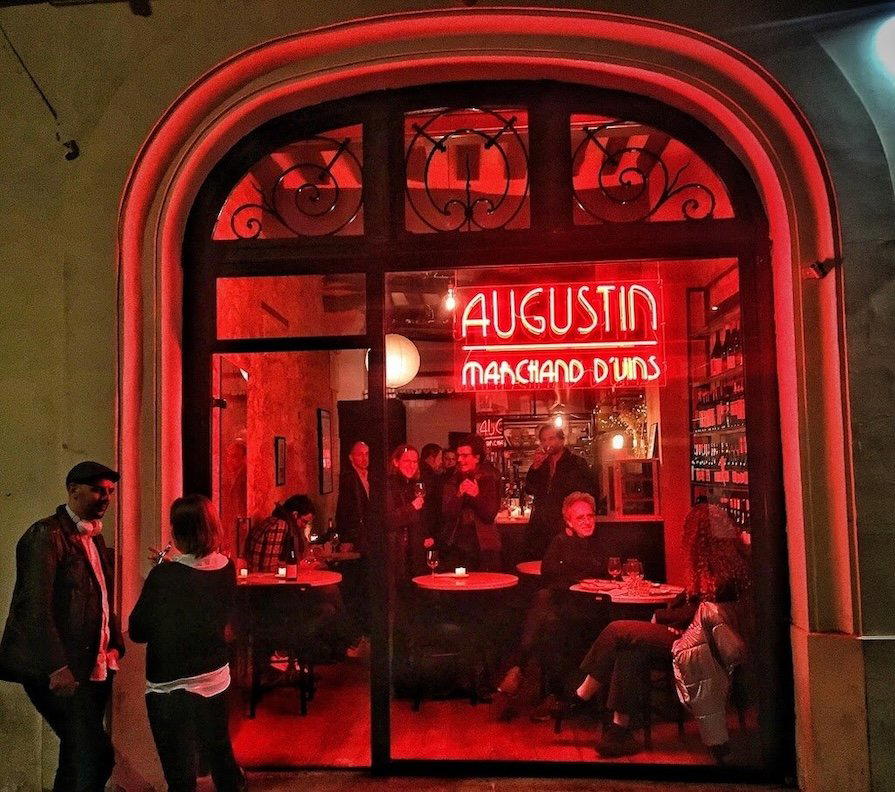
Relaxed and unpretentious bistro interior with pale-green walls, wooden tables, open kitchen, small comfortable space focusing attention on the dining experience.