Auberge Saint-Mathieu

1 Michelin Star
Our verdict
A Michelin Plate recipient sitting deep in the Mauricie region of Quebec, Auberge Saint-Mathieu earns that recognition through creative cooking that draws directly from its rural surroundings. For creative cuisine this far from a major city, it occupies a tier of its own within the regional Quebec dining scene.

Pearl is the En Primeur Club membership app, where members save venues, book tables and use the concierge.
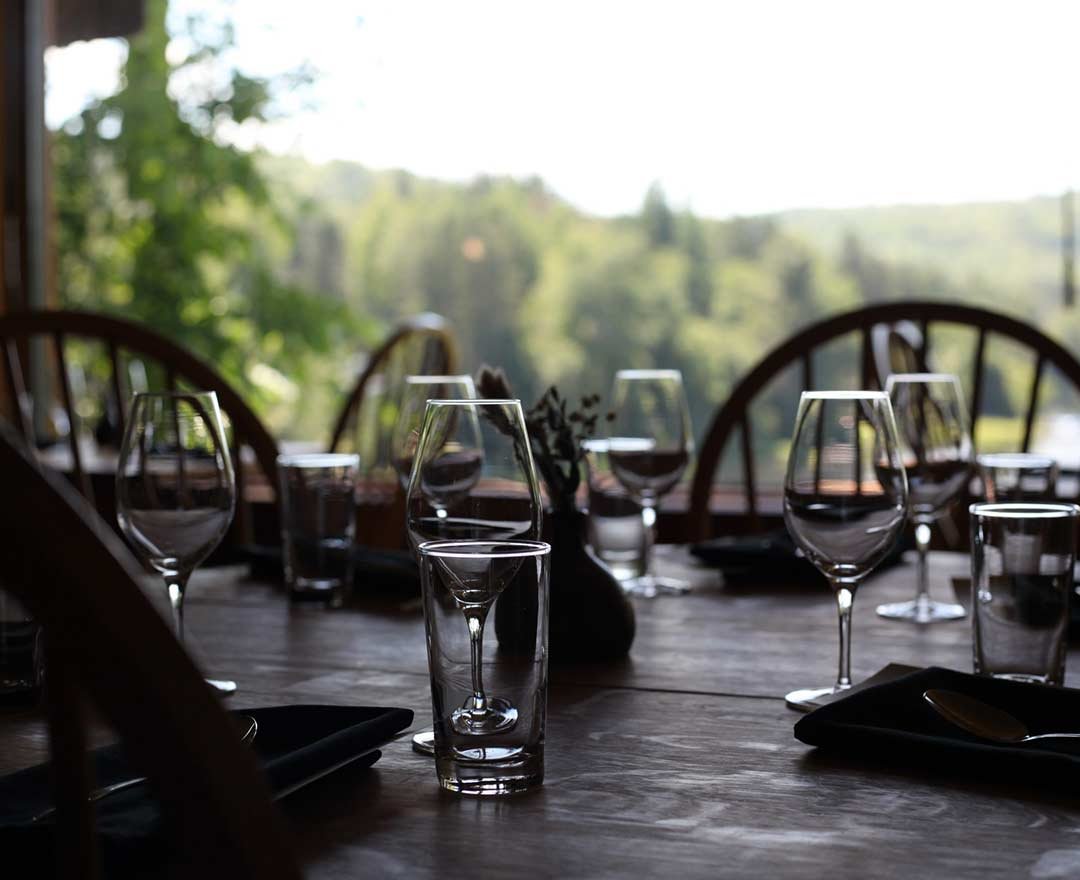
Where the Mauricie Forest Sets the Table
The drive to Saint-Mathieu-du-Parc already tells you something about what to expect from Auberge Saint-Mathieu. The village sits in the Mauricie region of Quebec, roughly halfway between Montreal and Quebec City, surrounded by boreal forest, lakes, and the kind of agricultural land that hasn't been swallowed by suburban sprawl. By the time you arrive at 2081 Chemin Principal, the rural setting has made its point: this is not a restaurant that happens to mention local ingredients as a marketing note. The landscape is the supply chain, and the kitchen's creative direction follows from that premise.
That framing matters in 2025, when Michelin's expansion into Quebec has sharpened the question of which restaurants outside Montreal and Quebec City are actually operating at a serious level. Auberge Saint-Mathieu received a Michelin Plate in the 2025 guide, a recognition that signals cooking worth a stop, distinct from the star tier but meaningful as a quality marker in a region where fine dining has historically been concentrated in the province's two major urban centres.
Creative Cooking Anchored to Mauricie's Producers
Quebec's creative dining tier has developed a recognizable grammar over the past decade. The template, refined at places like Tanière³ in Québec City and echoed in various forms at Jérôme Ferrer - Europea in Montreal, builds menus around seasonal Quebec produce, treats fermentation and preservation as culinary infrastructure rather than trendy technique, and draws the plate's visual language from the terrain outside the window. Auberge Saint-Mathieu operates within that tradition, but with a specificity of place that urban restaurants can reference only abstractly.
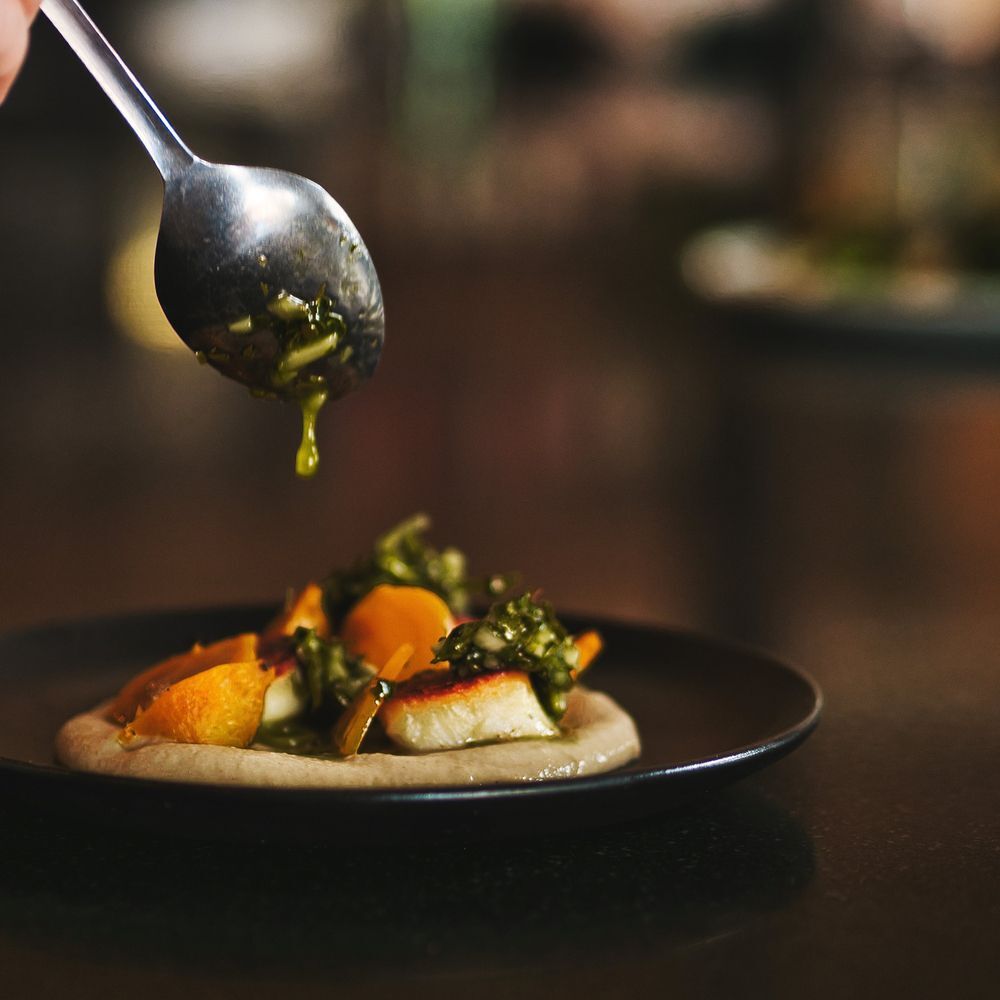
The Mauricie region produces a different raw material base than the fertile Laurentian lowlands closer to Montreal. Game, freshwater fish, foraged fungi, and cold-climate root vegetables are not local colour here, they are the actual agricultural and ecological reality. Creative cuisine in this context means working with ingredients that arrive with strong natural character rather than the neutrality of commodity supply chains. For a kitchen committed to that approach, the sourcing geography is also a creative constraint: what the region yields in a given season is the menu's real author.
This sourcing logic connects Auberge Saint-Mathieu to a broader Canadian pattern visible at rural-destination restaurants that have built serious reputations by committing fully to place. Eigensinn Farm in Singhampton, Ontario, operates on a similar principle of radical localism. The Pine in Creemore positions itself within a comparable rural-creative niche. ÄNKÔR in Canmore draws on Rocky Mountain terroir with a similar editorial clarity. What connects these restaurants is a refusal to treat their geography as a disadvantage relative to urban peers. The argument, borne out by Michelin's attention, is that distance from supply hubs sharpens specificity rather than limiting it.
The $$$$ Tier in a Rural Context
Pricing at Auberge Saint-Mathieu sits at $$$$, the same tier as Michelin-starred urban contemporaries including Alo in Toronto and AnnaLena in Vancouver. In a rural Quebec village, that price point carries a different calculus than it does in a major city. Diners absorb travel time and, in many cases, accommodation costs as part of the evening's overhead. The Auberge format, an inn with a restaurant, partially answers that equation by collapsing the logistics: the table, the bed, and the morning are all in the same building, and the surrounding region offers its own reasons to extend the stay.
For planning purposes, Saint-Mathieu-du-Parc is accessible from both Montreal and Quebec City, placing it within range as a weekend destination rather than a day trip. Those planning a broader exploration of the region's dining and accommodation options can consult our full Saint-Mathieu-du-Parc restaurants guide and our full Saint-Mathieu-du-Parc hotels guide, as well as resources covering bars, wineries, and experiences in the area.
Where It Sits in the Canadian Creative Tier
The Michelin Plate positions Auberge Saint-Mathieu within a tier of serious creative restaurants that have not yet attracted stars but are operating above the regional baseline. In Quebec specifically, the Michelin list has reinforced what local food media had been tracking for some time: that ambitious cooking is no longer a Montreal-only story. Narval in Rimouski is another data point in that argument, anchoring serious cuisine on the south shore of the St. Lawrence far from the province's culinary centre of gravity.
Internationally, the model of ingredient-led creative cooking in a rural auberge setting has a long pedigree. Arpège in Paris built its reputation around the chef's own kitchen garden; Alléno Paris au Pavillon Ledoyen pursues ingredient transformation through extraction and concentration at the opposite end of the scale spectrum. Auberge Saint-Mathieu operates with fewer resources than either but within the same intellectual tradition: the source material defines the cooking, not the other way around. For Canadian creative dining with clear geographic specificity, it belongs in the same conversation as ARLO in Ottawa and Restaurant Pearl Morissette in Lincoln, both of which have built reputations by committing hard to place and season.
Planning the Visit
The Auberge format means the restaurant is most naturally experienced as part of an overnight stay, though the specifics of booking format, hours, and capacity are best confirmed directly with the property. The $$$$ price point applies to the restaurant, and those combining it with accommodation should budget accordingly. Given the rural setting and the distance from urban centres, advance planning is advisable, this is not a walk-in proposition for most visitors. Baan Lao in Richmond is an example of a destination-minded restaurant with a similarly deliberate approach to the guest experience, where the journey to the table is part of the frame.
Frequently asked questions
Is Auberge Saint-Mathieu more mid-range or high-end?
Pricing at Auberge Saint-Mathieu is listed as $$$$.
How It Stacks Up
Comparable venues nearby, for context on price, style, and recognition.
| Venue | Cuisine | Price | Awards | Notes |
|---|---|---|---|---|
| Auberge Saint-MathieuThis venue (the venue you are viewing) | Nordic-inspired Locavore Fine Dining | Not listed | 1 Michelin Star | Not listed |
| Le Club Chasse et Pêche | Refined French-Québécois Fine Dining | $50–100 | Michelin Plate | Vieux Montréal |
| LA CABANE D’À CÔTÉ | Quebecois Sugar Shack | $50–100 | Canada's 100 Best Restaurants #38 | St-Benoît de Mirabel |
| PERCH | Modern Tasting Menu | $150–200 | Canada's 100 Best Restaurants #95 | Little Italy |
| Annette bar à vin | Modern Wine Bar Small Plates | Not listed | Bib Gourmand | Petite-Cote |
| Île Flottante | Modern French Tasting Menu | $100–150 | Michelin Plate | Mile End |
Recognition history
Dated appearances from independent guides and award organizations, with the underlying list record or original source where available.
Michelin 1 Star
Michelin
Full recognition history (2 entries)
Michelin Plate
Michelin
Continue exploring
More in Saint-Mathieu-du-Parc
Details
- Rustic
- Cozy
- Scenic
- Intimate
- Elegant
- Date Night
- Special Occasion
- Waterfront
- Terrace
- Extensive Wine List
- Local Sourcing
- Farm To Table
- Waterfront
- Tasting Menu
Warm earth tones, rustic handmade decor with recycled materials, soft lighting, and magnificent lake views creating a cozy chalet atmosphere.