Skip to Main Content
← Collection
LocationBoston, United States
Star Wine List

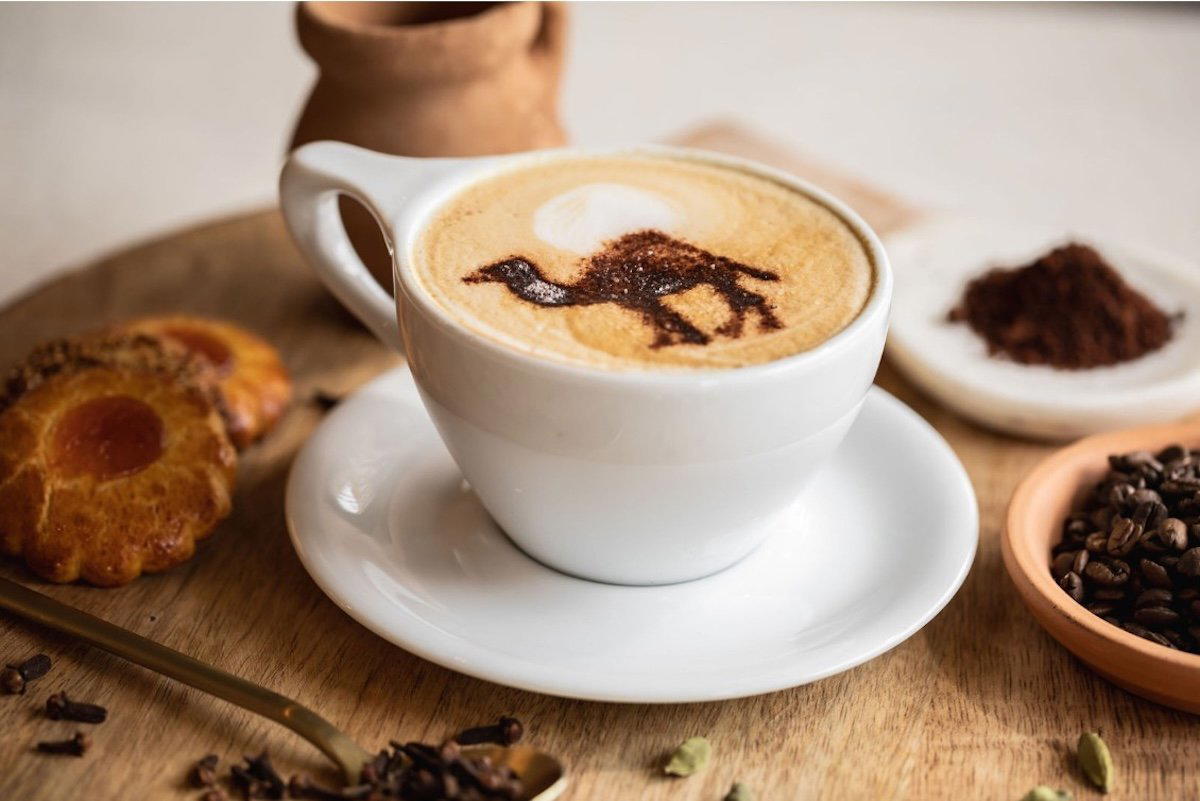
Arwa brings a Texas-rooted Yemeni coffee shop format to Brookline's Beacon Street, introducing qishr, cardamom-spiced brews, and traditional pastries to a Boston neighbourhood better known for its suburban café culture than Middle Eastern specialty coffee. As one of the few Yemeni-specific coffee concepts in Greater Boston, it occupies a distinct position in a city where specialty coffee tends to run Scandinavian-light or third-wave American.

Arwa restaurant in Boston, United States
About

Beacon Street Gets a Different Kind of Coffee Counter

Brookline's Beacon Street corridor has long been a study in neighbourhood café culture at its most comfortable: indie roasters, brunch spots, and the occasional boba outpost serving a dense residential population that treats the strip as a daily beat rather than a destination. Arwa lands on this street as something noticeably different. It is a Yemeni coffee shop, part of a Texas-based franchise that has built its reputation around qishr and the broader tradition of Yemeni coffee ceremony, a practice with roots that predate the European café culture most Western drinkers treat as the default.

That positioning matters more than it might first appear. Boston's specialty coffee scene, like those in most American cities catalogued in our full Boston restaurants guide, tends to cluster around two poles: Nordic-influenced light roasts with minimal milk intervention, and neighbourhood staples that prioritise comfort over origin traceability. Yemeni coffee as a genre sits outside both poles. The qishr tradition, which centres on the husks of the coffee cherry rather than the roasted bean, produces a spiced, tea-adjacent brew with cardamom and ginger at its core. It is a fundamentally different product from what the third-wave movement has trained most urban drinkers to expect, and Arwa's presence on Beacon Street is, in that sense, genuinely additive to what this part of the city offers.

What Yemeni Coffee Culture Actually Is

Yemen's relationship with coffee is not incidental. The country is widely credited in food history as the origin point of commercial coffee cultivation, with the port city of Mocha central to early trade routes that spread the bean to the Ottoman Empire and then to Europe. The qishr preparation that Arwa centres its menu around is one expression of that heritage: brewed from the dried husks of the coffee cherry (cascara, in contemporary specialty terminology), spiced with cardamom and sometimes ginger, and served hot. The result sits closer to a spiced herbal infusion than an espresso, which makes it accessible to non-coffee drinkers while remaining specific enough to educate those who think they already know the category.

For context, the growing interest in cascara-based drinks in specialty coffee circles in cities like San Francisco (where something like the ambitious tasting-format at Lazy Bear reflects a similar appetite for culinary education through unfamiliar ingredients) and New York (home to the technically rigorous approach seen at Le Bernardin in fine dining) suggests that the broader dining public is increasingly comfortable with drinks and dishes that ask for engagement rather than instant recognition. Arwa's format channels that same impulse, but through a community-rooted tradition rather than a chef-driven innovation narrative.

Brookline as the Right Address

The choice of Brookline's Beacon Street as the location for Arwa's Boston outpost is consistent with the neighbourhood's demographic character. Brookline has historically drawn a more internationally varied resident base than many of Boston's inner neighbourhoods, with universities, medical institutions, and a long-established Jewish community shaping a food culture that is more globally curious than the downtown or waterfront corridors. That makes it a more natural fit for a Yemeni coffee concept than, say, the tourist-facing stretch of the Seaport, where novelty tends to need a louder pitch.

The address at 1333 Beacon St puts Arwa within walking distance of the kind of foot traffic that sustains a café through daily habit rather than destination dining. Practical logistics here are worth noting for first-time visitors: Beacon Street is well-served by the MBTA Green Line, making the spot accessible from downtown Boston without a car. For those building a wider Brookline or Boston day around the visit, the full Boston experiences guide and Boston bars guide offer broader itinerary anchors.

The Franchise Question and What It Changes

Arwa operates as a Texas-based franchise, which raises a question worth addressing directly: does the franchise structure dilute the cultural authenticity that makes a Yemeni coffee concept interesting in the first place? The honest answer is that franchise models in specialty food vary enormously. Some, like the more ambitious counter formats seen at chef-driven tasting menus such as 311 Omakase or the Portuguese-influenced precision of Agosto, depend on singular culinary authorship that cannot be replicated at scale. Café and coffee shop formats, by contrast, have a longer and more defensible history of franchise operation, particularly when the core product is defined by a recipe tradition rather than a chef's individual interpretation.

What that means for Arwa in Brookline is that the product consistency a franchise provides may be more asset than liability. The qishr recipe does not need to be invented fresh by each location; it draws authority from the tradition it represents. Whether the Boston location executes that tradition with the depth of engagement the original Texas operation established is a question of staff training and sourcing, neither of which can be assessed without verified on-the-ground reporting. What can be said is that the format itself carries inherent credibility, and that Greater Boston has few if any competing Yemeni coffee specialists against which to benchmark it.

Where Arwa Fits in the Boston Coffee and Café Picture

Boston's café culture is not short of options, but it is somewhat short of range. The city's most discussed dining experiences tend toward fine dining formats, from the globally inspired comfort food at Ama at the Atlas to the steakhouse gravity of Abe and Louie's, while the café tier in most neighbourhoods remains relatively conventional by the standards of New York or Chicago (where Alinea anchors a very different conversation about what food culture can look like). Arwa sits in a gap that Boston has not historically filled: a specialty café with a cultural specificity that goes beyond roast origin or pour-over technique.

For visitors already exploring the city's dining width through resources like the Boston hotels guide or the Boston wineries guide, Arwa represents a genuinely different register, a morning or afternoon stop that delivers cultural context alongside the drink. It is not competing with the omakase ambition of 311 Omakase or the neighbourhood warmth of Alcove. It is doing something narrower and, within that narrowness, more specific than most of what Beacon Street currently offers.

Planning Your Visit

Arwa is located at 1333 Beacon St in Brookline, accessible via the MBTA Green Line. As a café-format operation rather than a full-service restaurant, walk-in visits are the expected model, and the format does not require the advance booking logistics that apply to reservation-driven spots like Agosto or high-demand counters such as those tracked in the full Boston restaurants guide. Hours, pricing, and current menu details are not confirmed in verified data at time of writing; contacting the venue directly before visiting is advisable, particularly for anyone travelling specifically for the qishr or pastry offerings.

Frequently Asked Questions

What dish is Arwa famous for?
Arwa's identity is built around qishr, the traditional Yemeni spiced coffee husk brew made with cardamom and ginger. This is the drink the franchise has anchored its concept to, and it is the primary reason the Brookline location is distinct from standard specialty coffee shops. Traditional Yemeni pastries accompany the drink menu, though specific items available at the Boston location have not been confirmed through verified sources.
How hard is it to get a table at Arwa?
As a café-format operation rather than a reservation-driven restaurant, Arwa does not operate a booking system in the way that high-demand Boston dining rooms do. Walk-in access is the standard model for coffee shops of this type. Peak morning and weekend hours on Beacon Street tend to draw consistent foot traffic given the residential density of Brookline, so earlier visits may mean shorter waits for seating.
What makes Arwa worth seeking out?
Arwa occupies a genuinely underserved position in Boston's café culture: a Yemeni coffee specialist in a city where specialty coffee defaults to third-wave conventions. The qishr tradition it represents has historical depth that most coffee concepts in Greater Boston do not engage with. For anyone curious about coffee's pre-espresso history or the broader culture of the Arabian Peninsula, Arwa provides access to that tradition in a neighbourhood that is more internationally curious than most of Boston's dining corridors.
Is Arwa overpriced or worth every penny?
Pricing details for the Brookline location have not been confirmed through verified sources, so a direct assessment cannot be made. As a franchise café format, it is likely to sit within the mid-range of Boston specialty coffee pricing rather than at the premium end occupied by full-service restaurant beverage programs. The cultural specificity of the qishr format adds a dimension of value that standard café options do not provide, regardless of where the ticket price lands.
Is Arwa part of a chain, and does that affect the experience at the Brookline location?
Arwa is a Texas-based franchise concept, making the Brookline outpost one of multiple locations operating under the same brand. For a café format built around a recipe tradition rather than individual chef authorship, the franchise structure is less of a concern than it would be for a tasting-menu restaurant. The qishr recipe draws its authority from Yemeni coffee tradition, not from a single location's invention, which means the Boston outpost can offer the same cultural reference point as the original, provided sourcing and preparation standards are maintained consistently across the group.

A Lean Comparison

A fast peer set for context, pulled from similar venues in our database.

Collector Access

Need a table?

Our members enjoy priority alerts and concierge-led booking support for the world's most difficult tables.

Get Exclusive Access