
Michelin Plate
Our verdict
Animo by Aigner brings Mediterranean cuisine to Salzburg's Nonntal neighbourhood, holding a Michelin Plate in both 2024 and 2025 at the more accessible end of the city's dining spectrum. At the €€ price point, it occupies a distinct position from Salzburg's starred heavyweights, offering olive-oil-forward cooking rooted in southern European technique.

Pearl is the En Primeur Club membership app, where members save venues, book tables and use the concierge.
The menu
What to order
- Handcrafted pasta
- Whole roasted fish
- Steamed mussels
- Vitello tonnato
- Spaghetti vongole
Mediterranean Cooking in a City Built for Baroque
Salzburg's restaurant scene divides fairly cleanly between two gravitational pulls: the grand-occasion rooms clustered near the Altstadt, where the Michelin stars are dense and the tasting menus long, and a quieter residential orbit where the cooking is less ceremonial but no less considered. Nonntal, the neighbourhood on the southern slope of the Festungsberg, belongs to the second category. Its streets are quieter than the tourist corridors, and Animo by Aigner, at Nonntaler Hauptstraße 55, reads as part of that neighbourhood character rather than an exception to it.
Mediterranean cuisine in a landlocked Alpine city is not the contradiction it might appear. Austria has long maintained a southern lean in its table culture, a legacy of the Habsburg empire's reach into the Italian peninsula and the Adriatic. What Animo by Aigner represents is a specific, contemporary version of that tradition: cooking organised around olive oil, fresh herbs, and the lighter proteins of Mediterranean coastal larders, positioned at the €€ price tier that makes it one of the more accessible Michelin-recognised addresses in the city.
The Olive Oil Argument
Mediterranean cuisine is, at its structural core, an olive oil cuisine. That distinction matters more than it sounds. Butter-led European traditions build flavour through emulsification and reduction; olive oil traditions work differently, emphasising the raw quality of the oil itself, the timing of its addition to a dish, and the degree to which it either integrates into or sits on top of other ingredients. A kitchen that understands olive oil tends to produce food that is cleaner and more direct in flavour, where sourcing decisions carry more visible consequence than technique alone.
This framework places Animo by Aigner in a different culinary register from Salzburg's more prominent fine-dining addresses. Ikarus, the two-Michelin-star room at Hangar-7, operates at €€€€ with a rotating guest-chef format that prioritises conceptual ambition. Esszimmer, one star at €€€, works in a Modern Austrian idiom. Senns, also two stars, maintains an Austrian culinary identity. Pfefferschiff and The Glass Garden operate in creative registers at the higher price bands. Animo by Aigner is the outlier in this group: Mediterranean in orientation, mid-range in price, and Michelin-recognised without carrying a star. That combination has a specific appeal for the reader who wants acknowledged quality without the full commitment of a tasting-menu evening.
What the Michelin Plate Signals
The Michelin Plate, awarded to Animo by Aigner in both 2024 and 2025, functions as a quality floor rather than a ceiling. It indicates that inspectors found the cooking consistent and the experience worth the detour, without the kitchen having yet assembled everything the star criteria require. In a city where the starred competition is concentrated at price points significantly above €€, a Plate at this tier functions as a signal that the kitchen is cooking to a standard that exceeds its price point's average.
For regional context, Austria's broader dining geography shows how seriously the country takes its restaurant culture. Steirereck im Stadtpark in Vienna sits at the apex of Austrian fine dining, while addresses like Döllerer in Golling an der Salzach and Kräuterreich by Vitus Winkler in Sankt Veit im Pongau demonstrate that serious cooking extends well beyond the urban centres. Further afield in the Alpine region, Gourmetrestaurant Tannenhof in Sankt Anton am Arlberg and Griggeler Stuba in Lech hold their own alongside celebrated Danube Valley addresses like Landhaus Bacher in Mautern an der Donau. Animo by Aigner belongs to this broader Austrian restaurant culture, but operates from a different culinary starting point: the Mediterranean basin rather than the Alpine larder.
Mediterranean at the Mid-Range: A Wider Pattern
The €€ Mediterranean format has grown as a distinct restaurant category across European cities, and its logic is not difficult to follow. The cuisine's structural simplicity, grilled fish, legumes, vegetable-forward plates, oils and acids, means that a skilled kitchen can deliver genuine quality without the infrastructure costs of a tasting-menu operation. The risk, of course, is the opposite: that without the discipline of fine-dining service and sourcing, the format defaults to generic bistro food with a southern accent. The Michelin Plate suggests that Animo by Aigner avoids that collapse.
For comparison within the Mediterranean genre at a higher price point, La Brezza in Ascona and Arnaud Donckele and Maxime Frédéric at Louis Vuitton in Saint-Tropez show what the cuisine looks like when applied at the luxury end. Animo by Aigner works from the same culinary foundation but at a register that makes it a regular-use address for residents rather than a once-a-trip destination.
Planning a Visit
Nonntal is reachable from the Altstadt in under fifteen minutes on foot, crossing south through the old town and past the Kajetanerplatz. The address, Nonntaler Hauptstraße 55, sits on the neighbourhood's main residential artery. Booking ahead is advisable rather than optional, particularly during the summer festival season when Salzburg absorbs a substantial international visitor influx and restaurant capacity across the city tightens. For readers building a broader Salzburg itinerary, hotels guide, bars guide, wineries guide, and experiences guide.
Frequently asked questions
What price level is Animo by Aigner?
Pricing at Animo by Aigner is listed as €€.
Quick Comparison
| Venue | Cuisine | Price | Awards | Notes |
|---|---|---|---|---|
| Animo by AignerThis venue (the venue you are viewing) | Mediterranean Seasonal Trattoria | $50–100 | Michelin Plate | Not listed |
| Ikarus | Guest Chef Fine Dining | $200–300 | 2 Michelin Stars · La Liste Top Restaurants | Modern European, Creative |
| Esszimmer | Modern French Fine Dining | $100–150 | 1 Michelin Star · Falstaff Restaurant - 95 Falstaff Points | Modern Austrian, Creative |
| Senns | Modern Cosmopolitan Fine Dining | Not listed | 2 Michelin Stars · La Liste Top Restaurants | Not listed |
| Pfefferschiff | Modern Austrian Fine Dining | $100–150 | 1 Michelin Star · Falstaff Restaurant - 95 Falstaff Points | Creative |
| Brandstätter | Creative Austrian Regional Cuisine | $50–100 | Michelin Bib Gourmand | Not listed |
Recognition history
Dated appearances from independent guides and award organizations, with the underlying list record or original source where available.
Michelin Plate
Michelin
Full recognition history (3 entries)
Michelin Plate
Michelin
Michelin Plate
Michelin
Continue exploring
More in Salzburg
Restaurants in Salzburg
All restaurants in Salzburg →
Bars in Salzburg
All bars in Salzburg →
Details
- Intimate
- Elegant
- Cozy
- Quiet
- Date Night
- Group Dining
- Special Occasion
- Terrace
- Garden
- Open Kitchen
- Sommelier Led
- Farm To Table
- Local Sourcing
- Garden
- A La Carte
- Small Plates
- Wine
- Prosecco
- Vegetarian Friendly
- Gluten Free Options
Current opening hours
- Monday
- 11:30 AM–2 PM, 6 PM–12 AM
- Tuesday
- 11:30 AM–2 PM, 6 PM–12 AM
- Wednesday
- 11:30 AM–2 PM, 6 PM–12 AM
- Thursday
- 11:30 AM–2 PM, 6 PM–12 AM
- Friday
- 11:30 AM–2 PM, 6 PM–12 AM
- Saturday
- Closed
- Sunday
- Closed
Hours can change for holidays and private events. Hours as of .
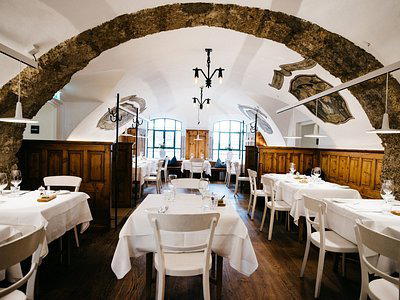
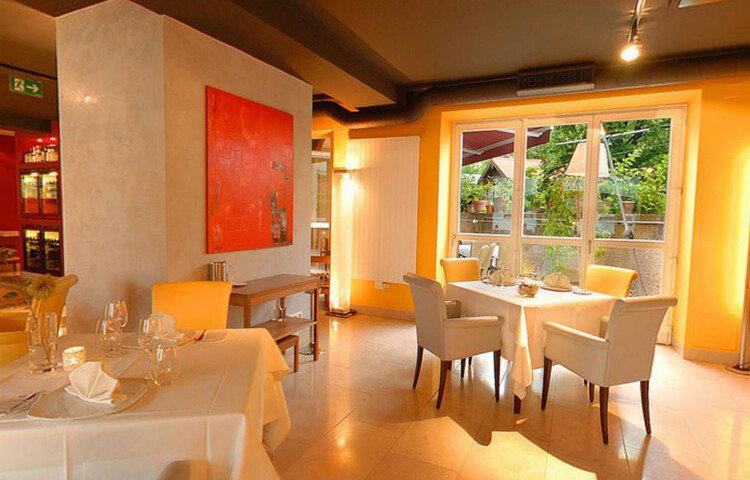
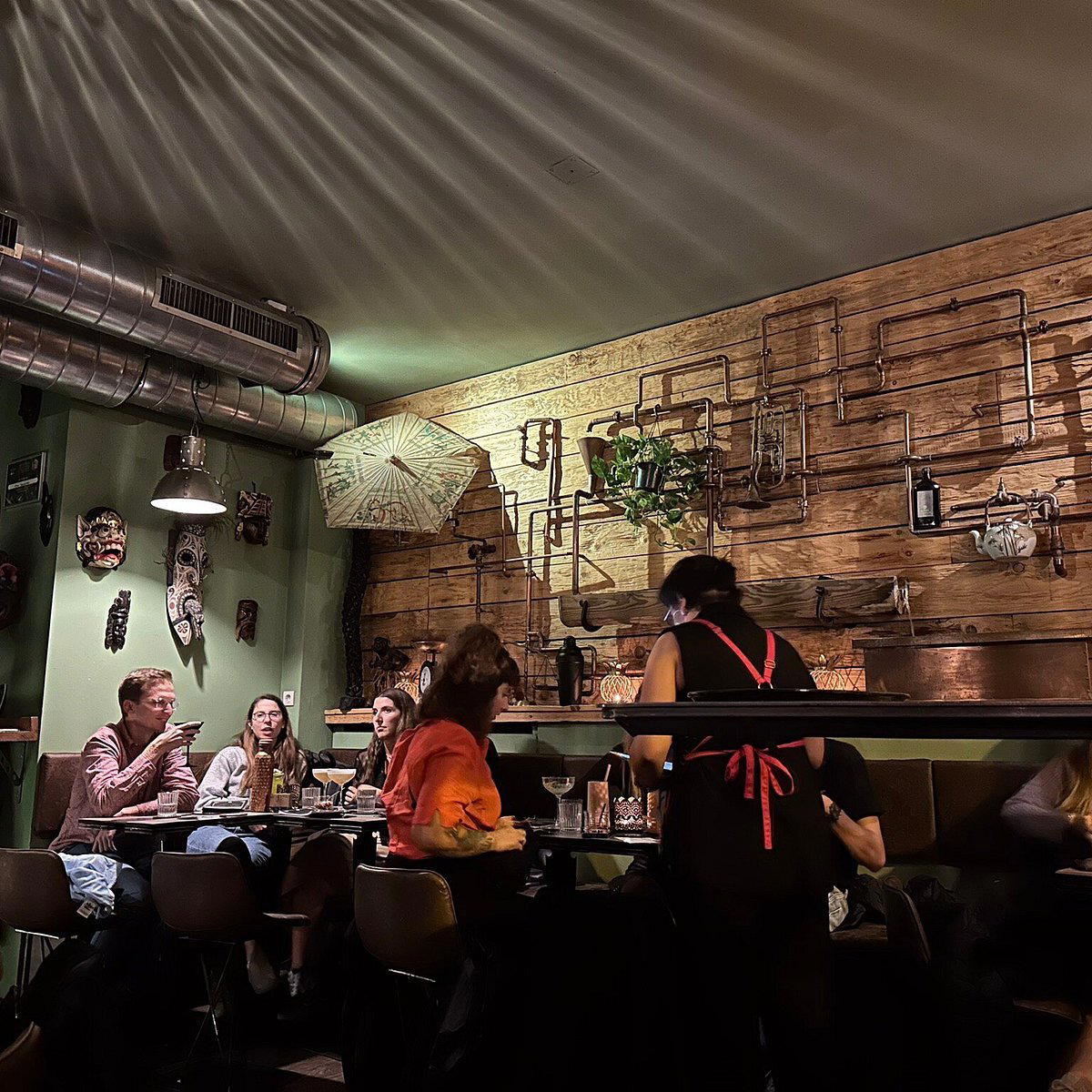
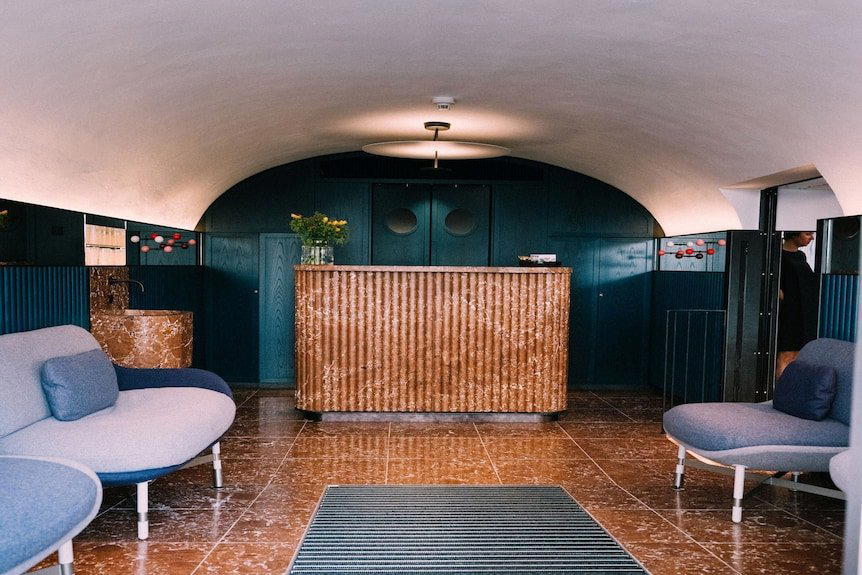
Warm, relaxed, and welcoming with wood furnishings and soft textiles; two compact dining rooms with clear sightlines to service staff; intimate garden seating in summer with natural light.