Our verdict
On Lara Caddesi in Antalya's Muratpaşa district, Anarkali brings Indian and Pakistani cooking to a coastal Turkish city where such kitchens remain rare. The menu draws on the desi tradition of slow-cooked, spice-layered dishes that travel well across the subcontinent's two culinary traditions. For visitors looking beyond Turkish grills and seafood, it occupies a distinct space in the local dining scene.

Pearl is the En Primeur Club membership app, where members save venues, book tables and use the concierge.
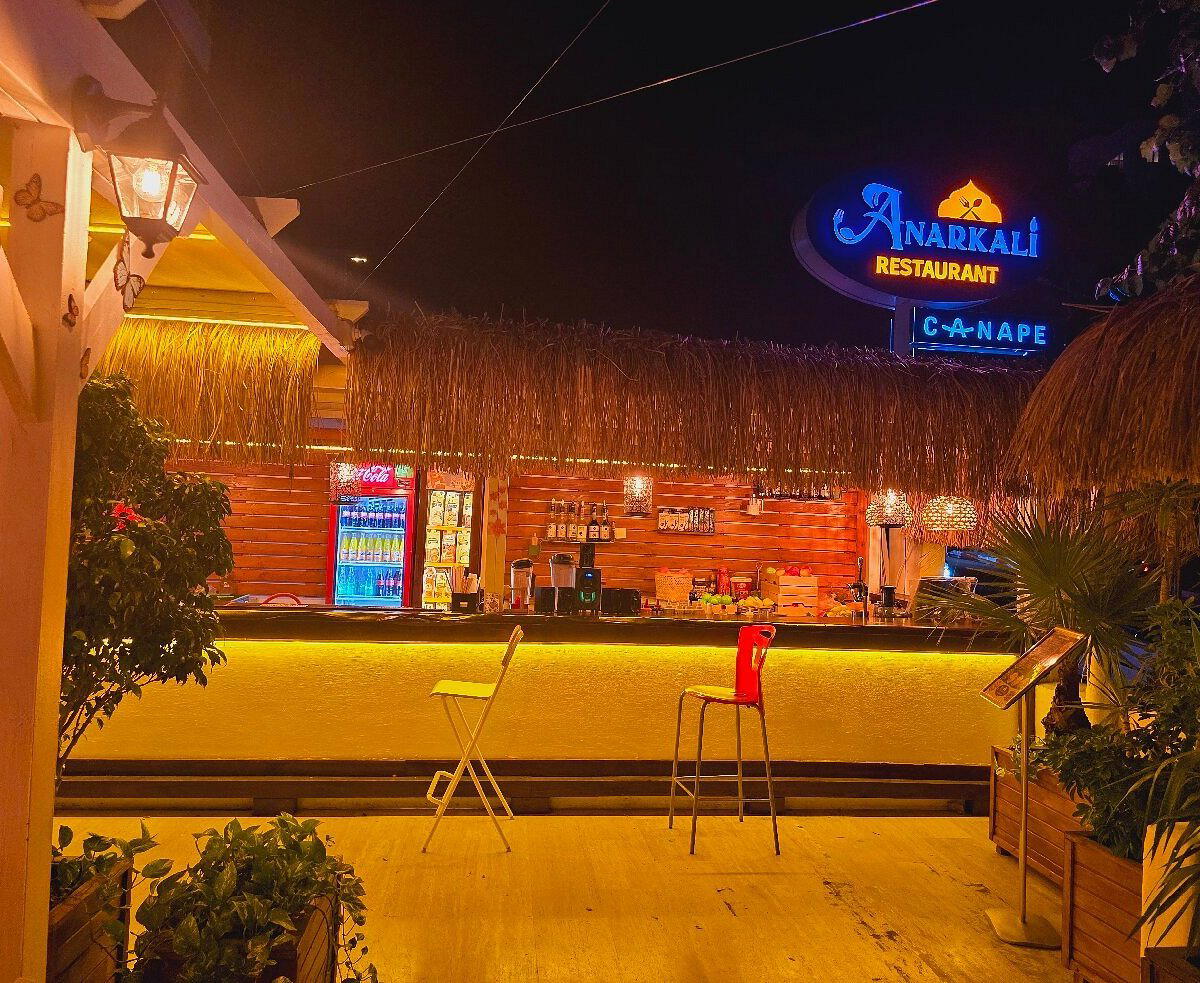
The menu
See the current menu on wa.me →Desi Cooking on the Anatolian Coast
Antalya's restaurant scene skews heavily toward the Mediterranean arc: grilled fish, kebab houses, and a growing tier of modern Turkish addresses competing for the resort-town visitor. Against that backdrop, a kitchen serving Indian and Pakistani cooking on Lara Caddesi reads as a deliberate outlier. The desi tradition that Anarkali represents draws from one of the world's most ingredient-dense culinary lineages, where spice blending is a craft refined over centuries and slow-cooked proteins are the measure of a kitchen's patience, not its speed.
Lara Caddesi is a long commercial artery running through Muratpaşa toward the coast, lined with a mix of neighbourhood restaurants and convenience trade. Anarkali sits at number 182/B in the Güzeloba section, a stretch that serves a largely local clientele rather than the resort-hotel corridor further west. That address matters: kitchens in this part of the city answer to residents and repeat visitors, not one-night tourist traffic, which tends to shape a more consistent, ingredient-driven approach to the menu. For context on how Muratpaşa's broader dining character compares across cuisines and price points, see our full Muratpaşa restaurants guide.
What Indian-Pakistani Cooking Actually Asks of a Kitchen
The culinary traditions shared between India and Pakistan are not easily shortened. Desi cooking at its most serious involves building spice pastes from scratch, managing long braising times for dishes like nihari or haleem, and sourcing whole spices that degrade quickly once ground. The separation between a kitchen that opens a jar and one that toasts and grinds to order is audible in the final dish: depth of flavour in a proper curry comes from layering aromatics at different stages of the cooking process, not from a premixed base. Across Turkey, this category of cooking remains thinly represented, which means that where it does appear, it typically serves a specific and loyal community rather than a casual walk-in crowd.
Pakistan's culinary geography is itself diverse: the rich, dairy-forward dishes of Punjab, the drier spice profiles of Khyber Pakhtunkhwa, and the coastal influence of Karachi's seafood culture all appear in a well-rounded Pakistani menu. Indian cooking adds further range, from the rice-based southern traditions to the bread-and-gravy northern idiom that most diaspora restaurants lead with. A kitchen that names both traditions in its identity is signalling breadth, which places pressure on sourcing: you cannot replicate the flavour of fenugreek-heavy saag or a cardamom-forward biryani without the right dried goods and fresh aromatics.
Ingredient Sourcing in a Turkish Context
Running a South Asian kitchen in Turkey involves a supply chain that most local restaurants do not have to think about. Turkish wholesale markets stock cumin, coriander, and red chilli in abundance, given their overlap with Anatolian cooking, but the more specific inputs of Indian and Pakistani cuisine require either specialist importers or proximity to a diaspora community with the purchasing volume to sustain them. Fenugreek leaves (kasuri methi), dried mango powder (amchur), black cardamom, and mustard seeds with the right pungency profile are not standard in Turkish kitchen supply chains. Antalya has a substantial international population, particularly in its tourist and hospitality workforce, and the city's position as a major transit hub means international goods move through it more easily than in inland cities.
The same logic applies to protein sourcing. Halal butchery is not a challenge in Turkey, where the practice is standard, but the specific cuts favoured in South Asian cooking, bone-in for slow braises, marrow-rich for richer sauces, require a butcher relationship rather than a cash-and-carry approach. That kind of supply discipline is what separates a desi kitchen that tastes right from one that approximates the flavour profile without landing it.
For comparison, Turkey's higher-profile restaurant tier has built a strong identity around local sourcing and regional produce, as seen at addresses like Turk Fatih Tutak in Istanbul or the seasonal approach at Maçakızı in Bodrum. The challenge for a South Asian kitchen in Turkey is the inverse: the local supply chain is abundant but largely misaligned with what the cuisine requires, making specialist sourcing the central discipline rather than an optional upgrade.
The Wider Turkish Restaurant Context
Turkey's restaurant scene has developed considerable depth in its own culinary traditions, with addresses like Narımor in Izmir, Nahita Cappadocia in Nevsehir, and Aravan Evi in Ürgüp representing regional approaches to the country's own cooking. Against that domestic richness, the case for a South Asian kitchen in a Turkish coastal city rests on genuine demand from the international community that has settled around Antalya's tourism infrastructure, as well as Turkish diners who have encountered Indian and Pakistani cooking during travel and want access closer to home.
That demand exists across Turkey's larger cities too. Istanbul has seen slow but consistent growth in South Asian restaurants over the past decade, largely anchored by the city's South Asian business and student communities. In Antalya, the base is smaller, which makes a dedicated kitchen more significant for those who depend on it. Restaurants serving specific diaspora communities in cities where that cuisine is rare tend to operate with a different kind of accountability than venues in saturated markets, where the next alternative is a short walk away.
Across coastal Turkey, the restaurant conversation is dominated by seafood addresses such as Poyraz Sahil Balık in Beykoz and contemporary dining rooms like Mezegi in Fethiye or Ahãma in Göcek. Anarkali's positioning in Muratpaşa is simply different in kind from these venues, which is the point: it is filling a gap in the cuisine map rather than competing within an established local category.
Planning Your Visit
Anarkali is located at Güzeloba, Lara Cd. 182/B, 07230 Muratpaşa, Antalya. The address sits on a main road in a working neighbourhood, accessible by both private vehicle and local transport from central Antalya. Given the restaurant serves a community that relies on it, evenings and weekends are likely to see higher demand than midweek lunchtimes, though this should be confirmed directly.
Frequently asked questions
Is Anarkali Restaurant Indian Pakistani Cuisine Delicious Desi Food okay with children?
Desi restaurants of this type typically serve a broad range of dishes spanning mild to heavily spiced, which gives families the flexibility to order across the heat spectrum. The Güzeloba neighbourhood location on a main road in Muratpaşa, Antalya, suggests a neighbourhood-facing format rather than a formal dining room, which generally suits families.
What is the atmosphere like at Anarkali Restaurant Indian Pakistani Cuisine Delicious Desi Food?
The restaurant sits on Lara Cd. in a working neighbourhood of Muratpaşa, Antalya, which sets a practical, community-oriented tone rather than a resort-facing or tourist-polished one. South Asian restaurants operating in this kind of context tend toward informal, canteen-adjacent settings where the cooking is the main event.
Is Anarkali one of the only Indian-Pakistani restaurants on Turkey's Mediterranean coast?
Antalya's dining scene is dominated by Mediterranean Turkish cooking, grilled fish, and kebab houses, making a dedicated Indian-Pakistani desi kitchen in Muratpaşa a rare format for this coastline. The restaurant's address on Lara Cd. in Güzeloba places it in a working neighbourhood rather than the tourist strip, suggesting it draws a local and expatriate South Asian community as its core audience.
What dish is Anarkali Restaurant Indian Pakistani Cuisine Delicious Desi Food famous for?
Indian-Pakistani desi cooking at a serious level typically anchors around slow-cooked curries, layered biryanis, and spice-paste-based gravies built from scratch, so the menu likely draws from that tradition. For current dish information, visiting the restaurant directly or checking any active social profiles is the most reliable approach.
What part of town is Anarkali Restaurant Indian Pakistani Cuisine Delicious Desi Food in?
Anarkali Restaurant Indian Pakistani Cuisine Delicious Desi Food is located at Güzeloba, Lara Cd. 182/B, 07230 Muratpaşa/Antalya, Türkiye, Muratpasa.
What's the best way to book Anarkali Restaurant Indian Pakistani Cuisine Delicious Desi Food?
The address is Güzeloba, Lara Cd. 182/B, 07230 Muratpaşa, Antalya, accessible by main road. Arriving early in a service period reduces wait risk if the dining room is small.
What do critics highlight about Anarkali Restaurant Indian Pakistani Cuisine Delicious Desi Food?
No formal critical reviews or awards are recorded in the venue data. What the restaurant's existence does signal is the logistical commitment required to run a South Asian kitchen in Antalya, where sourcing whole spices, dried lentils, and specific aromatics outside Turkish wholesale channels demands a separate supply chain most local restaurants do not maintain. That operational specificity is itself a marker of intent.
Comparable Spots, Quickly
Comparable venues nearby, for context on price, style, and recognition.
| Venue | Cuisine | Price | Awards | Notes |
|---|---|---|---|---|
| Anarkali Restaurant Indian Pakistani Cuisine Delicious Desi FoodThis venue (the venue you are viewing) | Indian Pakistani Cuisine | $20–30 | Not listed | Not listed |
| The House Of Memories | Traditional Turkish Testi Kebab | $10–20 | Not listed | Uchisar |
| SushiCo | Japanese Sushi with Pan-Asian Fusion | $20–30 | Not listed | Alsancak |
| Kebapçı Halil Usta | Traditional Gaziantep Kebabs | $10–20 | Not listed | Şehitkamil |
| Metanet Lokantasi | Traditional Gaziantep Turkish | $10–20 | Not listed | Kozluca |
| Asil Antalya – Turkish & Lebanese Restaurant | Turkish, Lebanese & Moroccan Fusion | Not listed | Gault & Millau Türkiye 1 Toque | Kadriye |
Continue exploring
More in Muratpasa
Restaurants in Muratpasa
All restaurants in Muratpasa →
Details
- Casual Hangout
- Family
- A La Carte
- Vegetarian Friendly
- Halal
Current opening hours
- Monday
- 12:30–11 PM
- Tuesday
- 12:30–11 PM
- Wednesday
- 12:30–11 PM
- Thursday
- 12:30–11 PM
- Friday
- 12:30–11 PM
- Saturday
- 12:30–11 PM
- Sunday
- 12:30–11 PM
Hours can change for holidays and private events. Hours as of .