Alkemē
Alkemē sits on Don Gaspar Avenue in a city where New Mexican tradition and contemporary American cooking increasingly share the same table. The address places it within walking distance of Santa Fe's historic plaza district, among a tier of restaurants pushing the format further than the regional staples that define most visitors' first impressions of the city.
Pearl is the En Primeur Club membership app — saves, bookings, and concierge access live there. Same editors, same standards.
- Address
- 227 Don Gaspar Ave, Santa Fe, NM 87501
- Phone
- +15059829704
- Website
- alkeme-santafe.com
- Directions
- Get directions
 Saves & bookings on Pearl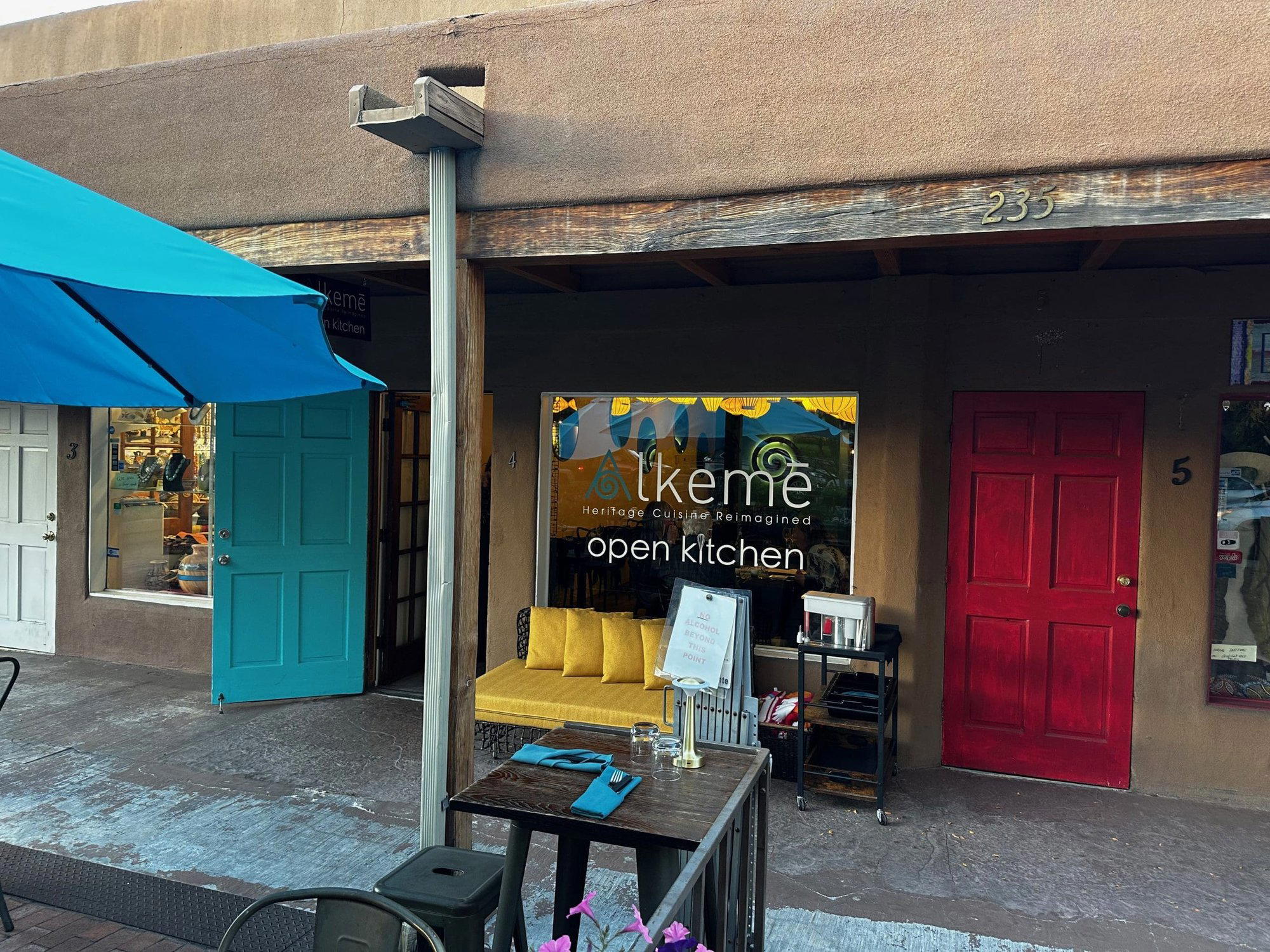
Santa Fe's Progressive Counter: Where the High Desert Meets the Tasting Menu Format
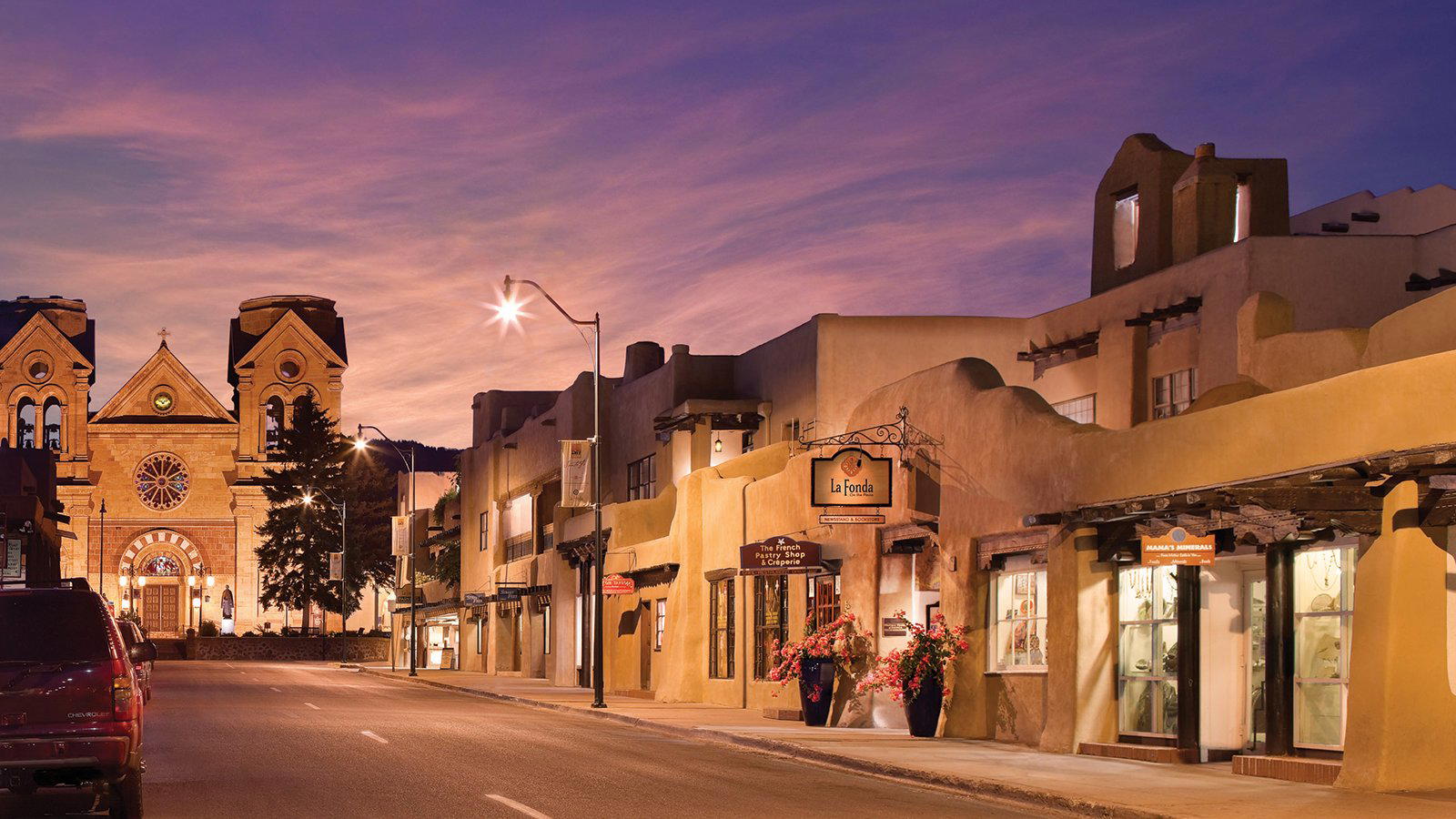
Don Gaspar Avenue runs south from the plaza district through a quieter corridor of Santa Fe's historic core, past adobe walls and narrow lots that feel unchanged from another era. It is in this setting that Alkemē occupies its address at 227, a location that puts it physically apart from the busiest stretch of Canyon Road galleries and the tourist-dense blocks around the Palace of the Governors. That distance is part of the proposition. Considered cooking in Santa Fe has tended to position itself slightly off the main current, where the room can be controlled and the pace set deliberately.
Santa Fe's dining scene has been sorting itself into tiers more visibly over the past decade. The regional tradition anchored by red and green chile, posole, and blue corn tortillas remains the dominant draw for most visitors, represented at the serious end by places like Sazón (New Mexican) and at the casual end by half the menus in the city. Alongside that tradition, a smaller cohort of restaurants has been building a different kind of argument: that Santa Fe can support the multi-course, ingredient-focused format that defines ambitious American cooking in larger cities. Alkemē belongs to that cohort. Its address and name signal a deliberate departure from the regional vernacular, operating in a register closer to tasting-menu programs at Smyth in Chicago or Lazy Bear in San Francisco than to the enchilada plates that fill most Santa Fe dining rooms.
The Arc of the Meal
The tasting progression format, when it works in a smaller city, depends on a particular kind of hospitality intelligence. The meal has to justify its own length. Each course needs to establish a position in a sequence rather than simply arriving as an isolated plate. This is the discipline that separates the format from an extended prix-fixe and the one that makes it demanding to execute consistently outside of the major markets where diners arrive with a calibrated sense of what they are paying for.
In cities where the tasting format has taken firmest root, the structure typically moves from lighter, more acidic preparations through progressively richer proteins, with textural variation used to reset attention and prevent fatigue. The strongest programs, from Blue Hill at Stone Barns in Tarrytown to Single Thread Farm in Healdsburg, treat the sequence as a compositional argument, not just an ordering of dishes. The expectation at an address like Alkemē's, set against the high desert context of New Mexico, is that the regional larder, chiles, native grains, locally foraged ingredients, will appear somewhere in that arc, not as a concession to local color but as a genuine ingredient decision.
Santa Fe sits at roughly 7,000 feet elevation, which affects both what grows nearby and how wine interacts with food. Kitchens working at altitude with serious ambitions have to account for that fact in ways that sea-level programs do not. It is a concrete detail that distinguishes the cooking context here from peer programs at Providence in Los Angeles or Addison in San Diego, where the Pacific larder and the climate set entirely different parameters.
Positioning in the Santa Fe Tier
The city's restaurant hierarchy is smaller and more compressed than the major coastal markets. Santa Fe does not have the depth of Michelin-tracked dining that New York does, where an address like Atomix in New York City operates inside a dense comparable set of recognized counters. Here, the competitive references are fewer and the comparable set tighter. Alkemē's Don Gaspar address places it at the more considered end of Santa Fe's non-regional options, alongside addresses like 229 Galisteo St and Bodega Prime, which also operate at a remove from the straight New Mexican format.
The city does have range below that tier. Back Road Pizza and Bert's Burger Bowl serve the casual end of the market, and the volume of visitors means that tier is always well-populated. The gap between those addresses and something like Alkemē is wide, which is both a market opportunity and a challenge. Diners at the ambitious end of Santa Fe dining tend to be a mix of well-traveled art collectors, destination visitors who have already done the regional dishes, and locals who follow the national conversation around food closely enough to recognize the format when they see it. That is a different audience than the one lining up for a green chile cheeseburger, and serving it well requires a different set of decisions in every aspect of the operation.
For a point of comparison on how regional identity and fine-dining format can coexist successfully, the model closest to what Santa Fe represents in national terms might be something like The Inn at Little Washington in Washington, a serious long-format program operating in a small city with a specific regional identity, or the farm-sourcing discipline visible at Atelier Moessmer Norbert Niederkofler in Brunico, where the alpine larder is not decorative but structural. The parallel is not about equivalence of recognition but about the operating conditions: serious cooking in a place that is not a global dining capital requires a clearer argument for why the meal is worth the commitment.
Planning Your Visit
Alkemē is at 227 Don Gaspar Ave, a short walk south of the plaza in Santa Fe's historic center. The address is accessible on foot from most downtown hotels, which matters in a city where parking near the center can be slow. Santa Fe's season peaks between May and October, with the summer monsoon period and the fall arts market drawing the largest visitor concentrations. Booking ahead during those months is advisable for any serious restaurant in the city. For the full picture of what Santa Fe's dining scene currently offers across price points and formats, our full Santa Fe restaurants guide covers the range in depth, from the regional anchors to the newer generation of kitchens working in a different register.
For travelers whose usual reference points run toward the major coastal programs, from Le Bernardin in New York City to The French Laundry in Napa or Emeril's in New Orleans, the context for Alkemē is a kitchen operating in a smaller, higher-altitude city with a distinct regional identity and a dining public that has become increasingly literate about what the multi-course format can do at its leading.
The Essentials
Comparable venues nearby, for context on price, style, and recognition.
| Venue | Cuisine | Price | Notes |
|---|---|---|---|
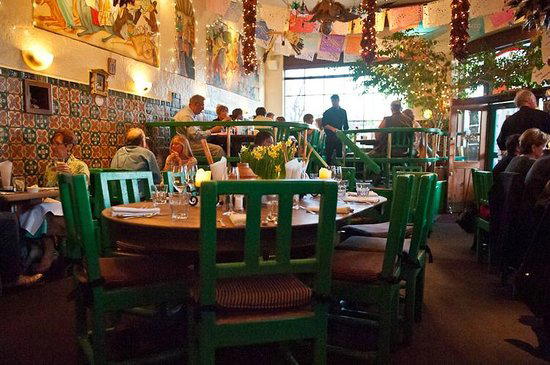
| AlkemēThis venue — the venue you are viewing | Downtown, Asian Heritage Reimagined | $$$$ | Not listed |
| Coyote Cafe | Downtown, Modern Southwestern Cuisine | $$$ | Not listed |
| Dinner For Two | Not listed | $$$$ | Historic District, Farm-to-Table Steakhouse with Tableside Presentations |
| State Capital Kitchen | Downtown Santa Fe, New American Dim Sum | $$$ | Not listed |
| Cafe Pasqual's | Old Santa Fe, New Mexican | $$$ | Not listed |
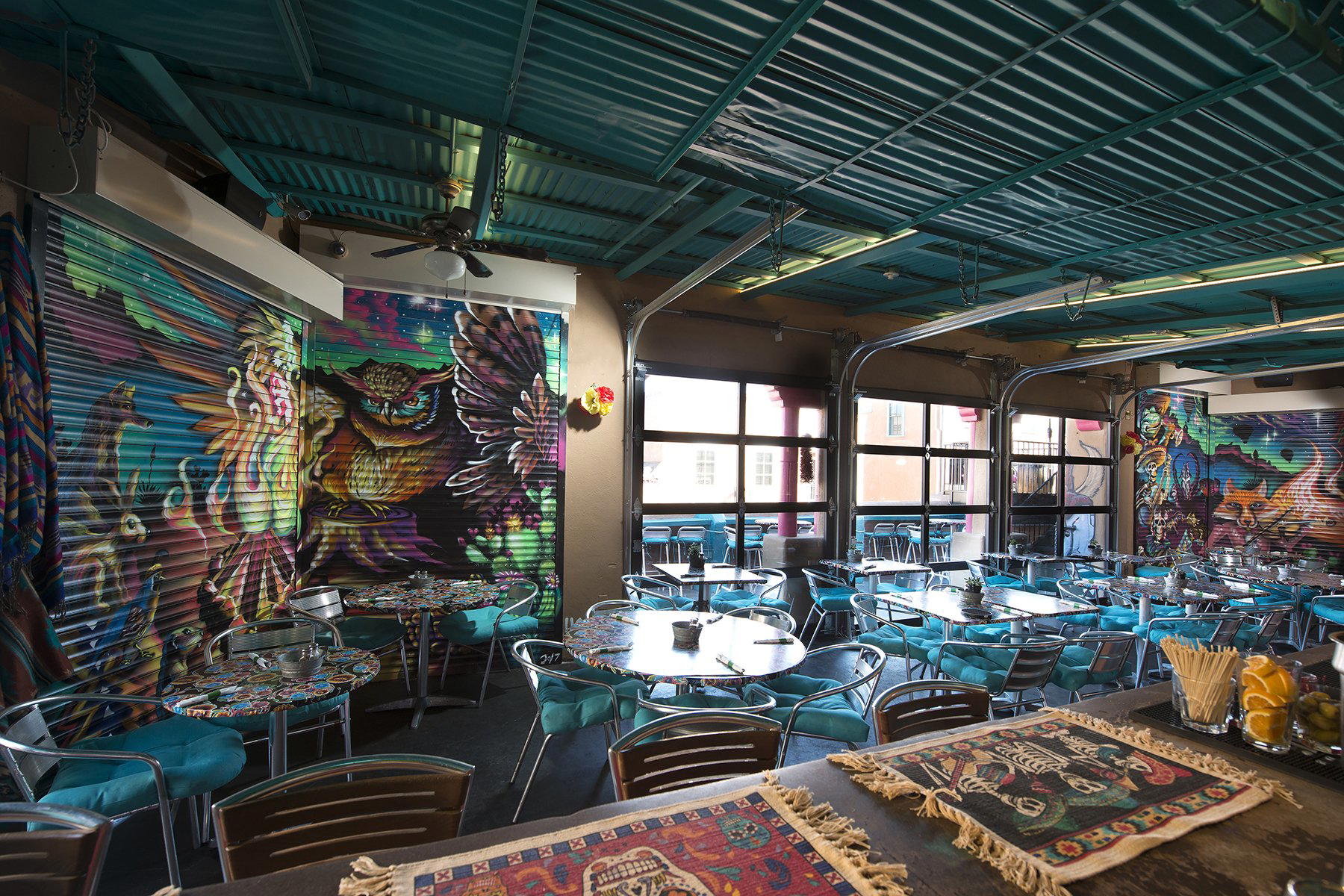
| Paloma Restaurant | Guadalupe Street, Modern Mexican | $$$ | Not listed |
At a Glance
- Sophisticated
- Elegant
- Modern
- Intimate
- Date Night
- Special Occasion
- Open Kitchen
Current opening hours
- Monday
- Closed
- Tuesday
- 5–8:45 PM
- Wednesday
- 5–8:45 PM
- Thursday
- 5–8:45 PM
- Friday
- 5–8:45 PM
- Saturday
- 5–8:45 PM
- Sunday
- Closed
Hours can change for holidays and private events. Last verified .
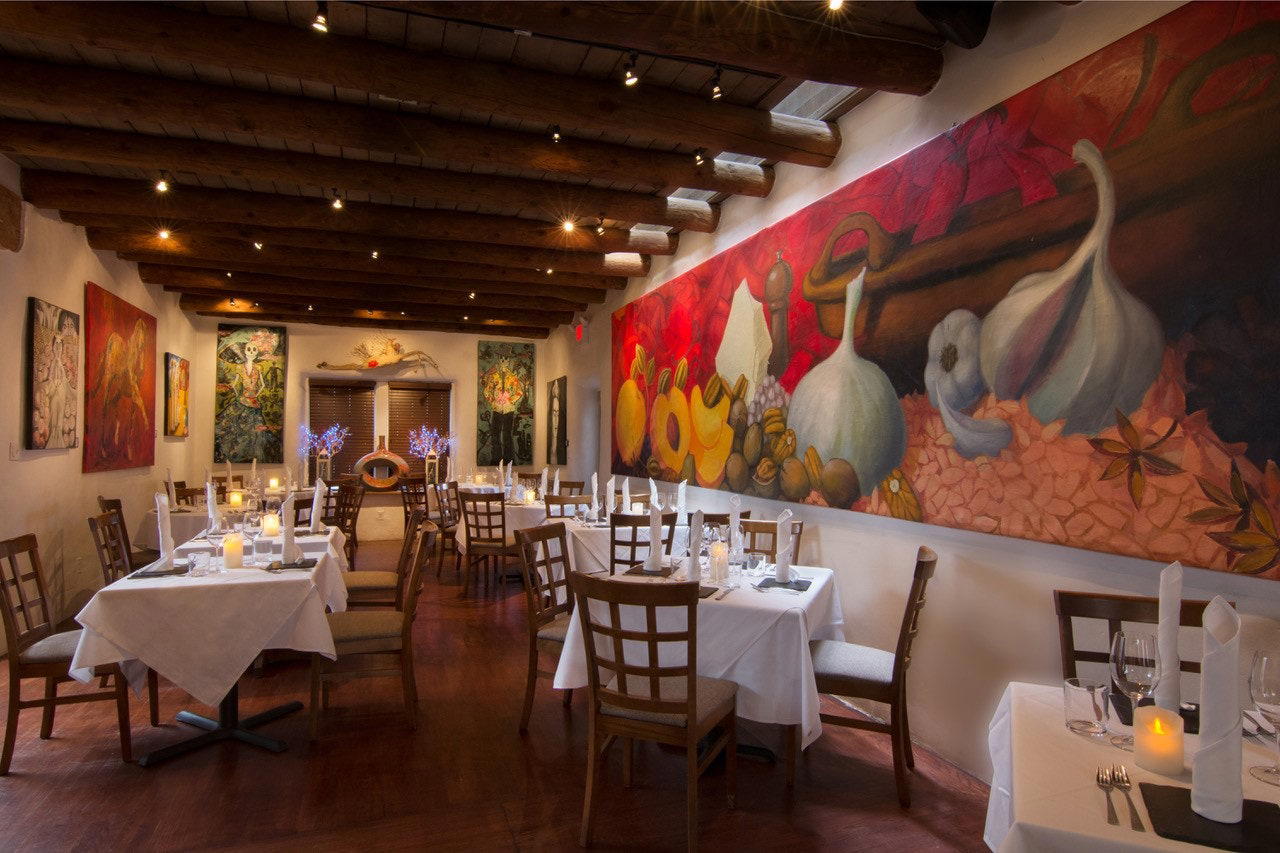
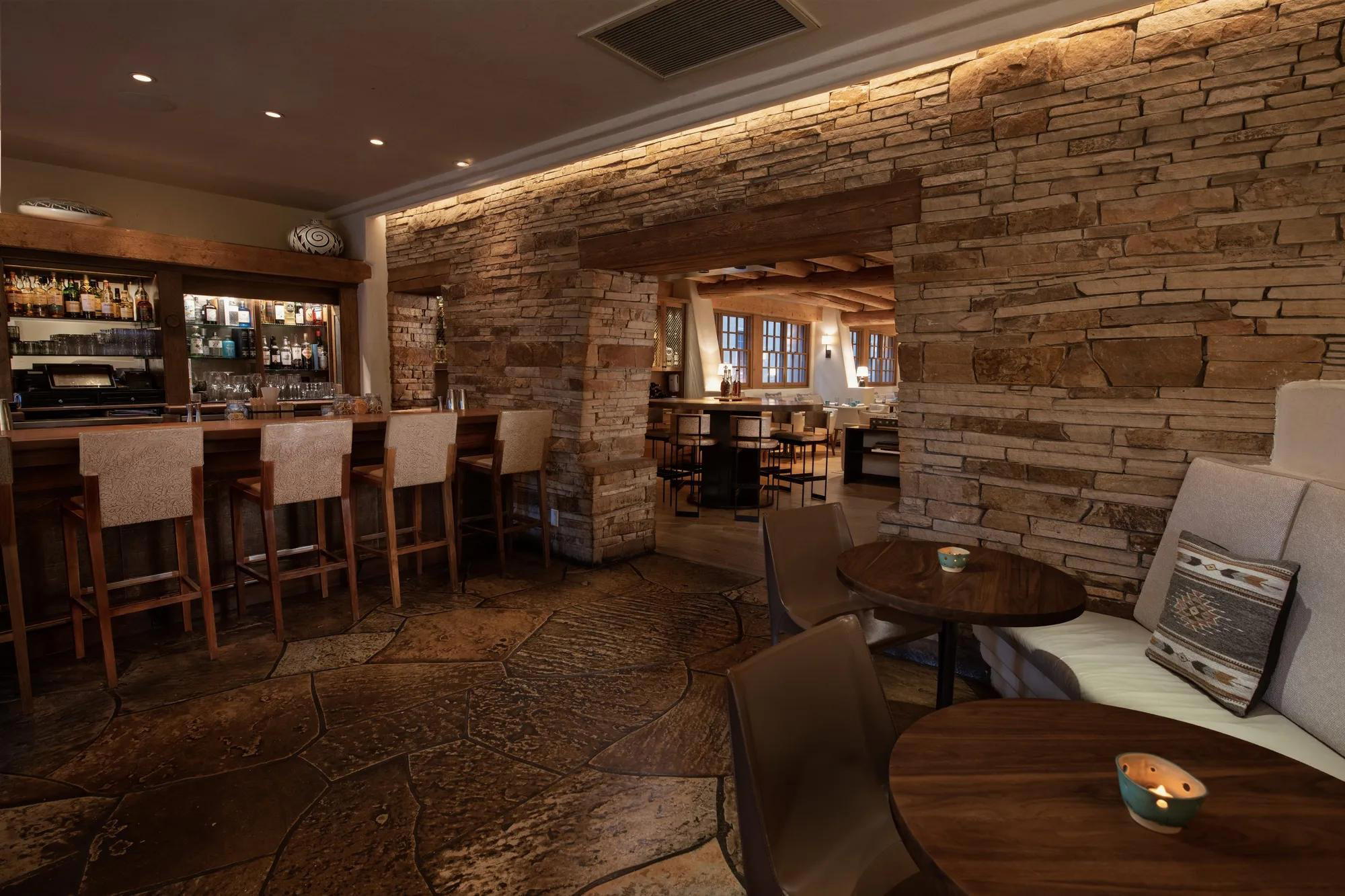
Intimate fine dining atmosphere with beautifully presented dishes in a caring, innovative environment.