
Michelin Plate
Our verdict
Al Dragone occupies a natural cave just off Vieste's cathedral square, serving traditional Apulian cooking at mid-range prices with two consecutive Michelin Plate recognitions (2024 and 2025). The kitchen leans on the Gargano coast's larder: local scampi, almonds, and the hyperlocal produce that defines this stretch of Puglia. For honest regional cooking in an atmosphere the town's tourist strip cannot replicate, it earns its place on the short list.

Pearl is the En Primeur Club membership app — saves, bookings, and concierge access live there. Same editors, same standards.
- Address
- Via Duomo, 8, 71019 Vieste FG, Italy
- Phone
- 0884357321
- Website
- aldragone.it
- Directions
- Get directions
- Booking
- Book on the venue's website
The menu
What to order
- Scampi in almond crust
- Flambé seafood
- Raw seafood
Stone, Salt, and the Gargano Larder
Vieste sits at the tip of the Gargano promontory, a limestone peninsula that juts into the Adriatic and has been shaping local cooking for centuries. The sea delivers scampi, orata, and ricci; the interior olive groves and almond orchards fill in the rest. What makes this particular stretch of Puglia interesting from a sourcing perspective is the compression: within a short radius, you have saltwater fish markets, ancient almond trees on the Gargano plateau, and the terraced vegetable plots that supply the town's kitchens. Restaurants working in this tradition don't need to reach far for raw material, and the best of them don't. Our full Vieste restaurants guide maps the broader scene across the town's dining tiers.
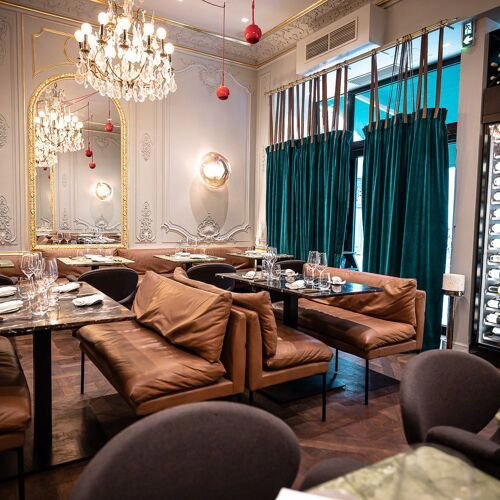
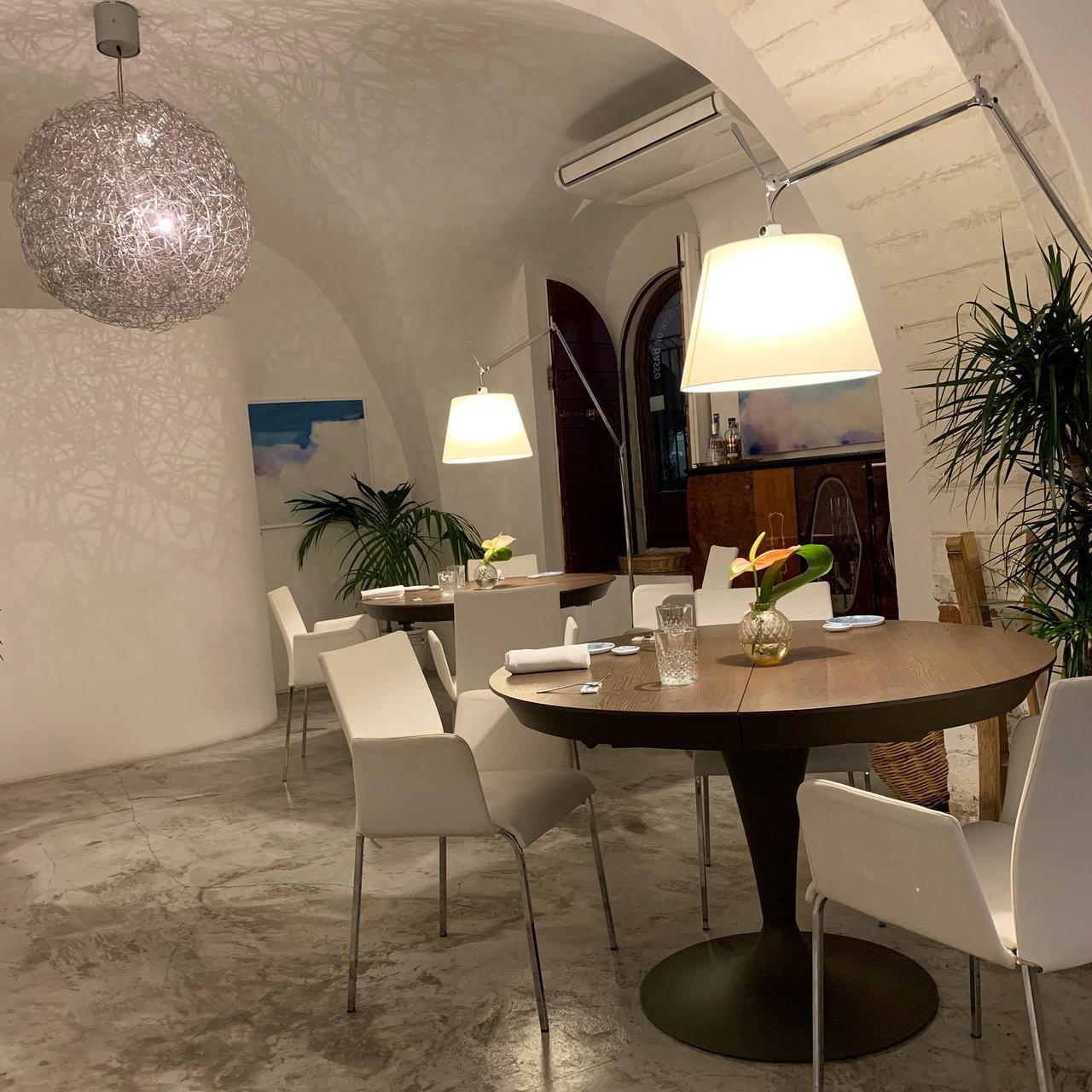
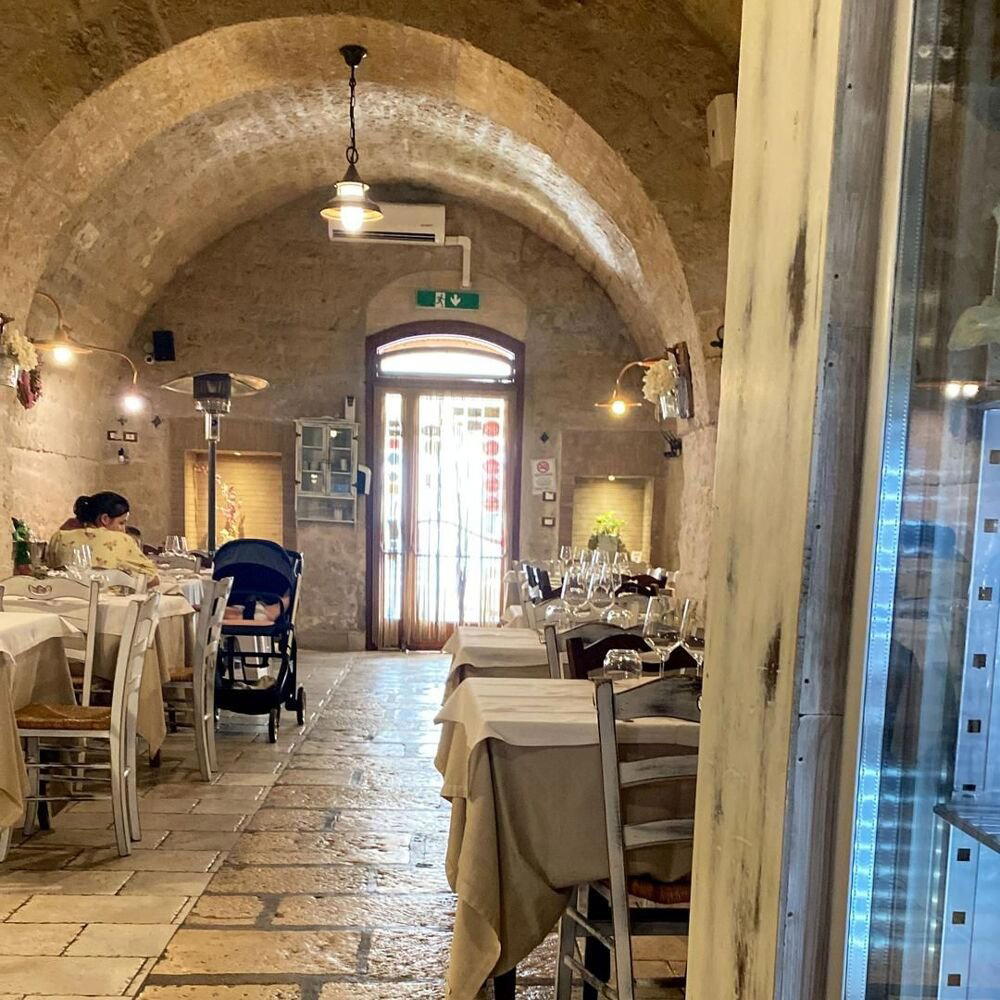
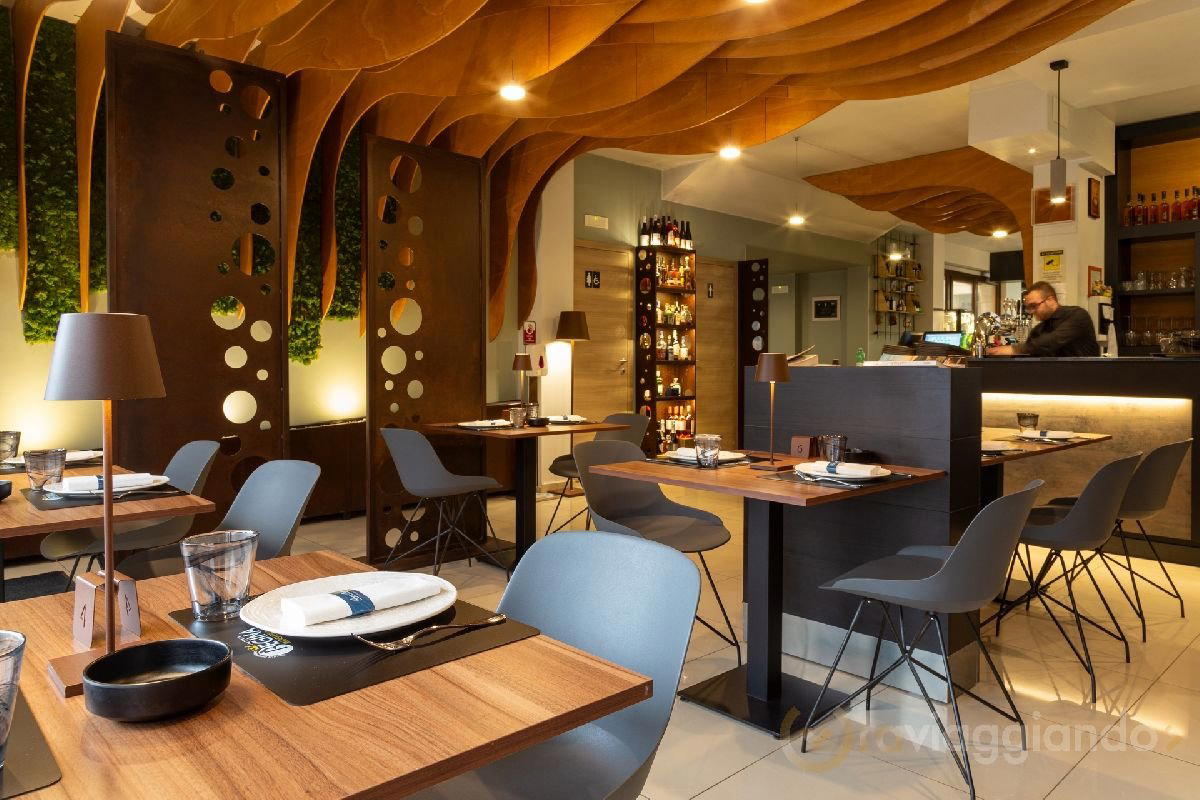
Al Dragone operates inside a natural cave on Via Duomo, steps from the cathedral in Vieste's old town. The physical setting is not decorative: these cave spaces in the historic quarter were carved from the limestone that defines the Gargano coast, and the walls absorb and reflect sound in ways that give the room an acoustic character no built interior can approximate. The temperature stays cooler than the street outside, relevant on an August evening in a town where the mercury sits well above thirty degrees. The atmosphere arrives without effort, which is both the advantage and the obligation: the food has to earn its place in a room that already does considerable work.
Two Michelin Plates and What That Signals
Michelin awarded Al Dragone a Plate in both 2024 and 2025. The Plate designation sits below the star tier but above the anonymous Guide listing: it signals food worth a stop, prepared with care, without claiming the creative ambition or technical precision that star kitchens are assessed against. In the context of Vieste, a coastal resort town with strong seasonal demand, consecutive Plate recognition positions Al Dragone at the upper end of the local market without placing it in the same conversation as Puglia's fine-dining tier. That tier includes Casa Sgarra in Trani and Pashà in Conversano, both of which operate at significantly higher price points and with different creative ambitions. Al Dragone's value is elsewhere: it occupies the space where traditional sourcing and honest execution meet, and the Michelin endorsement confirms the kitchen is doing something more considered than the tourist-facing restaurants that dominate much of Vieste's seafront.
For reference, the gap between Plate and star kitchens in Italy is substantial. Italy hosts some of the most decorated tables in Europe: Osteria Francescana in Modena, Dal Pescatore in Runate, and Enoteca Pinchiorri in Florence represent the country's three-star cohort, operating at €€€€ price points with creative and technical programmes that operate in a different register entirely. Al Dragone at €€ sits at the opposite end of that spectrum, not competing with Le Calandre or Enrico Bartolini, but doing something genuinely distinct: grounding recognisable Apulian flavours in a specific place, at a price that makes a second visit plausible.
The Ingredient Logic of Southern Apulian Cooking
Apulian cuisine is among the most ingredient-transparent in Italy. The cooking tradition here resists the reduction sauces and cream-heavy preparations found further north; what arrives on the plate is recognisably what was pulled from the water or picked from the tree. Almonds are a structural ingredient in the Gargano kitchen, used in crusts, sauces, and as finishing texture, which makes the kitchen's scampi in almond crust a dish that reads as a natural regional statement rather than a creative flourish. Scampi from the southern Adriatic are fished at relatively close range, and the almond orchards on the Gargano interior have been cultivated since at least the medieval period. The dish is, in that sense, a local product twice over.
This ingredient logic is worth understanding as a framing device for the whole menu. Apulian food does not usually ask you to decode technique or identify obscure references. It asks you to assess the quality of sourcing and the care of execution. By that measure, a kitchen earning consecutive Michelin Plate recognition over two years is making a consistent argument about both. For Puglia's wider ingredient-focused dining tradition, you can also look to Reale in Castel di Sangro and Piazza Duomo in Alba for how Italian regional kitchens engage source material at the highest level, or Uliassi in Senigallia and Quattro Passi in Marina del Cantone for how Adriatic and southern Italian coastal kitchens handle similar raw material at the starred tier. Atelier Moessmer Norbert Niederkofler in Brunico and Casa Perbellini 12 Apostoli in Verona extend the comparison to northern Italy's approach to place-specific sourcing.
Planning a Visit
Al Dragone is located on Via Duomo, 8, in the old town of Vieste, placing it within the historic quarter that most visitors to the Gargano pass through at some point. Vieste draws substantial summer traffic from late June through August, which means any restaurant with Michelin recognition and a distinctive physical space will see strong demand in peak season. Booking ahead in summer is the practical default; the shoulder months of May, early June, and September typically offer more availability and cooler dining conditions inside the cave. The €€ price range makes it accessible relative to the quality signal the awards provide, and it sits comfortably within the range of what a direct two-course dinner with house wine costs across comparable Apulian towns. For the wider picture of where to stay and what else to do in Vieste, our Vieste hotels guide, our bars guide, our wineries guide, and our experiences guide cover the town's full offer across categories.
Frequently asked questions
What price level is Al Dragone?
Pricing at Al Dragone is listed as €€.
At-a-Glance Comparison
| Venue | Cuisine | Price | Awards | Notes |
|---|---|---|---|---|
| Al DragoneThis venue — the venue you are viewing | Modern Apulian Seafood | $50–100 | Michelin Plate | Not listed |
| Atelier Moessmer Norbert Niederkofler | Italian, Creative | Not listed | Michelin 3 Star | Not listed |
| Dal Pescatore | Italian, Italian Contemporary | Not listed | Michelin 3 Star | Not listed |
| Enoteca Pinchiorri | Contemporary Italian Fine Dining | $200–300 | 3 Michelin Stars · World's 50 Best #32 | Italian - French, Italian Contemporary |
| Enrico Bartolini | Creative | Not listed | Michelin 3 Star | Not listed |
| Osteria Francescana | Avant-Garde Italian Contemporary | $300–500 | 3 Michelin Stars · World's 50 Best #1 | Progressive Italian, Creative |
Recognition history
Dated appearances from independent guides and award organizations, with the underlying list record or original source where available.
Michelin Plate
Michelin
Full recognition history (3 entries)
Michelin Plate
Michelin
Michelin Plate
Michelin
Continue exploring
More in Vieste

Details
- Romantic
- Intimate
- Rustic
- Elegant
- Date Night
- Special Occasion
- Historic Building
- Extensive Wine List
- Local Sourcing
- A La Carte
- Vegetarian Friendly
- Gluten Free Options
Magical and refined cave atmosphere with tranquil, private seating and dim, enchanting lighting.