
Tabelog 100 #73
Our verdict
Aji Kawa puts Miyazaki’s yakitori culture in a compact, serious frame: local drinking food treated with the discipline that earns repeat Tabelog 100 Yakitori WEST recognition. The draw is not spectacle, but sourcing logic, charcoal timing, and a room built for people who understand that chicken skewers in Kyushu belong as much to shochu culture as to dinner.

Pearl is the En Primeur Club membership app — saves, bookings, and concierge access live there. Same editors, same standards.
- Address
- 2 Chome-7-13 Tachibanadorinishi, Miyazaki, 880-0001, Japan
- Phone
- +81 985-28-2802
- Hours
- Mon ClosedTue–Sat 5–9 PMSun Closed
- Website
- tabelog.com
- Directions
- Get directions
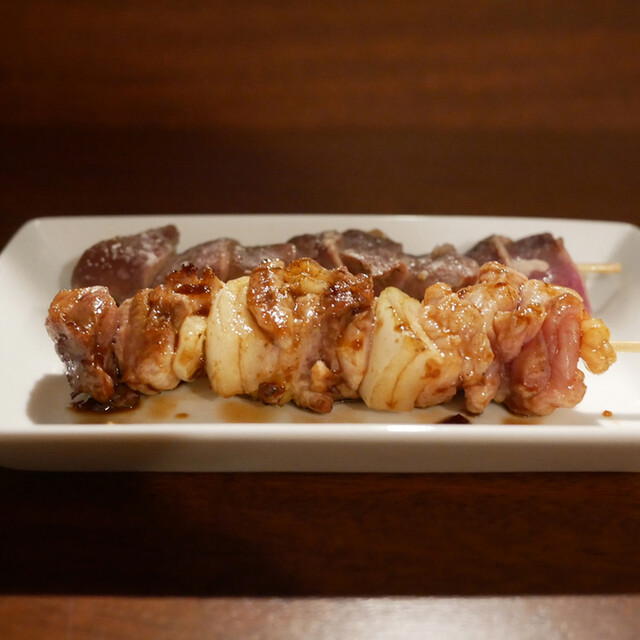
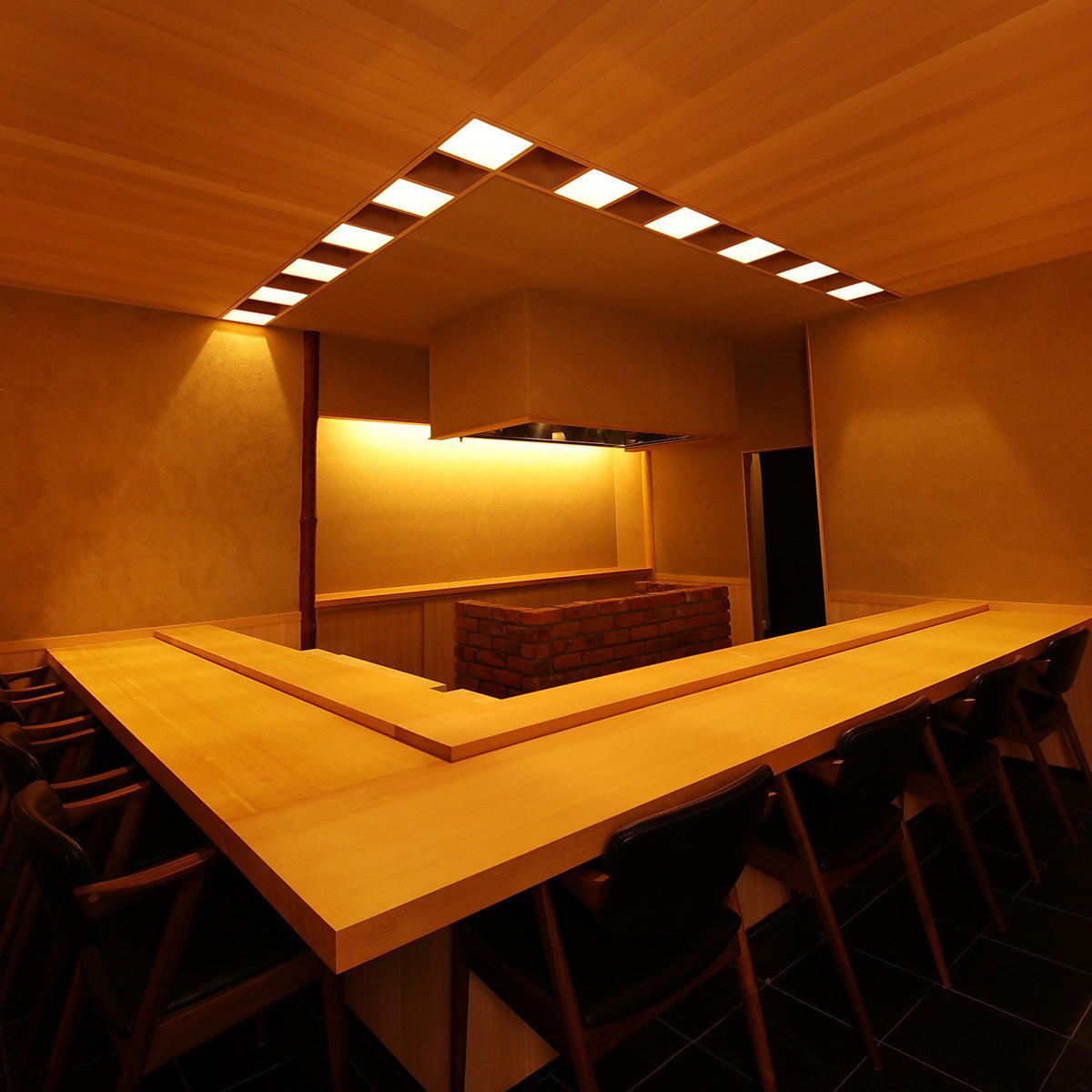
The room reads before the menu does: a small Miyazaki yakitori counter where smoke, heat, and close-range timing carry the evening. In Kyushu, grilled chicken is not a side note to drinking culture; it is one of the clearest ways a region shows its agricultural habits, its relationship with charcoal, and its preference for directness over ceremony. Aji Kawa belongs to that grammar. Its repeated selection for Tabelog 100 Yakitori WEST, including 2025, places it in a serious western-Japan conversation rather than the casual izakaya bracket.
Yakitori in Miyazaki is a sourcing argument, not a luxury performance
Miyazaki’s food identity is often flattened into a few travel shorthand dishes, yet the prefecture’s poultry culture deserves closer attention. Yakitori here carries the logic of place: chicken as a local staple, shochu as the natural drinking partner, and grilling as a technique that rewards restraint. The craft is less about piling on novelty than choosing cuts carefully, seasoning with discipline, and letting charcoal do the work without turning dinner into theatre.
That context matters because Aji Kawa sits in a category where small differences decide the meal. At this level, a skewer house is judged by cut selection, heat control, pacing, and how well the drinks support the grill. The listed drinks lean toward sake and shochu, a pairing pattern that makes sense in Miyazaki, where sweet potato shochu is part of the local table rather than an afterthought. For diners comparing the city’s genres, the contrast is sharp: Aji no Ogura Honten represents the chicken nanban conversation, GRILL Ranman points toward yoshoku comfort, and Aji Kawa works in the narrower register of smoke, poultry, and repeated passes over fire.
The recognition also says something useful. Tabelog’s Hyakumeiten lists are not Michelin-style star systems; they function more like a public signal of category depth. A yakitori selection in the WEST list puts a restaurant into a regional field that includes Kansai, Chugoku, Shikoku, and Kyushu, where grilling traditions vary by chicken breed, seasoning preference, and drinking habits. In that field, a Miyazaki address has to compete beyond local affection.
A compact counter changes the rhythm of the meal
Small yakitori rooms have a built-in advantage: less distance between grill and guest, fewer dead moments between skewers, and a clearer sense of whether the kitchen is controlling heat or reacting to it. Aji Kawa’s format keeps the focus close. This is not the kind of Miyazaki dinner built around broad menu browsing; it is a place where the sequence, the grill, and the glass matter more than a long catalogue of choices.
That intimacy also shapes who should go. The fit is strongest for diners who care about yakitori as a craft category, not simply as casual skewers before a second stop. It is less suited to anyone looking for a broad vegetarian meal, a private-room business dinner, or a polished hotel-restaurant setting. Compared with Miyazaki peers in different price and format lanes, such as Chinese Sen (Chinese), GIGLI, Fujiyama Pudding Miyazaki, Ranpu Tei, Soba Tokoro Shimizu, Tenichi, Nomi no Ichi, and Oak, the appeal is narrower and more exacting. That narrowness is the point.
There is a useful lesson here for travelers moving through Kyushu: regional dining does not always announce itself through luxury markers. In Miyazaki, the more revealing meal may be a counter built around chicken, charcoal, and shochu rather than a formal tasting menu. The city’s dining culture rewards those who read categories carefully. A yakitori house with sustained Hyakumeiten recognition is not merely a dinner option; it is evidence that local ingredients and local drinking habits can hold their own in a broader Japanese ranking system.
How to place it within a Miyazaki itinerary
Aji Kawa works well as the anchor of a food-focused evening rather than a quick add-on between attractions. The surrounding Tachibanadorinishi area places it within central Miyazaki’s dining orbit, where independent restaurants and drinking rooms carry more character than the city’s larger commercial spaces.
Travelers building a Japan-wide food map can read Aji Kawa against other small-format regional specialists: -Grilled beef Sukiyaki- KAMAKURA TANUKIAN 鎌倉 たぬき庵 in Kamakura for beef-focused tradition. 鮪と炭火焼き うお炭 秋葉原店 in Tokyo for charcoal cooking in a capital-city register.cafe in Osaka for a different urban casual format.know in Kumamoto for another Kyushu lens, (Shoku) Vietnam in Kawasaki for immigrant cooking in a Japanese city, [Curry Senmon Ten] Maruyama Kyoju. in Sapporo for specialty curry culture, Jōdo Saké Bar in Los Angeles for sake-led Japanese dining abroad, and Onigiri Time in Pasadena for a compact rice-focused format.
The editorial case is clear: choose Aji Kawa when the purpose is to understand Miyazaki through poultry, charcoal, and local drinking culture. The restaurant’s value lies in category precision. It narrows the evening to a few variables, then lets ingredient quality and grill work carry the argument.
Frequently asked questions
When can I go to Aji Kawa?
Hours at Aji Kawa: Mon: Closed; Tue: 5–9 PM; Wed: 5–9 PM; Thu: 5–9 PM; Fri: 5–9 PM; Sat: 5–9 PM; Sun: Closed.
Is Aji Kawa expensive?
Pricing at Aji Kawa is listed as JPY 4,000 - JPY 4,999 View spending breakdown.
Where is Aji Kawa located?
Aji Kawa is located in Miyazaki.
What is Aji Kawa known for?
Aji Kawa is known for yakitori and for being selected in Tabelog 100 Yakitori WEST 2025 in Miyazaki. The room is compact, with 10 seats, and dinner runs Tuesday through Saturday.
Is Aji Kawa good for vegetarians?
It is not a strong fit for vegetarians. The listed cuisine is yakitori (grilled chicken skewers), and the drinks list focuses on sake and shochu, so the menu centers on poultry.
Comparison Snapshot
Nearby venues at a similar price tier for orientation.
| Venue | Cuisine | Price | Awards | Notes |
|---|---|---|---|---|
| Aji KawaThis venue — the venue you are viewing | Traditional Yakitori Counter | $30–50 | Tabelog 100 #73 | Not listed |
| Soba ya Tesshin | Japanese Soba | $20–30 | Tabelog 100 #40 | Tachibanadori Higashi |
| Ramen Man | Miyazaki-style Ramen Shop | $1–10 | Tabelog 100 #87 | Miyazaki |
| かつれつ軒 | Japanese Tonkatsu | $1–10 | Not listed | 神宮 |
| Aji no Ogura Honten | Japanese-style Western Cuisine (Yoshoku) | $10–20 | Tabelog 100 #96 | Miyazaki Station area |
| イワナガ食堂 | Yoshoku (Japanese-Style Western Cuisine) | $100–150 | Tabelog 100 #67 | Tachibanadōri Higashi |
Recognition history
Dated appearances from independent guides and award organizations, with the underlying list record or original source where available.
Tabelog 100 #73 · No. 73
Tabelog · Tabelog 100 - Yakitori - WEST - 2025
Continue exploring
More in Miyazaki
Details
- Intimate
- Cozy
- Casual Hangout
- After Work
- Group Dining
- Solo
- Private Event
- Chefs Counter
- Standalone
- Sake Program
- A La Carte
- Counter Dining
- Small Plates
- Sake
- Shochu
Current opening hours
- Monday
- Closed
- Tuesday
- 5–9 PM
- Wednesday
- 5–9 PM
- Thursday
- 5–9 PM
- Friday
- 5–9 PM
- Saturday
- 5–9 PM
- Sunday
- Closed
Hours can change for holidays and private events. Last verified .