Our verdict
Ljubljana's À La Carte Tradition and Where This Address Fits Slovenia's capital has spent the better part of the last decade recalibrating its restaurant identity. The country's fine-dining reputation was built largely outside Ljubljana — at places like Hiša Franko in Kobarid and Hiša Linhart in Radovljica — where chefs working in smaller towns found the freedom and the produce networks to build something distinctive. The capital has caught up, and the format split that now defines Ljubljana dining mirrors a broader European pattern: tasting menus on one side, à la carte houses on the other, each serving a different appetite. The à la carte format carries its own logic in a city like Ljubljana, where the old town's compressed geography means most serious restaurants sit within a short walk of one another. Guests who want to eat across multiple evenings, or who are sharing a table with varied appetites, find the free-choice model more accommodating than a locked progression. The ground-floor room on Krojaska ulica, set back from the street in the building's rear section, fits this rhythm: a space that invites you to arrive with a preference rather than a surrender. Ingredient Sourcing and the Slovenian Produce Network Any serious conversation about Ljubljana restaurants eventually arrives at ingredients. Slovenia's position at the intersection of Alpine, Mediterranean, and Pannonian agricultural zones gives its chefs access to a produce range that few comparably sized countries can match. The Julian Alps supply lamb, game, and dairy with the kind of altitude-driven intensity that lowland farming cannot replicate. The Vipava Valley, where Gostilna Pri Lojzetu has long anchored its cooking, produces stone fruit, olive oil, and wine under a microclimate that reads more Adriatic than Central European. The Karst plateau contributes its own cured meats and aged cheeses, while the short stretch of Slovenian coastline near Piran delivers seafood that arrives at Ljubljana kitchens within hours. This geography has trained Ljubljana diners to read menus as sourcing documents. A dish that names its region or producer signals kitchen intent in a way that generic descriptions no longer can. Restaurants that engage this network seriously, building supplier relationships across multiple Slovenian zones rather than defaulting to wholesale commodity channels, occupy a different tier of credibility in the city's dining conversation. The à la carte format suits this approach well: individual dishes can carry their sourcing story more directly than a tasting menu, where the arc of the progression sometimes subordinates individual ingredient detail to overall narrative. Slovenian kitchens drawing on this produce tradition sit in a broader regional conversation alongside Croatian, Austrian, and northeastern Italian counterparts. The distinction is less about technique and more about specificity: which valley, which season, which farm. Venues like Altrokè, which foregrounds regional cuisine as its organising principle, and AFTR, which takes a more contemporary approach within Ljubljana's mid-tier, each make different choices about how visibly to carry that sourcing identity. The Old Town Setting and What It Implies Krojaska ulica sits inside Ljubljana's old town, the pedestrianised core that runs along the eastern bank of the Ljubljanica river. The address, ground floor, in the back, describes a spatial type common to the district: buildings whose street frontage gives little away, with the dining room itself occupying a quieter, more interior position. This is not unusual in a neighbourhood where 18th and 19th century building stock was never designed around restaurant visibility. The spatial arrangement tends to filter out passing trade and concentrate the room toward guests who arrived with purpose. Old town Ljubljana has enough restaurant density that the competitive set is immediate and legible. Restavracija Strelec, operating from within Ljubljana Castle with a modern cuisine format at the €€€ tier, represents the area's most architecturally theatrical option. Allegria occupies a different register, while Abi Falafel anchors the casual end of the district's eating options. An à la carte room in this part of the city operates between those poles, competing less on spectacle and more on what arrives at the table. How Ljubljana Compares to the Wider Slovenian Scene For visitors spending time in the capital before moving into the countryside, understanding where Ljubljana restaurants sit relative to their rural counterparts matters. The country's most decorated addresses have consistently been outside the city: Hiša Denk in Zgornja Kungota, Milka in Kranjska Gora, Dam in Nova Gorica, Grič in Šentjošt nad Horjulom, and Pavus in Lasko each represent the dispersed model of Slovenian fine dining, where proximity to primary producers and lower operating costs allow for a certain kind of ambition that capital-city rents complicate. Gredič in Brda layers wine-region identity onto that equation. Ljubljana's contribution to the national scene is different: density, accessibility, and the infrastructure of a city with consistent international visitor traffic. Restaurants here serve a more varied audience than their rural counterparts, which shapes menu design in visible ways. The à la carte model is particularly well suited to that context, allowing a kitchen to hold multiple registers simultaneously, lighter dishes for guests eating early, more committed plates for those arriving later with appetite and time. For international reference points, the shift toward ingredient transparency and sourcing specificity visible in Ljubljana echoes what happened at addresses like Lazy Bear in San Francisco, where provenance became a structural element of the menu rather than a footnote, or the long-standing rigour around product quality at Le Bernardin in New York City. The scale and context differ enormously, but the underlying argument, that the ingredient's origin is part of what you're paying for, translates across formats and geographies. Planning Your Visit The address is Krojaska ulica 6-8 in Ljubljana's old town, on the ground floor at the rear of the building. The old town is pedestrianised, so arriving on foot from the city centre or from the riverbank is the practical approach; the nearest parking is outside the pedestrian zone. Ljubljana's old town restaurants operate in a competitive booking environment during summer months and around major events, so confirming availability before arriving is advisable. For a broader view of what the city's dining scene currently offers, the full Ljubljana restaurants guide maps the range from casual to formal across multiple neighbourhoods. Those exploring the wider Slovenian scene beyond the capital will also find value in Baščaršija in Maribor, which represents a different regional tradition at Slovenia's second city. Frequently Asked Questions Is À la carte restaurant okay with children?Ljubljana's old town restaurants generally accommodate families, and an à la carte format, where dishes can be ordered selectively, suits mixed-appetite tables better than a fixed tasting menu. That said, this is a sit-down dining room rather than a casual café, so the usual expectations around behaviour apply.What kind of setting is À la carte restaurant?The room occupies the ground floor of a building on Krojaska ulica in Ljubljana's old town, set back from the street in a quieter rear position. In a city where the dining tier runs from casual riverbank spots through mid-range options like Allegria up to the €€€ end represented by Restavracija Strelec, this address occupies a neighbourhood-restaurant register suited to unhurried dining.What should I order at À la carte restaurant? Dishes built around Karst, Vipava Valley, or Julian Alps ingredients typically reflect the kitchen's strongest supply relationships and are worth prioritising over any imported alternatives on the menu.Can I walk in to À la carte restaurant?Walk-ins are more viable here than at Ljubljana's tasting-menu counters, but summer evenings in the old town fill quickly across all formats. Arriving early, before 7pm on weekday evenings, improves your odds considerably. For weekend dinners, a booking made earlier in the week is the lower-risk approach in a neighbourhood with this level of foot traffic.What is À la carte restaurant known for?The address is positioned within Ljubljana's old town dining cluster, where the à la carte format itself is the primary distinction from the city's more structured tasting-menu options. In a Slovenian dining scene that has earned international attention through places like Hiša Franko, an accessible old-town room operating on a free-choice model fills a practical gap for guests who want quality without a fixed progression.How does dining on Krojaska ulica compare to other Ljubljana old town streets for an evening meal?Krojaska ulica runs through the heart of the pedestrianised old town, which means it shares foot traffic and atmosphere with the Ljubljanica riverbank promenade while sitting slightly removed from the busiest tourist circuits. Restaurants on this street tend to attract a more local-weighted clientele than those directly on the river, which in Ljubljana, as in most Central European capitals, correlates loosely with kitchen seriousness and value. For visitors building a multi-night eating plan across the city, pairing an old-town à la carte dinner here with a more ambitious tasting-format evening at a venue like Restavracija Strelec covers the city's two dominant registers efficiently.

Pearl is the En Primeur Club membership app — saves, bookings, and concierge access live there. Same editors, same standards.
- Address
- Krojaska ulica, 6-8, Ljubljana si-1000, Slovenia (ground floor, in the back)
- Phone
- +386 1 200 9000
- Directions
- Get directions
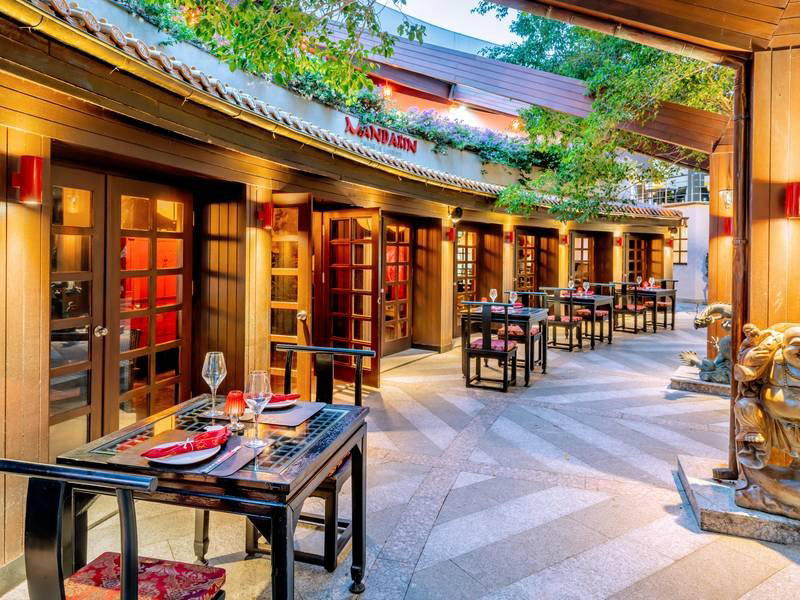
Ljubljana's À La Carte Tradition and Where This Address Fits
Slovenia's capital has spent the better part of the last decade recalibrating its restaurant identity. The country's fine-dining reputation was built largely outside Ljubljana — at places like Hiša Franko in Kobarid and Hiša Linhart in Radovljica — where chefs working in smaller towns found the freedom and the produce networks to build something distinctive. The capital has caught up, and the format split that now defines Ljubljana dining mirrors a broader European pattern: tasting menus on one side, à la carte houses on the other, each serving a different appetite.
The à la carte format carries its own logic in a city like Ljubljana, where the old town's compressed geography means most serious restaurants sit within a short walk of one another. Guests who want to eat across multiple evenings, or who are sharing a table with varied appetites, find the free-choice model more accommodating than a locked progression. The ground-floor room on Krojaska ulica, set back from the street in the building's rear section, fits this rhythm: a space that invites you to arrive with a preference rather than a surrender.
Ingredient Sourcing and the Slovenian Produce Network
Any serious conversation about Ljubljana restaurants eventually arrives at ingredients. Slovenia's position at the intersection of Alpine, Mediterranean, and Pannonian agricultural zones gives its chefs access to a produce range that few comparably sized countries can match. The Julian Alps supply lamb, game, and dairy with the kind of altitude-driven intensity that lowland farming cannot replicate. The Vipava Valley, where Gostilna Pri Lojzetu has long anchored its cooking, produces stone fruit, olive oil, and wine under a microclimate that reads more Adriatic than Central European. The Karst plateau contributes its own cured meats and aged cheeses, while the short stretch of Slovenian coastline near Piran delivers seafood that arrives at Ljubljana kitchens within hours.
This geography has trained Ljubljana diners to read menus as sourcing documents. A dish that names its region or producer signals kitchen intent in a way that generic descriptions no longer can. Restaurants that engage this network seriously, building supplier relationships across multiple Slovenian zones rather than defaulting to wholesale commodity channels, occupy a different tier of credibility in the city's dining conversation. The à la carte format suits this approach well: individual dishes can carry their sourcing story more directly than a tasting menu, where the arc of the progression sometimes subordinates individual ingredient detail to overall narrative.
Slovenian kitchens drawing on this produce tradition sit in a broader regional conversation alongside Croatian, Austrian, and northeastern Italian counterparts. The distinction is less about technique and more about specificity: which valley, which season, which farm. Venues like Altrokè, which foregrounds regional cuisine as its organising principle, and AFTR, which takes a more contemporary approach within Ljubljana's mid-tier, each make different choices about how visibly to carry that sourcing identity.
The Old Town Setting and What It Implies
Krojaska ulica sits inside Ljubljana's old town, the pedestrianised core that runs along the eastern bank of the Ljubljanica river. The address, ground floor, in the back, describes a spatial type common to the district: buildings whose street frontage gives little away, with the dining room itself occupying a quieter, more interior position. This is not unusual in a neighbourhood where 18th and 19th century building stock was never designed around restaurant visibility. The spatial arrangement tends to filter out passing trade and concentrate the room toward guests who arrived with purpose.
Old town Ljubljana has enough restaurant density that the competitive set is immediate and legible. Restavracija Strelec, operating from within Ljubljana Castle with a modern cuisine format at the €€€ tier, represents the area's most architecturally theatrical option. Allegria occupies a different register, while Abi Falafel anchors the casual end of the district's eating options. An à la carte room in this part of the city operates between those poles, competing less on spectacle and more on what arrives at the table.
How Ljubljana Compares to the Wider Slovenian Scene
For visitors spending time in the capital before moving into the countryside, understanding where Ljubljana restaurants sit relative to their rural counterparts matters. The country's most decorated addresses have consistently been outside the city: Hiša Denk in Zgornja Kungota, Milka in Kranjska Gora, Dam in Nova Gorica, Grič in Šentjošt nad Horjulom, and Pavus in Lasko each represent the dispersed model of Slovenian fine dining, where proximity to primary producers and lower operating costs allow for a certain kind of ambition that capital-city rents complicate. Gredič in Brda layers wine-region identity onto that equation.
Ljubljana's contribution to the national scene is different: density, accessibility, and the infrastructure of a city with consistent international visitor traffic. Restaurants here serve a more varied audience than their rural counterparts, which shapes menu design in visible ways. The à la carte model is particularly well suited to that context, allowing a kitchen to hold multiple registers simultaneously, lighter dishes for guests eating early, more committed plates for those arriving later with appetite and time.
For international reference points, the shift toward ingredient transparency and sourcing specificity visible in Ljubljana echoes what happened at addresses like Lazy Bear in San Francisco, where provenance became a structural element of the menu rather than a footnote, or the long-standing rigour around product quality at Le Bernardin in New York City. The scale and context differ enormously, but the underlying argument, that the ingredient's origin is part of what you're paying for, translates across formats and geographies.
Planning Your Visit
The address is Krojaska ulica 6-8 in Ljubljana's old town, on the ground floor at the rear of the building. The old town is pedestrianised, so arriving on foot from the city centre or from the riverbank is the practical approach; the nearest parking is outside the pedestrian zone. Ljubljana's old town restaurants operate in a competitive booking environment during summer months and around major events, so confirming availability before arriving is advisable. For a broader view of what the city's dining scene currently offers, the full Ljubljana restaurants guide maps the range from casual to formal across multiple neighbourhoods. Those exploring the wider Slovenian scene beyond the capital will also find value in Baščaršija in Maribor, which represents a different regional tradition at Slovenia's second city.
Frequently asked questions
Is À la carte restaurant okay with children?
What kind of setting is À la carte restaurant?
What should I order at À la carte restaurant?
Can I walk in to À la carte restaurant?
What is À la carte restaurant known for?
How does dining on Krojaska ulica compare to other Ljubljana old town streets for an evening meal?
Continue exploring
More in Ljubljana
Restaurants in Ljubljana
Browse all →
Bars in Ljubljana
Browse all →
Hotels in Ljubljana
Browse all →
Wineries in Ljubljana
Browse all →
À la carte restaurant
The wine
- Wine program
- Curated wine list
- Extensive wine list
Details
- Elegant
- Sophisticated
- Cozy
- Business Dinner
- Special Occasion
- Hotel Restaurant
- Extensive Wine List
- Local Sourcing
- A La Carte
- Vegetarian Friendly
Pleasant surroundings with a tropical aquarium, refined and luxurious atmosphere honoring tradition.