9th Street Bistro

9th Street Bistro in Noblesville serves globally-inspired contemporary French bistro fare with a seasonal, chef-driven focus. Must-try dishes include House Rosemary Focaccia with olive oil, Mixed Olives with pimento cheese and whipped herb butter, and the Slow-Cooked Lamb Shank. The kitchen, led by Chef Samir Mohammad, makes nearly everything from scratch, bread, sauces, desserts, using local ingredients whenever practical. With just nine tables and four bar seats, the bistro offers an intimate, carefully paced fine dining experience noted for its rotating menus, eclectic wine list, craft cocktails, and consistently strong critical reception. Reservations are required via OpenTable for most evenings; expect a warm, personal welcome and dishes that are rich, layered, and precisely executed.
Pearl is the En Primeur Club membership app — saves, bookings, and concierge access live there. Same editors, same standards.
- Address
- 56 S 9th St, Noblesville, IN 46060
- Phone
- (317) 774-5065
- Website
- 9thstbistro.com
- Directions
- Get directions
 Saves & bookings on Pearl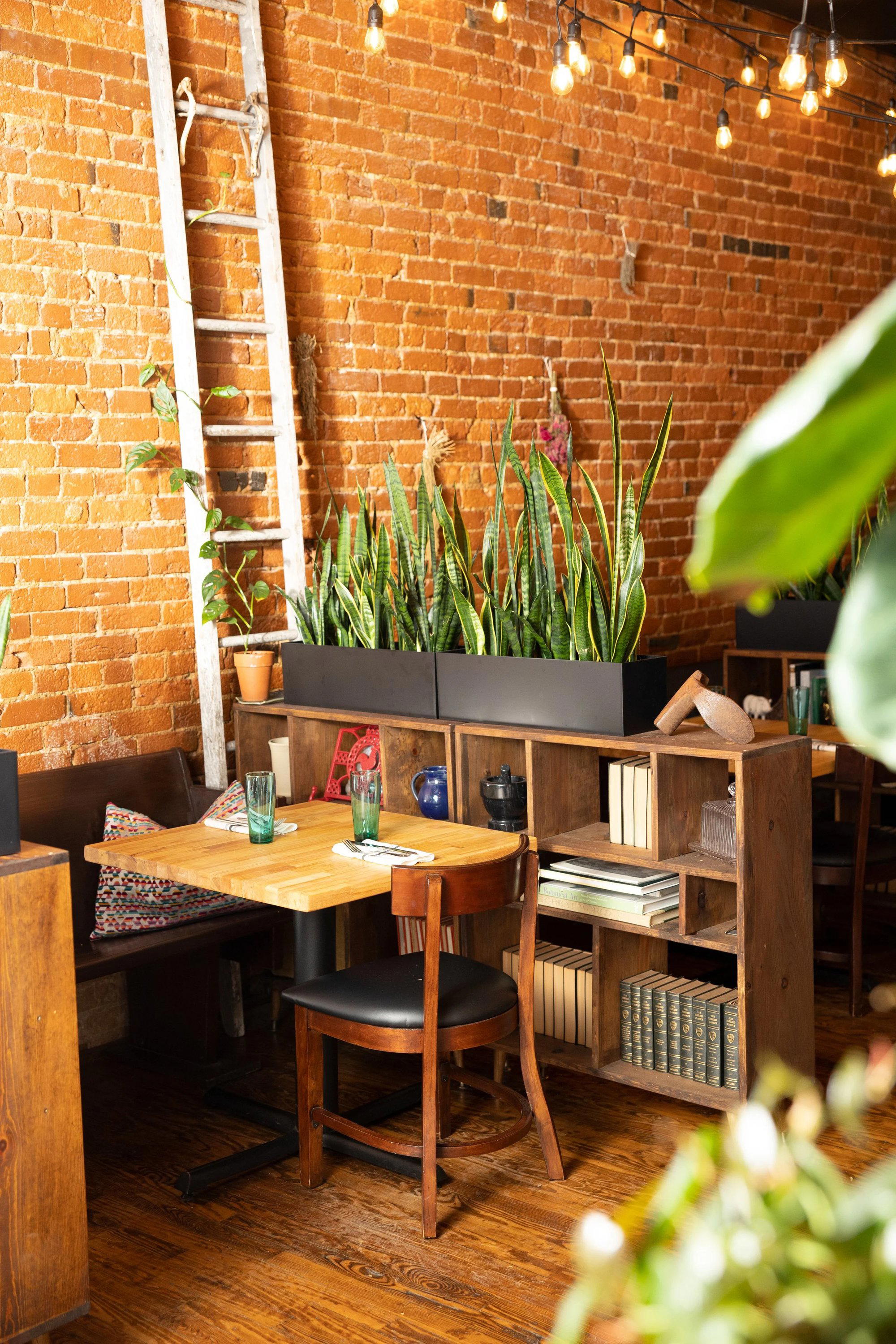
Globally-Inspired Cooking in Small-Town Indiana
Downtown Noblesville occupies a particular kind of American main street: brick storefronts, a courthouse square, and a dining scene that has been quietly diversifying over the past decade as suburban Indianapolis continues its northward pull. Against that backdrop, a bistro drawing on international reference points is less of an anomaly than it might first appear. The towns ringing Indianapolis have increasingly supported kitchens that reach beyond the region's meat-and-potatoes defaults, and 9th Street Bistro, at 56 S 9th St, sits in that emerging cohort.
The Ingredient Argument: Sourcing as Editorial Stance
The substantive claim a mid-market American bistro can make in 2024 is not about its menu format or its wine list. It is about where the food comes from. At 9th Street Bistro, the kitchen's stated framework centers on fresh, local ingredients used whenever practical, paired with scratch production across bread, sauces, and desserts. That combination positions the restaurant inside a broader national movement that has been running since roughly the early 2000s, when farm-to-table sourcing shifted from point of difference to baseline expectation at a certain tier of American dining.
What makes the scratch commitment meaningful is what it signals about kitchen labor and kitchen values. Restaurants that buy in bread, pre-made sauces, or finished desserts are typically managing food cost and staff capacity. Kitchens that produce those components internally are making a different calculation: that the gap in quality justifies the time. That gap is most visible in bread and desserts, where industrial production tends toward uniformity, and in sauces, where scratch reduction and seasoning produce a complexity that is difficult to replicate from a commercial base. Whether the execution delivers on that commitment is a question of consistency, but the structural intention is legible.
For comparison, one fully realized version of this sourcing-first argument in American fine dining appears at places like Blue Hill at Stone Barns in Tarrytown and Single Thread Farm in Healdsburg, where the supply chain is almost entirely controlled and the menu is built backward from harvest. Those operations represent the category ceiling. 9th Street Bistro operates in a different register, where local sourcing is a guiding principle within the constraints of a smaller market and a broader-access price point, rather than a tightly managed agricultural system. That is not a criticism; it is a category distinction.
The Global Inspiration Framework
The bistro's cooking draws from international travel reference points, which is a reasonable way to describe food that borrows technique and flavor from multiple culinary traditions without committing to any single one. This is a familiar approach in American casual dining: the globally-inflected menu allows a kitchen to rotate influences, respond to seasonal availability, and appeal to a broad audience without being pinned to a single national cuisine.
It is worth noting what the globally-inspired label does and does not promise. It does not imply the precision of a kitchen like Atomix in New York City, where Modern Korean cooking is executed at Michelin two-star level, or the controlled creativity of Alinea in Chicago, which has three Michelin stars and a specific progressive American identity. What it does promise is range, variety, and a kitchen that is not constrained by a single tradition's rules. In a market like Noblesville, that range is more likely to function as a draw than a liability.
The bistro framing is also a deliberate calibration. Bistro, in its French original, denotes a casual, affordable neighborhood restaurant. In American usage, it has drifted upmarket slightly, suggesting a step above casual American but well below fine dining. The term signals conviviality over ceremony, which tends to suit a broader diner demographic and a neighborhood that does not have the density of destination-dining traffic that would support a tasting-menu-only format.
Where Noblesville Fits in the Regional Picture
Indiana's dining infrastructure is more developed than its national profile suggests. Indianapolis has produced serious kitchens over the past fifteen years, and the northern suburbs have followed at a modest lag. Noblesville is not a food destination in the way that a traveler might route a trip through it specifically for a meal, but it functions well as a local anchor for the Hamilton County area. Restaurants at this level in secondary markets often outperform their competition precisely because expectations are calibrated lower and the bar for what constitutes a good meal is more achievable.
For visitors staying in the area, the full hospitality picture includes options beyond the restaurant. Our full Noblesville hotels guide covers accommodation options, and for after-dinner options, our full Noblesville bars guide maps the area's bar scene. For those spending more time in the region, our full Noblesville wineries guide and our full Noblesville experiences guide are also available.
For context at other price points and city contexts, American scratch-focused restaurants span a considerable range: Lazy Bear in San Francisco and The French Laundry in Napa represent the upper tier of American cooking, while venues like Emeril's in New Orleans, Providence in Los Angeles, Addison in San Diego, Le Bernardin in New York City, Albi in Washington, D.C., The Inn at Little Washington, and 8 1/2 Otto e Mezzo Bombana in Hong Kong illustrate how widely the category scales by city, format, and culinary tradition.
Planning a Visit
The restaurant is located at 56 S 9th St in Noblesville, Indiana, in the historic downtown core. Reservations are essential, and the restaurant is open Wednesday through Saturday from 4:30 to 9:30 PM.
Comparable Venues
Comparable venues nearby, for context on price, style, and recognition.
| Venue | Cuisine | Price | Notes |
|---|---|---|---|
| 9th Street BistroThis venue — the venue you are viewing | Globally-Inspired Gastropub | $$$ | Not listed |
| Casa Santa | Modern Mexican | $$$ | Noblesville |
| Houlihan's | American Bar & Grill | $$ | Hamilton Town Center |
| Stone Creek - Noblesville | Modern American Steakhouse & Seafood | $$$ | Town Center |
| Livery Noblesville | Latin-Inspired Tapas | $$ | Hamilton Town Center |
| Late Harvest Kitchen | Seasonal Contemporary American | $$$ | Keystone At the Crossing |
Recognition history
Dated appearances from independent guides and award organizations, with the underlying list record or original source where available.
OpenTable Top 100 Restaurants
OpenTable
Continue exploring
More in Noblesville
Restaurants in Noblesville
Browse all →
Bars in Noblesville
Browse all →
At a Glance
- Cozy
- Intimate
- Elegant
- Date Night
- Special Occasion
- Business Dinner
- Open Kitchen
- Craft Cocktails
- Local Sourcing
- Farm To Table
Current opening hours
- Monday
- Closed
- Tuesday
- Closed
- Wednesday
- 4:30–9:30 PM
- Thursday
- 4:30–9:30 PM
- Friday
- 4:30–9:30 PM
- Saturday
- 4:30–9:30 PM
- Sunday
- Closed
Hours can change for holidays and private events. Last verified .
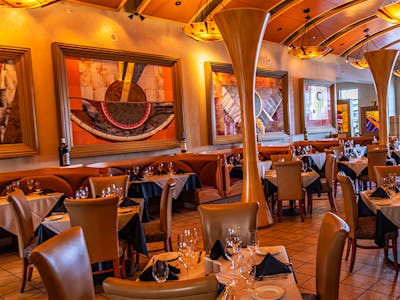
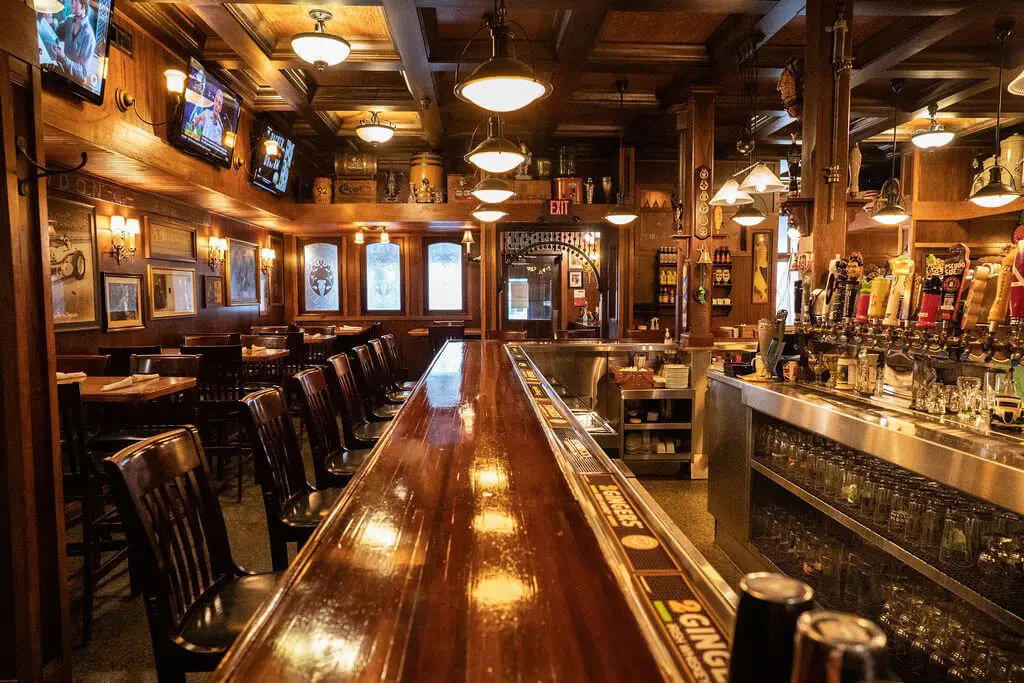
Cozy and intimate with exposed brick, original hardwood floors, vintage bookcases, and warm lighting creating a welcoming, trendy atmosphere.