非吃布蛤
Our verdict
Su Ao Township sits on Taiwan's northeast coast where cold Kuroshio currents push exceptionally fresh seafood ashore daily. 非吃布蛤 plants itself squarely in that local supply chain, drawing on the hard clams and shellfish that have defined this fishing port's table for generations. For visitors tracing Taiwan's coastal eating traditions beyond the capital, Su Ao offers a counterpoint to Taipei's fine-dining circuit.

Pearl is the En Primeur Club membership app — saves, bookings, and concierge access live there. Same editors, same standards.
- Address
- Su-ao Township, 27092
- Directions
- Get directions
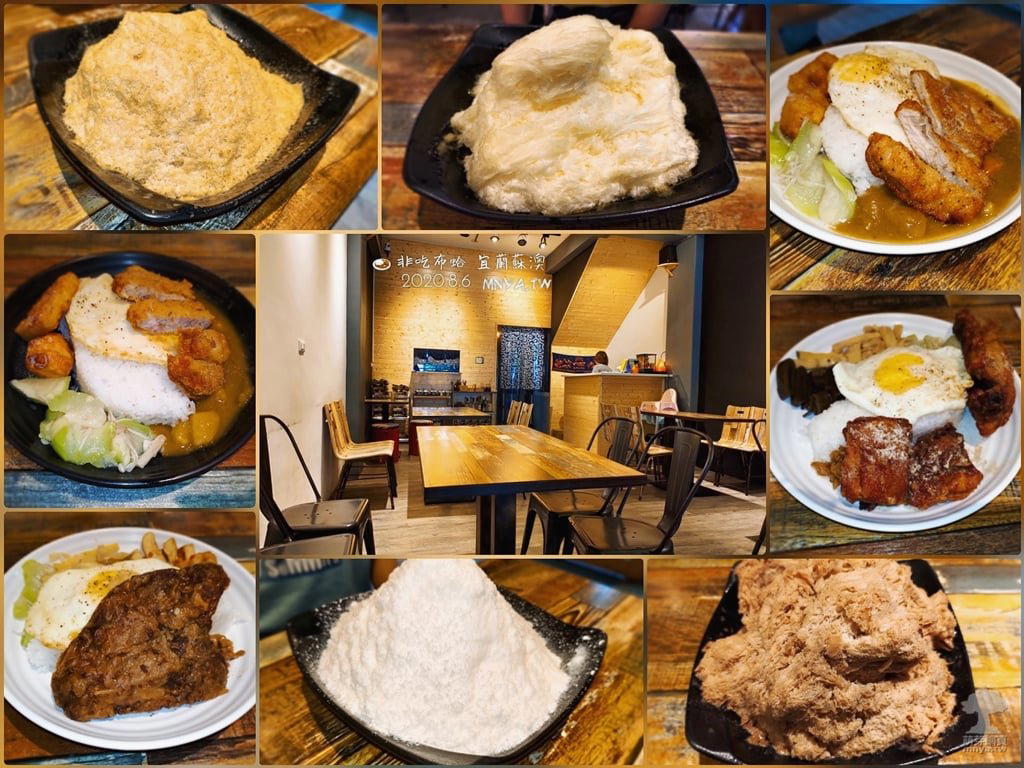
The menu
What to order
- 咖哩豬排飯
- 咖哩雞排飯
Where the Cold Current Sets the Menu
Su Ao Township occupies a particular position on Taiwan's culinary map that its northern neighbours rarely match. The town sits at a point where cold Kuroshio upwelling currents meet the warmer coastal shelf, producing water conditions that marine biologists associate with faster-growing, denser-flavoured bivalves. That hydrological fact is not incidental to what ends up on plates here — it is the reason a place like 非吃布蛤 exists at all. The name itself is a phonetic play on the Taiwanese dialect phrase for hard clam (布蛤, bù-gé), signalling immediately that this is an ingredient-driven address, not a broad-menu restaurant trying to please everyone.
Along Taiwan's northeast coast, the hard clam has long occupied the same cultural position that oysters hold in Brittany or soft-shell crabs in the Chesapeake: a hyperlocal product tied to a specific geography, harvested by families who have worked the same tidal flats across generations. Su Ao's fishing harbour reinforces that identity. The morning catch arrives at the docks before most of Taipei is awake, and the shellfish moving from boat to kitchen within hours represents a supply chain that premium coastal restaurants elsewhere spend considerable effort and money trying to replicate. Here, proximity does the work.
Su Ao's Place in Taiwan's Wider Seafood Circuit
Taiwan's most-discussed restaurant addresses tend to cluster in Taipei, Taichung, and Tainan — cities where international press, Michelin inspectors, and the country's food media concentrate their attention. Venues like logy in Taipei and JL Studio in Taichung operate in a tier defined by tasting menus, international technique, and documented award histories. Su Ao sits outside that circuit, which is precisely what makes eating here feel different.
The township's dining character is shaped by proximity to source rather than proximity to critics. That pattern appears across Taiwan's coastal townships: in Chenggong on the east coast, where Chenggong Douhua anchors a local food culture built around hyper-fresh ingredients rather than refined technique, and further south in Tainan, where A Xia brings a more formal lens to traditional Taiwanese ingredients. Non-metropolitan food towns in Taiwan share a common logic: the shorter the distance between harvest and plate, the less intervention the food requires.
For visitors exploring our full Su Ao Township restaurants guide, 非吃布蛤 reads as representative of that ethos rather than an outlier within it. It is worth cross-referencing with the range of approaches on Taiwan's dining spectrum, from the neighbourhood-rooted cooking at Golden Formosa Taiwanese Cuisine in Taipei's Shilin district to the more produce-focused formats documented at GARDENh in Yonghe District, to understand how far ingredient provenance can travel as an organising philosophy.
The Hard Clam as Culinary Argument
The hard clam's case as a serious ingredient extends beyond freshness. Taiwanese bù-gé are farmed and harvested under conditions that produce a shellfish with a distinct mineral quality, a function of the mineral-rich cold currents that pass through the Su Ao area. Comparable provenance arguments appear along other cold-water coastlines: the iron-tinged flavour profile of Galician barnacles, the glycogen-heavy sweetness of Hokkaido scallops harvested in winter. In each case, geography does something to the ingredient that technique cannot fully replicate.
At 非吃布蛤, the name's directness about its primary ingredient aligns with a broader trend in Taiwan's non-metropolitan food culture: restaurants that organise their identity around a single ingredient or technique rather than a broad cuisine category. That model appears in other Taiwanese townships, the pork bun focus at Ah Zhen Rou Bao in Lukang, or the tofu-centred menu at a comparable address in Hengshan, and it tends to produce cooking that is less diversified but more committed to executing one thing well.
That commitment has a practical implication for the diner: you arrive knowing what the kitchen has staked its reputation on. There is no diffusion of effort across a large, varied menu. The clam is the argument, and everything around it exists to support or contextualise it.
Getting There and Planning the Visit
Su Ao is accessible from Taipei by Taiwan Railways in approximately 90 to 100 minutes on the northern line heading toward Hualien, a practical connection that makes a same-day trip feasible without requiring an overnight stay, though the township's proximity to Su-hua Highway scenery and the cold spring pools at Su Ao Cold Spring makes a longer visit reasonable. The township is compact enough that the fishing harbour, cold spring area, and main eating streets are all within walking distance of the train station.
Su Ao's dining options are concentrated around the harbour area, and a visit to 非吃布蛤 fits naturally within a broader half-day or full-day circuit of the township's food and natural attractions. Travellers who appreciate Taiwan's range of coastal eating, from the port-town directness of Su Ao to the more composed presentations at GEN in Kaohsiung, will find the contrast instructive.
Frequently asked questions
Would 非吃布蛤 be comfortable with kids?
Su Ao Township's seafood spots are generally family-oriented, and a venue built around hard clams — a straightforward, crowd-friendly shellfish — fits that pattern. Nothing in the venue's profile suggests a formal or adults-only setting.
How would you describe the vibe at 非吃布蛤?
The name itself — which translates roughly to 'must eat clams' — signals a place with a single-minded focus rather than a broad, crowd-pleasing menu. Su Ao Township venues of this type tend toward the casual and no-frills, where the product quality does the heavy lifting. Expect a working-port atmosphere rather than a polished dining room.
Is Su Ao Township accessible as a day trip from Taipei for dining at 非吃布蛤?
Taiwan Railways connects Taipei to Su Ao in approximately 90 to 100 minutes on the northern line running toward Hualien, making a focused day trip practical. Su Ao Township itself is compact, so combining a meal at 非吃布蛤 with the town's cold spring facilities requires minimal logistics. The return journey on the same line keeps the itinerary clean without requiring an overnight stay in Yilan County.
What's the signature dish at 非吃布蛤?
The name 非吃布蛤 directly references the Taiwanese hard clam (bù-gé), making shellfish the clear centrepiece of the menu. Su Ao sits where cold Kuroshio current water meets the coastline, producing hard clams with a firmer texture and cleaner flavour than those farmed in warmer southern waters.
What part of town is 非吃布蛤 in?
非吃布蛤 is located at Su-ao Township, 27092, Su Ao Township.
Do they take walk-ins at 非吃布蛤?
No booking contact or reservation policy is documented for this Su Ao Township address. Venues of this format in Taiwan's coastal townships often operate on a walk-in basis, particularly outside peak summer and holiday weekends. Arriving early in a meal service is the practical approach until confirmed booking information is available.
What makes 非吃布蛤 worth seeking out?
Su Ao Township sits at a point where cold-current waters produce hard clams that differ measurably from shellfish harvested elsewhere on the island — firmer, with less of the muddy aftertaste common in warmer-water farming. Most of Taiwan's internationally covered seafood addresses are concentrated in Taipei and Tainan; Su Ao operates largely outside that circuit, which keeps the clientele local and the sourcing short. For anyone making the 90-to-100-minute train journey from Taipei toward Hualien, this is a purposeful stop rather than an accidental one.
Quick Comparison
| Venue | Cuisine | Price | Awards | Notes |
|---|---|---|---|---|
| 非吃布蛤This venue — the venue you are viewing | Taiwanese Curry Rice and Snacks | Not listed | Not listed | Not listed |
| JL Studio | Modern Singaporean Cuisine | $100–150 | 3 Michelin Stars · World's 50 Best #50 | Modern Singaporean, Singaporean |
| logy | Modern Japanese-Taiwanese Fusion Omakase | $100–150 | 2 Michelin Stars · World's 50 Best #22 | Modern European, Asian Contemporary |
| Le Palais | Fine Dining Cantonese | $150–200 | 3 Michelin Stars · La Liste Top Restaurants | Cantonese |
| Taïrroir | Taiwanese-French Fusion Fine Dining | $150–200 | 3 Michelin Stars · La Liste Top Restaurants | Taiwanese/French, Taiwanese contemporary |
| Mudan Tempura | Michelin-Starred Tempura | Not listed | 2 Michelin Stars · La Liste Top Restaurants | Tempura |
Continue exploring
More in Su Ao Township
Restaurants in Su Ao Township
Browse all →
Hotels in Su Ao Township
Browse all →
Wineries in Su Ao Township
Browse all →
Details
- Cozy
- Casual Hangout
- A La Carte
Clean environment with air conditioning in summer and attractive decor.