On Changhua's historic Lukang strip, 阿振肉包 has built a following around the baozi tradition that the town helped define. Positioned against the neighbourhood's broader street-food offer, including noodle specialists like 王罔麵線糊 and the Vietnamese counter on Minzu Road, the shop occupies the local comfort-food tier rather than the destination-dining bracket, making it a reference point for anyone reading Lukang's food geography.
Pearl is the En Primeur Club membership app — saves, bookings, and concierge access live there. Same editors, same standards.
- Address
- 中山路71號, 鹿港鎮, Changhua 505
- Directions
- Get directions
 Saves & bookings on Pearl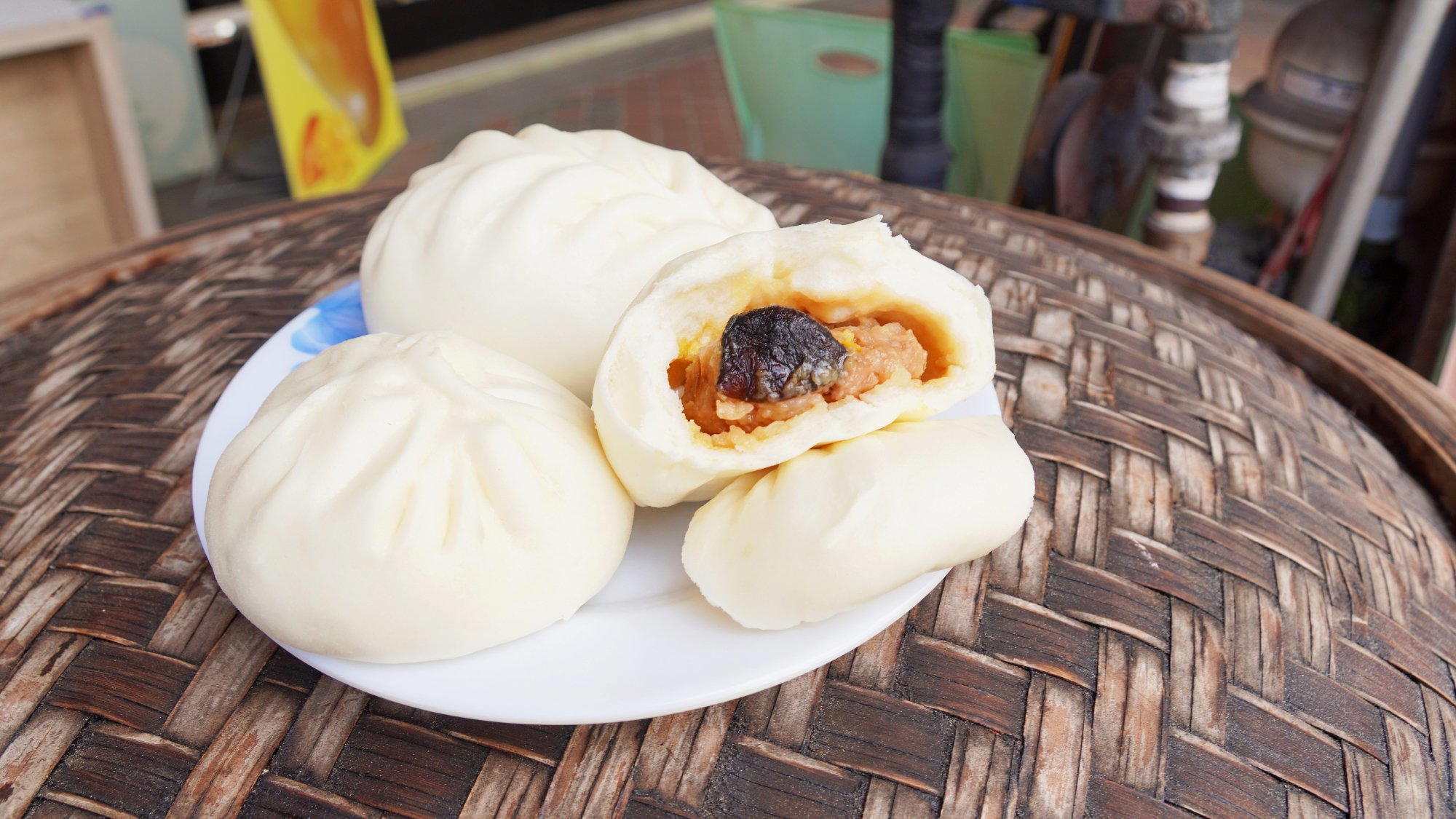
Lukang's Street-Food Grammar and Where Baozi Fits
Lukang is the kind of town that forces a recalibration. Forty minutes south of Taichung by road, it is among the stronger-preserved Qing-dynasty merchant towns on the island, and its food has evolved in a way that mirrors its architecture: dense, functional, and surprisingly old. The snack culture here is not a curated heritage project. It is continuous, working-class, and embedded in a street layout that predates the Republic. On Zhongshan Road, which runs through the commercial core of the old town, baozi shops, noodle counters, and braised-food stalls operate in close proximity, each claiming a slightly different part of the daily hunger schedule.
Within that street-food grammar, steamed buns sit in a specific position. They are not Lukang's most photographed food, that distinction goes to the oyster-heavy dishes and the candied winter melon slabs sold near the temple gates. But they are among the more routinely eaten. A good baozi counter in this town functions less as a destination and more as infrastructure: it is where people stop before work, after temple visits, or between errands. 阿振肉包, at 中山路71號, is a casual restaurant serving Traditional Taiwanese Steamed Buns in Lukang, Changhua, and it occupies exactly that position on Zhongshan Road, in the stretch of the street most trafficked by locals running ordinary lives rather than tourists with itineraries.
The Zhongshan Road Context
Zhongshan Road in Lukang is not a restaurant row in the contemporary sense. It does not have the kind of organized dining cluster you find in Taichung's West District or the planned night-market circuits of larger cities. What it has is accumulation: generations of small operators who have held the same addresses, sometimes the same recipes, across decades. The competitive set on this stretch is defined by longevity and regularity of custom rather than by critical recognition or social-media amplification. That means venues like 阿振肉包 are measured by how reliably they show up, how consistent the product is across hundreds of repeat visits, and whether locals choose them when they have no reason to be generous.
For comparison, the food geography of central Lukang places 阿振肉包 alongside spots like 王罔麵線糊, which anchors the noodle end of the local street-food spectrum, and 越南小吃 鹿港民族路, which reflects the newer immigrant-food layer that has quietly established itself across Taiwanese market towns. Each of these represents a different chapter in how Lukang eats, and the baozi counter contributes the chapter on fermented-dough staples that link modern street food back to the mainland Fujianese cooking traditions the town's merchant families carried over centuries ago. Elsewhere on the EP Club Taiwan map, you find different registers: JL Studio in Taichung operates in the fine-dining tier, while logy in Taipei represents the contemporary tasting-menu bracket. 阿振肉包 is several categories removed from both, and that distance is precisely the point.
What the Baozi Tradition Means in This Town
The steamed bun has a long and geographically varied history in Taiwan's central-west coastal corridor. Lukang, as the second-largest port in Taiwan during the Qing period, was a transit point for Fujianese cooking techniques, and the filled-bun format arrived and adapted here the way most things did: through trade and settlement, not through culinary intention. By the time the port trade declined and Lukang turned inward, its food traditions had already solidified around the ingredients and techniques that the community had made its own.
In contemporary Lukang, baozi production at the street level tends to emphasize the pork-filling format, with variations depending on the shop's lineage and local preference for seasoning weight and dough thickness. The street-food tier here generally resists the trend toward thin, restaurant-style skins that has become standard in metropolitan dumpling and bun shops. Texture and filling ratio, rather than visual refinement, are the signals that regulars use to evaluate quality. That orientation toward substance over presentation is characteristic of the Lukang eating culture more broadly, a preference shaped by the town's working-merchant heritage rather than by any contemporary dining aesthetic.
Planning a Visit
Visitors arriving from Taichung have particularly direct routing options, with bus and scooter rental both practical depending on group size. Lukang has no train station of its own, so the road connection from Changhua city or Taichung is the standard approach. Zhongshan Road is walkable from the main tourist entry points of the old town, which means a stop at 阿振肉包 can be integrated into a broader Lukang circuit without requiring a separate trip. The street-food rhythm in this part of town is concentrated in the morning and late-morning hours, which is when the baozi counter draws its most consistent local custom. Arriving outside those windows reduces selection and, more importantly, moves the experience away from the social context that gives it meaning. The the old royal thai 老 泰國古典餐廳 in the Changhua area covers a completely different meal type for those building a multi-stop itinerary across the county.
For those building a wider Taiwan reading list around street-food categories, the EP Club has coverage at multiple levels: GEN in Kaohsiung, A Xia in Tainan, and reference points further afield like Le Bernardin in New York City and Atomix in New York City help establish where fine-dining benchmarks sit globally. The distance between those and a Zhongshan Road baozi counter is not a quality judgment, it is a category distinction, and understanding both ends of the spectrum is how serious eaters read a food city.
Just the Basics
Comparable venues nearby, for context on price, style, and recognition.
| Venue | Cuisine | Price | Notes |
|---|---|---|---|
| 阿振肉包This venue — the venue you are viewing | Not listed | $ | Not listed |
| 老龍師肉包 | Not listed | $ | Lukang, Traditional Taiwanese Steamed Pork Buns |
| 王罔麵線糊 | Lukang, Traditional Taiwanese Mi Fen Hu | $ | Not listed |
| 越南小吃 鹿港民族路 | Not listed | $ | Lukang Old Street area, Traditional Taiwanese Mienxian Hu (Mie Line Paste) |
| the old royal thai 老 泰國古典餐廳 | Lukang, 老皇家泰國古典料理 | $$ | Not listed |
| 心心港式腸粉 | 松山區饒河街夜市, Hong Kong Style Rice Rolls | $ | Not listed |


At a Glance
- Classic
- Well Known
- Cozy
- Solo
- Family
- Casual Hangout
- Standalone
No-frills and efficient, with a busy, queue-driven atmosphere typical of a popular local specialty shop.