232 Bleecker
232 Bleecker occupies a stretch of the West Village where the street's character shifts from tourist throughfare to something quieter and more residential. The address sits within a neighbourhood dense with serious independent restaurants, placing it in a competitive local tier that rewards curiosity. Sourcing and ingredient provenance are the lenses through which the kitchen makes its clearest arguments.
- Address
- î 232 Bleecker St, New York, NY 10014 î
- Phone
- +16469055800
- Website
- 232bleecker.com
- Directions
- Get directions
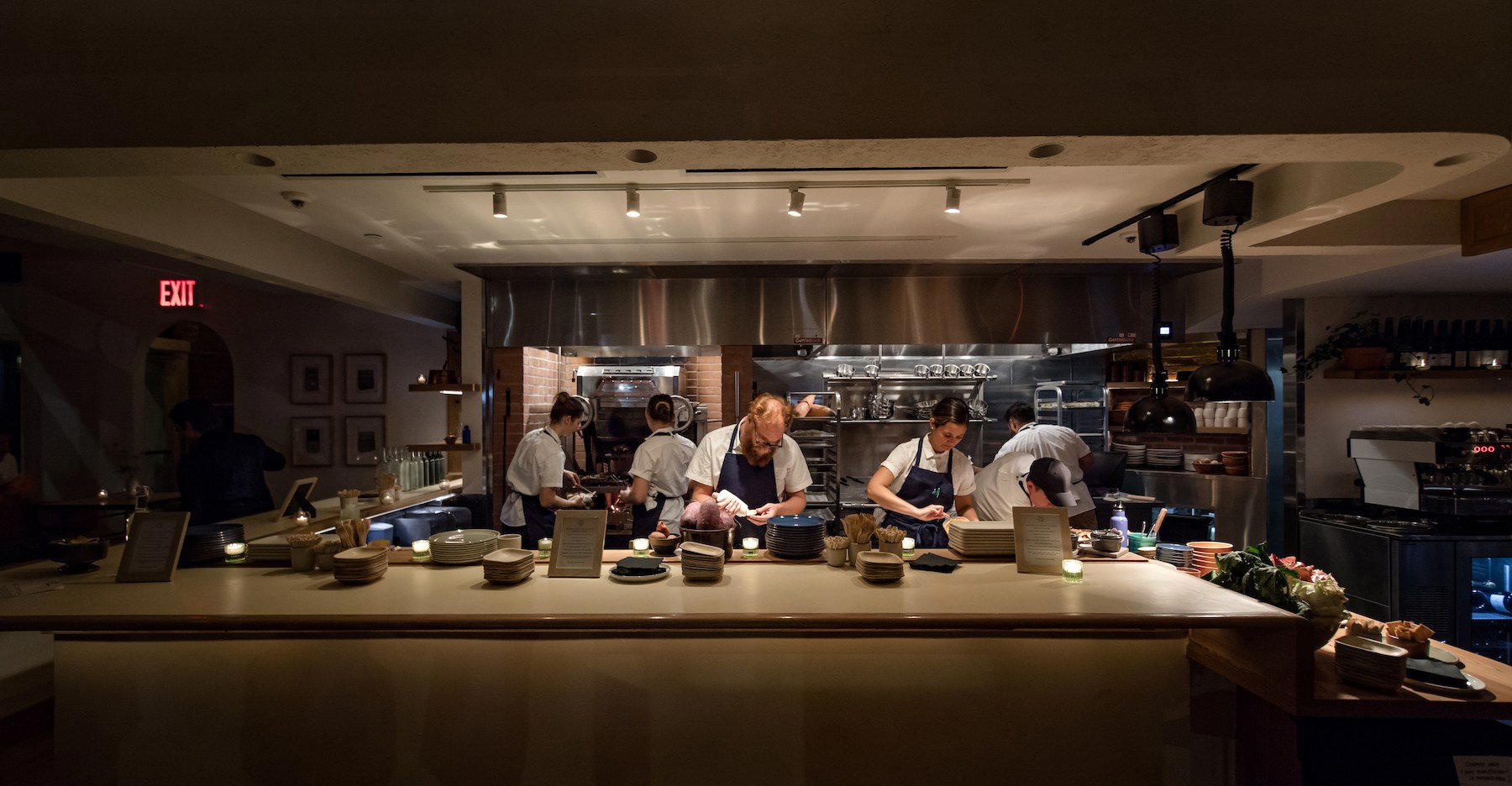
Where Bleecker Street Settles Down
By the time Bleecker Street reaches the low 200s, it has shed most of its weekend-crowd energy. The blocks around 232 belong to a part of the West Village that reads as genuinely residential: brownstone facades, fewer chain frontages, the kind of foot traffic that moves with purpose rather than spectacle. 232 Bleecker operates here, and the West Village dining scene has long rewarded restaurants that match the neighbourhood's register rather than compete against it for volume or visibility.
The West Village sits within a broader Manhattan dining pattern where address carries real signal. A restaurant on this stretch of Bleecker operates in proximity to some of the city's most debated independent tables, and the neighbourhood comparison set is demanding. For diners accustomed to the formal grandeur of midtown institutions like Per Se or the precision seafood of Le Bernardin, the West Village offers a different proposition: smaller rooms, shorter distances between kitchen and guest, and a service register that tends toward knowledgeable rather than ceremonial.
The Sourcing Argument in Lower Manhattan
Ingredient provenance has become the defining credential for a particular class of American restaurant over the past fifteen years. The argument runs that traceability, seasonality, and producer relationships produce better food not as a philosophical stance but as a practical outcome: shorter supply chains mean fresher product, and direct relationships with growers and ranchers mean the kitchen gets access to things that never reach wholesale distribution. Blue Hill at Stone Barns in Tarrytown made this case at a large scale and with significant acreage behind it. Single Thread Farm in Healdsburg built an entire property around the farm-to-kitchen premise. Urban restaurants operating on Bleecker Street work with the same logic but within a different constraint set: no land, no growing season, and a supply chain that runs through the Hudson Valley, the Greenmarket at Union Square, and a network of artisan producers who service the city's serious independent tables.
Within New York City, that sourcing infrastructure is genuinely deep. The Greenmarket system connects Manhattan kitchens to farms within a few hours' drive, and the city's density means specialty producers find it economically viable to service individual restaurant accounts. A kitchen at 232 Bleecker, operating in this environment, has access to ingredient quality that would be logistically implausible in many other American cities. The question for any restaurant in this position is what it does with that access, and how legibly the sourcing choices translate to the plate.
The sourcing-forward model has its own competitive comparable set in New York. Restaurants operating on these premises tend to run shorter menus with higher ingredient rotation, calibrating dishes to what's available rather than anchoring the menu to year-round anchors. This creates a dining experience where returning guests encounter meaningful variation across visits, and where the kitchen's relationship with its suppliers becomes part of the implicit conversation at the table. It's a model that scales differently from the grand tasting-menu format of places like Masa or the precision-engineered courses of Atomix, both of which operate on fixed, highly structured menus where the sourcing is present but subordinate to the overall architectural logic of the meal.
New York's Independent Tier and What It Demands
American restaurant culture has produced a recognizable category of destination-worthy independents that operate outside the formal tasting-menu bracket. Lazy Bear in San Francisco, Alinea in Chicago, and The French Laundry in Napa each represent different approaches to the high-ambition independent: some maximalist, some conceptually driven, some rooted in terroir and producer relationships. In New York, the equivalent tier includes restaurants that have chosen to remain genuinely independent rather than scale into groups, and the West Village has historically been a neighbourhood where that kind of table finds its audience.
The comparison set matters because it establishes what the guest is implicitly choosing when they book in this part of the city. The formal Korean precision of Jungsik New York or the progressive tasting formats that dominate midtown's upper tier require a different commitment from the diner, in terms of both time and spend. A West Village independent that pitches its identity through sourcing and neighbourhood fit is making a different kind of offer, one that competes more on intimacy and ingredient honesty than on technical elaboration or formal structure. Providence in Los Angeles, Addison in San Diego, and Bacchanalia in Atlanta each occupy similar positions in their respective cities: serious independents that have earned their standing through consistency and sourcing integrity rather than through the kind of structural ambition that generates year-long waiting lists.
For diners mapping New York's restaurant geography, 232 Bleecker is worth understanding in relation to its neighbourhood rather than in isolation. Internationally minded diners who move between venues like 8 1/2 Otto e Mezzo Bombana in Hong Kong or Alain Ducasse at Louis XV in Monte Carlo will find the West Village independent tier a different register entirely, built on a different set of assumptions about what a great meal requires.
Practical Notes
The restaurant sits at 232 Bleecker Street in Greenwich Village, Manhattan, zip code 10014. The address is walkable from the Christopher Street-Sheridan Square and West 4th Street subway stations, placing it within easy reach of the A, C, E, B, D, F, and M lines as well as the 1 train. The West Village's street grid in this area is irregular enough that first-time visitors often find it worth mapping the specific cross streets before arriving. Independent tables in this neighbourhood range from casual neighborhood spots to serious destination dining.
How It Stacks Up
Comparable venues nearby, for context on price, style, and recognition.
| Venue | Cuisine | Price | Notes |
|---|---|---|---|
| 232 BleeckerThis venue — the venue you are viewing | Vegetable-Forward American | $$ | Not listed |
| Cove | Modern American | $$ | SoHo-Little Italy-Hudson Square |
| Shake Shack Madison Square Park | Polished American Fast Food | $$ | Midtown South-Flatiron-Union Square |
| Schnipper's | Classic American Burgers & Salads | $$ | Midtown-Times Square |
| Dishes | American Deli | $$ | Midtown-Times Square |
| Henry Public | American Gastropub | $$ | Carroll Gardens-Cobble Hill-Gowanus-Red Hook |
Continue exploring
More in New York City
Restaurants in New York City
Browse all →
Bars in New York City
Browse all →
Hotels in New York City
Browse all →






At a Glance
- Cozy
- Modern
- Trendy
- Casual Hangout
- Open Kitchen
- Craft Cocktails
- Local Sourcing
- Farm To Table
Current opening hours
- Monday
- 11 AM–9 PM
- Tuesday
- 11 AM–9 PM
- Wednesday
- 11 AM–9 PM
- Thursday
- 11 AM–9 PM
- Friday
- 11 AM–9 PM
- Saturday
- 11 AM–9 PM
- Sunday
- 11 AM–9 PM
Hours can change for holidays and private events. Last verified .
Soothing and relaxed atmosphere with a focus on fresh, seasonal ingredients, distinct from the chain's typical lunch rush.