XVA Art Hotel

In Al Fahidi, Dubai's oldest surviving residential quarter, XVA Art Hotel occupies a restored wind-tower courtyard house that operates as a boutique hotel, contemporary art gallery, and café under one roof. The property sits at the intersection of heritage conservation and low-impact hospitality, a counterpoint to the steel-and-glass tower hotels that define most of the city's accommodation market.
Pearl is the En Primeur Club membership app — saves, bookings, and concierge access live there. Same editors, same standards.
- Address
- 777X+JXM - Al Fahidi St,Bur Dubai، Al Fahidi Neighborhood (formerly Bastakiya),Near Dubai Museum - Dubai - United Arab Emirates
- Phone
- +971 4 353 5383
- Website
- xvahotel.com
- Directions
- Get directions
 Saves & bookings on Pearl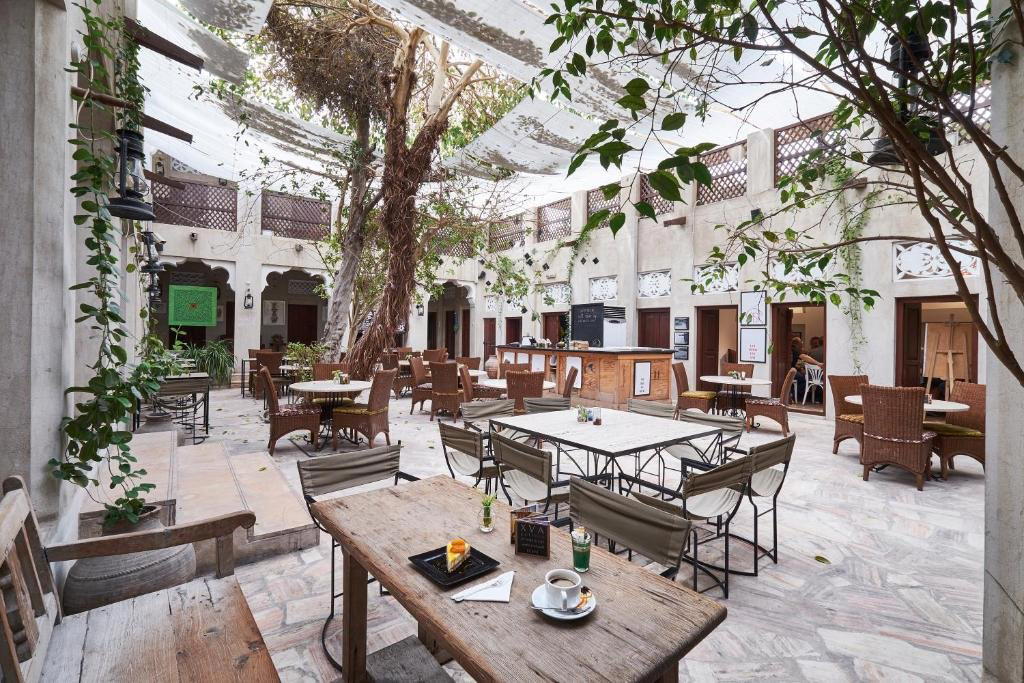
Where the Old City Breathes Differently
Dubai's hospitality identity is shaped, overwhelmingly, by scale. The city's most-discussed properties, from the marina towers to the Palm's resort complexes, compete on square footage, amenity count, and spectacle. Al Fahidi operates on an entirely different logic. The neighbourhood, formerly known as Bastakiya and sitting immediately west of the Dubai Museum along Al Fahidi Street, is one of the few surviving examples of pre-oil Dubai: a dense network of narrow lanes, wind towers, and courtyard houses built from coral stone and gypsum. Walking in from the main road, the temperature drops perceptibly in the shaded passages, and the acoustic register shifts from traffic to conversation. It is within this fabric that XVA Art Hotel sits, occupying a traditional courtyard house that has been conserved and adapted rather than demolished and replaced.
That distinction matters more than it might initially seem. Heritage conservation in fast-developing cities is frequently cosmetic, a preserved façade fronting entirely new construction. The Al Fahidi neighbourhood itself is managed as a historic district by Dubai Municipality, which constrains what can be built or altered, and XVA's integration into that framework places it in a different tier from branded properties that market "heritage-inspired" design while operating from purpose-built buildings. The hotel is physically part of the original urban tissue of Bur Dubai, and that relationship to place defines its character more than any single design choice.
Low-Footprint Hospitality in a High-Consumption City
Dubai's luxury hotel market has, in recent years, produced particularly resource-intensive properties anywhere. The Atlantis The Royal, the Jumeirah Marsa Al Arab, and the newer ultra-luxury tower properties like The Lana operate at a scale that requires substantial energy, water, and material inputs to sustain. XVA sits at the opposite end of that spectrum not by intention alone, but by physical constraint and philosophical orientation. The building's wind-tower architecture, a passive cooling system developed across the Gulf over centuries, reduces reliance on mechanical air conditioning in ways that modern buildings cannot easily replicate. The courtyard form, which draws hot air upward through the tower and circulates cooler air through living spaces, was the region's engineering answer to extreme heat long before electricity arrived.
Small boutique properties in historic buildings across the region, from Arabian Nights Village in Abu Dhabi to heritage-focused retreats in Sharjah's old districts, share this logic: the building itself does environmental work that a modern structure would outsource to mechanical systems. This is not a marginal consideration in a climate where cooling accounts for a substantial share of building energy use. For travellers weighing the environmental implications of accommodation choices, the physical form of the building is a more legible signal than a hotel group's sustainability certification, which tends to measure operational efficiency relative to peers operating in the same high-consumption format.
The café at XVA has maintained a menu built around locally sourced and vegetarian-leaning dishes, consistent with the property's broader orientation toward lower-impact operations. This kind of alignment between food philosophy and building philosophy is more common in heritage-integrated boutique properties than in large resort formats, where F&B operations are often managed separately from sustainability commitments.
The Gallery Function
XVA operates simultaneously as an art gallery showing contemporary work, predominantly by artists from the Arab world and South Asia, two communities with long historical connections to Dubai's pre-oil commercial culture. Al Fahidi's position as a cultural district has been reinforced over decades by the Dubai Culture and Arts Authority, which has supported the neighbourhood as a site for galleries, cultural institutions, and craft workshops. Within that context, XVA's gallery function is not incidental to the hotel; it is part of what makes the property legible within the neighbourhood's purpose.
The integration of gallery and hotel is an approach that has found more traction in cities with developed contemporary art scenes: Aman New York includes significant art programming, and properties like Cheval Blanc Paris operate with site-specific commissions throughout. What distinguishes XVA is that the art on the walls is for sale, making the gallery genuinely commercial rather than decorative, and the artists shown tend to reflect the cultural geography of the surrounding neighbourhood rather than the tastes of an international luxury brand's art advisor.
Where It Sits in the Dubai Accommodation Market
Dubai's accommodation market has bifurcated sharply. On one side: large-scale resort and tower hotels, many affiliated with international groups, competing on pool decks, beach access, and F&B programming. On the other: a small but growing cohort of boutique and independent properties that trade on neighbourhood specificity, smaller room counts, and non-standardised design. XVA belongs firmly to the latter group, in the same broad category as design-led independents operating in Al Fahidi and the adjacent Al Seef waterfront development.
For context, properties like the Address Beach Resort, the Address Creek Harbour, or the Address Downtown operate at a fundamentally different scale and serve a different travel purpose. Comparing XVA against those properties is a category error. The correct peer comparison is with the small number of heritage-integrated, low-key boutique properties that treat Al Fahidi's physical and cultural context as the central product rather than a backdrop. Against that smaller comparable set, XVA's combined hotel-gallery-café format, its position within a protected historic district, and its longevity in the neighbourhood (the property has been operating for well over a decade) place it as one of the more established representatives of that format in Dubai.
Travellers who have stayed at properties like Castello di Reschio in Umbria or Aman Venice, where the historic built fabric is the primary experience, will recognise the underlying logic at XVA: the building has already done most of the design work, and the hotel's role is to inhabit it thoughtfully rather than compete with it.
Getting There and Planning Your Stay
Know Before You Go
- Location: Al Fahidi Street, Al Fahidi Historical Neighbourhood (formerly Bastakiya), Bur Dubai. On foot from Al Fahidi Metro Station: approximately 10 minutes through the old quarter.
- Getting there:
- Neighbourhood timing: Al Fahidi is leading explored in the morning and late afternoon. Midday heat between May and September makes extended outdoor time difficult. The Dubai Museum and the Sheikh Mohammed Centre for Cultural Understanding are within walking distance.
- Wider UAE context: Al Fahidi makes a logical base for day trips to Sharjah's heritage districts by taxi, or as part of a wider UAE itinerary that might include the Liwa Desert or Al Ain.
Cuisine and Recognition
Comparable venues nearby, for context on price, style, and recognition.
| Venue | Cuisine | Price | Notes |
|---|---|---|---|
| XVA Art HotelThis venue — the venue you are viewing | Restored traditional majilis-style heritage building with wind towers and courtyards | $$$ | Not listed |
| Fairmont The Palm | Hotel | Not listed | Palm Jumeirah |
| The Wolseley Hotels | Luxury brand inspired by well-known London restaurant offering immersive cosmopolitan experiences. | $$$$ | Not listed |
| Baccarat Hotel & Residences Dubai | Ultra-luxury branded mixed-use complex combining a Baccarat hotel with high-end serviced residences in crystalline towers. | $$$$ | Downtown Dubai |
| The Chedi Private Residences | Branded luxury residences blending timeless elegance with contemporary urban living | $$$$ | Barsha Heights |
| FORM Hotel Dubai, member of Design Hotels | Contemporary Art Deco sanctuary in historical Al Jaddaf District | $$$$ | Jaddaf |
Recognition history
Dated appearances from independent guides and award organizations, with the underlying list record or original source where available.
Michelin Selected
Michelin
Continue exploring
More in Dubai
Hotels in Dubai
Browse all →
At a Glance
- Quiet
- Elegant
- Intimate
- Cozy
- Romantic Getaway
- Weekend Escape
- Historic Building
- Garden
- Terrace
- Wi Fi
- Concierge
- Garden
- Street Scene
- Wi Fi
- Concierge
- Garden
Serene and peaceful atmosphere with courtyards for relaxation, art-filled interiors, soft lighting, and authentic historic charm.