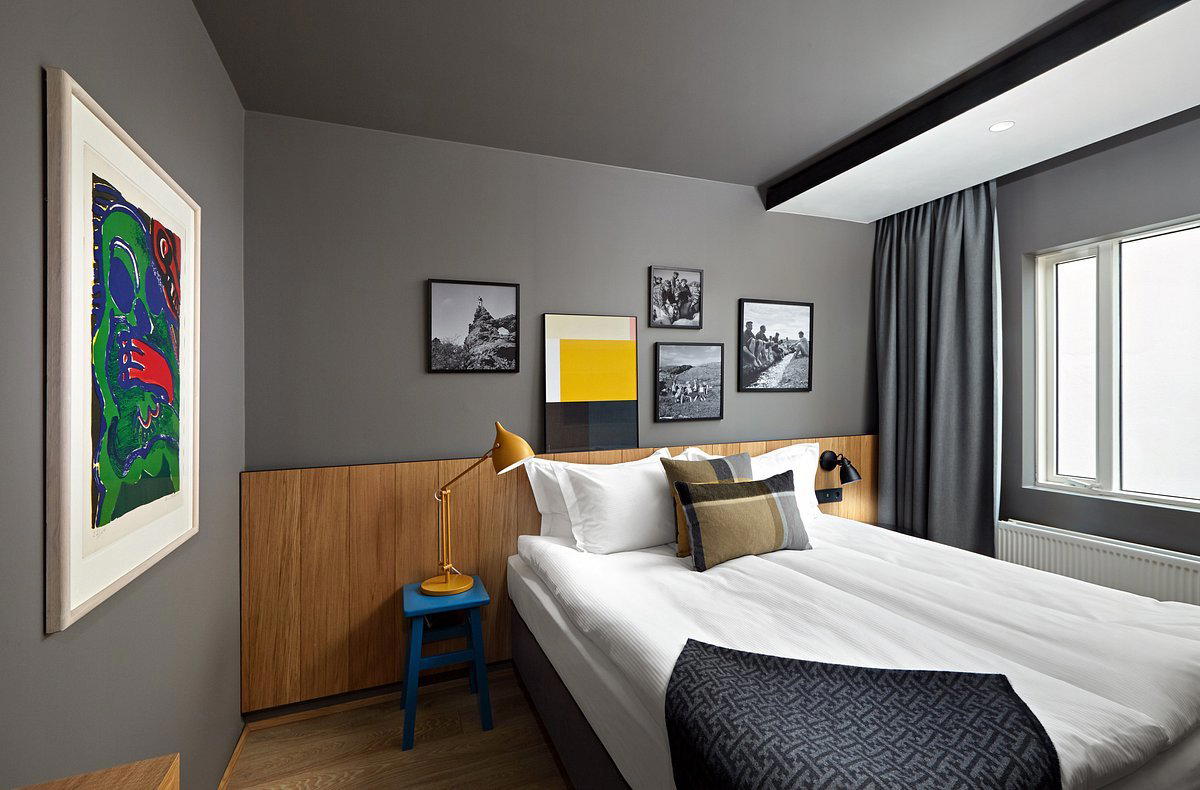
Positioned on the northern shore of Lake Mývatn, Hótel Reykjahlíð occupies one of Iceland's most geologically charged settings, where lava fields meet geothermal steam and the light shifts with the season. The property belongs to a category of Icelandic accommodation defined by place rather than programme, where the landscape is the architecture and the surrounding terrain sets the agenda for every stay.
Where the Lava Field Meets the Lake
There is a particular quality of light at Lake Mývatn that visitors consistently fail to anticipate. In summer, the midnight sun turns the water copper and the surrounding lava formations into silhouettes that look assembled rather than formed. In winter, the same formations become foreground for the northern lights, a phenomenon this latitude catches with unusual frequency given the distance from significant light pollution. Hótel Reykjahlíð sits inside this setting, in the small community of Reykjahlíð on the lake's northeastern shore, and the relationship between building and terrain is the defining characteristic of a stay here.
The Mývatn region belongs to a category of Icelandic destinations that rewards slower movement. This is not a transit stop on the Ring Road, though Route 1 does pass through. It is a place that geologists, ornithologists, and travellers serious about volcanic landscape have been visiting for decades, and the accommodation infrastructure reflects that orientation. The hotel operates in a context where the draw is entirely external: pseudo-craters at Skútustaðagígar, the Dimmuborgir lava formations, the Námaskarð geothermal area, and the Mývatn Nature Baths are all within reach and represent genuinely rare geological phenomena that have no equivalent elsewhere in Iceland.
The Architecture of an Icelandic Lake Property
Icelandic rural accommodation has historically split between working farm conversions, purpose-built lodges with Scandinavian modernist leanings, and smaller guesthouses that prioritise location over design ambition. Properties like ION Adventure Hotel in Selfoss and Eleven Deplar Farm in Ólafsfjarðarmúli represent a third wave: design-led properties that treat the building as a deliberate statement about its environment. Hótel Reykjahlíð operates in a different register, grounded in the village fabric of Reykjahlíð rather than isolated architectural theatre.
The village itself carries an unusual history. A lava flow from the Krafla volcanic system reached the settlement in 1729, and the local church survived, an event that embedded itself into local memory and gives the area a human timescale that purely geological sites lack. For a property in this location, that historical layer matters: it means the building exists inside a living community rather than positioned as a resort perch above it.
For comparison, Hótel Búðir on the Snæfellsnes peninsula operates with a similar logic: a relatively modest structure set against a landscape that provides all the drama, with the hotel functioning as a calibrated base rather than a destination in itself. The design approach at properties of this type tends toward restraint, with materials and scale that defer to the surroundings rather than competing with them. Vogafjós Farm Resort in Vogar, also on Lake Mývatn, represents the farm-conversion model in the same region, giving travellers a point of comparison for what the accommodation tier looks like in this particular geography.
Lake Mývatn sits roughly 100 kilometres east of Akureyri, Iceland's second city, and about 450 kilometres from Reykjavík by road, a distance that places it beyond the range of day-trip tourism from the capital. This geographic position shapes the guest profile: the majority of visitors are committed to a minimum two-night stay, and many arrive as part of longer Ring Road itineraries. The commitment required to reach Mývatn filters the audience toward travellers who have done research, which in turn influences what accommodation providers in the area offer.
This is not a region where proximity to an international airport anchors the hotel's competitive position, as it does for properties like Silica Hotel in Grindavík or Hotel Ranga in Hella, both of which serve guests on shorter south-of-Iceland itineraries. Mývatn properties instead compete on access to the north's specific natural features, and Hótel Reykjahlíð's address on the lake's northeastern shore places it within walking distance of the church, the general store, and the lake edge, while keeping the Krafla volcanic system, roughly 8 kilometres to the north, as a credible half-day excursion.
Reykjavík-based properties like The Reykjavík EDITION and Black Pearl operate in an entirely different market, serving urban travellers who want design and F&B sophistication at the centre of the capital. Hótel Reykjahlíð's value proposition is the inverse: the setting is the thing, and the accommodation functions as a committed base for landscape-driven travel rather than a destination in its own right.
Planning a Stay: Practical Framing
Seasonality at Mývatn is more pronounced than at many Icelandic destinations. Summer, from late May through August, brings the midnight sun, the peak of the area's birdlife (the lake is one of Europe's most important waterfowl habitats), and the highest visitor volumes. Winter travel, from November through February, prioritises northern lights viewing, with the region's low light pollution and clear atmospheric conditions making it one of the more reliable aurora locations in northern Iceland. These two seasons attract different traveller types and the logistical considerations differ substantially: summer allows for extended evening exploration of the lava fields and crater lakes, while winter requires vehicle preparation for icy roads and the acceptance of compressed daylight hours.
Travellers arriving in summer should account for the fact that Mývatn's popularity has grown considerably in the past decade, and accommodation in the area books out well in advance during June and July. The flight from Reykjavík to Akureyri (operated by Icelandair, approximately 45 minutes) followed by a car hire from Akureyri is the most efficient routing, though the Ring Road drive from the capital, roughly five to six hours, provides its own editorial reward in terms of landscape transition.
For context on how this property sits within the broader Icelandic accommodation spectrum, the EP Club Reykjahlí guide maps the options across price tier and location. Comparisons with south-coast properties like UMI Hotel in Vík, Skálakot Hotel in Hvolsvöllur, or Hótel Klaustur Iceland in Kirkjubæjarklaustur are instructive: the south coast operates as Iceland's most trafficked corridor, while the north retains a more deliberate, less saturated character that justifies the additional travel time for the right kind of visitor.
How It Stacks Up
| Venue | Price | Awards |
|---|---|---|
| Hótel ReykjahlíðThis venue (the venue you are viewing) | Not listed | Not listed |
| The Reykjavik EDITION | Not listed | 1 Michelin Key · Forbes Recommended |
| 101 hotel Reykjavik | Not listed | Michelin Selected · Design Hotels Member |
| Eleven Deplar Farm | $2,500+ | Virtuoso Luxury Hotel Partner · Tablet Hotels Top 40 New Hotels |
| Hótel Klaustur Iceland | $100–200 | World Luxury Hotel Awards WLHA Regional Winner |
| Hotel Ranga | $300–500 | 1 Michelin Key · Small Luxury Hotels of the World Member |
Continue exploring
More in Reykjahli
Hotels in Reykjahli
Browse all →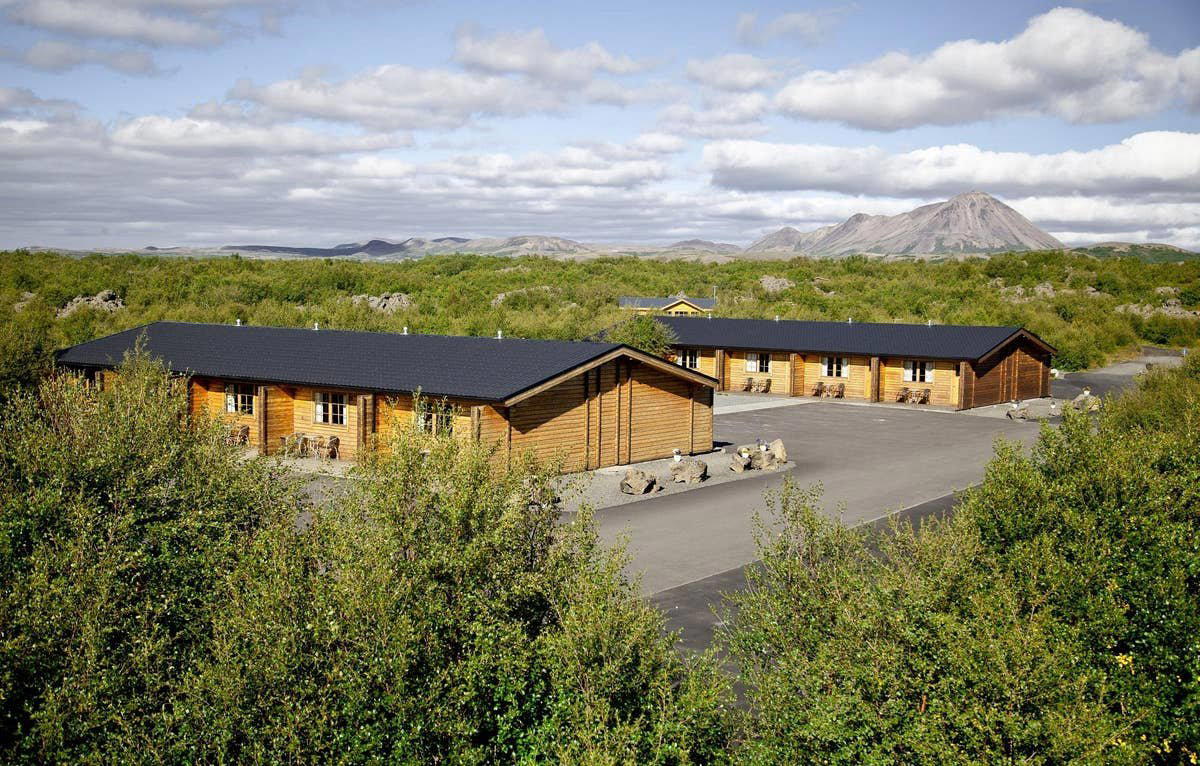
Details
- Cozy
- Modern
- Rustic
- Scenic
- Romantic Getaway
- Family Vacation
- Weekend Escape
- Panoramic View
- Wi Fi
- Restaurant
- Bar
Warm and eclectic atmosphere with colorful pops against minimalist Scandi design, cozy fireplace in the bar, and a neighborhood guesthouse feel.